
Legislative preparations establishing a centralized lower threshold for the assignment and promotion criteria of academic personnel in Turkish universities are slated for completion next year, according to official strategic plans outlined in the 2027 Presidential Annual Program.
The comprehensive roadmap, compiled from official government planning documents, sets out a systemic restructuring of the country’s higher education system. Coordinated primarily through the Council of Higher Education (YÖK) alongside individual universities, the multi-faceted strategy focuses on enhancing academic standards, expanding data-driven governance, recalibrating university admission quotas to reflect real-world labor demands, restructuring distance learning models, and elevating the quality of doctoral research and international academic recruitment.
Under the upcoming framework, policy formulation across the higher education sector will increasingly rely on big data analytics and continuous performance tracking. The government plans to expand the use of data-driven policy development processes across both YÖK and individual higher education institutions. As part of this initiative, universities’ performance metrics will be closely monitored, and standardized evaluation reports will be published at regular intervals to ensure institutional transparency and continuous oversight.
To foster greater synergy within the nation’s academic ecosystem, state planners are designing targeted models aimed at boosting inter-university cooperation. These models will utilize field-based matching mechanisms, allowing institutions with complementary strengths to share resources, conduct joint research, and harmonize academic offerings.
Concurrently, the determination of university admission quotas will undergo a structural shift. Rather than relying solely on historical enrollment figures, student quotas will be calculated based on the actual physical, technical, and academic capacities of individual universities. Crucially, these figures will also be calibrated against present conditions and strategic forecasts regarding labor market supply and demand, while explicitly factoring in regional economic needs.
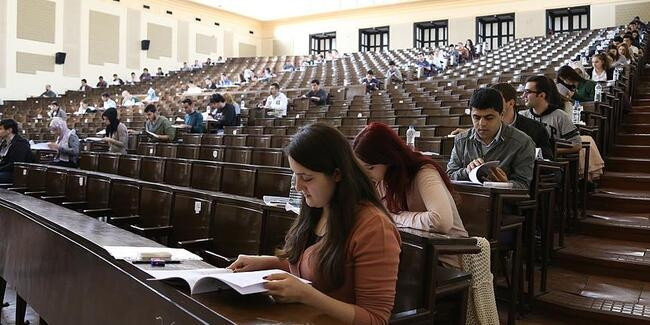
As part of this localized approach, the government intends to boost the operational effectiveness of its "Regional Development-Oriented Mission Differentiation and Specialization Project." This strategic initiative seeks to move away from a one-size-fits-all university model by encouraging institutions outside major metropolitan centers to tailor their academic, research, and educational agendas to the specific economic, social, natural, and industrial potential of their surrounding provinces and regions.
Open Education System Programs to Be Reviewed in Line with Sectoral Needs
A major component of the upcoming reforms involves a comprehensive overhaul of the open education (distance learning) network. According to the Presidential Annual Program, academic offerings within the open education system will undergo a rigorous review to align them with evolving sectoral demands, ultimately leading to a reduction in the overall weight of distance learning within the broader higher education landscape.
As part of this recalibration, admission quotas for open education programs targeted at secondary school graduates seeking to transition into higher education will be established strictly in light of program quality and specific academic characteristics. The policy aims to ensure that open learning pathways maintain academic rigor rather than serving as passive overflow channels for university admissions.
Furthermore, the open education framework will be strategically restructured to center primarily around adult education, professional upskilling, and lifelong learning initiatives. By shifting the core purpose of open learning toward continuous adult education, policy makers aim to better serve non-traditional students and working professionals seeking to update their skill sets, while directing traditional high school graduates toward more intensive, practical, or residential higher education programs.
Labor Market Performance of Graduates to Be Regularly Tracked

The national program outlines targeted interventions to elevate the baseline quality of academic staff working across higher education institutions. Central to this objective is the establishment of a centrally determined lower limit for university assignment and promotion criteria. By defining national minimum baseline standards, YÖK aims to harmonize academic qualifications across different institutions and ensure that appointments to assistant, associate, and full professorships adhere to standardized academic benchmarks nationwide. Legislative work detailing these minimum baseline criteria is scheduled for finalization in 2027.
Alongside staff qualifications, the 2027 program emphasizes direct action to enhance the practical and professional competencies of university students and recent graduates. To close the gap between academic theory and workplace requirements, new educational programs will be crafted in direct consultation with industry and sector representatives. These collaborative efforts will focus on defining core professional qualifications and jointly executing applied, work-based training modules within key industries.
To support students throughout their academic journeys and subsequent transitions into the workforce, universities will be required to build up the operational capacity of their internal career centers. The plan mandates the expansion of career guidance and counseling services across all campuses, ensuring that these resources remain easily accessible to both current students and alumni.
In parallel, the government will implement a systematic tracking system to monitor the labor market performance of university graduates on a regular basis. By tracking key employment metrics—such as time to initial employment, industry alignment, and career progression—policy makers and university administrators will be able to evaluate institutional outcomes continuously and track the developmental progress of individual universities over time.
Doctoral Programs Suitable for Universities’ Competency Analysis and Specialization Areas to Be Opened
To ensure that advanced academic training yields tangible technological and economic benefits, the Presidential Annual Program prioritizes the alignment of practical education with institutional research strengths. In areas where universities possess demonstrated expertise, new initiatives will be launched to establish industrial partnerships and joint cooperative education models, directly boosting students’ technical knowledge and hands-on professional experience.

The program also details comprehensive measures to enhance internationalization across Turkish campuses, focusing on academic quality rather than sheer student volume. Under the planned guidelines, international student admissions will be standardized across universities by establishing the Türkiye Examination for Foreign Students (TR-YÖS)—administered centrally by the Assessment, Selection and Placement Center (ÖSYM)—as the primary benchmark for foreign admissions.
Simultaneously, Turkey aims to increase its appeal to top-tier global academic talent. Over the coming year, policy makers will introduce regulatory streamlined processes and financial incentives designed to facilitate the employment of qualified foreign post-doctoral researchers and international academics. Special support will be directed toward hiring foreign doctorate-holding scientists in strategically critical and high-need research disciplines.
To further elevate the global standing of the national higher education system, YÖK and Turkish universities will pursue institutional agreements to develop joint doctoral degree programs in partnership with internationally renowned higher education institutions that hold high ranks in global university classification systems.
Finally, the criteria governing doctoral education within Turkey will undergo a thorough revision. Government planners will review overall doctoral program frameworks and candidate admission requirements to ensure high academic standards. Moving forward, the authority to launch new doctoral programs will be tied directly to comprehensive competency analyses of applicant universities. PhD programs will only be approved in fields that strictly correspond to an institution’s verified research competencies and designated specialization areas, effectively preventing the proliferation of under-resourced graduate programs and focusing doctoral education where institutional expertise is strongest.