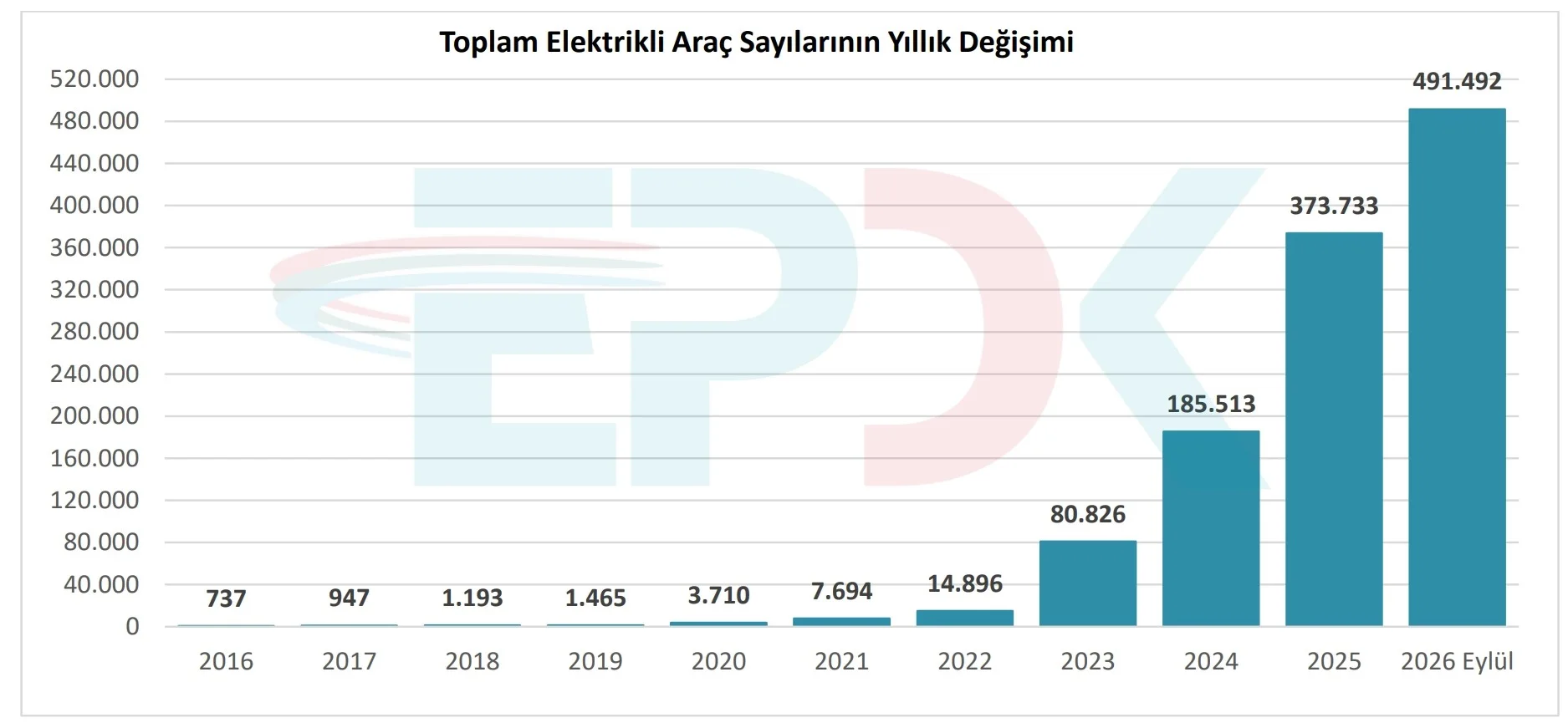
Türkiye’s electric vehicle market has reached a milestone, with official regulatory figures confirming that the nation’s electric vehicle fleet expanded to 491,492 units by September 2026. Data released by the Energy Market Regulatory Authority (EPDK) highlights a rapid shift in the country’s transportation sector, revealing that the total pool of electric vehicles grew by 52.8 percent compared to the same month in the previous year.
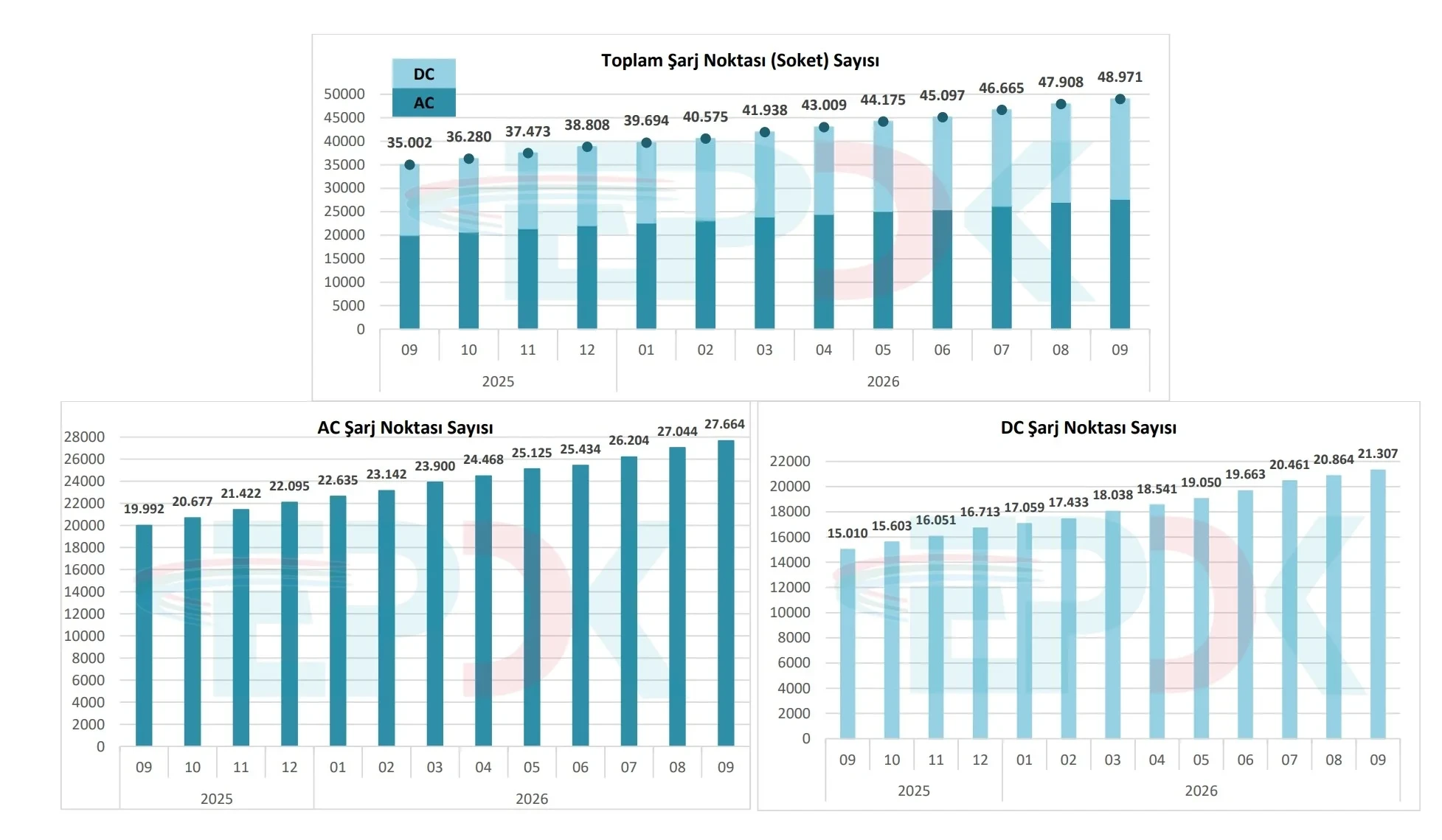
This sustained uptick in zero-emission driving has placed heightened demands on national energy and charging networks. In response, infrastructure developers across the country have steadily scaled up their commercial operations. Türkiye’s commercial charging ecosystem reached 48,971 individual charging sockets by September 2026, while the combined installed power capacity of these stations climbed to 3,875 megawatts.
The comprehensive industry report, which draws upon foundational vehicle registration data from the Turkish Statistical Institute (TÜİK), underscores a broader structural transformation in consumer mobility preferences across the country. As drivers transition away from traditional internal combustion engines, domestic energy distribution networks and private network operators are recalibrating their investments to support high-capacity, rapid-charging capabilities along major transportation corridors and urban density centers.
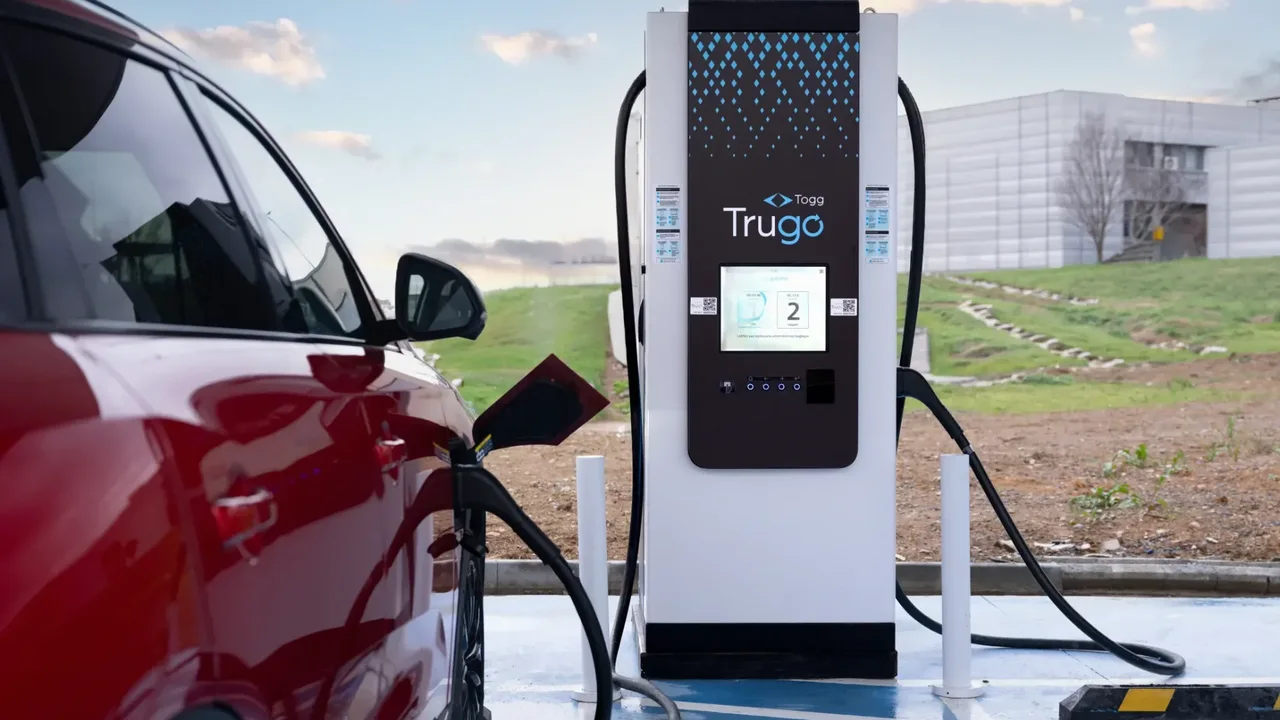
Among network operators, Togg’s charging subsidiary Trugo emerged as the market leader in terms of total energy delivered to vehicles during the period, while Zes retained the largest overall footprint in terms of individual physical sockets deployed. Furthermore, the statistics reflect a pronounced consumer preference for direct current fast charging, which now accounts for the vast majority of total energy delivered nationwide.
Rapid Growth in Electric Vehicle Fleet
The growth trajectory of Türkiye’s electric vehicle ownership over recent years demonstrates a remarkable acceleration, moving from a niche market segment to a central component of the national automotive market. According to the comparative figures within the EPDK framework, the total number of registered electric vehicles in Türkiye stood at 321,710 in September 2025. Over the course of the following twelve months, net additions to the fleet totaled 169,782 units, propelling the overall fleet size to 491,492 vehicles by September 2026.
Looking back across a broader multi-year timeline illustrates the steep incline of this adoption curve. In 2022, Türkiye’s registered electric vehicle count was recorded at just 14,896 units. As market availability widened and public awareness increased, that figure jumped to 80,826 vehicles by the end of 2023. The expansion continued at a rapid pace through 2024, when total registered electric vehicles reached 185,513 units. By the close of 2025, the national fleet had scaled to 373,733 vehicles before pushing past the threshold of nearly half a million by the end of the third quarter of 2026.
Short-term growth dynamics remain consistently strong. Between August 2026 and September 2026 alone, the total number of electric vehicles on Turkish roads grew by 3.1 percent in a single month. This ongoing month-over-month expansion indicates that consumer demand remains robust, bolstered by expanding model lineups, growing secondary markets, and expanding awareness regarding the operational cost advantages of electric powertrains.
To keep pace with the influx of new electric vehicles, Türkiye’s commercial charging infrastructure has undergone a parallel expansion. The nation’s total count of commercial charging sockets increased from 35,002 in September 2025 to 48,971 in September 2026. This buildout represents a 39.9 percent year-over-year increase in physical charging connections, driven by the installation of 13,969 new sockets within a single year.
Despite this substantial physical expansion, the data reveals a subtle shift in the balance between power delivery capacity and vehicle population growth. In September 2025, the ratio of total installed grid charging power to the active electric vehicle fleet stood at 8.05 kilowatts per vehicle. By September 2026, this ratio experienced a slight decline to 7.89 kilowatts per vehicle. Industry analysts interpret this movement as an indicator that consumer adoption of electric vehicles is currently progressing at a pace that slightly outstrips the physical commissioning of new commercial grid power infrastructure, placing greater operational emphasis on network efficiency and strategic station placement.
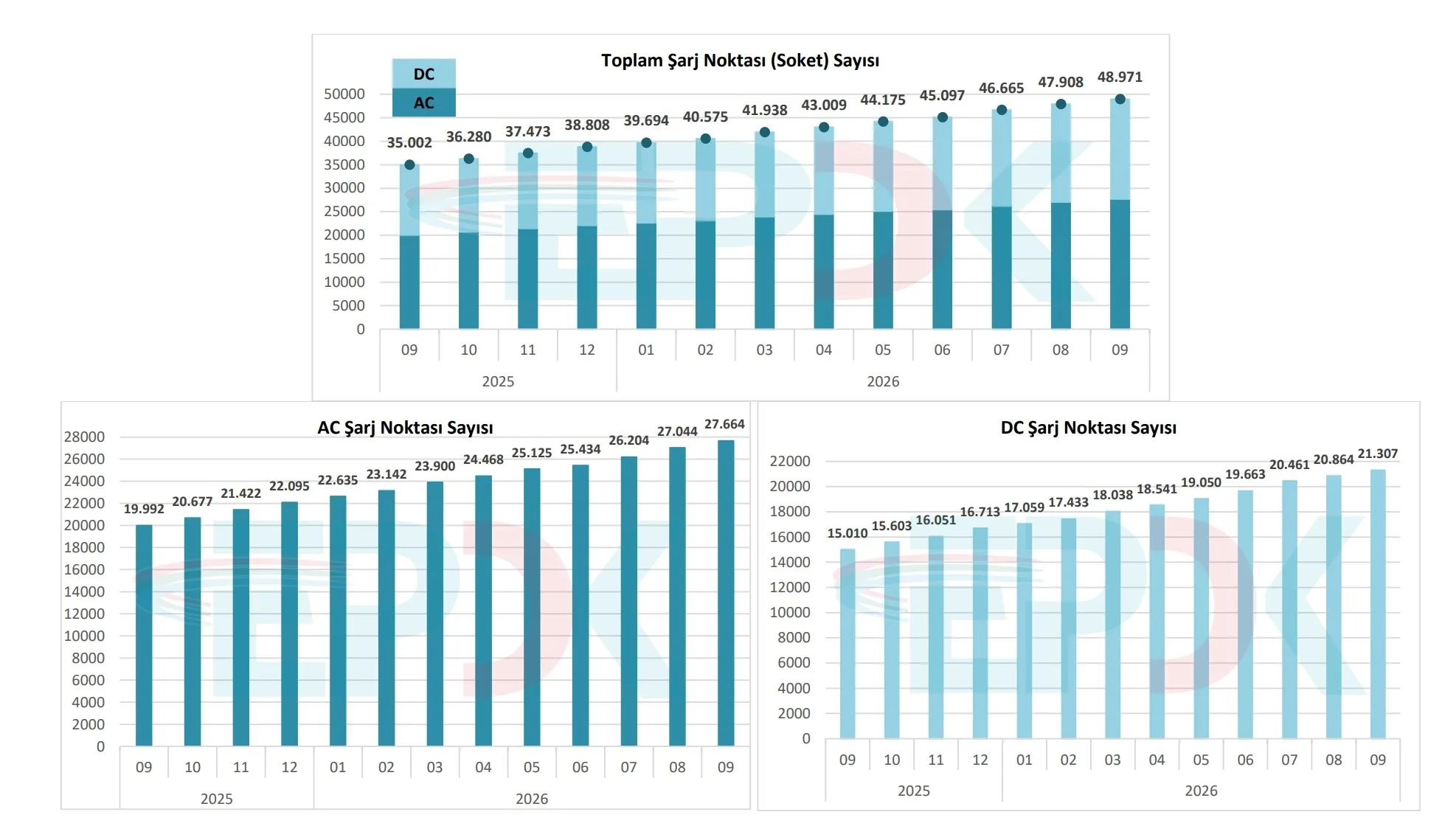
The operational composition of the commercial socket network reflects a clear technological evolution. Of the 48,971 total commercial sockets active in September 2026, alternating current (AC) connections numbered 27,664, while direct current (DC) fast-charging connections totaled 21,307. While AC chargers continue to make up the numerical majority of total installed connections due to lower hardware and installation costs, DC infrastructure is expanding at a noticeably faster rate. Year-over-year growth for high-speed DC sockets hit 42 percent, outstripping the 38.4 percent growth rate observed for AC sockets. This strategic focus on fast-charging hardware aligns with driver demands for reduced dwell times during long-distance intercity trips and rapid urban top-ups.
Consumption Metrics and Leading Network Operators
As the sheer volume of electric vehicles on the road increases, power consumption at commercial charging stations has risen proportionately. Official data shows that commercial charging infrastructure across Türkiye delivered a total of 83,253 megawatt-hours (MWh) of electrical energy to vehicles during the month of September 2026.
This energy delivery volume was accumulated across a total of 3,548,897 charging hours, encompassing 3,152,733 individual charging sessions throughout the month. The operational split between AC and DC charging stations reveals a stark contrast in how drivers utilize public infrastructure. Although AC chargers represent more than half of all deployed sockets nationwide, DC fast chargers delivered an overwhelming 82.44 percent of all electricity consumed during the period. AC charging stations accounted for the remaining 17.56 percent of total power delivered.
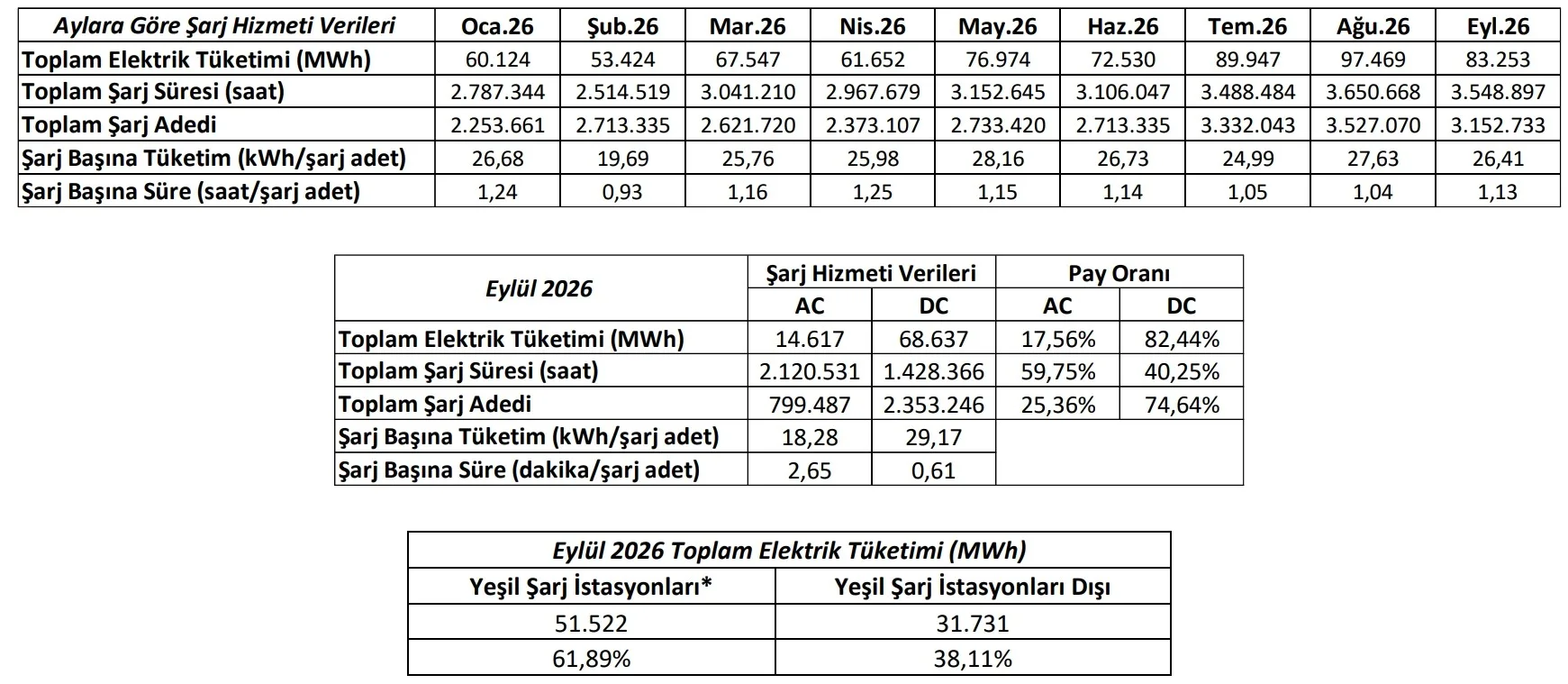
This disparity in energy throughput is further reflected in session-level metrics. During September 2026, the average energy delivered per transaction at an AC charging station stood at 18.28 kilowatt-hours (kWh). By comparison, the average energy transferred during a single DC fast-charging transaction reached 29.17 kWh. The higher session volume and higher energy density of DC connections underscore the critical role that fast-charging corridors play in routine vehicle operations, enabling drivers to quickly replenish significant battery percentage points while on the move.
Environmental metrics embedded in the EPDK dataset highlight a substantial shift toward renewable power within the mobility ecosystem. During September 2026, exactly 61.89 percent of all electricity consumed across Türkiye’s commercial charging network was supplied through certified green charging stations. These facilities utilize electricity fully sourced from renewable energy generation, such as wind, solar, and hydroelectric power, ensuring that a significant majority of the country’s electric vehicle mileage yields genuine well-to-wheel emission reductions.
From a geographical perspective, electricity consumption at public charging stations remains heavily concentrated in major metropolitan centers and economic hubs. Istanbul accounted for the largest share of total network energy consumption, with drivers drawing 22,383 MWh of electricity during September 2026. This figure represents 26.89 percent—more than a quarter—of the entire nation’s commercial charging consumption. Ankara secured the second spot in regional energy demand, representing 13.28 percent of national consumption, while Izmir ranked third with a 6.12 percent share. Together, these three largest metropolitan areas consume nearly half of all energy distributed through Türkiye’s public charging network.
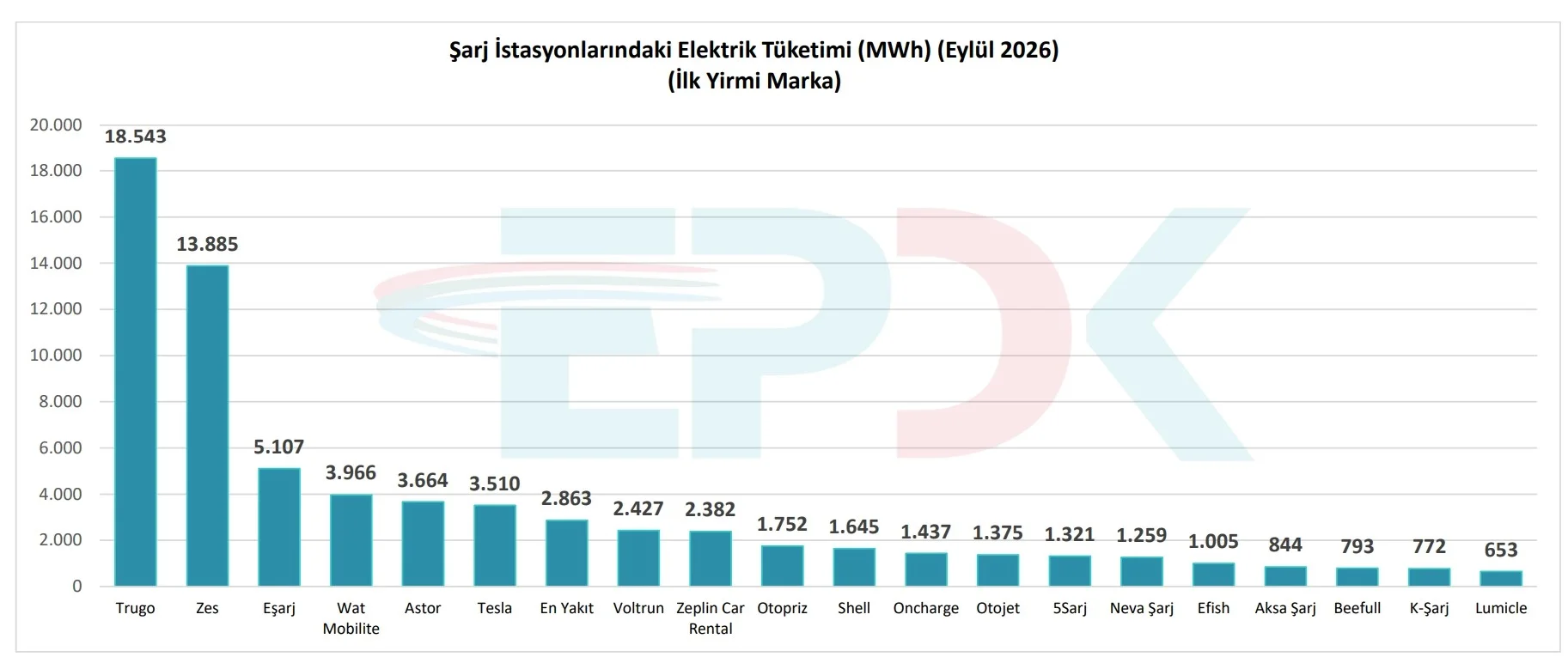
The competitive landscape among charging network operators is characterized by distinct market leadership depending on whether performance is evaluated by energy volume delivered or total installed physical infrastructure.
In terms of total power delivery, Trugo captured the leading market position in September 2026. The operator delivered 18,543 MWh of electrical energy to vehicles over the course of the month, representing 22.27 percent of the nationwide commercial total. Zes ranked second in energy throughput, supplying 13,885 MWh to drivers across its network, while Eşarj placed third with a total delivery volume of 5,107 MWh.
However, when evaluating network presence through the lens of physical footprint and availability, Zes maintained the top position in the country. As of September 2026, Zes operated a nationwide network of 5,553 active commercial charging sockets. Trugo held the second-largest physical footprint with 4,200 deployed sockets, while Voltrun occupied third place with 2,719 sockets in commercial service.
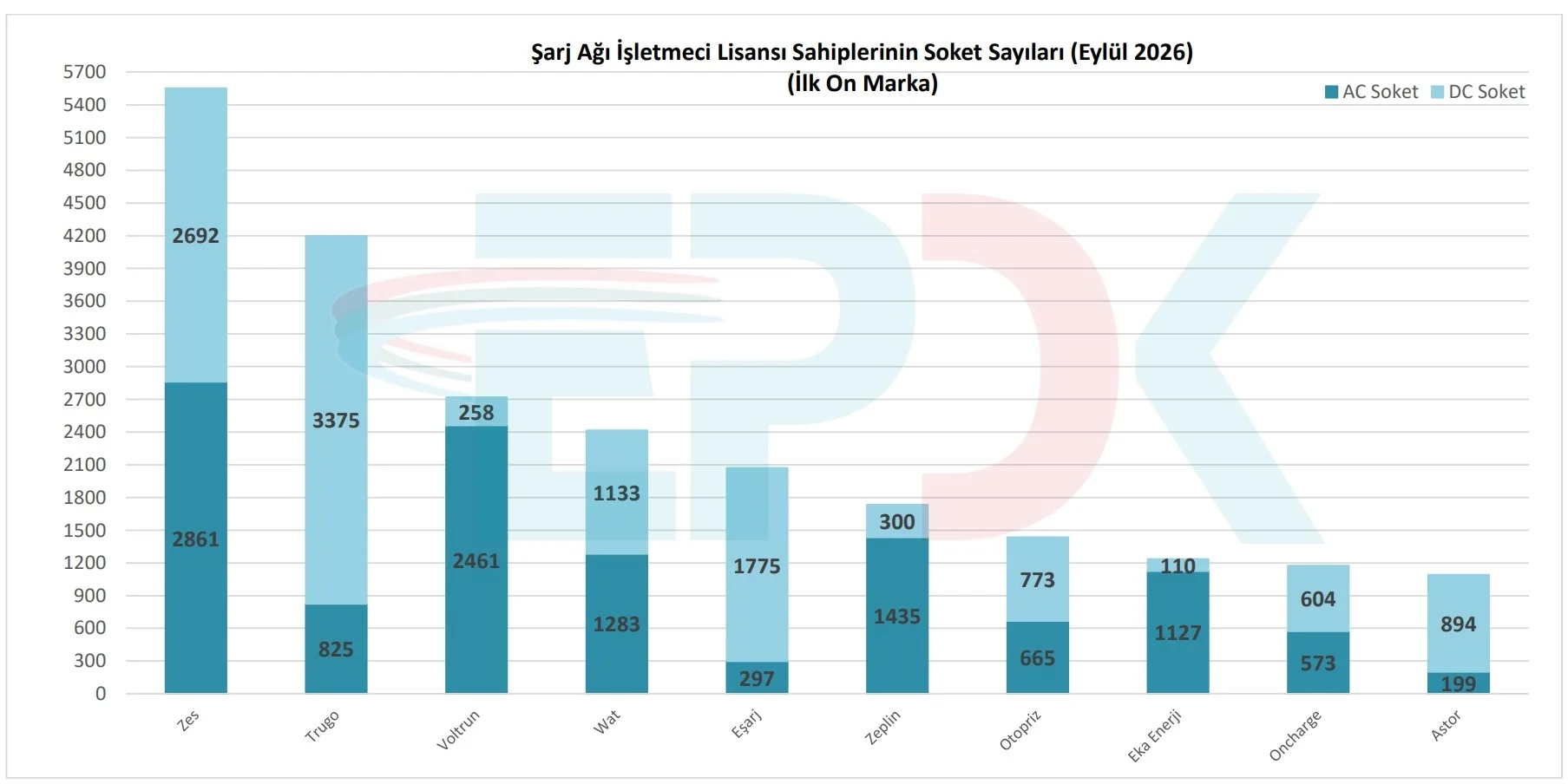
These operational metrics illustrate a complex and rapidly evolving market structure. While some network operators have prioritized widespread coverage with a diverse mix of AC and DC points, others have focused heavily on high-power DC installations designed to maximize energy throughput per socket location. As Türkiye’s electric vehicle population approaches half a million units and continues to scale, the interplay between fast-charging deployment, renewable grid integration, and geographic coverage will remain pivotal in shaping the nation’s broader transition toward sustainable transport.