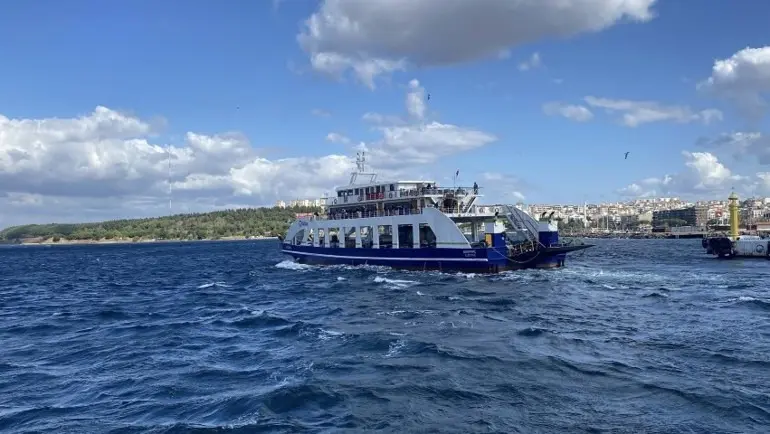
ÇANAKKALE, Turkey — Severe weather conditions and intensifying storm activity across the northern Aegean Sea have disrupted regional maritime transportation, prompting local authorities to suspend all scheduled ferry services connecting mainland Çanakkale to the islands of Gökçeada and Bozcaada.
The announcement was made by GESTAŞ Sea Transportation, the primary maritime transport operator for the Çanakkale Strait and the surrounding island routes. According to official statements issued by the company, all ferry sailings on the Kabatepe-Gökçeada and Geyikli-Bozcaada lines scheduled for tomorrow have been completely canceled due to dangerous wind conditions and rough sea states forecasted across the northern Aegean basin.
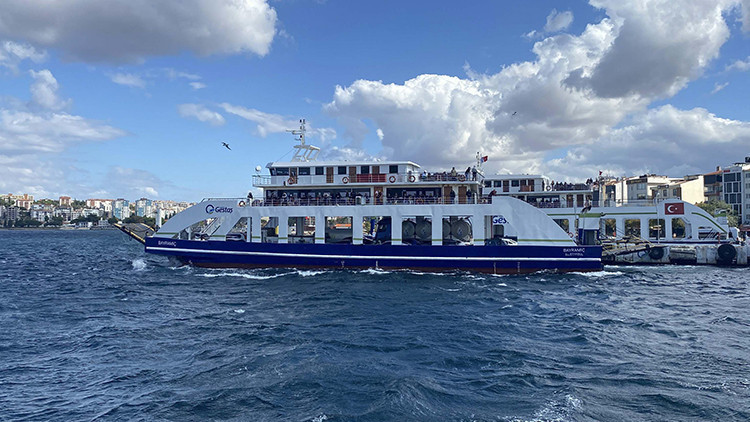
Adverse Weather Conditions Strike the Northern Aegean, Forcing Full Cancellation of Island Ferry Routes
The maritime disruption stems from a powerful weather system advancing across the northern Aegean region, bringing strong gales, heavy sea swells, and unpredictable squalls that make navigation and harbor maneuvering extremely hazardous for passenger and vehicle ferries. GESTAŞ confirmed that after evaluating current weather forecasts and warnings issued by meteorological authorities, the decision was taken to halt all trips on both critical island routes to ensure the safety of passengers, crew members, and vessels.
Under the canceled schedule, no departures will take place along the Kabatepe to Gökçeada route, nor will any ferries operate between the mainland port of Geyikli and the island of Bozcaada throughout the entire day tomorrow. The operational pause applies universally to both passenger traffic and vehicular transit, effectively severing routine maritime transport between mainland Çanakkale Province and Turkey’s two inhabited Aegean islands until environmental conditions stabilize.
The northern Aegean Sea is historically prone to rapid and severe weather shifts, particularly during seasonal atmospheric transitions when strong wind regimes dominate the region. The geography of the coastline off the Gelibolu (Gallipoli) Peninsula and the Ezine district leaves coastal shipping lanes fully exposed to open-water wave dynamics, turning maritime transit into a high-risk operation during atmospheric disturbances.
The route connecting Kabatepe port, located on the western coast of the Gallipoli Peninsula, to Gökçeada requires vessels to cross a significant stretch of open sea in the northern Aegean. Unlike the relatively sheltered waters of the Çanakkale Strait (Dardanelles), the Kabatepe-Gökçeada line faces directly into northern and northwesterly wind currents. When strong gales sweep through the area, the resulting wave heights and sea chop create severe instability for roll-on/roll-off (Ro-Ro) car ferries and passenger catamarans, making docking procedures at Gökçeada’s Kuzu Limanı port exceptionally dangerous.
Similarly, the line operating between the port of Geyikli in the Ezine district of Çanakkale and Bozcaada handles constant flow between the mainland and the popular island off the Troas coastline. While the physical distance between Geyikli and Bozcaada is shorter than the crossing to Gökçeada, the narrow channel between the island and the Anatolian mainland frequently acts as a natural funnel for prevailing winds. Under severe weather advisories, wind-driven surface currents and heavy ocean swells in this corridor create hazardous docking and departing conditions at Bozcaada Harbor, where harbor space is constrained and exposed to incoming wave action.
GESTAŞ Deniz Ulaşım Turizm Ticaret A.Ş., which operates under the oversight of the Çanakkale Special Provincial Administration, serves as the critical transit link for the entire region. The company manages routine passenger and vehicle transfers across various vital lines, including the main straits crossings between Lapseki and Gelibolu, Çanakkale and Eceabat, and Çanakkale and Kilitbahir, alongside its offshore island routes into the northern Aegean and southern Marmara Sea.

When severe weather impacts the region, GESTAŞ operates under strict maritime safety regulations established by regional harbor masters and national coastal safety directives. Standard operating procedures dictate that when wind speeds exceed safe operational limits or when sea swell forecasts threaten vessel stability and safe berthing, operations must be curtailed or suspended entirely. Captains retain ultimate legal authority regarding vessel safety, and operational decisions prioritize life and property safety over schedule adherence.
The total suspension of ferry services poses substantial logistical challenges for the resident populations of Gökçeada and Bozcaada, both of which rely almost exclusively on maritime links for day-to-day connectivity with the Turkish mainland. Neither island possesses active commercial airline infrastructure, leaving sea transit as the single conduit for food supplies, fuel shipments, commercial goods, postal services, medical logistics, and personal travel.
Gökçeada, recognized as Turkey’s largest island, houses permanent residential communities, agricultural enterprises, and civil infrastructure that require daily integration with mainland markets. Bozcaada, while smaller in physical geographic footprint, maintains an active local economy centered on agriculture, viticulture, and seasonal commerce, necessitating a continuous flow of vehicles and goods across the Geyikli channel.

When multi-day weather disruptions occur or when single-day total cancellations are implemented, local island authorities and residents must adjust supply chains and personal schedules accordingly. Fresh food shipments and freight transportation are routinely rescheduled, while commuters who travel between the mainland and the islands for administrative, educational, or professional obligations are forced to delay their movements.
In cases where critical medical emergencies arise during periods of complete ferry grounding, specialized emergency response mechanisms are triggered. The Turkish Coast Guard Command, along with dedicated sea ambulance services operating under the Ministry of Health, coordinate with local health authorities to carry out emergency medical evacuations from the islands to mainland hospitals in Çanakkale, utilizing specialized vessels equipped to navigate higher sea states when standard commercial ferries are unable to sail safely.
Seasonal weather patterns in the Çanakkale province are heavily influenced by the interplay between Mediterranean atmospheric systems and colder air masses descending from the Balkans and the Black Sea. The northern Aegean region is particularly characterized by powerful northerly and northeasterly winds, locally referred to as poyraz, as well as fierce southerly gales known as lodos. Both wind regimes are capable of producing prolonged maritime disruptions, generating high sea swells and localized sea spray that reduce visibility and jeopardize safe navigation.

GESTAŞ has advised all prospective travelers, local residents, and transport companies to closely monitor real-time service updates through the company’s official communication channels. Travel advisories, schedule modifications, and notices regarding the potential resumption of services are continuously published on the official GESTAŞ website, mobile applications, and customer service call centers. Passengers holding pre-booked tickets for affected departures during the cancellation period are being directed to customer support services for re
booking procedures or ticket adjustments once sea conditions return to safe operational thresholds.
As the weather system continues to traverse the northern Aegean Sea, maritime transport officials and local port authorities remain in constant communication with meteorological tracking services to evaluate when wind speeds and wave heights will subside sufficiently to allow ferry service on the Kabatepe-Gökçeada and Geyikli-Bozcaada lines to safely resume.