The Ministry of Agriculture and Forestry continues its rigorous nationwide inspections targeting food fraud, imitation, adulteration, and practices that violate regulatory standards. As part of an ongoing effort to ensure consumer safety and market transparency, the latest round of laboratory analyses and control results has revealed concerning violations across multiple food categories, particularly affecting popular spices and high-value culinary ingredients.
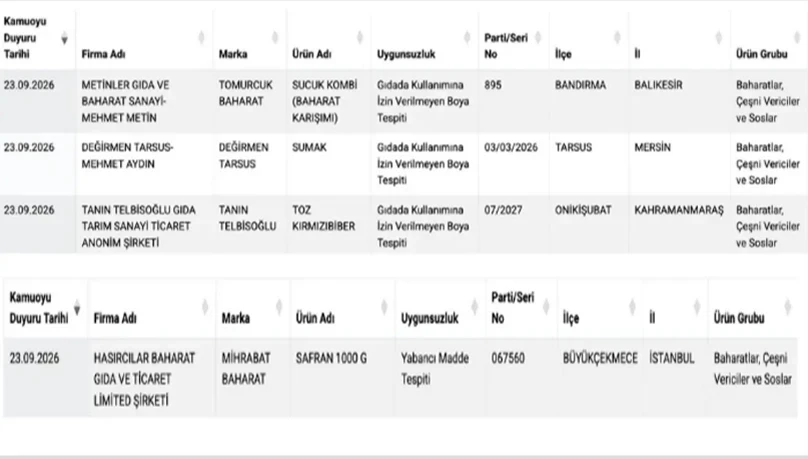
According to the newly published inspection findings released by the ministry, three distinct spice products originating from different regions of Turkey were found to contain unauthorized and prohibited dyes, posing potential risks to public health and violating food safety legislation. In addition to these colorant violations, a well-known saffron product supplied by an Istanbul-based enterprise has been officially added to the ministry’s growing list of items identified for imitation and adulteration.

The comprehensive checks, which are part of routine and unannounced monitoring programs conducted by food safety inspectors across the country, highlight ongoing compliance challenges within the supply chain. The Ministry of Agriculture and Forestry maintains that these inspections are vital for protecting consumers from misleading commercial practices and safeguarding public health against the unauthorized use of chemical additives that are strictly forbidden in food production.
Prohibited Dyes Identified in Balıkesir, Mersin, and Kahramanmaraş
The ministry’s updated control results point to specific geographical locations where regulatory breaches were uncovered during routine laboratory screening. In Balıkesir, specifically within the Bandırma district, operations involving the brand known as Tomurcuk Baharat came under scrutiny. Laboratory testing of the brand’s mixed sausage product—referred to in the administrative findings as a sausage combination item—revealed the presence of a prohibited dye that is entirely unauthorized under current food codex regulations.

A strikingly similar finding emerged in the southern province of Mersin, specifically in the Tarsus district. Officials examining products distributed under the Değirmen Tarsus brand discovered that a batch of sumac, a staple spice widely used in regional and national cuisine, contained unauthorized coloring agents. The use of such synthetic or unapproved dyes in natural spices is frequently deployed to artificially enhance the visual appeal of lower-quality or blended products, directly misleading consumers regarding the true nature and quality of what they are purchasing.
Further east, in Kahramanmaraş—a region renowned globally for its rich heritage in spice production and agriculture—another major infraction was documented. Inspections conducted in the Onikişubat district targeted the operations of the Tanın Telbisoğlu brand. Laboratory analysis of the brand’s ground red pepper confirmed the presence of prohibited dye compounds. The inclusion of such substances in ground red pepper not only violates food safety laws but also undermines the reputation of authentic regional agricultural products that rely on strict quality standards.
Istanbul-Based Saffron Added to the Adulteration Registry

While the cases in Balıkesir, Mersin, and Kahramanmaraş centered on the unauthorized application of prohibited dyes to enhance color, the ministry’s latest bulletins also highlighted issues concerning high-value culinary products subject to imitation and adulteration. A notable case emerged from Istanbul, Turkey’s largest commercial hub, involving a luxury spice frequently targeted by fraudulent operators due to its exceptionally high market value.
According to the official inspection records, a saffron product marketed under the Mihrabat brand, operating out of the Büyükçekmece district, failed compliance checks. Following comprehensive laboratory examinations, the product was officially determined to be a case of imitation and adulteration. Saffron, often referred to as "red gold," is notoriously susceptible to economic adulteration, where authentic stigmas are either mixed with inferior plant materials, substituted entirely with cheaper alternatives, or artificially treated to mimic the appearance of genuine, high-grade product.
The inclusion of the Büyükçekmece-based product in the ministry’s public disclosures underscores the persistent challenge regulatory authorities face in monitoring specialized and high-value markets. The Ministry of Agriculture and Forestry routinely updates its findings to ensure that consumers and commercial buyers are fully informed about products that fail to meet legal standards, reinforcing accountability across the entire food supply chain from local processors to metropolitan distributors.