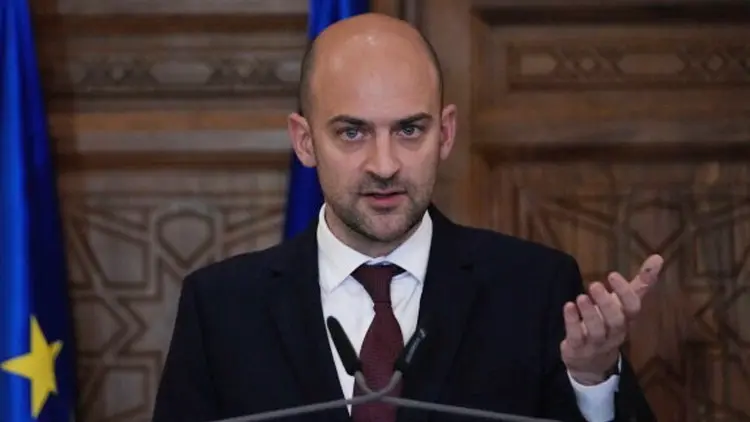
PARIS — French Foreign Minister Jean-Noël Barrot has delivered a sharply worded rebuke of the Israeli government, asserting that authorities in Tel Aviv bear direct responsibility for permitting the relentless seizure of Palestinian territory and tolerating an unprecedented wave of violence carried out by extremist settlers against Palestinian civilians across the occupied West Bank.
Speaking in a joint broadcast interview with public radio station France Inter and television channel France 2, France’s top diplomat stated unequivocally that Prime Minister Benjamin Netanyahu’s administration has exhibited a "guilty and scandalous complacency" regarding developments in the West Bank. Barrot warned that such policies violate established norms of international law while fundamentally undermining the long-term national security of Israel itself and mortgaging the broader stability of the Middle East.
The foreign minister’s remarks come amid escalating diplomatic friction between Paris and Tel Aviv, following comments made by French President Emmanuel Macron during the United Nations General Assembly in New York. Macron had questioned the justification for ongoing Israeli operations and settlement activities in the West Bank by observing that Hamas does not govern or run the territory, prompting caustic denunciations from Israeli officials who accused the French president of distorting regional realities.
Defending Macron’s United Nations Address
Addressing the fallout during his broadcast appearance, Barrot defended the French head of state, dismissing Israeli accusations and arguing that political critics in Tel Aviv had intentionally stripped the president’s words of their essential context.
"Everyone understood what the President meant," Barrot said, stressing that Macron’s core intervention was designed to draw an imperative distinction between the military campaign against Hamas following the devastating attacks of October 7 and the persistent, unchecked expansion of Israeli settlements in the West Bank.
Barrot underscored that the seizure of Palestinian land has continued unabated, accompanied by settler aggression that has reached levels never seen before in the occupied territory. The foreign minister reiterated that attempting to conflate the fight against Hamas with operations in the West Bank serves only to obfuscate the real humanitarian and legal crises unfolding on the ground.
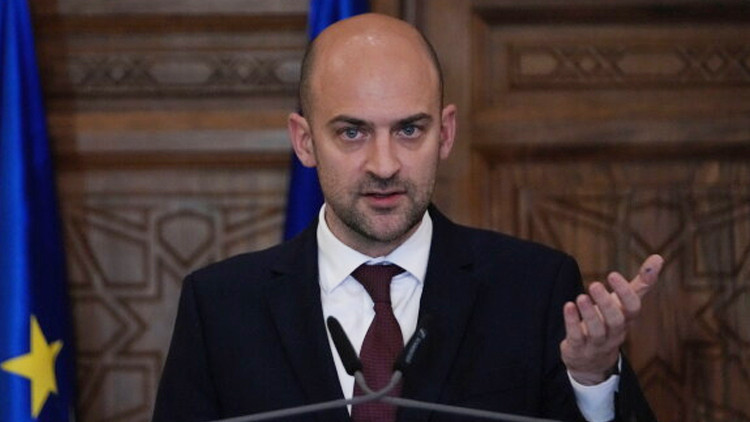
"There is a guilty and scandalous complacency on the part of the Israeli government toward what is happening in the West Bank," Barrot stated. He emphasized that the Tel Aviv government stands guilty under two distinct metrics: its blatant disregard for international legal frameworks prohibiting the annexation and settlement of occupied territories, and its failure to protect the long-term security interests of its own citizens by cultivating perpetual unrest and disenfranchisement.
‘Israel Has Mortgaged the Security of the Region’
Elaborating on the strategic ramifications of Israel’s current course, Barrot maintained that France’s position is rooted in both principled adherence to international law and a pragmatic assessment of regional stability.
"The President says that the fight against Hamas and the objective of erasing it from the future of Palestine cannot justify this policy of complacency, and he is right," Barrot told interviewers.
During the broadcast, journalists repeatedly pressed the foreign minister to provide a categorical "yes" or "no" answer to whether Hamas maintains an operational presence within the West Bank. Barrot avoided a binary response, choosing instead to focus on the strategic outcomes of Israeli state policy.
"The President’s argument is clear: the Israeli government’s policy does not ensure the weakening of Hamas, neither in Gaza nor in the West Bank," Barrot stated. Rather than diminishing militant influence or securing durable peace, he argued, the hardline posture championed by Israeli leadership has had the opposite effect, leaving the entire area precarious and vulnerable.
Barrot warned that the Netanyahu administration’s ongoing tolerance of extremist actions has actively "mortgaged" the future security of the region and imperiled the Israeli public. He added that certain Israeli political figures "do not hesitate to take a single sentence out of context to criticize France’s stance," making clear that Paris remains firm in maintaining an independent foreign policy that diverges sharply from the ideological directives of the current governing coalition in Tel Aviv.
The Diplomatic Clash Over the West Bank
The exchange marks one of the most direct public confrontations between French and Israeli officials in recent months. The controversy ignited following Macron’s address on September 22 before world leaders assembled at the United Nations General Assembly in New York.

In that address, Macron characterized the devastating devastation and civilian suffering in the Gaza Strip as an intolerable sight that ought to bring collective shame to the international community. Turning his attention to the occupied West Bank, the French president questioned the underlying rationale of Israeli military incursions and settler violence in an area governed under the framework of the Palestinian Authority.
"Look at what is happening in the West Bank, where violations occur every day; in the name of what are they carried out? Hamas has never operated in the West Bank," Macron had declared from the UN podium.
The reaction from Israeli leadership was swift and vitriolic. The Israeli Prime Minister’s Office issued an official statement harshly condemning Macron’s remarks, describing the French president’s assertions as "insolent nonsense." Israeli officials insisted that Hamas maintains clandestine networks, cells, and armed elements throughout the West Bank that regularly orchestrate attacks targeting Israeli civilians and security personnel, claiming Macron’s statements ignored the security threats confronting Israeli citizens daily.
Despite Tel Aviv’s pushback, French diplomats have pointed out that the structural control, governance, and institutional apparatus of the West Bank remain under the internationally recognized Palestinian Authority, which has long been at direct political and ideological odds with Hamas. By ignoring these structural realities and permitting extremist settler factions to displace Palestinian communities, French officials contend, the Israeli government is dismantling the foundational prospects for a negotiated two-state solution.
Growing Threats of Hybrid Warfare and European Security
Beyond the Middle East, Barrot used the joint broadcast to address pressing national defense challenges facing France and its European partners, specifically the expanding shadow of Russian aggression and asymmetric warfare.
Asked whether French intelligence and security agencies are actively preparing for the possibility of Russian unmanned aerial vehicles (UAVs) targeting French civilian airports or critical infrastructure such as nuclear power stations, Barrot acknowledged the reality of the danger.
"This is among the possibilities," Barrot confirmed.

The foreign minister explained that French authorities have been quietly preparing contingency responses against such contingencies for an extended period, noting that asymmetric disruptions have become a regular feature of contemporary European defense planning.
"These hostile acts are not new," Barrot remarked. "What we are observing is that these hostile actions have shown a marked upward trend in recent weeks and months."
Barrot highlighted that since the onset of Russia’s full-scale invasion of Ukraine, aggressive actions directed by Moscow against European nations, including France, have effectively doubled. He detailed how this sustained campaign manifests across multiple domains, ranging from state-sponsored disinformation initiatives designed to polarize Western societies and sophisticated cyber warfare targeting public utilities, to covert physical sabotage operations against transport and energy infrastructure.
By connecting the proliferation of hybrid threats in Europe with escalating conflicts in the Middle East, Barrot underscored the increasingly volatile and interconnected nature of global security. France, he reiterated, remains committed to defending international legal norms, holding state actors accountable for domestic and extraterritorial violations, and fortifying its critical national assets against hostile interference.