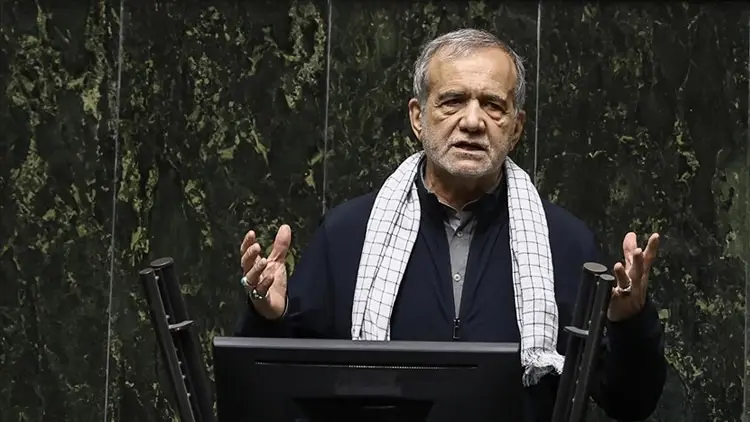
Iranian President Masoud Pezeshkian has formally announced that Iran is ready to participate in the emerging multilateral initiative known as the Mecca Alliance, a trilateral pact established between Turkey, Saudi Arabia, and Pakistan. Addressing the development in an interview with international broadcaster Al Jazeera, Pezeshkian called upon the broader Muslim world to set aside historic rivalries and ethnic divisions in favor of institutionalized cooperation, solidarity, and shared security objectives.
The Iranian president’s remarks represent a notable diplomatic overture at a juncture when regional security, geopolitical realignment, and multilateral defense frameworks dominate deliberations across West and South Asia. Speaking on the consensus reached between Ankara, Riyadh, and Islamabad, Pezeshkian emphasized that fostering cohesive bonds among Islamic nations is not merely advantageous, but essential to confronting long-standing regional vulnerabilities and external pressures.
"Muslims Must Unite"
Assessing the significance of the trilateral agreement, Pezeshkian described the formation of the Mecca Alliance as a constructive diplomatic endeavor capable of strengthening operational and diplomatic bonds among Muslim-majority countries.
"This is an important step," Pezeshkian said during the interview. "Muslims must unite. We are ready to take part in this process."
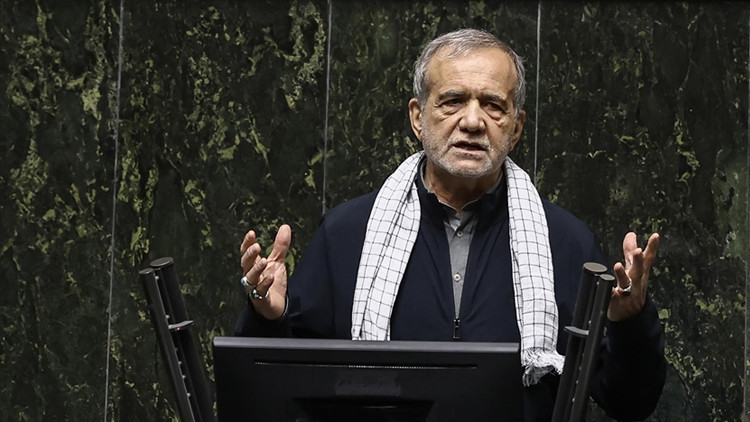
The Iranian head of state clarified that Tehran has not yet been apprised of the fine print, organizational parameters, or technical frameworks that govern the agreement. He noted that the specific commitments, binding clauses, and concrete resolutions undertaken by Turkey, Saudi Arabia, and Pakistan remain to be fully reviewed by Iranian officials. Despite the absence of finalized administrative data, Pezeshkian made clear that the conceptual foundation of the alliance aligns with his administration’s stated foreign policy posture of regional outreach and Islamic cohesion.
While Pezeshkian refrained from detailing the formal mechanisms or institutional procedures through which the Islamic Republic could integrate into the partnership, he reaffirmed Tehran’s principled political backing for the initiative. The willingness to engage with an arrangement originally conceived by three key regional powers—spanning NATO-member Turkey, Gulf heavyweight Saudi Arabia, and nuclear-armed Pakistan—underscores a diplomatic willingness to transcend traditional strategic fault lines.
"Divisions Must Come to an End"
A central pillar of the Iranian president’s discourse was the critical necessity of dismantling domestic and transnational polarization among Muslim states. Pezeshkian contended that historical divisions, nationalistic rivalries, and competing geopolitical agendas have historically compromised regional stability, leaving Islamic nations susceptible to internal friction and external manipulation.
National, linguistic, and ethnic distinctions, the president argued, should never serve as insurmountable barriers to political and security partnership. Instead, shared spiritual identity and common strategic challenges must form the bedrock of interstate relations across the Middle East and surrounding regions.
"If Muslims come together, we must first and foremost understand that divisions founded upon Arab, Turkish, and Iranian identities will, in this sense, cease to exist," Pezeshkian stated, underscoring that ethnic identity ought not to be weaponized as a tool of interstate friction.

Highlighting the universal tenets of common faith as a unifying factor, the president drew upon religious scripture and spiritual heritage to articulate his message of inclusivity and collective purpose.
"We are Muslims," Pezeshkian remarked. "We were created from a single man and a single woman, and we were dispersed into distinct nations and tribes. In the eyes of God, what is of profound importance is righteousness and giving thanks, not whether one is an Arab, a Turk, or a Persian."
Pezeshkian’s references to the shared origin and equal standing of all Muslim communities served as a philosophical rejection of narrow ethno-nationalism, which has often strained relations between Persian-majority Iran and neighboring Arab states or Turkic nations. By addressing Arab, Turkish, and Persian identities explicitly, the Iranian president sought to challenge the narrative of inherent, irreconcilable regional sectarianism that has frequently defined diplomatic relations over recent decades.
Iran Calls for Cohesion Across the Islamic World
Expanding upon the broader geopolitical outlook, Pezeshkian stated that sovereign Muslim states must systematically pivot away from unproductive competition, ideological polarization, and armed confrontation, redirecting their national energies toward cooperative ventures and collective security architecture.
The Iranian leadership views the Mecca Alliance as a potentially viable mechanism through which historical animosities across the Islamic world can be actively mitigated. By engaging collectively, member states could coordinate on mutual challenges, streamline regional diplomacy, and present a cohesive front in international affairs. Rather than cultivating zero-sum dynamics, Pezeshkian argued that regional agreements should operate as expansive platforms designed to harmonize defense considerations, stabilize volatile border regions, and promote sustainable economic ties.

The timing of Tehran’s supportive overture is particularly significant. Discussions regarding regional security cooperation, maritime safety, counter-terrorism measures, and the stabilization of flashpoints across the Middle East and South Asia have acquired heightened urgency among major regional capitals. As multilateral diplomacy gains traction, the emergence of the Mecca Alliance reflects an effort by Ankara, Riyadh, and Islamabad to establish an autonomous axis capable of addressing indigenous security challenges without perpetual reliance on external guarantees.
Nevertheless, substantial institutional questions surround the prospect of Iranian accession. The technical requirements, mutual obligations, and operational boundaries of the Mecca Alliance remain confined to its founding triumvirate. Official communiqués have not yet laid out whether the agreement functions primarily as a defensive mutual-assistance pact, a consultation framework, or an economic and security coordination forum.
Consequently, the conditions under which Iran could realistically be incorporated into the framework—alongside the structural provisions required to accommodate Tehran’s distinct security architecture alongside the defense commitments of Turkey, Saudi Arabia, and Pakistan—remain undefined. Neither the founding members nor Tehran have provided comprehensive documentation regarding the roadmap for potential expansion.
Even so, President Pezeshkian’s public declarations signal that Tehran desires an active seat at the table of emerging regional diplomacy, framing the Mecca Alliance not as an exclusive bloc, but as a prospective foundation for pan-Islamic political cooperation.