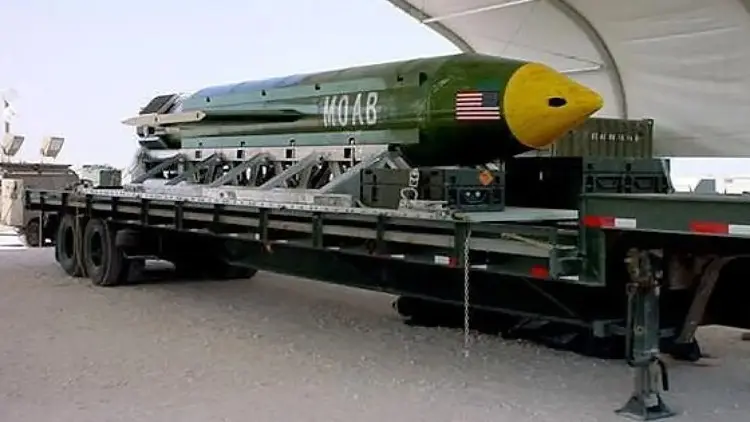
WASHINGTON — The White House is actively reviewing operational military plans that could target Iran’s critical energy and nuclear infrastructure in the event of renewed hostilities, with discussions encompassing the potential deployment of the GBU-43/B Massive Ordnance Air Blast (MOAB)—the most powerful conventional munition in the United States military arsenal.
According to reporting by CNN International, military planners are formulating updated target profiles at the direction of the administration as President Donald Trump considers whether to authorize fresh rounds of strikes against Tehran. The high-level deliberations come amid sensitive political timing surrounding upcoming congressional elections and reflect an ongoing search within the administration for an operational off-ramp that can be characterized publicly as a decisive success.
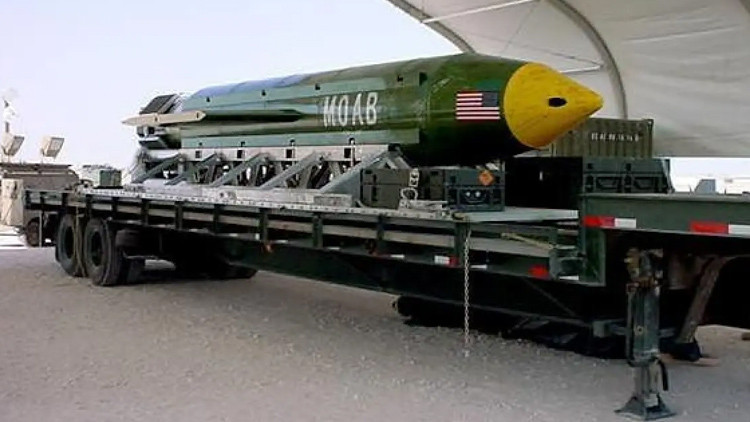
The tactical options on the table include both conventional precision-guided strikes against vital energy grids and specialized strikes aimed at Tehran’s dispersed nuclear architecture. Among the potential armaments under review is the MOAB, an 11-ton, GPS-guided conventional bomb commonly referred to as the "Mother of All Bombs," designed to detonate above ground to generate catastrophic atmospheric overpressure across wide geographic areas.
Military experts and administration insiders remain divided over whether utilizing the massive weapon would meaningfully alter the broader strategic calculus with Tehran or deliver the decisive breakthrough that the White House is seeking. While the deployment of such a heavy munition would represent an unprecedented escalation in the history of U.S.-Iranian confrontation, deep operational questions persist regarding its actual effectiveness against heavily fortified subterranean facilities.
The Search for a "Symbolic Victory" in Washington
The internal momentum behind the expanded targeting packages has been driven in large part by political and strategic dynamics inside the West Wing. According to sources familiar with the discussions, President Trump has repeatedly resisted calls from some advisers to declare the current military phase finished and initiate a full withdrawal of American personnel from regional operational theaters. The president has privately voiced concerns that withdrawing forces without an unmistakable, demonstrable triumph would project vulnerability and invite accusations of strategic retreat.
For weeks, high-ranking White House aides and national security officials have wrestled with the dilemma of designing an exit framework that Trump can present to the American electorate as an unambiguous victory. As military leadership plans for upcoming force adjustments, Pentagon planners have been tasked with identifying strike concepts capable of delivering a potent "symbolic victory"—a blow dramatic enough to establish dominance and justify bringing American servicemembers home without provoking an unmanageable, protracted war.
The operational timing remains closely linked to the schedule of American troop deployments across the Middle East. A source familiar with force management plans indicated that a scheduled rotation of U.S. forces is slated to proceed over the coming weeks. Under current scenarios being weighed by defense planners, departing military units might not be fully backfilled with replacement personnel, quietly reducing the U.S. operational footprint in the region if a suitable political resolution or military milestone is achieved beforehand.
A White House official reiterated that the administration’s baseline posture toward Tehran’s strategic capabilities remains uncompromising. "President Trump keeps all options on the table to ensure Iran never acquires a nuclear weapon," the official stated, framing the current contingency planning as a direct extension of the administration’s broader deterrence posture.
When asked about the prospective strike options, a Pentagon official acknowledged to CNN that standard military planning protocols necessarily encompass a wide spectrum of potential combat scenarios, emphasizing that the armed forces routinely maintain and update actionable target lists to provide the commander-in-chief with maximum flexibility.
"Mother of All Bombs" Option on the Table
The prospect of utilizing the MOAB has gained traction as administration officials look for options that would produce maximum psychological and physical resonance. According to an informed source, the White House directed military leadership to devise new strike packages specifically tailored to degrade Iran’s industrial energy capacity and pressure its leadership into capitulation.
Officials discussing the plans noted that authorizing strikes with the weapon could occur in the immediate window preceding any formal drawdowns or troop reallocations. Proponents within the planning teams have suggested that a single, devastating demonstration of force against high-profile strategic assets would allow the White House to declare mission accomplishment, assert deterrence over Tehran, and proceed with subsequent troop withdrawals from a position of proclaimed strength.
A defense official familiar with the logistical assessments pointed out that the physical scale and hardness of the potential targets in Iran would inevitably demand larger ordnance than the precision-guided munitions typically utilized in limited air campaigns. The GBU-43/B stands as the largest conventional weapon available to operational commanders, making its inclusion in high-intensity strike packages an inevitable subject of internal review.

Nevertheless, seasoned defense strategists within the Pentagon have urged caution, warning that the symbolic weight of dropping the largest non-nuclear bomb in the American inventory may not align cleanly with practical military objectives. While the blast would send an unmistakable geopolitical signal, military sources acknowledge high uncertainty over whether such an operation would truly force Tehran to abandon its strategic ambitions or instead trigger retaliatory escalations that prevent any orderly American departure.
Can It Destroy Underground Nuclear Sites?
Beyond the political considerations, defense planners confront significant technical hurdles regarding the munition’s physical capabilities against Iran’s hardened infrastructure. There are pervasive doubts among weapons specialists as to whether the MOAB is structurally capable of neutralizing deep subterranean installations.
The weapon relies on a satellite-linked global positioning system to deliver its massive payload with extreme accuracy, creating a cataclysmic blast radius that demolishes surface structures, light vehicles, and personnel over wide areas. However, key components of Iran’s nuclear program are buried dozens of meters beneath heavily reinforced terrain. Intelligence assessments have long highlighted critical facilities carved deep into mountainous geography, including heavily reinforced subterranean complexes situated beneath thick granite layers in locations such as the Kazma Mountain region.
A source familiar with current military targeting assessments regarding Iran emphasized that the weapon’s physical design makes it fundamentally ill-suited for deep-penetration missions:
"MOAB is a large-scale weapon that is fantastic for clearing wide open areas, but beyond that, it doesn’t do very much. It was never engineered as a deep-penetrating warhead."
Because the weapon is configured as an airblast munition designed to detonate slightly above ground level to maximize its horizontal shockwave, its kinetic energy dissipates outward rather than driving downward through solid rock and reinforced concrete. While a detonation above a subterranean complex would devastate surface support infrastructure, access roads, ventilation shafts, and perimeter security networks, the subterranean halls and heavily fortified centrifuge cascades deep underground would likely remain structurally intact.

Consequently, defense officials concede that any operational deployment of the bomb against deep nuclear sites would primarily serve as an instrument of psychological warfare. The blast is capable of producing an enormous fireball, deafening sonic overpressure, and visible devastation across miles of surface terrain, creating a powerful theatrical effect intended to shake the resolve of Iranian leadership, even if the primary underground assets survive the strike.
Previous Combat Deployment in Afghanistan
The GBU-43/B was initially developed in the early 2000s during the run-up to the Iraq War, conceived as an evolution of older airburst munitions intended to clear helicopter landing zones and suppress large troop formations. During its comprehensive testing phases at Eglin Air Force Base in Florida in 2003, defense officials emphasized the munition’s psychological dimension, noting that the overwhelming blast overpressure and towering mushroom-like plume were explicitly intended to shatter enemy morale, inducing opposing forces to surrender rather than face continuation of the bombardment.
Historically, the munition was prioritized for engagements against dispersed troop concentrations, logistics staging yards, and semi-hardened above-ground installations. Over time, its operational parameters were cautiously expanded to include shallow cave networks, trenches, and non-reinforced tunnel mouths where the concussive pressure wave could travel into subterranean openings.
Despite being maintained in the U.S. arsenal for well over a decade, the weapon was never utilized in combat until President Trump authorized its inaugural operational deployment in 2017 during his first presidential term. That strike targeted a sprawling subterranean stronghold belonging to ISIS militants in the Achin district of Nangarhar Province in eastern Afghanistan.
In that engagement, the munition was deployed against an intricate complex of reinforced tunnels, caves, and minefields that had stymied conventional ground advances. Afghan and American military assessments following the operation reported that the strike killed 36 ISIS fighters, collapsed three major underground tunnel entrances, demolished secondary weapon caches, and did so without producing verified civilian casualties.
The successful 2017 strike established an operational precedent for employing the weapon against unconventional defensive networks. However, military analysts note that the improvised, relatively shallow cave complexes targeted in rural Afghanistan bear little resemblance to the deeply buried, industrial-grade granite fortifications safeguarding Iran’s modern nuclear and energy infrastructure. As planners at the Pentagon and White House continue to refine their contingency options, the debate over whether the MOAB represents a genuine tactical solution or merely an optical victory remains at the center of Washington’s regional strategy.