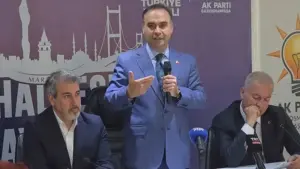
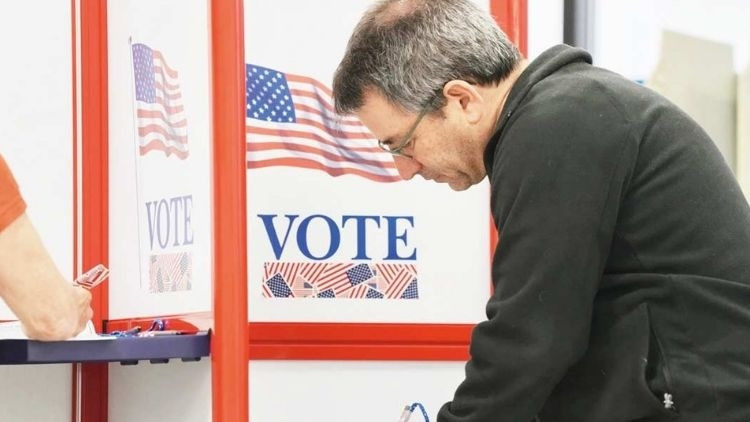
With just 17 days remaining before the pivotal November 3 midterm elections, the Republican Party faces an increasingly daunting political landscape as Democratic candidates mount aggressive challenges across traditional conservative territory. Across the United States, voters are preparing to cast ballots for hundreds of congressional seats, gubernatorial offices, and down-ballot state administrations, with early voting operations already underway in multiple jurisdictions.
Faced with mounting pressure on conservative strongholds, President Donald Trump has embarked on an intensive campaign schedule, holding back-to-back rallies in reliable Republican territory to energize the party’s core electorate. Urging his supporters to turn out in overwhelming numbers, Trump has framed the congressional midterm vote as a direct referendum on his own leadership, repeatedly telling audiences to approach the ballot box as if his name were printed directly on the ticket.
Yet despite high-profile presidential visits and concentrated grassroots outreach, Democratic contenders are registering unprecedented momentum in areas long regarded as impregnable conservative bastions. Nowhere is this dynamic more visible than in Texas, the cornerstone of the modern Republican electoral coalition. The Democratic Party has not secured a statewide office in Texas in 32 years, enduring more than three decades of uninterrupted Republican dominance across state government and federal representation.
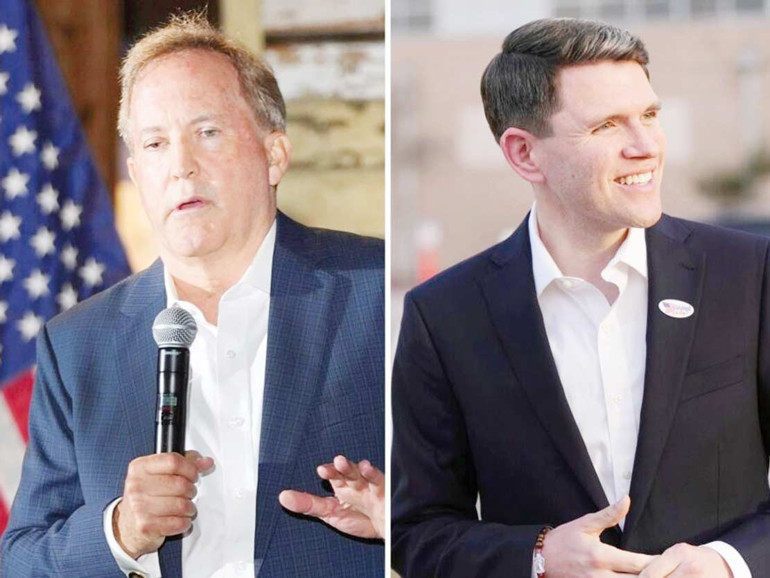
That historical trend, however, is facing an unprecedented test. A newly released poll conducted by the University of Texas indicates that the statewide contest has flipped in favor of the Democratic challenger. According to the survey, Democratic candidate James Talarico leads the race with 50 percent voter backing, opening a three-point advantage over his Republican rival, Ken Paxton, who garnered 47 percent support. The emergence of a Democratic lead inside Texas has sent shockwaves through both national parties, fundamentally altering campaign calculations in the closing weeks of the election season.
The Half-Billion-Dollar Battleground
The shift in Texas voter sentiment reflects a widening demographic and geographic realignment within the state’s rapidly evolving electorate. Demographic breakdowns from the University of Texas survey highlight sharp fault lines between the two coalitions. Talarico’s competitive advantage relies heavily on substantial backing from female voters, Latino communities, and residents concentrated in major metropolitan cores and rapidly growing suburban corridors. Conversely, Paxton’s core base of support remains anchored among male voters and rural populations across the state’s vast interior counties.
This demographic tug-of-war has transformed the Texas contest into one of the most financially staggering political showdowns in modern electoral history. According to data reported by The New York Times, combined advertising expenditures between the two rival campaigns have already eclipsed the $500 million threshold. Political analysts note that if ad spending continues along its current trajectory through the final stretch of campaigning, the confrontation between Talarico and Paxton could become the single most expensive non-presidential race ever waged in the United States.

The extraordinary deluge of commercial messaging across television, streaming, and digital platforms underscores how critical Texas has become to the national balance of power. While Republicans are forced to expend vast sums simply defending territory they historically took for granted, Democrats are leveraging their expansive financial base to mount statewide ground games that were once considered cost-prohibitive in such an expansive media market.
A Massive Disparity in Campaign Contributions
The financial records filed for the decisive third-quarter campaign period reveal a stark fundraising disparity between Democratic and Republican candidates across several critical battleground states. According to campaign finance metrics compiled by Axios, Democratic operations built a formidable cash advantage between July and September, significantly outraising their Republican counterparts in states that will dictate control of the federal legislature.
In Texas, the fundraising gap proved historic. During the July-to-September filing quarter, Talarico collected an unprecedented $64 million in political contributions. Paxton, by comparison, took in $18 million over the same three-month window. The Democratic campaign’s ability to nearly quadruple its opponent’s quarterly haul provided Talarico with an overwhelming resource advantage, financing sustained outreach across the state’s expensive media markets.

A similar pattern emerged in Georgia, a perennial swing state that has played a defining role in determining control of the federal legislature in recent election cycles. Incumbent Democratic Senator Jon Ossoff reported a massive quarterly haul of $33.1 million. His Republican challenger, Representative Mike Collins, managed to collect $2.8 million over the corresponding period, leaving the Republican challenger operating at a pronounced financial disadvantage in one of the country’s premier battlegrounds.
In Michigan, Democratic candidate Abdul El-Sayed—who would make history as the first Muslim member to serve in the United States Senate if elected—demonstrated comparable fundraising strength. Campaign disclosures indicate El-Sayed raised $30.7 million during the third quarter, considerably outpacing his Republican opponent, former Representative Mike Rogers, who brought in $9.7 million. These pronounced imbalances in direct candidate fundraising have forced Republican leadership to make difficult strategic decisions regarding where to direct limited national party resources in the race to secure congressional majorities.
Internal Maneuvering and Blame-Shifting in the House
The growing prospect of midterm setbacks has ignited internal positioning and strategic rivalries within the Republican conference on Capitol Hill. Foreseeing potential changes in the balance of power, senior lawmakers have already begun preparing for post-election leadership contests.

House Judiciary Committee Chairman Jim Jordan is reportedly laying the groundwork to mount a bid for the Speakership should Republicans lose their majority in the House of Representatives, positioning himself to direct the party’s congressional strategy in a divided legislature. As part of this wider effort, Jordan has maintained a relentless national schedule, traveling to 33 states to campaign alongside Republican candidates. In the process, the influential conservative lawmaker has focused on mending fences and strengthening political ties with colleagues who had previously opposed his bids for party leadership.
Despite Jordan’s active maneuvering across the country, current Speaker Mike Johnson, who has cultivated and maintained close ties with Donald Trump, is not expected to step aside quietly. Johnson’s supporters emphasize his loyalty to the party’s standard-bearer and his role in navigating the House through successive legislative deadlines, ensuring that any post-election conference showdown will carry substantial internal friction.
Meanwhile, Trump has already taken steps to pre-assign responsibility in the event of high-profile defeats on election night. In a recent statement shared on social media, the president publicly designated his primary scapegoats should Republicans fall short in Texas. Trump warned that if Paxton loses the race to Talarico, he will hold veteran Republican Senator John Cornyn and seasoned party strategist Karl Rove personally responsible for the defeat, underscoring the deep ideological divisions and finger-pointing simmering beneath the surface of the party’s midterm campaign.
Political Winds Shift Toward Eisenkot in Israel
As American campaigns navigate their final fortnight before the vote, voters in Israel are likewise preparing for a high-stakes national election scheduled for October 27, with incumbent Prime Minister Benjamin Netanyahu facing severe political headwinds.
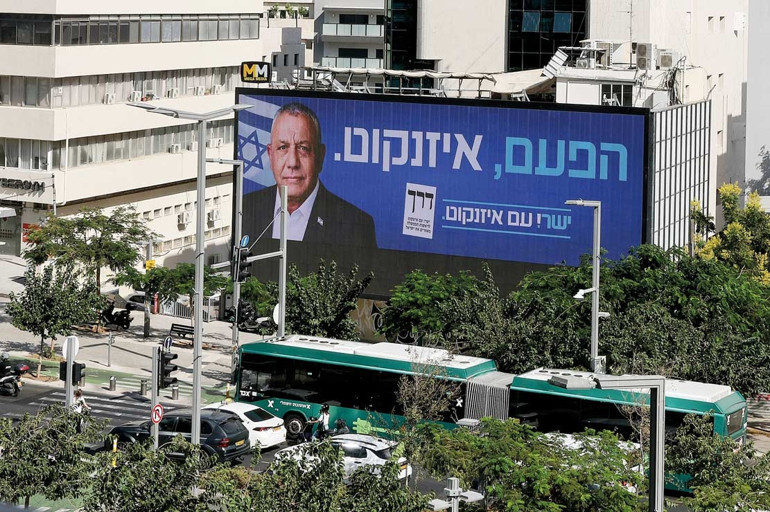
A comprehensive survey conducted by the Maariv newspaper in collaboration with the Lazar Research institute and Panel4ALL shows Netanyahu’s ruling Likud Party losing its position as the largest single faction in the Knesset. According to the poll, Likud has dropped to 18 parliamentary seats. In contrast, the Yashar Party, led by former military chief of staff Gadi Eisenkot, has vaulted into first place, capturing a projected 21 seats.
The survey also indicates that Eisenkot has overtaken Netanyahu in direct head-to-head prime ministerial preference ratings. Asked who is better suited to lead the country, 48 percent of respondents selected Eisenkot, compared to 41 percent who favored Netanyahu.
Despite the shift at the top of the ballot, the broader parliamentary landscape remains deeply polarized and structurally deadlocked. The poll projects that Netanyahu’s right-wing ruling bloc and the opposition coalition are locked in an exact tie, with each side holding 51 seats in the 120-member Knesset. Under this distribution, neither political camp commands the necessary 61-seat threshold required to assemble a functional governing majority on its own.
Israeli Electorate Leans Toward National Unity
With the threat of protracted political paralysis looming over the country, Israeli voters have displayed an overwhelming aversion to repeated election cycles. The Maariv poll revealed that if election day yields an inconclusive result that prevents the immediate formation of a governing coalition, 55 percent of Israelis prefer the establishment of a national unity government rather than plunging the nation into another round of snap parliamentary elections.
An electorate of approximately 7.3 million eligible voters will be called to the polls when voting stations open across the country on October 27 at 07:00 local time. Balloting will remain open until 22:00, giving citizens fifteen hours to cast their votes. A total of 38 political parties and electoral lists have registered to contest the election, each seeking to clear the national electoral threshold of 3.25 percent to secure representation in the next Knesset and participate in the critical coalition negotiations that will follow.