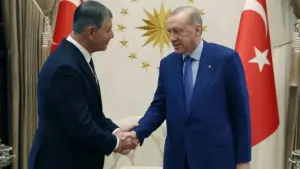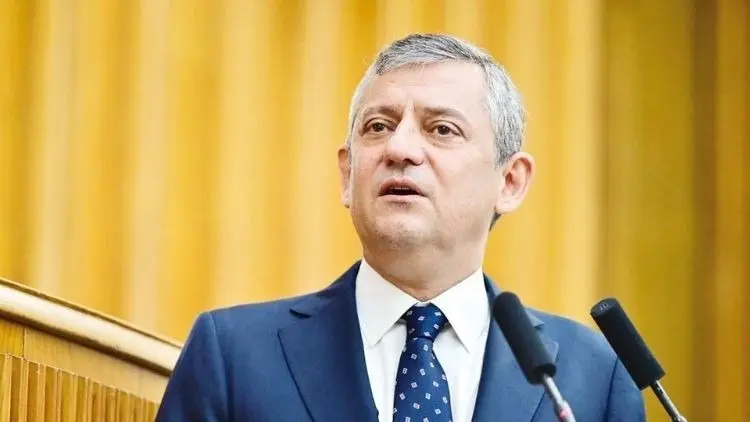
SILIVRI – In a move that has sent shockwaves through the Turkish political landscape, Özgür Özel, the Chairman of the Yeni Parti, has proposed a radical shift in the judicial handling of the ongoing Istanbul Metropolitan Municipality (IBB) case. Speaking from Silivri, where he has been closely monitoring the proceedings against IBB President Ekrem İmamoğlu, Özel called for the implementation of a citizen-led jury system to ensure transparency and public trust in a trial that many observers view as a defining moment for Turkish democracy.
The proposal was the centerpiece of a wide-ranging set of evaluations Özel shared during a live broadcast on NOW TV on the morning of October 17, 2026. Throughout his appearance, the Yeni Parti leader touched upon several critical issues, ranging from the tragic loss of a political colleague to allegations of financial corruption and constitutional maneuvers regarding potential early elections.
A Radical Proposal for Judicial Transparency: The 100-Person Jury
The most striking aspect of Özel’s address was his direct challenge to the current judicial process governing the case against Ekrem İmamoğlu. For over a year and a half, the IBB President has faced a barrage of allegations, yet Özel argued that the prosecution has failed to produce any substantive new evidence to support its claims.
"For eighteen months, numerous allegations have been leveled against Ekrem İmamoğlu," Özel stated. "However, during the defense phase, President Ekrem has consistently provided answers backed by documents and concrete evidence. Meanwhile, what is the prosecution doing? They stand in opposition, yet they fail to present a single piece of new evidence. This is no longer just a legal matter; it is a matter of public conscience."
To resolve the impasse and restore faith in the legal system, Özel proposed an unprecedented measure: "My desire is this: Let 100 people from Istanbul, who are over the age of 18 and hold the right to vote, be determined by a lottery to sit as a jury. Let the prosecutor explain the indictment, and let President Ekrem make his defense. If, as a result of the evaluation by these citizens, it is concluded that he is guilty, I am prepared to accept it. We are not involved in any business for which we cannot give an account."
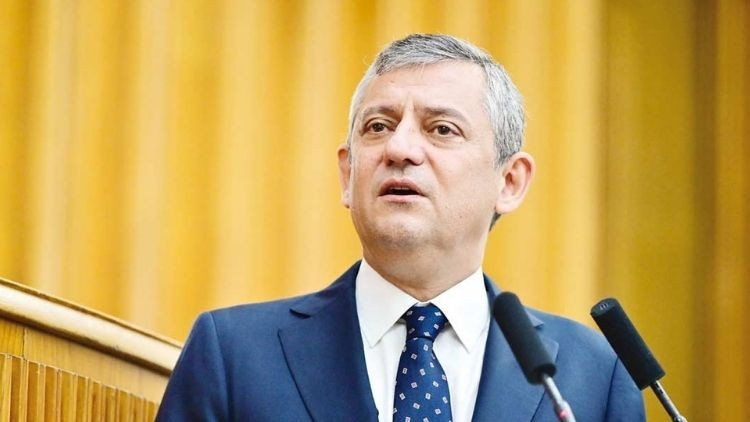
Özel’s proposal highlights a growing frustration within the opposition regarding the perceived politicization of the judiciary. By suggesting a jury of randomly selected citizens, he aims to shift the "verdict" from a closed legal circle to the very people whose mandate the trial seeks to challenge. He further noted the timing of recent administrative actions, pointing out that a trustee was appointed to a major media outlet just three hours before the defense was scheduled to begin, a move he characterized as an attempt to stifle the defense’s reach.
Honoring a Fallen Colleague: The Passing of Dündar Gültekin
Amidst the high-stakes political maneuvering, Özel took a moment to reflect on a personal and professional tragedy that has struck the political community. He expressed deep sorrow over the death of Dündar Gültekin, the Deputy Mayor of Üsküdar, who lost his life in a traffic accident.
The tragedy was particularly poignant for Özel, who noted that Gültekin was not only a political ally but also a professional peer. "On one hand, we are in the rush and competition of politics, and on the other, we face the harsh reality of loss," Özel said. "Dündar Bey was my colleague, a pharmacist, who lost his life while trying to reach the Turkish Municipalities Union elections. A fire has fallen into the heart of a family. This loss reminds us of the human cost and the dedication of those serving the public."
The IBB Case: A Struggle for the "Voice of the Nation"
Returning to the significance of the Silivri trials, Özel emphasized that his presence at the courthouse for the past three days was about much more than supporting a single individual. He framed the defense of Ekrem İmamoğlu as a defense of the collective will of the Turkish electorate.
"When I say I will make Ekrem President’s voice heard in Turkey, I am not just talking about making the voice of a fellow traveler or a mayor heard," Özel explained. "I am talking about the voice of the nation. The people want to change the government, and they go to the ballot box for this purpose. The voice being suppressed today is the people’s right to vote freely. We are here to ensure that the mandate given by millions is not overturned by judicial engineering."
Allegations of Corruption and the "Safe House" Terminology
In a joint press conference held in Silivri alongside IYI Party Chairman Müsavat Dervişoğlu, Özel drew a sharp contrast between the integrity of the IBB administration and the recent scandals involving government-appointed trustees. He specifically referenced allegations surrounding the Esenyurt municipality, where a trustee was recently appointed.

"On one side, we have those who do not stoop to a single penny and who serve Istanbul, yet face slander," Özel remarked. "On the other side, we have those from whose trustee-appointed homes in Esenyurt millions of Euros are being recovered. We have been introduced to a new terminology: the ‘kasa ev’ (safe house). While they try to manufacture crimes against our mayors, actual hoards of cash are being discovered in the residences of their own appointees."
Özel’s use of the term "kasa ev" suggests a new front in the opposition’s critique of the government’s "trustee" policy, framing it not as a security measure but as a cover for financial impropriety. He demanded that the government account for these findings rather than focusing on "fictional" cases against elected officials.
Challenging Mehmet Uçum on Election Dates and "Secret Agreements"
The Yeni Parti leader also turned his attention to recent statements made by Presidential Advisor Mehmet Uçum regarding the timing of future elections. Özel criticized Uçum for suggesting that an election date has already been "clarified," noting that such a declaration ignores the constitutional requirements for calling an early election.
"Mehmet Uçum can say an election is possible or that he expects a date," Özel said. "But to say ‘the date has been clarified’ is something else entirely. We have a constitution. The conditions for bringing elections forward are clear: it requires the vote of 360 deputies in Parliament. As the Yeni Parti, we have 91 deputies, and we are not part of this calculation. So, does Mehmet Uçum know who will provide the rest of those votes?"
Özel went further, questioning whether the government had entered into clandestine negotiations to bypass the opposition’s stance. "Has a secret agreement been made with the DEM Party? Or is it thought that those brought to the CHP management through ‘butlan’ (nullity) decisions will act together with the government in Parliament? They should explain this so the nation knows who to hold accountable. This is not to say the DEM Party has made such a deal, but Uçum’s words require an explanation. Either they must say he exceeded his authority, or they must reveal what secret agreements they are aware of. To ignore the will of Parliament and see deputies as ‘in the pocket’ is unacceptable."
Demanding Transparency in the "Fund" Investigation
Finally, Özel addressed the ongoing investigations into various financial funds that have dominated headlines, alleging that lists of names involved in these scandals are circulating behind the scenes. He placed the burden of proof squarely on the ruling AKP government to clarify which of its members might be implicated.

"Lists are circulating with the names of many people, but not all of them have been verified," Özel cautioned. "We are not announcing names we cannot confirm because we do not want people to be unfairly accused due to name similarities or misinformation. However, the questions in the public mind must be answered. The obligation to explain the list, which is alleged to contain names of AKP members, lies with the government."
He concluded his remarks by calling for a full parliamentary inquiry into the disappearance of citizen funds and the failure of regulatory oversight. "Everyone needs to know who performed these transactions, who failed in their duty of supervision, and how the citizens’ money vanished. The perpetrators of this incident must come to Parliament and give an account."
As the proceedings in Silivri continue, Özel’s rhetoric signals an intensifying political struggle. By framing the legal battles as a "war" for the survival of the country’s democratic institutions, he has made it clear that the Yeni Parti intends to contest the government’s narrative on every front—from the courtroom to the constitutional assembly. "We will either save this country or we will all lose together," he stated. "There is no second option."