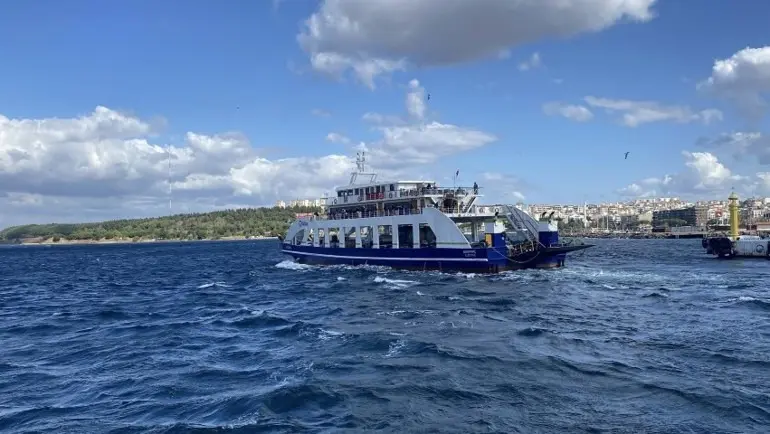
A powerful storm sweeping across the northern Aegean Sea has disrupted regional maritime transport, prompting official authorities to suspend key ferry operations connecting mainland Turkey to its primary Aegean islands. GESTAŞ, the primary maritime transport authority responsible for operations across the Çanakkale Strait and adjacent island routes, announced that all scheduled ferry trips between Kabatepe and Gökçeada, as well as those between Geyikli and Bozcaada, have been canceled for tomorrow due to severe weather conditions and hazardous open-sea swells.
The decision was taken following regional meteorological warnings of high-velocity winds capable of generating dangerous sea conditions in the northern Aegean basin. In an official bulletin regarding the regional transport network, GESTAŞ confirmed that safety protocols necessitated a total temporary shutdown of both vital island connections. The precautionary measure covers both passenger and vehicle transport services on the affected routes, effectively isolating the islands from mainland vehicle crossings until wind and sea conditions subside to acceptable operational levels.
Severe Weather Conditions Halt Northern Aegean Maritime Transport
The northern Aegean basin is known for experiencing rapid and intense shifts in weather patterns, particularly during transitional seasonal periods when regional atmospheric pressure differences trigger sustained gales. The current weather disruption, which has taken hold across the coastal waters of Çanakkale province, features high-velocity wind gusts that generate steep waves and churned waters within the sea channels separating the mainland peninsula from the offshore islands.
GESTAŞ, which manages passenger and car ferry lines throughout the Çanakkale Strait (Dardanelles) and the surrounding northern Aegean sea corridors, continuously monitors weather advisories issued by the State Meteorological Service alongside real-time maritime conditions reported by local harbor master offices. When sustained wind speeds and wave heights surpass maritime safety thresholds established for car ferries and passenger vessels, operations are systematically halted to eliminate navigation hazards, docking risks, and potential structural strain during boarding and disembarkation procedures.
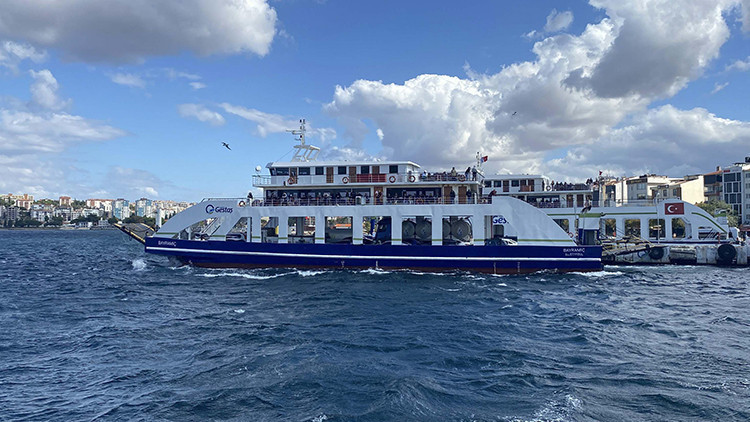
According to reports from Çanakkale, the storm’s intensity across open waters makes navigating the channels exceptionally challenging, particularly for heavy car ferries that require stable harbor approaches. Consequently, the preventive cancellation of tomorrow’s scheduled sailings on the Kabatepe–Gökçeada and Geyikli–Bozcaada lines was deemed essential to ensure public safety and protect maritime infrastructure.
The Vital Lifeline to Turkey’s Aegean Islands
To understand the impact of ferry cancellations in this region, it is essential to consider the vital role these maritime routes play in sustaining daily life on Gökçeada and Bozcaada. These two islands hold unique geographical, cultural, and economic significance as Turkey’s major inhabited Aegean islands.
Gökçeada, situated in the northernmost reaches of the Aegean Sea near the entrance of the Çanakkale Strait, is Turkey’s largest island. The island depends almost entirely on the ferry link originating from the port of Kabatepe, located on the historic Gallipoli (Gelibolu) Peninsula. The route spans open sea waters, leaving ferry vessels directly exposed to strong northeasterly gales and southwesterly storms. Because Gökçeada lacks an active commercial passenger airport with regular scheduled flights, the Kabatepe ferry line functions as the island’s single logistical lifeline for food supplies, emergency medical transport, postal delivery, fuel trucking, and local transit.
Bozcaada lies further south, situated off the coast of the Ezine district in Çanakkale province. It is connected to the mainland via the port of Geyikli. Although the distance between Geyikli and Bozcaada is shorter than the Kabatepe–Gökçeada crossing, the stretch of water—known historically as the Tenedos Channel—is prone to sudden squalls and turbulent currents where the outflow of the Dardanelles meets the open Aegean Sea. The Geyikli–Bozcaada ferry service provides the sole mechanism for transporting vehicles, agricultural produce, commercial goods, and daily provisions between the mainland and the island.
Impact on Island Logistics, Tourism, and Daily Commutes
When maritime operations are completely suspended across both island lines, the immediate result is a temporary pause in the movement of goods, commercial shipping, and daily passenger travel. Island residents who commute to mainland Çanakkale for specialized medical appointments, official business, secondary education, or commercial trading must adjust their schedules until maritime authorities clear vessels for safe navigation.
Local businesses on both Gökçeada and Bozcaada—ranging from grocery suppliers and agricultural exporters to hotels and restaurants—rely on a continuous schedule of morning and evening ferry arrivals. Extended delays caused by Aegean storms necessitate careful inventory management by local island vendors. Perishable items, fresh produce, dairy products, and daily provisions are particularly vulnerable to transport disruptions, making timely announcements from GESTAŞ essential for merchants aiming to restock supplies before a storm hits.
Tourism, a cornerstone of the economy for both islands, is similarly impacted by weather-related ferry cancellations. Gökçeada is popular for its natural landscapes, windsurfing conditions, historic Greek villages, and quiet coastal bays, drawing domestic and international visitors year-round. Bozcaada, renowned for its historic castle, restored architecture, wind turbines, and long-standing winemaking tradition, experiences steady tourist traffic. Storm delays can strand visitors on the islands or force prospective travelers to cancel bookings on the mainland, creating ripple effects across the regional hospitality sector.
Wind Dynamics and Maritime Safety in the Dardanelles Region
The geography of Çanakkale province creates dynamic wind conditions that present distinct operational challenges for maritime carriers. The Çanakkale Strait acts as a natural funnel connecting the Sea of Marmara with the Aegean Sea. When high-pressure weather systems develop over Eastern Europe or Russia while low-pressure systems move across the Mediterranean, sharp pressure gradients form across western Turkey.

These atmospheric conditions produce strong, sustained winds that blow through the strait and sweep across the northern Aegean waters. The two dominant wind vectors in the area—northeasterly winds (commonly known as Poyraz) and southwesterly winds (Lodos)—each present specific hazards for ferry operations:
Northeasterly gales drive cold air masses down from the Black Sea through the Marmara, generating short, steep wave patterns that hit the northern coastlines of Gökçeada and complicate vessel maneuvering at Kabatepe harbor. Conversely, southwesterly Lodos winds bring heavy swells directly into the roadsteads of Bozcaada and the southern approaches to the Dardanelles, causing significant rolling motion for flat-bottomed ro-ro car ferries.
Because car ferries feature high surface areas due to their superstructure and elevated vehicle decks, strong crosswinds create substantial windage, making harbor maneuvers near narrow concrete piers exceptionally delicate. Captains must contend not only with open-sea swells but also with docking risks where severe gusts can push a vessel off alignment. As a result, safety protocols established by GESTAŞ and monitored by regional harbor master offices mandate complete operational suspensions whenever wind speeds exceed safe operational margins.
Operational Protocols and Emergency Preparedness
GESTAŞ Transportation Inc., established under the governance of the Çanakkale Special Provincial Administration to ensure continuous maritime transit across the region, operates an extensive fleet of car ferries, passenger catamarans, and conventional ro-ro ships. The company manages several strategic ferry corridors, including primary cross-strait routes—such as Çanakkale–Eceabat, Çanakkale–Kilitbahir, and Lapseki–Gelibolu—alongside the two vital northern Aegean island corridors.

While cross-strait ferry lines inside the protected waters of the Dardanelles can frequently maintain operations during moderate weather disruptions, the island lines operate in exposed sea environments that are far more vulnerable to swell height and wind exposure. Consequently, the island routes are typically the first to experience preventive shutdowns when severe gale warnings are issued by weather authorities.
To minimize disruption for travelers and residents, GESTAŞ utilizes public communication channels, official website notices, mobile updates, and regional press bulletins to broadcast early warnings regarding weather-induced schedule changes. When storm forecasts indicate that operations will be impossible for an entire day, as is the case for tomorrow’s services between Kabatepe–Gökçeada and Geyikli–Bozcaada, advance notifications allow logistics managers, emergency service providers, and private travelers to adjust their schedules accordingly.
Emergency services on the islands, including local health centers and municipal disaster response units, maintain established contingency protocols for periods when ferry services are severed. In the event of critical medical emergencies requiring urgent mainland hospitalization during extended maritime closures, local authorities coordinate with sea rescue teams or specialized medical helicopter units operated by the Ministry of Health, ensuring that emergency care remains accessible even when commercial ferry transport is entirely suspended.
Monitoring Conditions for Service Resumption
As the storm system progresses across the northern Aegean Sea, maritime crews, port technicians, and local authorities remain on standby to assess sea state developments. Operations on the Kabatepe–Gökçeada and Geyikli–Bozcaada routes are expected to remain suspended throughout the duration of tomorrow’s weather advisory.

GESTAŞ has advised all prospective passengers and commercial vehicle operators to consult official updates before traveling toward Kabatepe or Geyikli ports. Once wind speeds dissipate and wave conditions return to safe operational parameters, technical assessments will be conducted at port facilities to ensure that piers and docking systems are clear for service.
Following severe weather cancellations, GESTAŞ typically schedules additional or consecutive ferry sailings once operations resume to clear the backlog of vehicles and passengers waiting at mainland and island terminals. For now, residents and travelers in the region must wait out the storm as the northern Aegean experiences another seasonal surge of severe winter weather along Turkey’s western coastline.