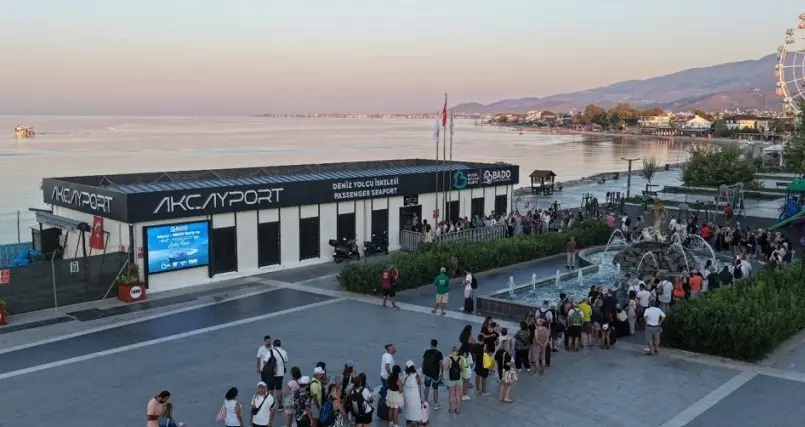
The newly revived sea bus connection linking Akçay, on Balıkesir’s Edremit Gulf coast, with the Greek island of Lesbos (Midilli) has recorded extraordinary passenger volumes during its first month of operation. Relaunched by the Balıkesir Metropolitan Municipality after a 27-year gap, the route operated by Balıkesir Sea Buses (BADO) achieved an average occupancy rate of 95 percent, highlighted by a single-voyage record of 412 passengers on a one-way trip.
The overwhelming initial interest in the service has significantly exceeded initial municipal projections, establishing the line as a primary maritime transit corridor across the North Aegean. Transport officials report that the strong demand underscores the route’s vital role in boosting regional tourism and expanding cross-border maritime links between Turkey and Greece.
Strong Passenger Demand Drives 95 Percent Occupancy on Resurgence Route
The relaunch of the Akçay-Lesbos route represents a major operational milestone for maritime public transport in the region. After remaining inactive for nearly three decades, the corridor was re-established to meet growing demands for direct, efficient sea connections across the Aegean Sea. From its first days of service, the BADO sea buses experienced near-capacity passenger loads, reflecting strong interest from domestic holidaymakers, local residents, and international travelers.
During its inaugural month, passenger throughput climbed steadily, culminating in a single-trip high of 412 passengers on a one-way crossing. Reaching a 95 percent overall capacity utilization rate within thirty days of launch highlights the high demand for fast ferry options along the North Aegean coast, where maritime routes frequently serve as crucial links for seasonal tourist traffic.
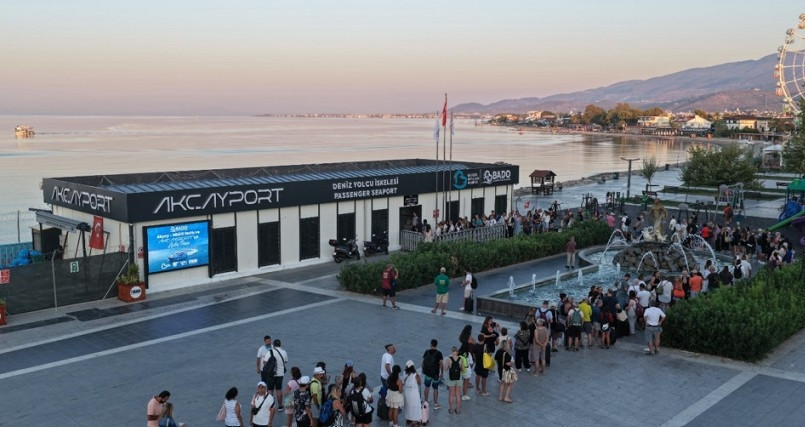
The sea bus service offers a direct water route across the Gulf of Edremit to the port of Mytilene on Lesbos. By providing a scheduled, high-speed alternative to existing regional transit options, the route has successfully captured a significant share of the summer travel volume in the Edremit area, easing pressure on existing regional transport infrastructure while introducing a new gateway for cross-border travel.
Strategic Vision and Public Transport Integration
Evaluating the performance metrics of the route’s initial operational phase, Mustafa Ömür Boyuer, General Manager of Balıkesir Public Transport Inc. (Balıkesir Toplu Taşıma A.Ş.), emphasized that the early outcomes exceeded the municipality’s initial feasibility assessments.
"In the feasibility studies we conducted prior to launching the service, we anticipated that this route possessed the potential to become a center of attraction," Boyuer stated. "However, the level of public interest we have witnessed has reached a point far beyond even our optimistic expectations. We do not view this line merely as a maritime transit link providing transportation between two points, but rather as an essential connection that significantly reinforces Balıkesir’s broader tourism potential."
Municipal transport strategists designed the BADO service not only to move passengers across the sea but also to integrate the coastal district of Akçay into broader regional tourism networks. According to transit officials, the successful deployment of the vessel fleet and the high load factors demonstrate that well-timed investments in maritime infrastructure can yield immediate economic and operational benefits.
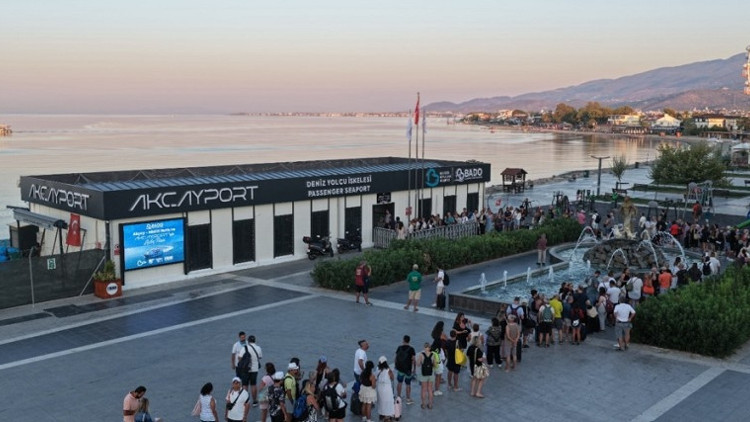
The integration of the Akçay-Lesbos line into Balıkesir’s municipal public transit portfolio reflects a broader effort by local authorities to maximize the utility of the province’s extensive coastline. By offering standardized schedules and reliable sea bus operations, Balıkesir Public Transport Inc. aims to ensure long-term operational sustainability while maintaining high service standards for travelers navigating the northern Aegean route.
Reviving a Historic Maritime Corridor in the North Aegean
The 27-year gap in direct passenger services between Akçay and Lesbos had long left a noticeable void in the regional transport network of the northern Aegean. Historically, coastal towns along the Gulf of Edremit maintained close commercial and cultural ties with nearby Aegean islands. However, over time, changes in regional transit dynamics and shipping routes led to the suspension of direct municipal passenger connections from Akçay.
Re-establishing the line required comprehensive planning by the Balıkesir Metropolitan Municipality, involving technical surveys, dock and terminal preparations, border control coordination, and maritime safety compliance. The successful return of BADO vessels to these waters restores a historic maritime corridor that enhances accessibility for travelers on both sides of the Aegean.
Akçay, situated at the foot of Mount Ida (Kazdağları), serves as a key coastal hub within Balıkesir’s Edremit district, known for its thermal springs, natural parks, and extensive summer resorts. Lesbos, the third-largest Greek island, lies directly across the gulf, making the two locations natural focal points for regional cross-border travel. The reintroduced sea bus line creates a direct gateway between these two destinations, significantly shortening travel times compared to round-about land routes or transit through more distant ports.

Boosting Tourism and Regional Economic Mobility
The strong opening month for the Akçay-Lesbos route highlights its broader impact on local and regional economies. Direct maritime connectivity encourages day trips, weekend visits, and extended vacations, bringing economic activity to local hospitality, retail, and food sectors in both Balıkesir and Lesbos.
For Balıkesir, the route serves as an strategic asset to attract international visitors entering through Lesbos, offering them direct access to the thermal tourism, ecotourism, and cultural heritage sites concentrated in the Edremit, Akçay, and Kazdağları regions. Conversely, Turkish travelers and vacationers residing in or visiting Balıkesir benefit from a convenient and swift maritime passage to Lesbos.
By diversifying port access points along the Balıkesir coast—complementing existing routes operating out of neighboring districts like Ayvalık—the Akçay-Lesbos line helps distribute passenger traffic more evenly across the province’s transport infrastructure. This strategic distribution reduces bottlenecking at individual ports during peak tourist seasons, improving the overall efficiency of cross-border travel in the Aegean.
As operational data from the first month demonstrates, the decision to reactivate the line after 27 years has proven both timely and effective. Municipal transport authorities plan to continue monitoring passenger trends, schedule efficiency, and fleet management to support the continued growth and operational stability of the BADO Akçay-Lesbos line throughout its operating seasons.