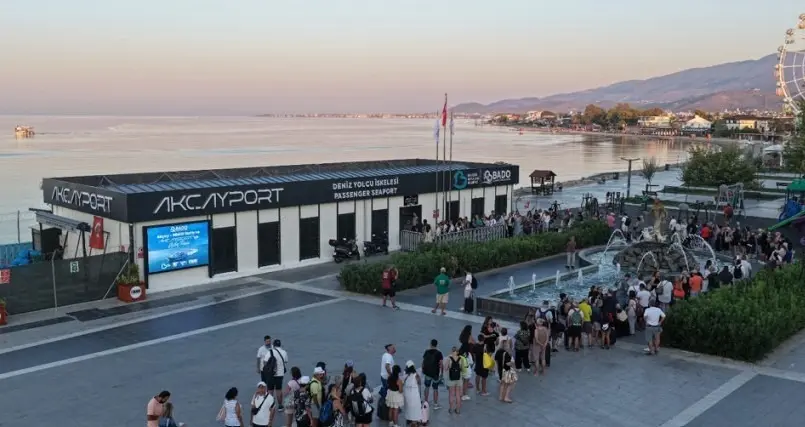
High Occupancy and Record Passenger Numbers Mark Relaunch of Akçay-Lesbos Maritime Service
The maritime connection between the coastal town of Akçay in Balıkesir and the Greek island of Lesbos (Midilli) has experienced an extraordinary surge in passenger volume during its first month of operation, marking a major milestone for regional transport infrastructure in the Northern Aegean. Relaunched by the Balıkesir Metropolitan Municipality after a hiatus lasting 27 years, the BADO (Balıkesir Sea Buses) Akçay-Lesbos Sea Bus Line has rapidly established itself as a primary route for travelers crossing between Turkey and Greece. Official performance data from the inaugural month reveals that the service achieved an impressive average occupancy rate of 95 percent, underscoring intense public demand and validating municipal investments in cross-border maritime transit.
The rapid uptake of the service was further highlighted by a single-trip passenger record set during the line’s first four weeks of operation. On one of its scheduled single-direction voyages, the sea bus carried 412 passengers, setting the highest passenger count recorded on a single trip since the route was officially reactivated. The service, operated under the management of Balıkesir Toplu Taşıma A.Ş. (Balıkesir Public Transport Inc.), has effectively restored a historical maritime corridor that had remained dormant for nearly three decades, offering a direct, efficient, and reliable connection across the Edremit Gulf to Lesbos.
Evaluating the operational results of the inaugural month, Mustafa Ömür Boyuer, the General Manager of Balıkesir Toplu Taşıma A.Ş., expressed strong satisfaction with the public response and the line’s initial performance metrics. Boyuer noted that while preliminary technical and economic feasibility assessments conducted prior to the route’s launch had indicated significant market potential, the actual volume of passenger interest exceeded even the most optimistic forecasts generated during the planning phase.
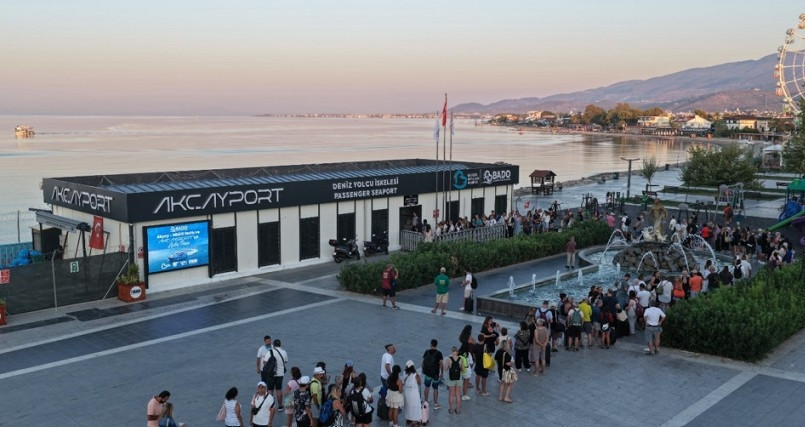
"In the feasibility studies we conducted before opening the line for service, we anticipated that this route could become a major center of attraction, but the level of public interest has reached a point even better than we had projected," Boyuer stated. "We view this line not merely as a maritime transit route providing transportation between two geographic points, but as an important connection that significantly strengthens Balıkesir’s overall tourism potential."
The pre-launch feasibility process involved detailed evaluations of regional travel trends, seasonal tourist movements, passenger flow projections, and maritime transport logistics across the Edremit Bay corridor. Municipal planners had identified a growing need for direct maritime access between Balıkesir’s Northern Aegean coastline and the neighboring Greek islands. The objective was to create a modern transport link capable of serving local residents, domestic vacationers visiting the Edremit Riviera, and international travelers seeking direct connections across the Aegean. The immediate rise to a 95 percent average occupancy rate within thirty days of operation confirmed that consumer demand was both immediate and robust.
Economic and Tourism Implications for the Northern Aegean Transit Corridor
The resumption of the Akçay-Lesbos sea bus line represents the realization of a long-standing strategic goal for municipal leaders and regional economic stakeholders. For 27 years, direct public maritime passenger travel between Akçay—a prominent coastal district within Balıkesir—and the island of Lesbos was unavailable. Travelers wishing to cross between the region and Lesbos were previously required to utilize alternative transport options or travel to other departure points along the coast, such as Ayvalık.
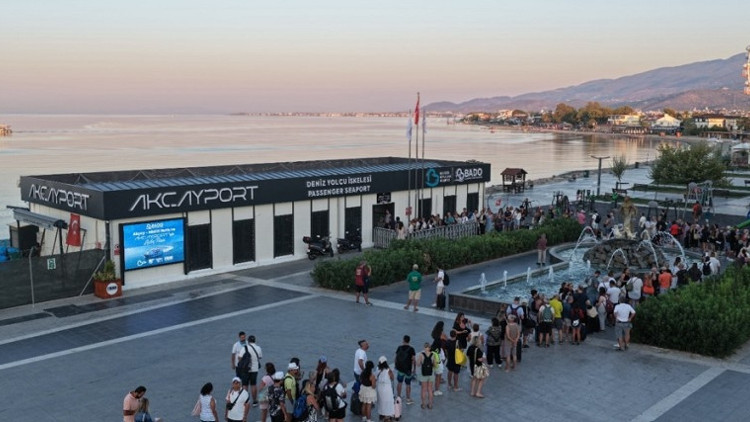
The nearly three-decade absence of a direct sea connection from Akçay created a missing link in the regional public transport framework, particularly given Akçay’s strategic location along the Edremit Gulf and its close connections to major highways, agricultural regions, and thermal tourism centers. By re-establishing the BADO line, Balıkesir Metropolitan Municipality has successfully reactivated this historical route, significantly shortening travel times and delivering a streamlined maritime transit experience for passengers traveling between the Turkish mainland and the Greek island.
The high occupancy rates recorded throughout the first month carry meaningful implications for the broader economy of Balıkesir’s coastal region as well as the island of Lesbos. Maritime transit connections of this nature function as key economic drivers, facilitating cross-border day trips, short-term holiday visits, and commercial exchanges. The increased movement of visitors generates tangible economic activity for local businesses, hospitality operators, retail sectors, and food service establishments situated near port terminals and urban centers on both sides of the sea.
For Akçay and the broader Edremit region, the presence of an active international sea bus terminal elevates the area’s standing as a regional tourism hub. Vacationers staying in Balıkesir’s coastal resorts can now easily integrate a visit to Lesbos into their travel itineraries, increasing the overall appeal of the region as a multi-destination travel hub. Simultaneously, the direct maritime connection provides residents and visitors on Lesbos with straightforward access to the natural attractions, historical landmarks, shopping districts, and thermal resources of Balıkesir and the surrounding Ida Mountains (Kazdağları) area.

The single-trip record of 412 passengers demonstrates the capacity of modern sea bus vessels to handle high volumes of passenger traffic efficiently. Managing such volume requires close coordination among port authorities, border control personnel, customs officials, and maritime operations staff. The successful execution of service throughout the first month reflects the operational readiness of Balıkesir Toplu Taşıma A.Ş. to maintain high service standards, strict safety protocols, and punctual departure schedules under conditions of heavy passenger demand.
Furthermore, the sea bus service has been integrated into Balıkesir’s broader municipal public transport infrastructure. Passengers arriving at the Akçay terminal can access connecting land-based transit services operating across Edremit, Balıkesir city center, and neighboring coastal settlements. This multimodal transport strategy ensures that maritime passengers can transition smoothly between sea and land transit networks, enhancing the overall efficiency of public transportation across the province.
The strong initial performance of the BADO Akçay-Lesbos line highlights the strategic value of reviving historical maritime trade and travel routes in the Aegean Sea. By bridging geographic boundaries and restoring direct travel between Akçay and Lesbos after 27 years, Balıkesir Metropolitan Municipality and Balıkesir Toplu Taşıma A.Ş. have established a high-demand transit link that supports local economic development, enhances regional connectivity, and expands tourism opportunities across the Northern Aegean.