

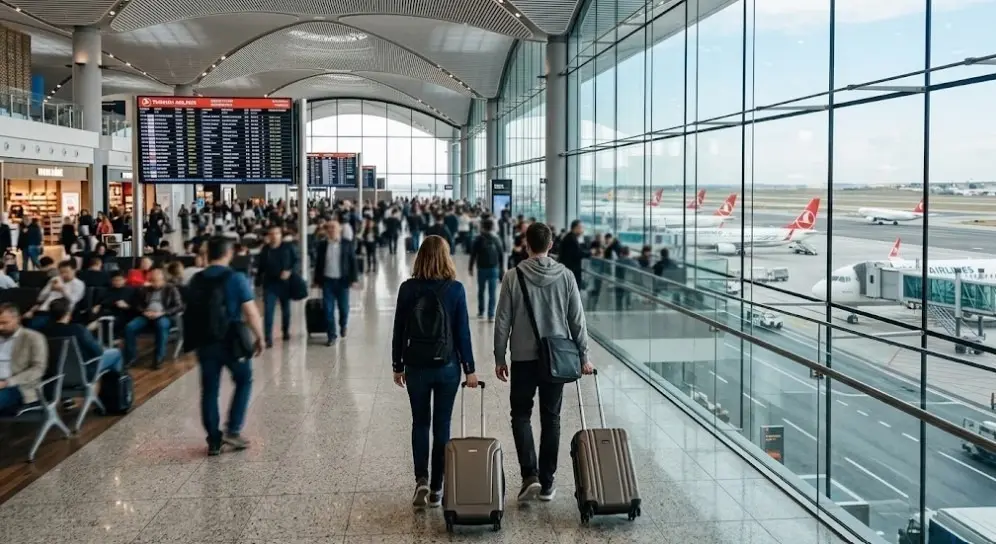
A comprehensive report surveying over 14,000 travelers across 14 nations reveals how shifting consumer priorities, digital trust, and wellness are reshaping the global tourism landscape.
A major international study tracking global travel preferences has revealed key trends set to define the tourism landscape in 2027. Based on extensive research conducted by Hilton in partnership with data intelligence firm Morning Consult, the 2027 Trend Report gathers insights from more than 14,000 travelers across 14 countries, including Türkiye. The findings highlight a profound shift in consumer expectations, showing that travelers are increasingly stepping away from conventional, mass-market itineraries in favor of deeply tailored, intentional, and restorative journeys.
The research highlights a fundamental evolution in how people view their time away from home. Rather than relying on generic vacation formulas, modern travelers are seeking experiences that directly mirror their personal lifestyle goals, mental health needs, and individual values. As digital innovation accelerates and artificial intelligence becomes embedded in daily routines, the criteria for planning and evaluating a successful trip are undergoing a significant transformation worldwide.
Reimagining the Modern Vacation Experience
Evaluating the implications of the study, Simon Vincent CBE, Executive Vice President and President for Europe, Middle East, and Africa (EMEA) at Hilton, emphasized that vacationers are placing a far higher premium on the intrinsic quality of their time spent away. He noted that travelers are moving away from attempting to fit into a standardized template of what a trip should look like, choosing instead to curate trips that serve specific personal outcomes.
"Travelers are now focused on making the time they spend away much more meaningful," Vincent stated regarding the report’s findings. "Rather than chasing a one-size-fits-all ‘perfect vacation’ concept, they are seeking experiences that reflect their own personal interests and priorities."
This shift in mindset touches every phase of the journey, from initial inspiration and booking mechanisms to on-the-ground choices and post-trip reflection. As consumers become more discerning, hospitality brands and tourism operators are finding that success hinges on delivering personalized value rather than standardized offerings.
The Emerging "Trust Equation" in Travel Planning
As artificial intelligence platforms become standard tools for organizing travel, the research reveals that trust has emerged as the single most critical factor in the planning process. Today’s travelers do not rely on a single channel; instead, they navigate between automated digital tools, direct personal recommendations, and brand loyalty programs, utilizing each resource at specific points along their booking journey.
This interplay has created what the report defines as a new "Trust Equation in Travel." Within this framework:
- Artificial intelligence serves to accelerate the discovery and research phase, sorting through vast amounts of information quickly.
- Human expertise provides essential reassurance, offering a layer of credibility that digital algorithms alone cannot fully supply.
- Established brand loyalty programs validate the traveler’s choice, ensuring consistency, security, and recognized quality.
In Türkiye, reliance on artificial intelligence during key decision-making stages has reached notable levels. When choosing accommodation, Turkish travelers demonstrate a high degree of confidence in AI-driven tools, placing them on equal footing with traditional human influences. According to the report, 20 percent of Turkish respondents state that they trust AI tools most when selecting a hotel.
This 20 percent figure puts trust in artificial intelligence directly on par with recommendations from family members, which also stands at 20 percent. Furthermore, AI tools have surpassed recommendations from friends, which are prioritized by 15 percent of Turkish travelers. This data underscores a rapid adoption of digital technology in Türkiye, where travelers are increasingly willing to let algorithmic intelligence guide major financial and lifestyle decisions.
The Rise of Purposeful Solo Travel and Personal Growth
Solo travel is experiencing a major resurgence, but its underlying motivations have changed. Rather than seeking pure adventure or social interaction, an increasing number of individuals are turning to solo journeys as a vehicle for self-improvement and mental reset.
Among Turkish travelers who plan to embark on a solo trip within the next 12 months, 39 percent identify "taking time for personal growth and self-reflection" as their primary motivation. This focus on internal development puts Türkiye at the very top of the global rankings in this category. Türkiye leads international markets in prioritizing self-reflection during solo travel, outranking South Korea, where 34 percent of respondents cited the same motive, and India, at 33 percent.
In addition to personal growth, physical and mental recuperation serves as another primary driver for solo travel. The survey reveals that 51 percent of Turkish solo travelers choose to journey alone specifically to "rest and recharge." On a global scale, this places Türkiye second worldwide for rest-focused solo travel, trailing only Japan, where 55 percent of solo travelers prioritize rest above all else.

Redefining Vacation Success Through Rest and Accommodation Quality
The report demonstrates that the metrics used to evaluate whether a vacation was "successful" are shifting from external activities to internal wellbeing. When asked to define the indicators of a truly good vacation, 58 percent of Turkish respondents highlighted "returning home feeling more rested and refreshed" as their primary goal.
In prioritizing post-trip revitalization, Türkiye shares the top tier globally with South Korea at 58 percent, while both follow Japan, where 65 percent of travelers view returning home fully rested as the ultimate standard of a successful trip. This shared focus highlights a growing international demand for vacations that counter the exhaustion of modern daily life rather than adding to it through overly packed itineraries.
At the same time, the quality of the hotel itself remains an indispensable component of the overall experience. Forty percent of Turkish travelers consider "staying at a great hotel" to be an essential indicator of a successful journey. This places Türkiye among a group of distinctly hotel-centric travel markets, aligning closely with the United Kingdom (43 percent), Saudi Arabia (41 percent), and Japan (41 percent), where the resort or hotel property is viewed not merely as a place to sleep, but as a central destination of the trip.
Wellness, Outdoor Environments, and Nervous System Regulation
The urge to restore mental and physical equilibrium is also driving how travelers choose their environments. Turkish respondents expressed a strong affinity for natural settings, recognizing exposure to the outdoors as a prerequisite for genuine relaxation.
Half of all Turkish travelers surveyed—50 percent—stated that clean air and spending time outdoors are essential for their ability to unwind. This places Türkiye fifth globally in emphasizing nature-based rest, positioning it just behind South American nations such as Brazil (54 percent) and Colombia (52 percent).
Furthermore, the desire for physical relaxation has taken on a more specific health-conscious dimension. The survey indicates that 40 percent of Turkish travelers actively seek out travel experiences explicitly designed to soothe their nervous systems and calm their bodies. Whether through quieter accommodations, wellness-focused amenities, or slow-paced environments, travelers are deliberately selecting options that lower stress levels and foster physiological recovery.

The Shift Toward Extended Stays Over Quick Getaways
In terms of travel frequency and duration, the report captures a distinct divergence between global averages and Turkish consumer behavior. Globally, among individuals planning to increase their travel frequency over the next year, approximately one-third intend to do so by balancing a combination of short weekend getaways and longer vacations.
However, Turkish travelers display a clear preference for longer, more immersive stays. Among those in Türkiye who plan to travel more frequently over the next 12 months, 54 percent state that they prefer longer trips. This figure makes Türkiye the global leader in prioritizing extended travel over brief escapes.
Rather than booking multiple, fast-paced weekend trips throughout the year, Turkish travelers are choosing to maximize their total time spent away from home by committing to sustained journeys. This preference for lengthier stays complements the broader demand for deep rest, personal reflection, and meaningful engagement with destinations, signaling a clear shift toward a more deliberate and immersive style of travel for 2027 and beyond.