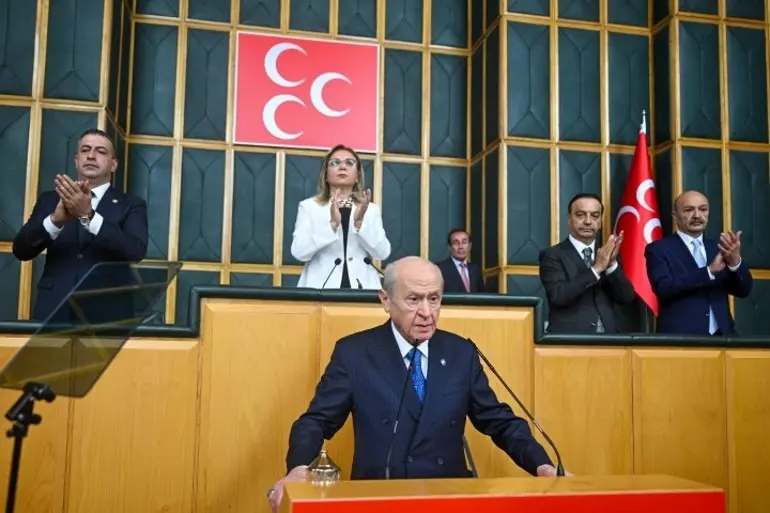
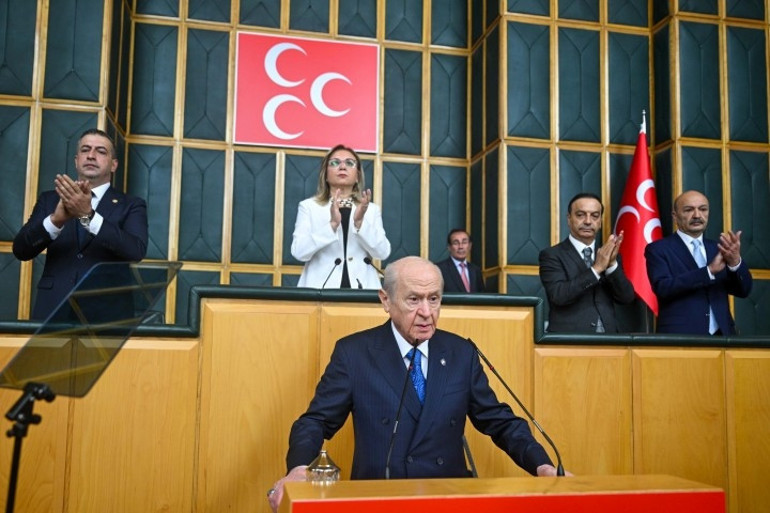
ANKARA – In a comprehensive and wide-ranging address to his party’s parliamentary group at the Turkish Grand National Assembly (TBMM), Devlet Bahçeli, the Chairman of the Nationalist Movement Party (MHP), delineated a vision for a "Terror-Free Turkey" while delivering a sharp critique of both domestic opposition and international provocations. Bahçeli’s speech, which touched upon everything from municipal corruption and high-profile financial scandals to the geopolitical instability in the Middle East and the Mediterranean, framed Turkey as a rising "political center" that would not be deterred by internal or external sabotage.
The MHP leader began his address with a message of national solidarity, greeting citizens across the country and abroad. He invoked a sense of spiritual and social responsibility, praying for abundance in every household and relief for those in distress. However, the tone quickly shifted to a serious evaluation of the challenges facing the Turkish state, emphasizing that the nation is currently in a "period of purification" across its public and political spheres.
Tragic Accidents and the Urgency of Urban Transformation
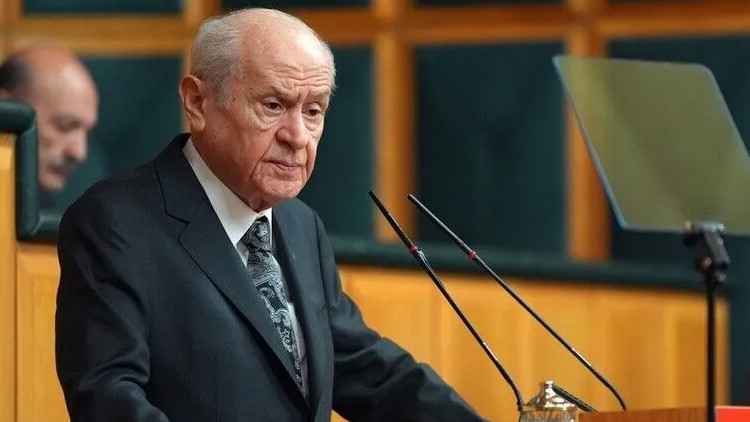
Bahçeli opened the substantive portion of his speech by reflecting on a series of tragic accidents that occurred over the past week, which have deeply saddened the nation. He specifically cited the building collapse in the Maltepe district of Istanbul, where two floors of a structure gave way, resulting in five deaths and eleven injuries. He also extended his condolences to the families of those who lost their lives in traffic accidents in Manisa’s Akhisar district and Kahramanmaraş—the latter of which involved MHP Kahramanmaraş deputy Zuhal Karakoç, who was among the seven injured.
"These losses are not merely statistics; they are a call to action," Bahçeli asserted. He emphasized that the state must adopt a more rigorous approach to traffic safety to minimize risks. More importantly, he linked these structural failures to the broader necessity of urban transformation. He urged for the swift completion of the nationwide mobilization for safer housing, particularly in regions prone to seismic activity. "Ensuring the construction of secure buildings across every corner of our country is a fundamental duty of the state to its citizens," he added.
Turkey as the Sovereign Political Center
A significant portion of Bahçeli’s address was dedicated to defining Turkey’s role on the global stage. He argued that Turkey is not just a geographical entity but the custodian of a magnificent civilization and a rich Turkish-Islamic tradition. "Our political center is Turkey," Bahçeli declared, noting that while ideological coordinates may differ among various political actors, the ultimate focus must remain on the sovereignty and prosperity of the Turkish nation.

He spoke of a "civilizational march" that draws its spiritual climate from Turkish-Islamic sources and its cultural foundations from ancient values. According to Bahçeli, this march is not only for the benefit of Turks but serves as a beacon of hope for oppressed nations seeking a free and honorable life. He called on the nation to move past "socially irrelevant debates" and focus its energy on building a prosperous future and a new civilization equipped with high moral values.
"Turkey Will Not Turn Back From Its Path"
Addressing the persistent threat of terrorism, Bahçeli reiterated the government’s commitment to establishing a "terror-free Turkey" and a "terror-free region." He warned that these initiatives have alarmed those who harbor ambitions of regional dominance and those who wish to see a weakened Turkey.
"Just as in the past, when they tried to divide our people through economic, political, and social means, or through terror and violence, those who wish to sabotage our environment of peace and security are once again active," Bahçeli said. However, he remained defiant, stating that the Turkish nation would not turn back from its decision. He vowed that the steps toward a terror-free country would be taken with "seriousness and sincerity" and would be brought to a conclusion in the shortest possible time.

Israeli Provocations and the Yemen Conflict
Turning his attention to the volatile Middle East, Bahçeli condemned the increasing "barbarism" of Israel. He highlighted the provocations surrounding Al-Aqsa Mosque—the first Qibla of Islam—as evidence of a provocative policy that has reached dangerous levels. He suggested that these actions are being fueled by the upcoming elections in Israel, where Prime Minister Benjamin Netanyahu’s administration is pursuing what Bahçeli termed a "genocidal policy" that is exhausting Gaza and threatening the West Bank and Syria.
Simultaneously, Bahçeli addressed the Houthi attacks originating from Yemen, which have targeted Saudi Arabia. He characterized these attacks as a tool for regional destabilization. He provided specific details regarding the attacks on King Khalid International Airport in Riyadh on October 10 and 11, which resulted in significant civilian casualties and injuries.
"We cannot remain silent or tolerant toward attacks on our sacred lands," Bahçeli stated. He argued that even if these lands are within the borders of another sovereign state, the historical and spiritual connection remains alive in the memory of the Turkish nation. He called for the use of diplomacy, and if that fails, the application of "deterrent force."

Bahçeli went as far as to suggest that Turkey should provide all necessary military support for the defense of Saudi Arabia within the framework of a "Mecca Alliance." He reminded the audience of the heroic defense of Medina by Fahrettin Pasha, noting that the title "Mehmetçik" (the Turkish soldier) was forged in the defense of these holy sites. He urged the Islamic world to stand united against those who sow seeds of discord and "rub their hands in Tel Aviv" hoping for a brotherly war between Muslims.
A Stern Warning to Greece
Geopolitical tensions in the Mediterranean also featured prominently in Bahçeli’s speech. He issued a blunt warning to the Greek administration, which he accused of seeking security through an alliance with Israel and the Greek Cypriot administration. He specifically mentioned the proposed electricity interconnection project between Greece, Cyprus, and Israel, which Turkey views as an infringement on its maritime jurisdiction.
"If Athens believes it can bypass Ankara’s objections by gaining the support of third countries, it is making a grave mistake," Bahçeli warned. He advised the Greek government that if they are arming themselves out of fear of Turkey, they should instead seek refuge in "Turkish peace." If they are arming themselves to intimidate Turkey, he reminded them that "no power can scare us." He urged Greek politicians to realize that the respect and friendship of Turkey are far more powerful than any weapons Israel might sell them.
"Turkey Is in a Period of Purification"
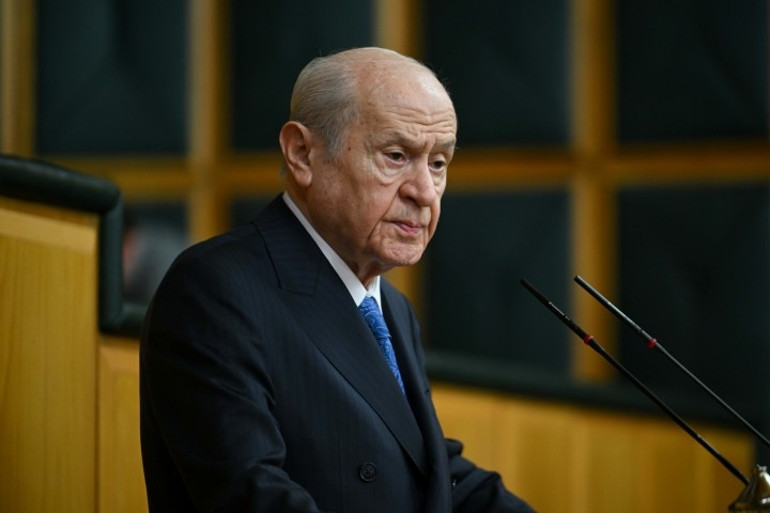
Moving to domestic affairs, Bahçeli addressed the ongoing legal battles against corruption and organized crime. He described the current era as a "period of purification and exoneration" for Turkey, where the state is taking decisive steps to uncover illegalities that exploit the public interest.
He touched upon the "Fund Investigation," a high-profile financial scandal that has dominated the Turkish media, involving celebrities and athletes. Bahçeli expressed his trust in the Turkish judiciary and the institutions of the state to ensure that justice is served swiftly. He emphasized that no corruption or irregularity should receive protection under the law, and that the legal processes to protect small investors have already begun.
The Opposition, the Fund Investigation, and the "Escape Ramp"
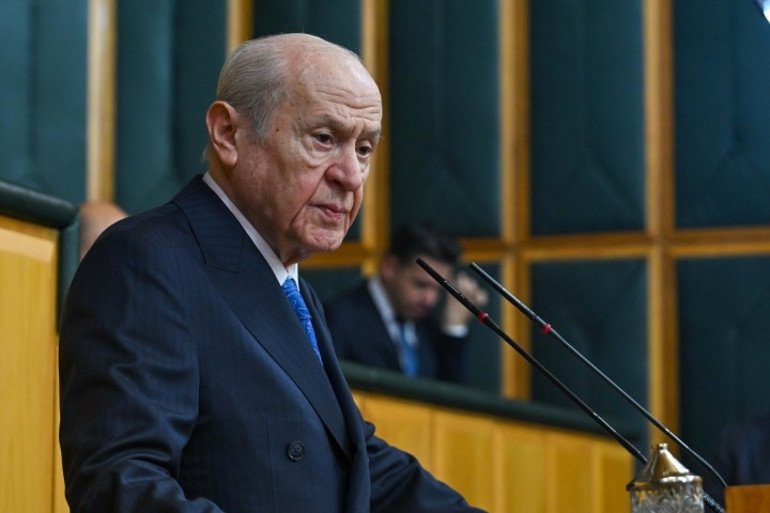
The most pointed criticism of the speech was reserved for the opposition parties. Bahçeli accused the opposition of using the "Fund crisis" as a "political anesthesia" to distract the public from corruption scandals within opposition-run municipalities.
"The opposition is attempting to weigh apples and oranges in the same scale," Bahçeli remarked. He argued that they are using the fund investigation as an "escape ramp" to cover up their own moral failures and the actions of "organized crime networks" that have allegedly infiltrated municipal administrations. He called for the dimension of municipal corruption—including bribery and embezzlement—to be fully disclosed to the public.
The Sociological Foundation of Morality
To reinforce his point, Bahçeli delved into the philosophical and sociological roots of morality, citing the works of Ziya Gökalp and Sabri Ülgener. He argued that the foundation of both the family and the state is rooted in morality. "A society that has lost its moral bonds will stumble in a state of social disorder," he said.
He emphasized that morality is not just a set of prohibitions but a matter of mindset and action that imposes social responsibility on the individual. For Bahçeli, the "erosion of social order" and the "moral crisis" currently being discussed in Turkey are symptoms of a deeper struggle for the soul of the nation. He advocated for a "moral standardization" in politics, where conscience becomes the basis for justice, merit, and reason.
Events in France and the Hypocrisy of Europe
Bahçeli also commented on the recent student protests in France, where youths have taken to the streets to demand better educational conditions and opportunity equality. He noted that the gathering of protesters at the Bastille Square was a symbolic reference to the French Revolution, suggesting the potential for these movements to spread across Europe.
He criticized the "heavy-handed" police intervention in France, noting the irony of European leaders who frequently lecture other nations on democracy and human rights while remaining silent on the violence occurring within their own borders. "This reveals the hypocrisy of Europe once again," Bahçeli said, contrasting the social unrest in Europe with Turkey’s recent educational achievements.
Turkey’s Educational Progress and PISA Results
In a moment of national pride, Bahçeli highlighted the results of the PISA 2022 (referred to in the context of recent reporting cycles) assessments. He noted that Turkey was the OECD country that increased its scores the most in mathematics, science, and reading compared to the previous evaluation.
"This success is a concrete indicator of the progress Turkey has made in education," he said. He called for continued investment in the national education system to prepare "virtuous and faithful generations" who are equipped with the skills of the information age and the values of their own culture. He described these future generations as the "architects of the Turkish Century."
Conclusion: A Call for Unity
Devlet Bahçeli concluded his marathon speech by calling for national unity and a focus on the future. He reminded his fellow deputies that every problem of the nation is a problem for the MHP, and every legitimate expectation of the people is a demand of the party.
He vowed that the "People’s Alliance" (Cumhur İttifakı) would overcome all obstacles to make the nation happier and the state stronger. Quoting the legendary folk poet Aşık Veysel, Bahçeli urged an end to "slander and calumny," calling for the nation to work together "hand in hand" to build schools and factories.
"Turkey is no longer the ‘Old Turkey’," he concluded. "It is a sovereign power with strong institutions, a massive economic capacity, effective diplomacy, and a deterrent defense industry. We will not allow anyone to play games with our stability or our brotherhood."