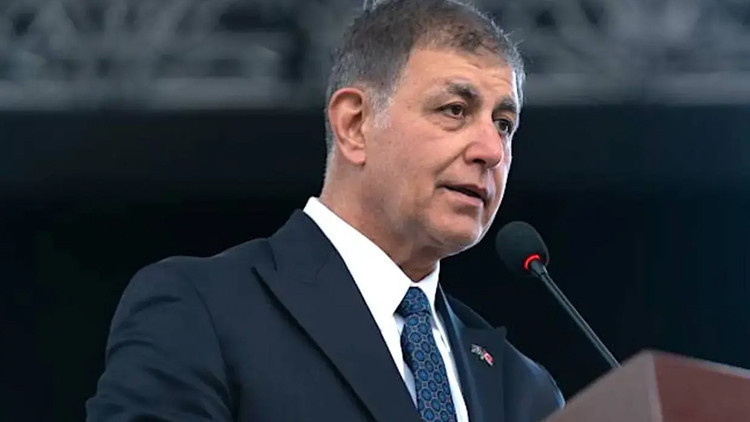
ANKARA — The political landscape in Turkey is bracing for a significant shift as speculation intensifies regarding the future of İzmir Metropolitan Municipality Mayor Cemil Tugay. Following a series of high-profile meetings in the capital and a string of cryptic social media interactions, all signs point toward Tugay officially joining the Justice and Development Party (AK Party) during its parliamentary group meeting scheduled for Wednesday, October 7. The potential move, which would see the leader of Turkey’s third-largest city and a traditional secular stronghold align with the governing party, has sent ripples through the nation’s political corridors.
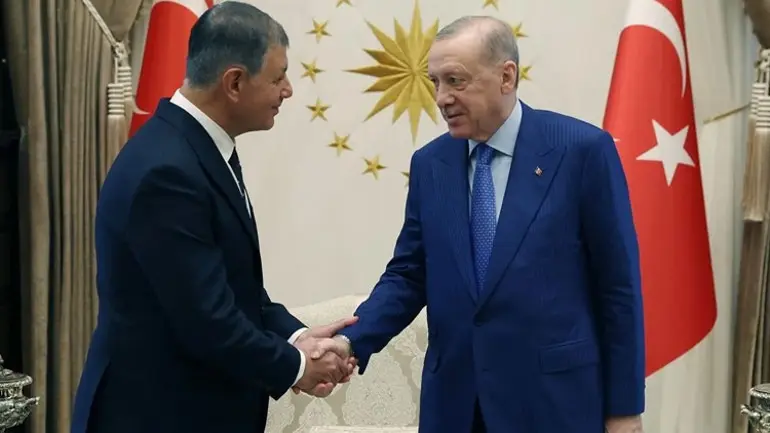
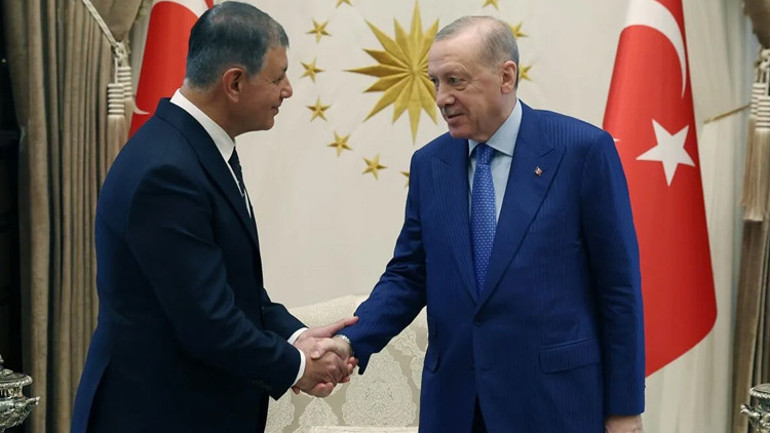
The rumors, which have been circulating with varying degrees of intensity since Tugay’s resignation from the Republican People’s Party (CHP) earlier this year, gained substantial momentum following a private audience with President Recep Tayyip Erdoğan at the Presidential Complex. Known as the Külliye, the venue is often the site of major political reconciliations and strategic alignments. While the details of the conversation between the President and the İzmir Mayor have remained largely confidential, the optics of the meeting suggested a definitive thawing of relations and the groundwork for a new political partnership.
Adding weight to the speculation is the reporting from CNN Türk correspondent Melike Görür Demirkıran, who has been tracking the "kulis" or backstage maneuvers in Ankara. According to Demirkıran, the political momentum has reached a tipping point. The journalist noted that the frequency and nature of Tugay’s recent engagements suggest that the period of his political independence is drawing to a close. The focal point for this transition is widely expected to be the AK Party’s upcoming group meeting, a traditional venue where President Erdoğan personally welcomes new members by pinning the party’s badge to their lapels in a highly symbolic ceremony.

The journey to this moment began on June 18, when Cemil Tugay announced his resignation from the CHP, the party under whose banner he was elected. His departure was marked by a sharp critique of the party’s management, then under the leadership of Kemal Kılıçdaroğlu. Tugay specifically cited the "absolute nullity" (mutlak butlan) of certain internal administrative decisions as a primary grievance, suggesting a deep-seated institutional disconnect. At the time of his resignation, Tugay expressed a bittersweet sentiment, noting that he was leaving with the hope of one day returning to a party that better reflected his vision, yet he committed to serving the people of İzmir as an independent mayor in the interim.
Despite the emergence of a "New Party" following internal fractures within the opposition, Tugay chose to remain unaffiliated for several months. During the summer, he repeatedly dismissed rumors of a jump to the AK Party, maintaining that his focus remained solely on the municipal governance of İzmir. However, the political atmosphere began to shift as the autumn session of parliament approached. The first concrete indicator of a change in direction came when Tugay traveled to Ankara for a series of high-level ministerial meetings, most notably with Minister of Transport and Infrastructure Abdulkadir Uraloğlu.

Meetings between metropolitan mayors and the Minister of Transport are common, often focusing on critical infrastructure projects such as metro lines, highway connections, and urban rail systems. However, in the context of Tugay’s independent status and the ongoing rumors, this meeting was viewed by political analysts as more than a mere bureaucratic consultation. It was seen as an exploration of how İzmir’s chronic infrastructure needs could be more effectively addressed through a closer alignment with the central government’s resources and executive power.
The most symbolic precursor to his rumored transition, however, was Tugay’s recent resignation from the Atatürkist Thought Association (ADD). In the context of Turkish politics, the ADD represents a staunchly secular, Kemalist ideological pillar, often closely associated with the core identity of the CHP. For a politician from İzmir—a city that prides itself on its Kemalist heritage—to cut ties with such an organization is a profound statement. Analysts suggest that this move was a necessary step to clear the ideological path for an entry into the AK Party, signaling a departure from the traditional secular-opposition bloc toward a more conservative-democratic platform.

The discourse surrounding Tugay’s potential defection reached a fever pitch following his recent activity on social media. Rather than issuing a flat denial to the growing rumors, the Mayor engaged with his followers in a way that many interpreted as a confirmation of his new trajectory. When a concerned citizen asked on social media whether he would terminate the employment of municipal workers upon joining the AK Party, Tugay’s response was telling. "Nothing happens to anyone who does their job," he replied. By answering a question predicated on his joining the AK Party without correcting the premise, Tugay effectively signaled that the transition was no longer a matter of "if," but "when."
This specific interaction highlights one of the most sensitive aspects of municipal political shifts in Turkey: the security of the local government workforce. Traditionally, a change in party affiliation at the mayoral level can lead to concerns about administrative restructuring. Tugay’s reassurance appears aimed at stabilizing the internal dynamics of the İzmir Metropolitan Municipality ahead of the formal announcement, suggesting a commitment to continuity in public service despite the change in political branding.
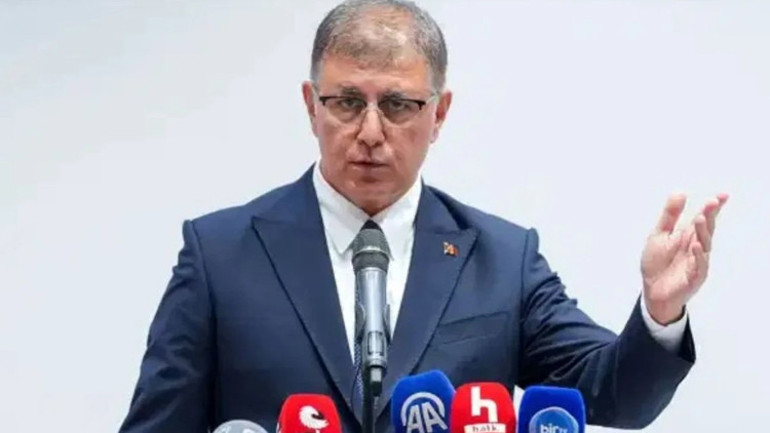
The potential acquisition of the İzmir Mayor represents a significant strategic victory for the AK Party. İzmir has long been considered the "fortress" of the CHP, a city where the governing party has struggled to secure a mayoral victory in recent decades. Having the incumbent mayor switch sides provides the AK Party with a unique opportunity to demonstrate its governance model in a traditionally skeptical urban center. For Tugay, the move could offer a way to bypass the partisan gridlock that often complicates the relationship between opposition-run municipalities and the central government, potentially unlocking state funding and approval for major local projects.
As Wednesday approaches, the eyes of the nation are fixed on the Turkish Grand National Assembly. The AK Party group meetings are often choreographed events designed to project unity and growth. If the rumors hold true, the image of President Erdoğan pinning the AK Party badge on Cemil Tugay will serve as one of the most significant political images of the year. It would mark the end of Tugay’s months-long tenure as an independent and the beginning of a new, controversial chapter in his political career.
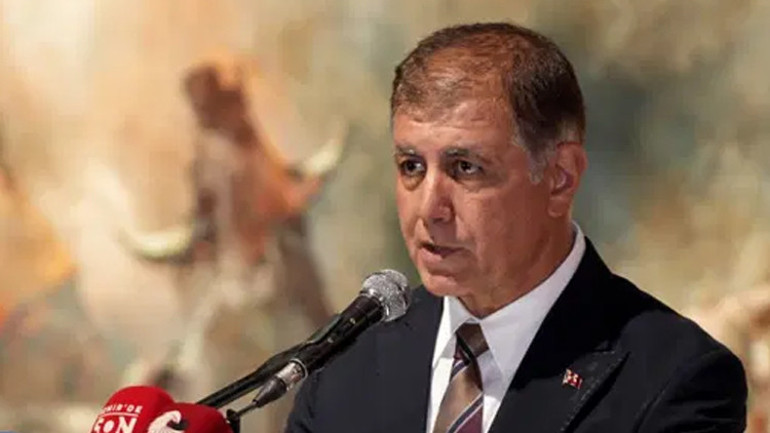
In İzmir, the reaction remains mixed. While some supporters of the Mayor argue that the move is a pragmatic necessity to ensure the city receives the investment it deserves, critics from his former party view the potential defection as a betrayal of the mandate he was given by the voters. The CHP leadership has remained relatively quiet in the immediate lead-up to the expected announcement, though the loss of such a high-profile figure would undoubtedly trigger a period of intense soul-searching within the opposition ranks.
The final confirmation remains tethered to the proceedings on October 7. Until the badge is pinned, the political world remains in a state of high anticipation. The transition of Cemil Tugay is not merely about one man changing his party affiliation; it is a reflection of the fluid and often unpredictable nature of Turkish local and national politics, where alliances are reshaped by the dual pressures of ideological shifts and the pragmatic demands of urban governance.
As the clock ticks toward Wednesday morning, the narrative of a "major political transfer" has moved from the realm of whispers into the spotlight of national discourse. Whether this move will bring the promised stability and investment to İzmir, or whether it will further polarize the city’s electorate, remains to be seen. For now, the "Ankara traffic" continues to flow toward a single conclusion, with Cemil Tugay at the very center of the storm.