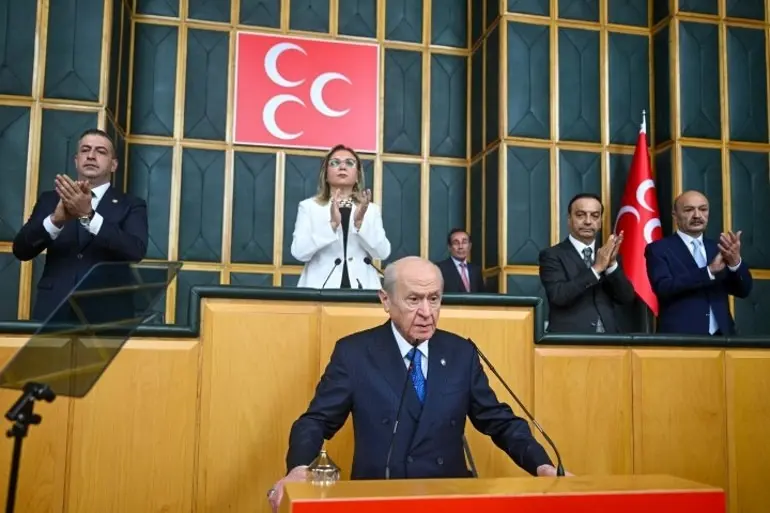
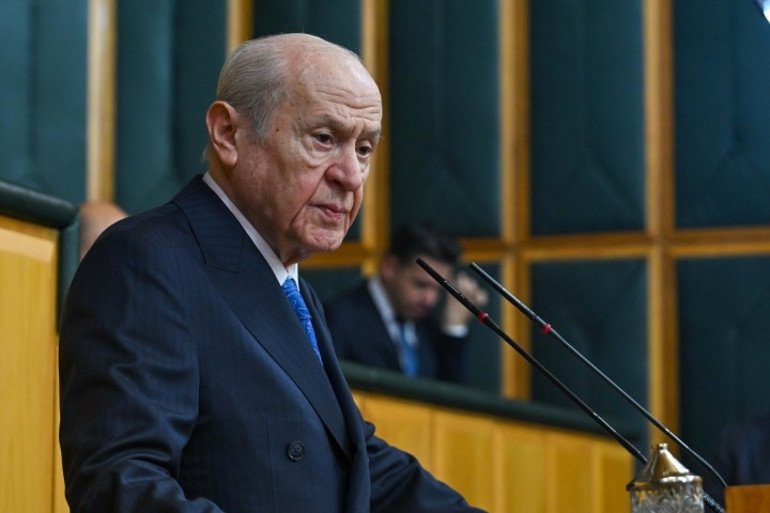
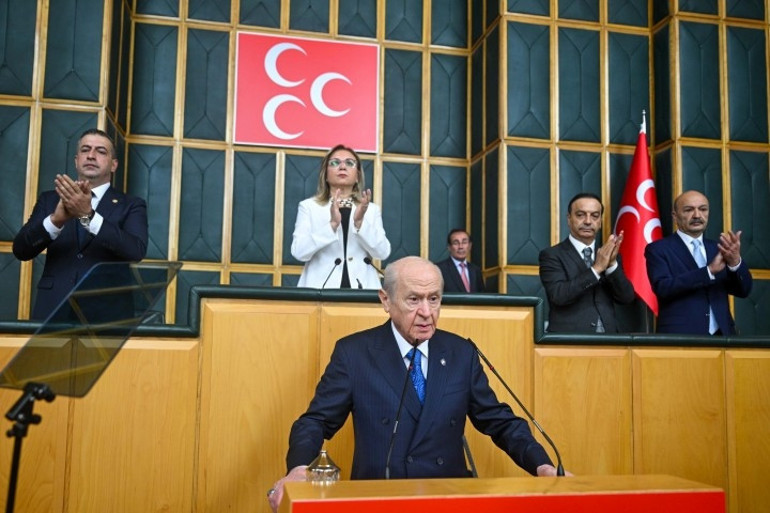
Devlet Bahçeli, the Chairman of the Nationalist Movement Party (MHP), delivered an expansive and multifaceted address during his party’s parliamentary group meeting at the Turkish Grand National Assembly (TBMM) this week. Covering a broad spectrum of domestic and international issues, Bahçeli articulated a vision for a "terror-free Turkey" and a stabilized region, while offering sharp critiques of the domestic opposition and issuing significant warnings to international players, including Israel and Greece.
The MHP leader began his speech with a somber reflection on a series of tragic accidents that have gripped the Turkish public’s attention over the past week. He expressed deep condolences for the victims of a building collapse in Istanbul’s Maltepe district, which claimed five lives and left eleven others injured. Bahçeli also touched upon devastating traffic accidents in Manisa’s Akhisar district and Kahramanmaraş, noting with concern that MHP Kahramanmaraş Deputy Zuhal Karakoç was among those injured in a crash that resulted in one fatality.
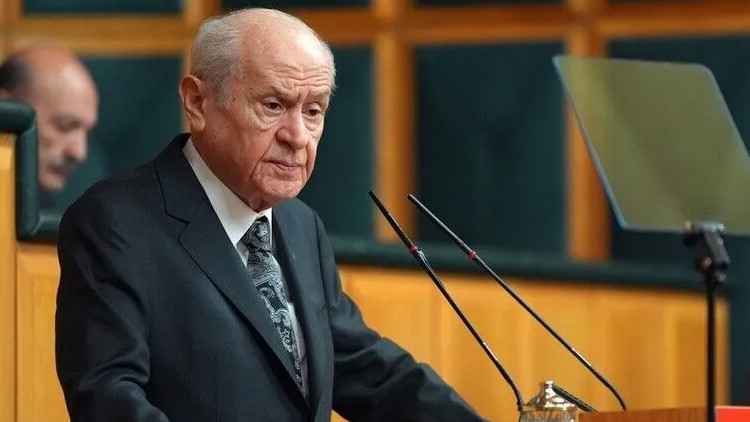
"I pray for God’s mercy upon our citizens who lost their lives and wish a speedy recovery to the injured," Bahçeli stated. He used these tragedies to underscore the urgent need for a national mobilization regarding urban transformation and public safety. He emphasized that the state’s efforts to rebuild risky areas, particularly those prone to earthquakes, must be completed with utmost speed to ensure the "sanctity of life" for all citizens.
A Turkey-Centered Geopolitical and Civilizational Identity
Transitioning to the broader geopolitical standing of the country, Bahçeli defined Turkey not merely as a nation-state but as the heir to a "glorious civilization" and a rich Turkish-Islamic tradition. He argued that Turkey’s historical depth and geographical position make it a natural center of gravity for global reconciliation and progress.

"Turkey is not just the name of a country; it is the address for new meetings and reconciliations in the world," Bahçeli told his deputies. He reiterated a core tenet of his political philosophy: that while ideological perspectives may differ among various political actors, the "political center" must always remain firmly rooted in Turkey. He called for the nation to move past "unproductive social debates" and focus its energy on building a prosperous future based on universal democratic values fused with ancient cultural roots.
Bahçeli expressed unwavering confidence in the Turkish people’s ability to create a new civilization. He argued that by integrating historical experience with contemporary achievements, Turkey could serve as a beacon of hope for "oppressed nations" seeking a free and honorable existence.
The Roadmap to a Terror-Free Turkey and Regional Stability

A significant portion of the MHP leader’s address was dedicated to the ongoing struggle against terrorism and the pursuit of regional peace. Bahçeli emphasized that the initiative to create a "terror-free Turkey" and a "terror-free region" would be pursued with "seriousness and sincerity." He warned that Turkey would not be deterred by external pressures or systematic attempts to weaken the state through economic or political sabotage.
"Turkey will not turn back from its path; the Turkish nation will not turn back from its decision," Bahçeli declared. He noted that throughout history, various methods—ranging from economic instability to social polarization and direct violence—have been employed by "enemies of Turkey" to divide the nation. He assured his audience that the current atmosphere of peace and security would be protected against all forms of provocation.
Bahçeli’s vision for a terror-free region extends beyond Turkey’s borders. He linked the country’s internal security to the broader stability of the Middle East, suggesting that a "consciousness of justice" and a "Turkey-centered civilization" are necessary to bring order to a region currently plagued by conflict.

Condemnation of Israeli Provocations and Houthi Attacks
The MHP leader turned his attention to the escalating tensions in the Middle East, specifically targeting the actions of the Israeli government and the Houthi movement in Yemen. He characterized the recent provocations at the Al-Aqsa Mosque—the first Qibla of Islam—as a manifestation of "Israeli barbarism."
Furthermore, Bahçeli addressed the Houthi attacks targeting Saudi Arabia and the holy lands of Islam. He argued that while the rhetoric of these different actors might vary, their actions serve the same purpose: destabilizing the region. "As the Nationalist Movement Party, we cannot remain silent or tolerant toward attacks on Al-Aqsa, the Kaaba, or the holy sanctuary of the Prophet," he said.
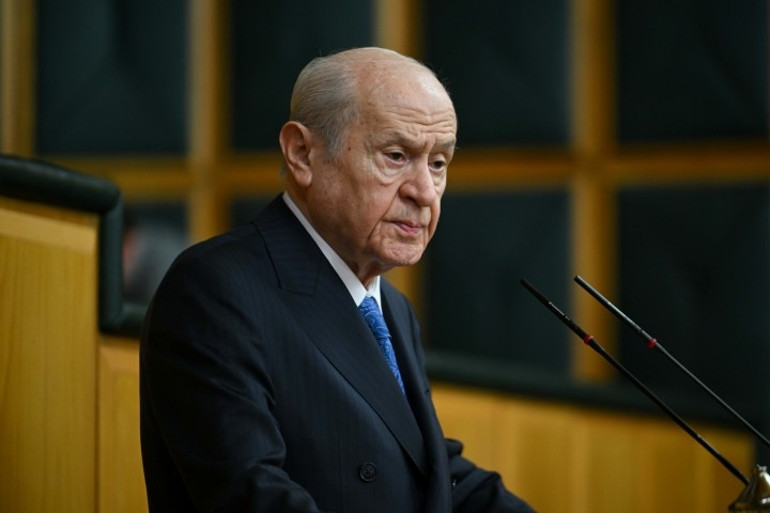
Invoking historical memory, Bahçeli reminded his audience of the "Medina Defense" led by Fahrettin Pasha during World War I, noting that the Turkish soldier earned the title "Mehmetçik" in those holy lands. He suggested that Turkey should not be indifferent to threats against Saudi Arabia’s sovereignty and proposed that Ankara should provide "all kinds of military support" to Riyadh within the framework of the Mecca Common Defense Agreement.
He cited specific data regarding the human cost of the conflict, mentioning an attack on Riyadh’s King Khalid International Airport on October 10 that left 13 dead and 309 injured, followed by another attack the next day. Bahçeli called for an immediate end to Houthi aggression and urged for a political solution in Yemen through dialogue and diplomacy, warning that those who "rub their hands in Tel Aviv" in hopes of a "brother-on-brother" conflict among Muslims must be met with a unified Islamic stance.
Stern Warnings to Athens Regarding Mediterranean Interests
Turning to the Aegean and Eastern Mediterranean, Bahçeli issued a sharp warning to the Greek administration. He criticized Athens for its attempts to form alliances with Israel and the Greek Cypriot administration to bypass Turkey’s maritime jurisdiction and rights. Specifically, he addressed the proposed electricity connection project between Greece, Cyprus, and Israel, which has received backing from the U.S. State Department.
Bahçeli asserted that Greece is making a "serious mistake" if it believes it can ignore Ankara’s objections by securing the support of third parties. "If the Greek government is arming itself to protect itself from us, I advise them to seek refuge in Turkish peace instead," Bahçeli remarked. "If they are arming themselves to scare us, they should never forget that no power can intimidate us."
He urged Greek politicians to realize that Turkey’s "respect and friendship" are far more valuable than any weapons or ammunition they might purchase from Israel. He called for an end to "unnecessary shows and hostilities," advocating for a resolution of disputes through dialogue that recognizes the sovereignty of the Turkish Republic of Northern Cyprus and Turkey’s "Blue Homeland" rights.
Corruption, the "Fund" Investigation, and the Opposition
In the domestic sphere, Bahçeli addressed high-profile corruption investigations and a controversial "fund" crisis that has dominated Turkish headlines. He called for a comprehensive "cleansing" of the political and public sectors, insisting that no irregularity or unlawful act should be protected by the law.
However, the MHP leader leveled heavy criticism at the opposition, accusing them of using the "fund" investigation—referring to a major financial fraud case—as an "escape ramp" to divert attention from corruption within opposition-run municipalities. He claimed that the opposition is attempting to "anesthetize" the public with the fund crisis while hiding the "immoral actions" of organized crime networks that have infiltrated local governments.
Bahçeli grounded his critique in the philosophy of Ziya Gökalp and Sabri Ülgener, arguing that morality is the bedrock of both the family and the state. "A society that has lost its moral ties will stumble in a state of social disorder," he said. He emphasized that MHP’s goal is to ensure that "justice is distributed on the scales of morality," starting with the institution of politics itself.
He urged state institutions to provide the public with accurate and transparent information regarding municipal corruption, ensuring that the "rights of the orphan" are protected. Bahçeli warned that systematic attempts to erode trust in state institutions are part of a larger plan to create the perception of a "unmanageable Turkey."
European Unrest vs. Turkish Educational Progress
In the final section of his speech, Bahçeli contrasted recent social unrest in Europe with Turkey’s achievements in education. He pointed to the student protests in France, where youths have taken to the streets to demand better school conditions and equality, as a sign of the "deteriorating social state" in Europe.
He criticized European leaders for their "hypocrisy," noting that those who frequently lecture Turkey on human rights and democracy have remained silent in the face of harsh police interventions and mass arrests in France. "The fact that European leaders do not speak out against the violence in France once again exposes Europe’s double standards," he noted.
Conversely, Bahçeli celebrated Turkey’s performance in the PISA 2025 results released by the OECD. He highlighted that Turkey was the OECD country that increased its scores the most in mathematics, science, and reading compared to the previous assessment. "This success is a concrete indicator of the progress Turkey has made in education," he said.
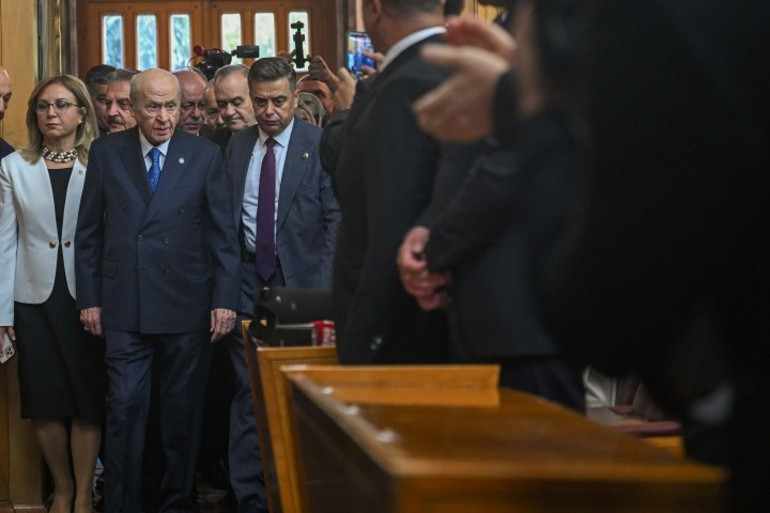
Bahçeli concluded his address by calling for a legislative year focused on solving the socio-economic problems of citizens. He urged his deputies to work with the spirit of the "People’s Alliance" (Cumhur İttifakı) to build a stronger state and a happier nation. Quoting the legendary folk poet Aşık Veysel, he ended with a plea for national unity: "Let us end slander and calumny / Let us love each other as brothers, soul to soul / Let us work for the Fatherland together / Let us build many schools and factories, brother."
The MHP leader’s speech serves as a comprehensive statement of intent, signaling that the party will remain a staunch defender of Turkey’s sovereign rights abroad while pushing for a rigorous moral and administrative overhaul at home.