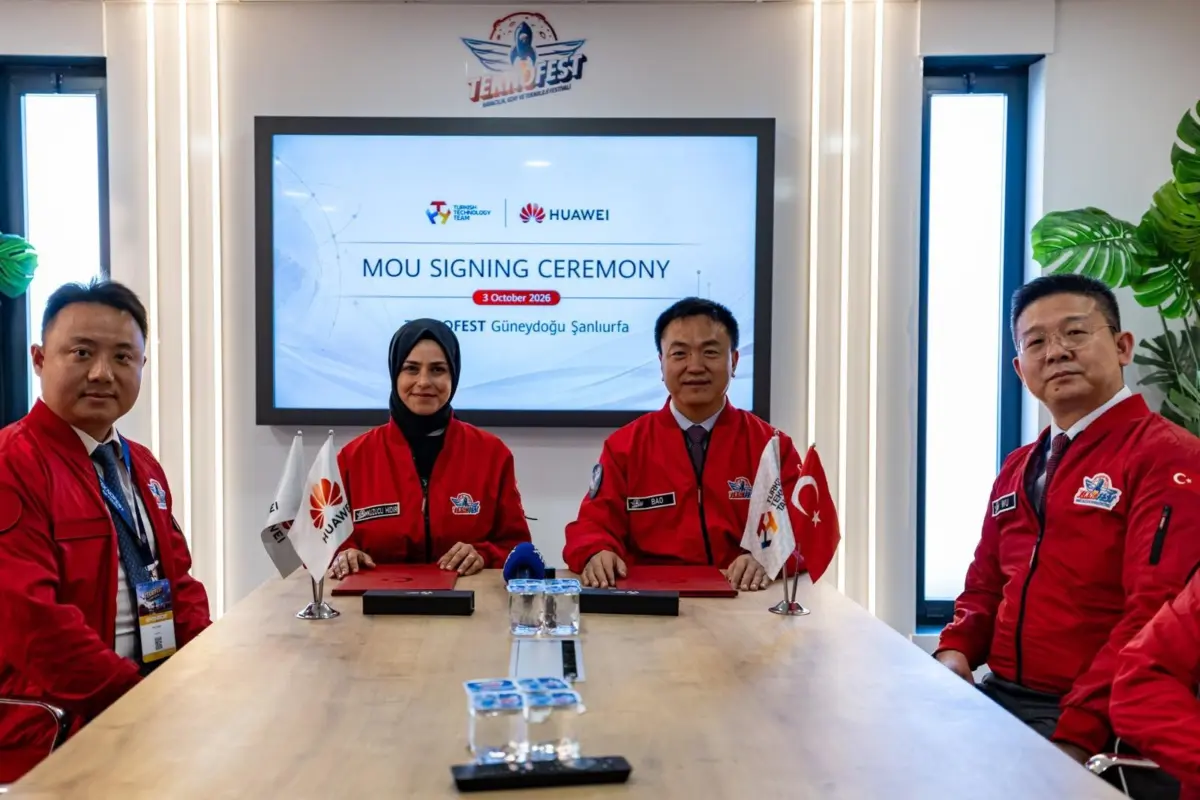
The Turkish Technology Team Foundation and Huawei Turkey have signed a strategic memorandum of understanding aimed at training qualified human capital in artificial intelligence, expanding educational access, and connecting students and young professionals with international growth opportunities.
In a landmark step aimed at bolstering the national digital ecosystem, the Turkish Technology Team Foundation (T3 Foundation) and Huawei Turkey have entered into a comprehensive strategic cooperation agreement centered on advancing education and expertise in artificial intelligence. Signed on October 3 during the TEKNOFEST Southeastern regional events held in the historic city of Şanlıurfa, the memorandum of understanding formalizes a joint commitment to nurture skilled personnel, expand educational access to cutting-edge technical fields, and align grassroots technological initiatives with the broad goals set out in Turkey’s National Artificial Intelligence Action Plan.
Under the terms of this newly cemented collaboration, both entities plan to execute structured, long-term programs designed to equip students, researchers, and emerging engineering professionals with the practical capacities and theoretical grounding demanded by today’s rapidly evolving global digital landscape. By pairing the non-profit reach and youth mobilization capacity of the T3 Foundation with the multinational technical expertise and industrial scale of Huawei Turkey, the partnership seeks to bridge the critical gap between academic knowledge and market-ready application in high-tech fields.
The formal signing ceremony took place amid the widespread technology exhibitions and student competitions that define the TEKNOFEST platform. Choosing TEKNOFEST Southeastern in Şanlıurfa as the venue underscores an intentional focus on regional accessibility and educational inclusivity, bringing advanced technological initiatives directly to dynamic communities across Anatolia. The partnership places special emphasis on ensuring that talented youth outside major metropolitan centers are afforded direct pathways to participate in the nation’s innovation economy, explore advanced computational fields, and connect with broader international platforms.
Central to the initiative is a shared dedication to supporting the objectives articulated in Turkey’s National Artificial Intelligence Action Plan. That policy blueprint outlines Turkey’s strategic intent to build domestic competencies, maintain sovereignty in emerging technologies, accelerate digital transformation across public and private sectors, and cultivate a sizable cohort of specialized professionals capable of leading next-generation industries. Through collaborative educational modules, hands-on development programs, and access to modern computational resources, the T3 Foundation and Huawei Turkey aim to create an environment where young talents do not merely consume technological tools developed abroad, but actively design, refine, and deploy innovative domestic solutions.
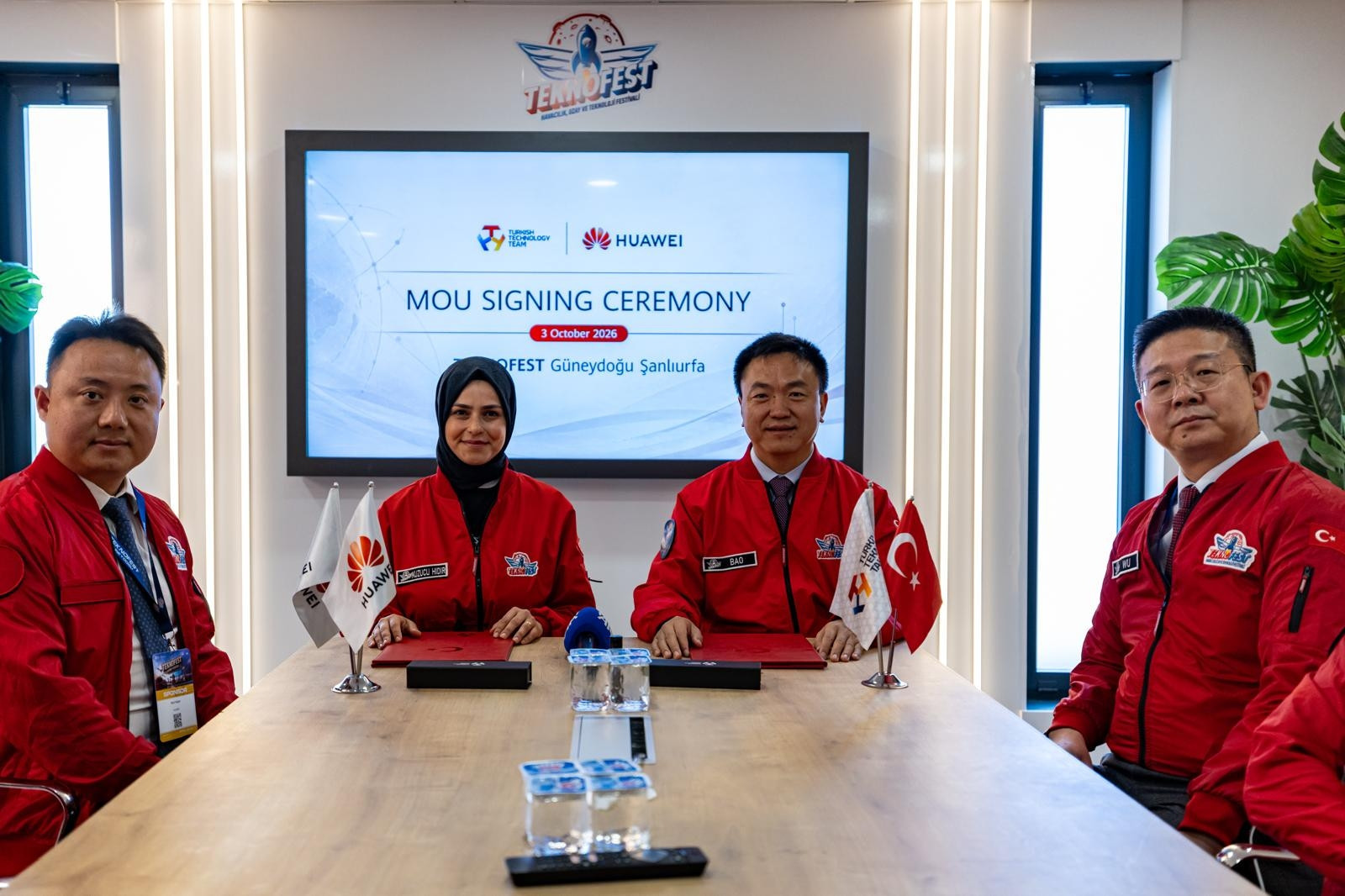
Addressing the significance of the partnership at the signing ceremony, Dr. Elvan Kuzucu Hıdır, Chairman of the Board of the T3 Foundation, highlighted that artificial intelligence represents far more than an incremental phase of digital automation. Rather, she emphasized its profound potential to reshape human society, tackle pressing global challenges, and create unprecedented avenues for socioeconomic advancement.
“Artificial intelligence, beyond being one of the most critical technologies shaping the future, holds the potential to generate solutions to the challenges humanity faces and to create new opportunities,” Dr. Elvan Kuzucu Hıdır remarked. “Transforming this potential into reality, however, is only possible through the cultivation of a qualified workforce that understands technology, actively develops it, and can translate it into tangible benefits for the public good.”
Dr. Hıdır reiterated that the core mission of the T3 Foundation remains rooted in clearing structural hurdles for ambitious youth, ensuring they possess the mentorship, resources, and encouragement required to bring visionary concepts into reality.
“As the T3 Foundation, our greatest priority is to ensure that our youth can access the opportunities they need throughout their personal journeys—from dreaming to producing, and from learning to innovating,” Dr. Hıdır stated. “We view this cooperation with Huawei as an essential milestone that will enhance our young people’s knowledge and skill sets, allow them to gain valuable experience on an international scale, and empower them to grow into influential, authoritative voices in the field of artificial intelligence.”

Her remarks reflect the wider operational ethos of the T3 Foundation, which has served as a driving force behind Turkey’s "National Technology Initiative." Through initiatives like nationwide technology workshops, community maker spaces, and the sprawling TEKNOFEST aerospace and technology festivals, the organization has consistently prioritized grassroots talent discovery. By establishing direct ties with established global enterprise leaders like Huawei, the foundation continues to diversify the specialized learning tracks available to young participants, exposing them to industry-grade workflows, cloud infrastructure, and enterprise artificial intelligence practices.
Speaking on behalf of the multinational telecommunications and tech enterprise, Huawei Turkey CEO Tonny Bao highlighted the mutual value of the strategic alignment and reinforced the company’s sustained commitment to investing in local human capacity.
“We are proud to collaborate with the T3 Foundation to train a qualified human resource base in the field of artificial intelligence in Turkey,” Tonny Bao said following the signing. “This memorandum of understanding is a clear testament to Huawei’s long-standing support for Turkey’s digital talent ecosystem. By bringing advanced technologies, comprehensive educational resources, and international opportunities directly to Turkish students and young professionals, we will actively assist them in acquiring the critical competencies required in the artificial intelligence era.”
Bao’s remarks point to Huawei’s established presence in Turkey, where the company maintains a dedicated local research and development ecosystem alongside its operational infrastructure. For multinational enterprise participants, engaging directly with youth-focused non-governmental organizations provides a direct pipeline to identify and cultivate innovative local talent. In providing access to training content, international benchmarks, and industrial platforms, Huawei aims to strengthen the digital literacy of the broader workforce, generating a ripple effect across multiple technological sectors.

The collaborative framework between the two organizations is structured around several foundational pillars. At the educational level, the parties plan to introduce comprehensive learning pathways focusing on core artificial intelligence disciplines, including machine learning, deep neural networks, computer vision, natural language processing, and big data engineering. These curricula will be made available to university students and early-career engineers seeking to expand their foundational knowledge into applied, real-world development.
Beyond standard theoretical instruction, the program aims to emphasize experiential learning through project-based challenges, technical workshops, and direct mentorship from experienced engineering teams. By engaging with complex real-world data sets and high-performance computing environments, participants will be encouraged to tackle localized challenges—such as agricultural optimization, smart urban management, environmental tracking, and industrial automation—using modern AI methodologies.
Furthermore, international exposure remains an essential component of the collaboration. Through Huawei’s expansive global network, the initiative plans to offer promising young developers opportunities to interact with international developer communities, showcase their projects on global stages, and gain insight into international best practices. This global perspective is designed to ensure that Turkish youth develop not only technical acumen, but also the communicative and professional adaptability needed to thrive in multinational engineering teams.
The announcement comes at a pivotal time when governments and technology ecosystems worldwide are actively competing to attract, retain, and develop specialized technical talent. As artificial intelligence models become increasingly integrated into core infrastructure, financial systems, industrial manufacturing, and public administration, the global demand for skilled AI engineers, researchers, and system architects has far outstripped current supply. By taking proactive measures to educate and empower emerging professionals at home, Turkey aims to build a self-sustaining technological ecosystem capable of maintaining economic competitiveness and driving high-value domestic productivity.

Through the planned joint initiatives in Şanlıurfa and across the country, both the T3 Foundation and Huawei Turkey seek to ensure that local talent is comprehensively supported at every stage of their technical development. By fostering an environment where young people can transition seamlessly from passive consumers of foreign software into active creators of novel, transformative tools, the partnership aspires to establish a sustainable talent pipeline that will power the nation’s technological and industrial ambitions for years to come.