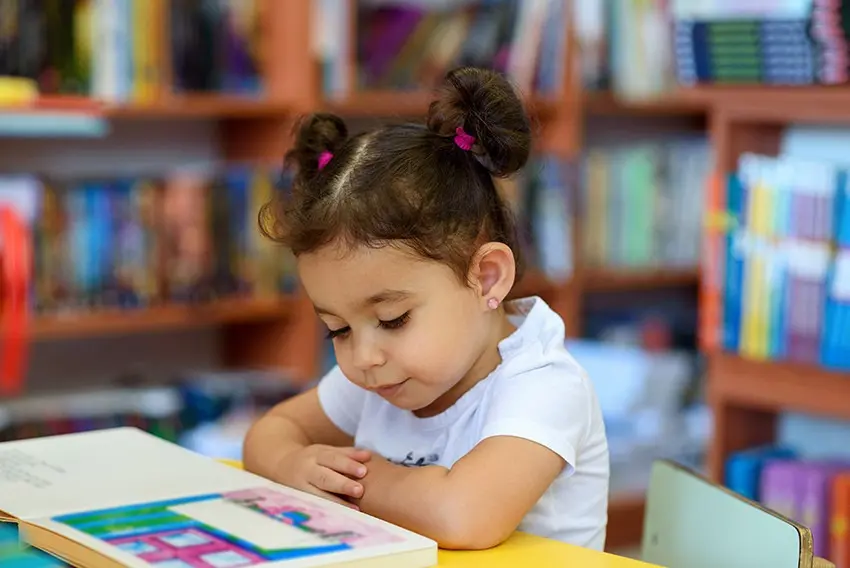
In storybooks and educational materials read by millions of young children, narrative plots frequently grapple with complex, painful, or bewildering human feelings. A main character might endure deep grief, flash with intense anger, or tremble in terror. Yet, when young readers look at the accompanying artwork on the page, they are almost invariably greeted by serene, smiling, or cheerful faces.
A study titled "(How) Do We Teach Emotions?" reveals a profound emotional disconnect between what children read in text and what they see in illustrations. Conducted by an interdisciplinary team of researchers from the University of Chicago, the University of Wisconsin–Madison, and the University of Texas at Austin, the comprehensive study demonstrates that while children’s literature and elementary textbooks contain a wide spectrum of human emotional experiences in their written narratives, visual artwork is heavily sanitized through a "positivity filter" that overwhelmingly defaults to happiness and calm.
According to child development experts and educators, this visual disconnect sends an implicit and potentially harmful message to young readers: regardless of what you are suffering or feeling on the inside, you must always project a happy facade to the outside world.
Eight Emotions in Words, Only Two in Pictures
The study examined a massive corpus encompassing elementary school textbooks used across the United States over the past three decades alongside roughly a century of award-winning children’s literature. To achieve unprecedented analytical scale, researchers leveraged advanced artificial intelligence tools to process 1,306 distinct books, analyzing a staggering 3,361,000 sentences.
The investigative framework evaluated eight fundamental emotional categories across both written texts and visual illustrations: anger, calm, confusion, disgust, fear, happiness, sadness, and surprise.
While textual narratives routinely engaged all eight emotions to build compelling storylines and depict realistic human struggles, the visual landscape was strikingly monochromatic. Approximately 90 percent of all visual depictions across the sampled books portrayed characters experiencing only two emotions: happiness or tranquility.
When researchers matched illustrations directly with the corresponding text on the exact same page, the emotional rift became even more pronounced. Pages whose text explicitly described character anger featured angry facial expressions in illustrations only 13 percent of the time. The visual alignment dropped even lower for other emotions: scenes depicting fear in text showed fearful expressions in illustrations in just 9 percent of cases, textual sadness was visually mirrored in only 10 percent of pages, and textual surprise yielded matching artwork in a mere 8 percent of instances.
Overall, nearly half of all analyzed pages exhibited a complete lack of emotional correspondence between text and artwork. Only about 10 percent of pages demonstrated full alignment where the emotion expressed in words was accurately reflected in the visual depiction.
To ensure these discrepancies were not simply the result of artwork focusing on a secondary character who felt differently than the narrator, researchers controlled for character identity by matching gender and racial characteristics. The findings remained unchanged: regardless of what intense emotional turmoil a specific character endured in the prose, illustrations consistently rendered them in a state of placid composure.
The Same Pattern Across Textbooks and Demographics
The emotional distortion was not confined to fictional narrative literature; it extended equally into educational courseware. The researchers systematically analyzed third-grade and fifth-grade textbooks across core academic disciplines, including science, social studies, and language arts.

To test whether regional, political, or cultural variations influenced how emotions were presented to schoolchildren, the study compared instructional materials approved for use in two distinct US states known for divergent political and educational policy climates. The results were uniform across the board. The overwhelming prevalence of "happy and calm" visual imagery persisted across both states, across all subject matters, and across both grade levels, demonstrating an industry-wide convention in educational publishing.
In the award-winning children’s literature analyzed, sadness appeared with higher frequency in the written prose, yet the accompanying illustrations continued to be dominated by scenes of happiness and calm.
The study also illuminated intriguing demographic patterns in how emotions are assigned to characters based on gender and age within written narratives versus visual depictions.
In written text, female characters were more frequently associated with sadness, whereas male characters were more commonly linked to anger. Child characters were primarily depicted in text as experiencing fear and confusion, while adult figures were more likely to express anger or calm composure.
However, when these characters were translated into visual artwork, these demographic distinctions dissolved into sanitized tropes. In illustrations, female characters were overwhelmingly depicted as happy, while male characters were predominantly portrayed as calm.

Does Cover Expression Dictate a Book’s Commercial Fate?
Beyond the internal pages of textbooks and storybooks, the researchers examined the commercial and institutional mechanics driving this emotionally sanitized artwork, focusing specifically on book covers. They analyzed the relationship between cover art facial expressions, consumer purchasing patterns, and library selection metrics.
The data revealed clear economic incentives favoring forced positivity. Books that featured exclusively happy or calm characters on their covers enjoyed significantly higher commercial sales and were borrowed far more frequently from libraries compared to titles that displayed characters exhibiting sadness, fear, or anger on their front cover.
Remarkably, the market bias against negative emotional expressions is so strong that book covers featuring no human characters at all outperformed books whose covers dared to illustrate "negative" human emotions. This commercial reality suggests that publishers, art directors, and consumers perpetuate an implicit censorship, favoring sanitized covers under the assumption that parents and buyers seek unyielding optimism for young readers.
Can Artificial Intelligence Accurately Read Human Emotion?
To conduct an analysis of this unprecedented scale, the research team employed state-of-the-art computational models. Written text across the dataset was categorized using the language model GPT-4o-mini, while visual imagery, character identification, and facial expression analysis were performed using Gemini 2.5 Pro Preview.
Methodologically, analyzing human facial expressions and subtle textual nuances via artificial intelligence presents potential technical challenges, particularly regarding the model’s capacity to distinguish subtle boundaries between active happiness and quiet calm. Recognizing these potential limitations, the researchers subjected their AI-driven findings to rigorous validation protocols.

The team cross-verified AI classifications against traditional lexicon-based text analysis tools, alternative large language models, conventional facial recognition software, and extensive manual coding performed by human evaluators. Across every validation methodology, the central conclusion held firm: written narratives in children’s books offer a rich, multi-faceted emotional universe, whereas visual illustrations operate within a highly restricted spectrum heavily biased toward joy and serenity.
Happy Faces on Every Page Aren’t Always Helpful
Educational specialists and child psychologists warn that this visual smoothing of emotional distress may have unintended consequences for childhood development and emotional literacy.
Prof. Dr. Erten Gökçe, Head of the Department of Elementary Education at Ankara University’s Faculty of Educational Sciences, stresses that plastering happy faces across every page of a book does not inherently make it more beneficial for a child.
"Plastering happy faces on every single page of a children’s book does not mean that book is better or healthier for a child," Gökçe explained. "When a child observes a book’s protagonist experiencing sadness, grief, or fear, it gives them an invaluable opportunity to recognize, name, and process their own complex feelings. If the character’s facial expression in the artwork fails to reflect that emotion, the visual narrative remains fundamentally incomplete."
Gökçe emphasizes that when visual artwork fails to validate textual emotion, children may struggle to build emotional resonance and self-awareness. He advises parents and educators to take an active role in bridging this gap during shared reading sessions.
"Parents and teachers should look beyond bright colors and cheerful drawings when selecting books," Gökçe recommended. "They can guide children toward deeper critical thinking by asking reflective questions, such as: ‘What do you think the hero is feeling in this part of the story, and do we actually see that emotion in their face on the page?’ Such inquiries encourage children to actively evaluate both textual context and visual representation."
Aligning the Author’s Words with the Illustrator’s Canvas
The disconnect between text and artwork also highlights structural challenges within the publishing industry. Dilek Bozan, an experienced literature teacher and editor of children’s cultural books, highlights how visual storytelling directly influences young readers’ psychological development and their capacity for empathy.
"In children’s literature, the fidelity with which a text’s emotional core is translated into artwork directly determines the quality of the connection a young reader forms with the book," Bozan said. "When a child reads about a hero experiencing profound sorrow or anxiety but cannot find any trace of that struggle in the artwork, they are unable to make sense of their own internal emotional turmoil. This mismatch can inadvertently lead children to experience feelings of isolation, confusion, or even guilt, making them feel as though their own negative emotions are abnormal or improper."
Bozan explained that publishing workflows often struggle to maintain emotional harmony between text and visual art due to differing creative interpretations.
"In the publishing process, we frequently encounter challenges regarding emotional alignment," Bozan noted. "An illustrator often interprets an author’s manuscript through their own artistic lens, which can lead to discrepancies. For instance, we have encountered cases where an author wrote a deeply moving scene about a child character dealing with severe grief over a friendship conflict, yet the illustrator depicted the character with a beaming, radiant smile."

Bozan emphasized that balancing artistic freedom with narrative fidelity is essential for producing emotionally authentic literature.
"Both the writer and the illustrator possess unique creative visions and expressive styles, making absolute synchronization challenging," Bozan added. "However, real life is not made up solely of endless joy. Children require emotionally balanced books that normalize and validate anger, anxiety, grief, and vulnerability. Thanks to modern digital collaboration tools, editors, authors, and illustrators can now communicate more closely to ensure that the emotional weight carried in the written word is faithfully mirrored on the illustrated page."