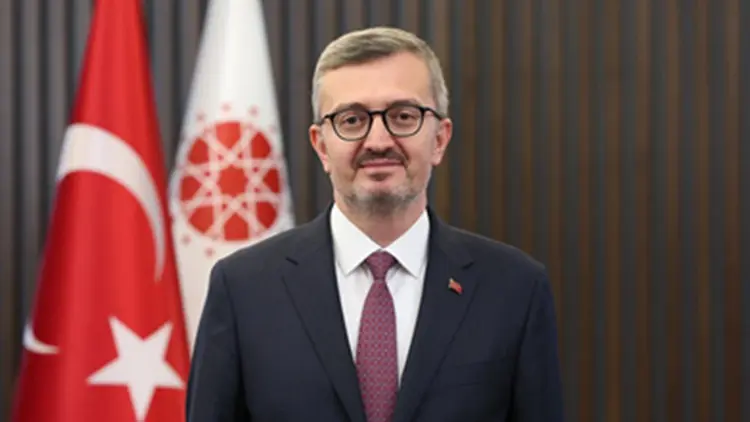
ANKARA — In a significant move to amplify Turkey’s long-standing diplomatic advocacy for global institutional reform, the Presidency’s Director of Communications, Burhanettin Duran, has provided an in-depth evaluation of a recent op-ed penned by President Recep Tayyip Erdoğan for Bloomberg. The article, which carries the pointed title "The United Nations Security Council Must Abolish the Veto Right," serves as a definitive manifesto for Turkey’s vision of a restructured international order. Through a series of statements shared on his social media accounts, Duran underscored the necessity of the President’s message, framing it as a vital roadmap for a more equitable and functional global governance system.
The timing of the President’s article and Duran’s subsequent commentary coincides with a period of intense global scrutiny regarding the efficacy of the United Nations. As international conflicts and humanitarian crises continue to test the limits of multilateralism, Turkey has positioned itself at the forefront of the debate, arguing that the structures established in the immediate aftermath of the Second World War are no longer fit for the complexities of the 21st century. Duran’s assessment highlights that the current system, designed to reflect the power balances of 1945, fails to account for the diverse voices and shifting geopolitical realities of the modern era.
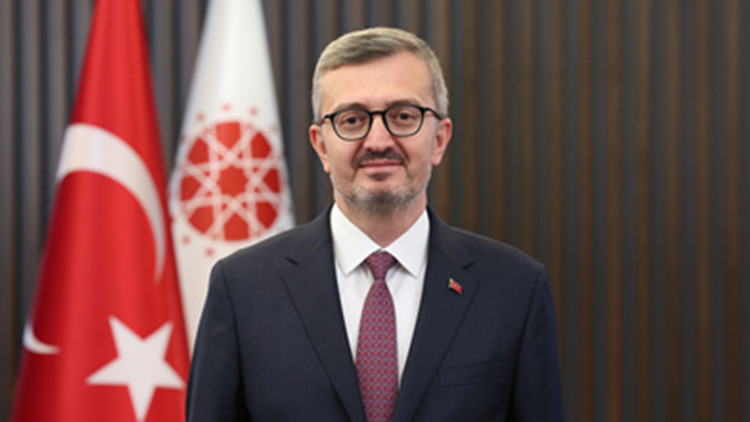
In his detailed analysis, Director Duran pointed out that President Erdoğan’s article explicitly identifies the structural inadequacies of the UN Security Council (UNSC) as a primary obstacle to global peace and security. The core of the critique lies in the veto privilege held by the five permanent members—the United States, Russia, China, the United Kingdom, and France. According to Duran, the President’s message is clear: the resolution of global issues and the maintenance of international security can no longer be left to the unilateral will and strategic interests of just a handful of nations. This concentration of power, Turkey argues, leads to institutional paralysis, where the collective conscience of the international community is frequently sidelined by the individual agendas of the "Permanent Five."
Expanding on the President’s reformist vision, Duran emphasized that the call for "a fairer world" is not merely a rhetorical flourish but a concrete demand for structural change. He noted that the "World is Greater Than Five" slogan, which has become a hallmark of Turkish foreign policy under President Erdoğan’s leadership, represents a fundamental shift toward a more inclusive, effective, and accountable international order. The Director of Communications stressed that real reform must begin with the abolition of the veto privilege in the UNSC. This step is viewed by the Turkish leadership as the essential starting point for transforming the council from a site of geopolitical maneuvering into a body that truly represents the interests of all member states.
The proposed reforms outlined in the Bloomberg article and echoed by Duran involve a significant redistribution of authority within the United Nations. A key component of this vision is the strengthening of the UN General Assembly. By empowering the General Assembly, Turkey aims to ensure that the broader international community has a more decisive role in global decision-making processes. Duran highlighted the President’s insistence that elected members of the Security Council must gain more weight in deliberations. The goal is to create a system where no single country possesses the power to obstruct the collective will of the majority of the international community.

Duran’s commentary further elaborated on the qualitative aspects of the proposed "new global order." He described the President’s approach as one that seeks to build a framework that is not only more representative but also more transparent and accountable. In the current setup, the lack of accountability for the permanent members often results in a double standard in the application of international law. By advocating for a system where all nations are held to the same standards and where decision-making is more democratic, Turkey is presenting a blueprint for what Duran describes as a "fairer world."
The Director of Communications also noted that President Erdoğan’s approach goes beyond identifying problems; it offers a comprehensive roadmap. This roadmap is built on the integration of the experiences, capacities, and collective will of different geographies. Turkey argues that regions such as Africa, Latin America, and the Middle East, which are often the most affected by Security Council decisions, must have a seat at the table where those decisions are made. Duran stated that the President’s perspective seeks to find a common ground where the diverse perspectives of the global community can converge to address shared challenges, from climate change and economic inequality to terrorism and regional instability.
Turkey’s advocacy for these reforms is presented as a natural extension of its own diplomatic evolution and historical identity. Duran emphasized that Turkey’s commitment to building a more just world is supported by its deep-rooted state tradition, its significant diplomatic capacity, and its extensive experience in multilateral diplomacy. Over the past two decades, Turkey has increasingly positioned itself as a mediator in global conflicts and a vocal advocate for the rights of the "Global South." This role, Duran suggests, gives Turkey the credibility and the necessary perspective to lead the conversation on international reform.

The Director’s statements also touched upon the practical necessity of these changes. He argued that the persistent failure of the UN Security Council to act decisively in the face of humanitarian catastrophes and blatant violations of international law has eroded the institution’s legitimacy. If the United Nations is to remain relevant and effective in the coming decades, it must undergo a profound transformation. The President’s call to abolish the veto right is framed as a rescue mission for the spirit of multilateralism, intended to restore faith in the possibility of collective action.
Furthermore, Duran underscored that Turkey’s efforts in this arena are not solitary. By publishing these views in an influential international outlet like Bloomberg, President Erdoğan is engaging with a global audience, including policymakers, academics, and the international public. The aim is to build a broad coalition of nations that recognize the need for change. Duran’s social media outreach serves to reinforce this message, ensuring that the nuances of Turkey’s position are understood both domestically and internationally.
The evaluation provided by Burhanettin Duran reflects a cohesive and determined strategy within the Turkish Presidency to challenge the status quo of global governance. By focusing on the veto privilege as the "starting point" for reform, Turkey is targeting the very heart of the post-war international system. The message communicated by Duran is that the world has outgrown the constraints of the 1945 settlement and that the demand for a more democratic and representative UN is no longer an optional debate but a historical necessity.

As Turkey continues to champion the cause of "a fairer world," its diplomatic initiatives are expected to remain focused on these core themes of representation, accountability, and the democratization of international institutions. Duran concluded his assessment by reaffirming that Turkey will continue to contribute to the construction of this new order, utilizing all its diplomatic resources and state experience to advocate for a system that serves the many rather than the few.
The discourse surrounding President Erdoğan’s Bloomberg article and Director Duran’s subsequent analysis highlights a pivotal moment in Turkish foreign policy. It marks a transition from criticizing the existing system to providing a structured and philosophical framework for its replacement. As the international community grapples with the limitations of current global structures, Turkey’s vocal and detailed call for reform ensures that the debate over the future of the United Nations remains at the center of the global political agenda. The emphasis on inclusivity and the removal of "privileges" remains the cornerstone of Ankara’s vision for the "Century of Türkiye" on the international stage.