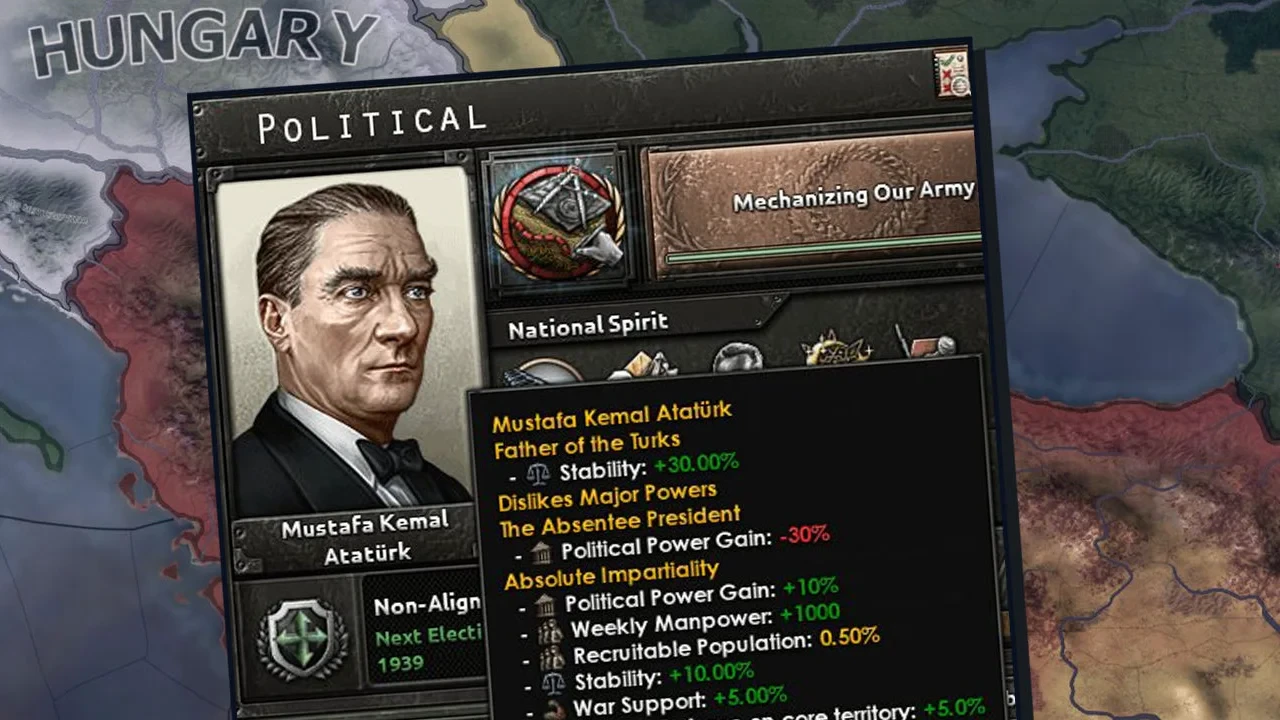
Swedish video game publisher and developer Paradox Interactive has found itself at the center of a growing controversy within the global gaming community. The Stockholm-based company, widely celebrated for its complex and deeply detailed historical grand strategy games, is facing severe backlash from Turkish players over the visual representation and textual depiction of Mustafa Kemal Atatürk, the founding father of the Republic of Turkey, in its upcoming strategy project.
The dispute, which began circulating across social media platforms, dedicated gaming forums, and digital distribution networks, centers on an alternative history scenario and leader model designed for the new title. Turkish gamers argue that the portrait of Atatürk is uncharacteristically low in quality, distorted, and disrespectful, while the accompanying in-game text fails to accurately represent the historical realities of Turkey’s struggle for independence and the sweeping reforms that followed.
The Core of the Dispute: Visual and Narrative Representation
Paradox Interactive has built a global reputation on titles such as Crusader Kings, Europa Universalis, Victoria, and Hearts of Iron. These franchises allow players to steer nations through critical historical eras, often presenting "what-if" scenarios that diverge from actual history. However, the developer’s latest project has sparked intense criticism for crossing the line from creative alternative history into what many Turkish players view as historical distortion and visual negligence.
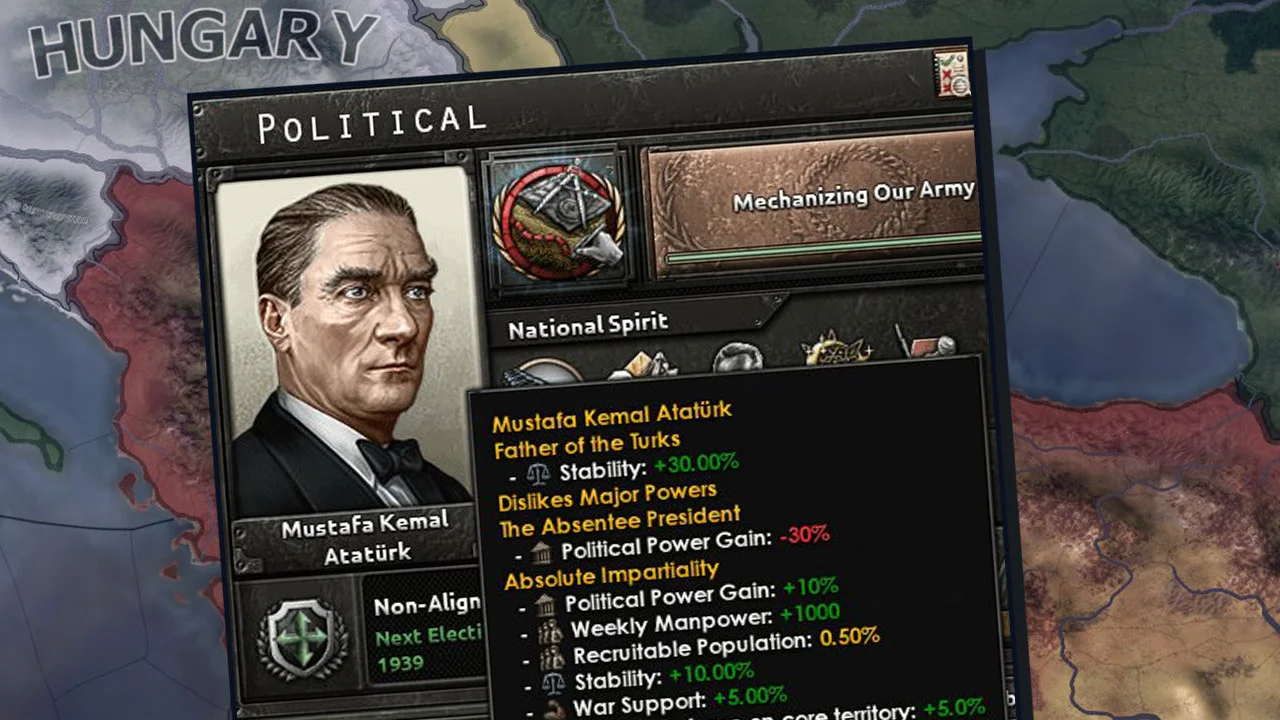
According to community feedback, the visual assets created for Mustafa Kemal Atatürk appear noticeably unpolished or deliberately altered when compared to the highly detailed and respectful portraits of other contemporary world leaders in the game. Players argue that the character model lacks the fidelity and dignity expected for a figure of such immense historical importance.
Beyond the aesthetic concerns, the narrative framing of the era has also drawn sharp criticism. Players who analyzed the preview content and promotional materials pointed out that the in-game text describing the Turkish War of Independence and the subsequent modernization reforms presents a highly biased, incomplete, and historically inaccurate perspective. Critics argue that the descriptions minimize the hardships of the independence struggle and misrepresent the nature of the secular and democratic reforms implemented during the early years of the Republic.
As these details spread across Turkish gaming forums and social media platforms, the initial disappointment quickly transformed into an organized campaign demanding immediate action from the developer.
Organized Backlash: Review Bombing and Boycott Calls
The reaction from the Turkish gaming community has been swift and highly coordinated. Within hours of the content being revealed, players began organizing protest actions across various digital channels. The primary battlegrounds for this backlash have been Steam—the world’s largest digital PC gaming storefront—and Paradox Interactive’s official community forums.
To voice their displeasure, Turkish players have initiated a "review bombing" campaign. This practice involves leaving highly critical, negative reviews on Paradox Interactive’s existing catalog of games to lower their overall user ratings and draw the attention of both the developer and potential buyers. Through this mechanism, the community hopes to exert financial and reputational pressure on the company.
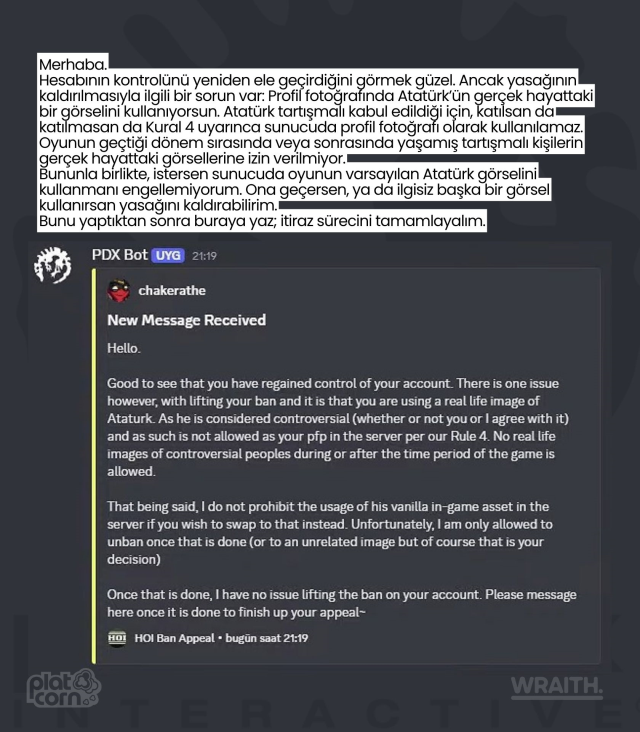
On the official Paradox Interactive forums and subreddits, the discussion has quickly moved to the top of the community pages. Turkish players, supported by some international history enthusiasts, have laid out clear demands for the development team:
- A complete visual redesign of Mustafa Kemal Atatürk’s portrait to match the high-quality standards applied to other historical leaders in the game.
- A thorough revision of the in-game text and historical descriptions to ensure they present an objective, accurate, and respectful account of the Turkish War of Independence and the country’s foundational reforms.
- An official acknowledgment from Paradox Interactive addressing the community’s concerns and outlining the steps the company plans to take to resolve the issue.
Many community leaders have also called for a total boycott of the upcoming title and any associated downloadable content (DLC) if the developers refuse to address these concerns before the official release.
The Historical and Cultural Context of Atatürk’s Legacy
To understand the intensity of the backlash, it is necessary to examine the unique cultural and historical status that Mustafa Kemal Atatürk holds in modern Turkey. As the military commander who led the Turkish National Movement during the War of Independence following World War I, and as the first President of the Republic of Turkey, Atatürk is widely regarded as a national hero.
His legacy is characterized by a series of radical political, legal, cultural, and social reforms designed to transform the ruins of the Ottoman Empire into a modern, secular, and democratic nation-state. These reforms included the adoption of a new Latin-based alphabet, the introduction of equal rights for women, the secularization of the legal system, and the promotion of scientific education.
In Turkey, Atatürk’s memory is protected by both deep societal reverence and specific legal frameworks. Consequently, any media portrayal—whether in film, literature, or interactive entertainment—that is perceived as belittling, defacing, or misrepresenting his image and legacy is met with intense public sensitivity. For Turkish gamers, seeing a historical figure of this magnitude treated with what they perceive as carelessness or bias is not merely a matter of historical inaccuracy, but a profound cultural slight.
Paradox Interactive’s Track Record and the Path Forward
This is not the first time Paradox Interactive has had to navigate the complex waters of geopolitical and historical sensitivities. Given the nature of grand strategy games, which frequently deal with sensitive historical periods, disputed borders, and controversial political figures, the company has occasionally run into diplomatic and cultural roadblocks in various regions.
In the past, Paradox has demonstrated a willingness to adapt its content to respect local laws and cultural expectations. The company has previously adjusted historical maps, altered flag designs, and modified leader portraits in response to feedback from different national communities. These changes are typically delivered through post-launch patches, localized versions, or specialized updates.
However, the current situation presents a significant public relations challenge in a highly lucrative region. Turkey represents a rapidly growing and incredibly passionate market for PC gaming, particularly for the grand strategy genre. Paradox titles have historically enjoyed a dedicated and active player base in the country, making the management of this crisis crucial for the company’s long-term regional reputation and market share.
At the time of writing, Paradox Interactive has not issued an official response or statement regarding the protests. Whether the development team will quietly implement visual and textual updates in the game’s final build, release a formal apology, or engage in a direct dialogue with the Turkish community remains to be seen. As the campaign continues to gain traction, the resolution of this dispute will likely serve as a case study in how modern game developers balance creative freedom and alternative history with cultural respect and community relations.