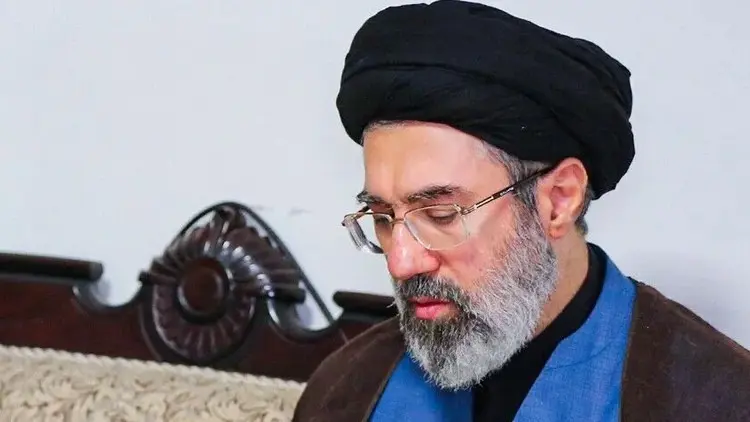
Assembly of Experts Member Ayatollah Mohsen Heidari Discloses Details of Mojtaba Khamenei’s Wartime Injuries, Hospital Bombings, and Succession to Supreme Leadership
In a significant revelation detailing the intense vulnerabilities and high-stakes transitions at the apex of the Islamic Republic of Iran, a senior clerical official has disclosed that Iranian leader Mojtaba Khamenei survived multiple targeted strikes at the onset of war, ultimately being pulled alive from the rubble of a devastated medical facility before his elevation to supreme authority.
The accounts were made public by Ayatollah Mohsen Heidari, a prominent member of Iran’s Assembly of Experts, during an extensive interview broadcast by the Al-Araby television network. According to Heidari, Mojtaba Khamenei was initially wounded during a direct assault on the official compound of his father, Iran’s former Supreme Leader Ayatollah Ali Khamenei, during the opening phase of hostilities. Following that initial strike, an aggressive campaign pursued him across the healthcare infrastructure, culminating in the destruction of three separate medical centers where he was suspected of receiving treatment.
The disclosures provide an unprecedented public accounting of the perilous physical circumstances surrounding the succession of power in Tehran, shedding light on the clandestine assessments and rapid decision-making that propelled Mojtaba Khamenei to the station of Leader of the Revolution amid active military conflict.
Targeted Strikes on Leadership Compounds and Healthcare Facilities
According to Heidari’s testimony, the sequence of events began with an attack aimed directly at the administrative and executive nerve center of the Islamic Republic: the office of former Supreme Leader Ali Khamenei. It was during this opening offensive that Mojtaba Khamenei sustained wounds significant enough to necessitate immediate, intensive medical intervention and emergency evacuation to a hospital setting.
What ensued, as recounted by the Assembly of Experts member, was a determined effort by adversary forces to eliminate him while hospitalized. Heidari stated that the United States and Israel carried out coordinated bombardments against three medical institutions assessed as potential locations where the wounded leader might have been transferred for emergency trauma care.
The campaign against these healthcare facilities reached its climax at the third targeted site, which suffered catastrophic structural destruction from the bombardment. Heidari stated that Mojtaba Khamenei was trapped beneath the collapsed building materials and had to be extricated directly from the debris by emergency rescue personnel. Despite the destruction of the medical complex, he survived the collapse and was subsequently transferred to secure, undisclosed facilities to continue his recovery away from exposed civilian and medical infrastructure.
The targeting of three separate hospitals underscores the severity of the intelligence and aerial campaign waged against Iran’s leadership apparatus during the conflict. Heidari’s account presents an environment wherein conventional sanctuaries, such as civilian medical installations, offered little protection against precise tracking and sustained aerial bombardment aimed at decapitating the nation’s political and clerical command structure.
Health Verification and the Evaluation of Jurisprudential Competence
Following his survival and rescue from the debris of the third bombed hospital, serious concerns emerged regarding his physical viability and mental capacity to shoulder the immense burdens of state leadership during a national emergency. Heidari emphasized that in the critical period that followed, the senior clerical establishment initiated a careful process to ascertain whether he retained the necessary attributes to govern.
According to Heidari, members of the Assembly of Experts—the deliberative clerical body constitutionally empowered to appoint, oversee, and dismiss the Supreme Leader—received comprehensive assessments confirming that his physical health had stabilized and that his medical recovery was on solid ground.
Beyond physical health, the clerical leadership placed paramount importance on the constitutional and theological prerequisites governing the supreme office. Heidari noted that the Assembly undertook a rigorous evaluation to confirm his mastery of Islamic jurisprudence (fiqh) and his capacity for statecraft. Under Iran’s constitutional framework, the Supreme Leader is not merely a political figurehead or military commander-in-chief, but the Vali-e Faqih—the Guardian Jurist—entrusted with ensuring that the governance of the nation remains firmly anchored within Islamic law while demonstrating administrative competence (tadbir), political courage, and resourcefulness.
Heidari noted that the Assembly verified both his comprehensive grasp of religious legal scholarship and his executive competence to steer the state through severe turmoil. These evaluations formed the legal and theological foundation required to validate his standing among the senior hierarchy of the Shia clerical establishment, answering persistent questions regarding his readiness to assume the country’s most powerful mantle.
An Autonomous Election by the Assembly of Experts
One of the most consequential assertions made by Ayatollah Heidari during his interview was the entirely unilateral and autonomous manner in which the Assembly of Experts conducted the leadership vote. Heidari explicitly declared that the clerical assembly elected Mojtaba Khamenei as Leader of the Revolution without engaging in consultations with any outside institutions, administrative bodies, or political organizations.

This declaration serves to underscore the constitutional prerogatives claimed by the Assembly of Experts, which operates as an independent constitutional body tasked exclusively with deciding the leadership question. In historical transitions, deliberations surrounding succession have often been viewed as vulnerable to external lobbying from powerful military institutions, security agencies, or parliamentary factions. Heidari’s statements sought to dispel any notion that external pressure or institutional negotiation dictated the selection, asserting that the clerics acted solely within their own constitutional mandate to fill the vacuum of supreme power.
The decision to bypass external state apparatuses and political organs reflected the urgency of the wartime environment. With the nation actively engaged in hostilities, its leadership targeted by direct strikes, and its infrastructure under sustained threat, the Assembly acted with insular dispatch to ensure unbroken continuity in the chain of supreme religious and military command. The rapid elevation of Mojtaba Khamenei was designed to project absolute stability, institutional cohesion, and unyielding resistance at a moment of profound vulnerability.
Geopolitical Repercussions and the Narrative of Survival
Heidari’s public revelations provide an extraordinary window into the operational realities confronting Tehran during the conflict. By framing Mojtaba Khamenei’s ascent through the lens of survival—enduring direct strikes on his family compound and emerging from the ruins of a bombed hospital—the narrative positions the new leader not merely as a political successor, but as an active participant in the physical perils of the conflict.
The interview granted to Al-Araby constitutes an intentional public broadcast to the wider Arab and international world. By openly accusing the United States and Israel of orchestrating strikes against three medical installations in an effort to eliminate him, Tehran reinforces its diplomatic and legal arguments regarding adversary violations of international norms protecting healthcare facilities during armed conflict. Simultaneously, the disclosures project an image of resilience, demonstrating that despite high-level intelligence penetration and precise strikes, the Islamic Republic’s core leadership mechanisms remained intact, functional, and capable of executing decisive constitutional duties under extreme duress.

The transition of supreme power from Ayatollah Ali Khamenei to his son Mojtaba has long been one of the most intensely scrutinized topics in contemporary Middle Eastern politics. For years, observers speculated on whether such a transition could overcome institutional resistance, public skepticism regarding hereditary succession, and rigorous theological scrutiny. According to Heidari’s account, the realities of total warfare transformed the theoretical debate into an immediate operational imperative. Surviving targeted strikes and structural collapse, the younger Khamenei emerged from the rubble of a bombed hospital with his health verified, his jurisprudential credentials confirmed by the Assembly, and the undivided, autonomous backing of the clerical body responsible for steering the republic’s destiny.