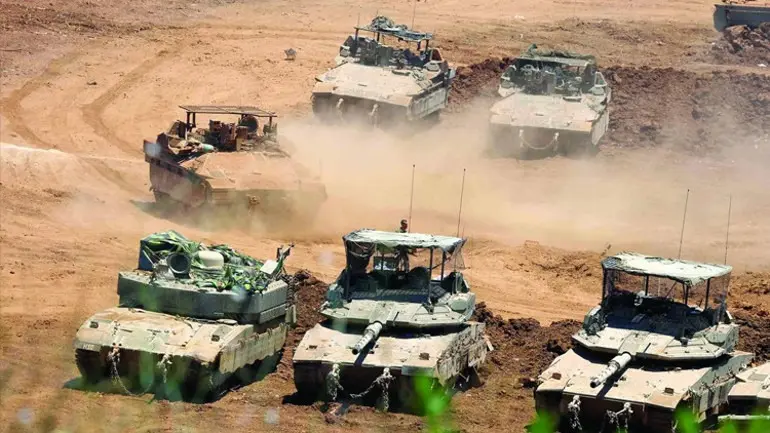
Israeli Defense Minister Yisrael Katz has issued a stark warning that Israel is fully prepared to widen its military occupation of southern Lebanon, launch a broader ground offensive, and absorb critical Lebanese territory into permanent security zones if the Lebanese armed group Hezbollah coordinates with Iran in military strikes against Israel.
The threats, delivered during a high-level operational assessment in Israeli-occupied territory in southern Lebanon, signal a severe escalation in regional tensions. Speaking alongside the head of the Israeli military’s Northern Command, Major General Rafi Milo, and other senior commanders, Katz declared that any participation by Hezbollah in Iranian-led attacks would be met with an unprecedented military response aimed at permanently redrawing the security landscape along Israel’s northern frontier.
Katz warned that Hezbollah would suffer a crushing blow that would result in the loss of further Lebanese sovereign territory, pointing specifically to strategic areas surrounding Nabatieh and the Litani River basin. According to the Defense Minister, these contested sectors would be incorporated into Israel’s permanent security buffer, cutting off southern regions and denying armed factions any operational foothold near the Israeli border.
"If Hezbollah involves itself in an Iranian attack against Israel, it will receive a heavy blow and will lose more territory in southern Lebanon, including the areas around Nabatieh and the Litani River," Katz stated during his tour of the frontline positions. "These areas will become part of Israel’s permanent security zone. The Israeli military is prepared to execute a ground maneuver."
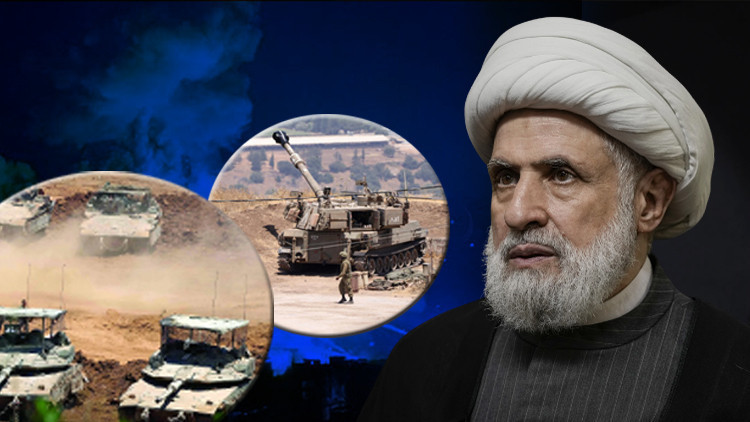
Threats of Mass Displacement and Strikes on Beirut’s Dahiyeh
During his operational review with Northern Command commanders, Katz outlined an extensive operational strategy that directly links future military maneuvers to the widespread displacement of Lebanese civilians from strategic corridors in the south and the capital.
The defense minister explicitly stated that Israeli forces would systematically clear populations from extensive swathes of southern Lebanese territory, pushing civilian communities far to the north beyond designated river boundaries. Katz indicated that the operational line would extend up to the Awali and Zahrani rivers, effectively emptying southern population centers to allow the military unimpeded freedom of action against hostile infrastructure.
"All Shiite populations up to the Awali and Zahrani lines will be evacuated to the north," Katz said, asserting that the primary objective of the territorial clearance would be to neutralize the launch sites and launch corridors utilized by unmanned aerial vehicles (UAVs) targeting towns and settlements across northern Israel. By establishing this expansive depopulated cordon, Katz argued, the Israel Defense Forces (IDF) would be able to mount unhindered strikes against command hubs, weapons caches, and launch pads without civilian interference.
The warnings extended beyond the immediate southern border area to the Lebanese capital. Katz stated that Beirut’s southern suburb of Dahiyeh—a densely populated urban hub long identified by Israel as a central bastion of Hezbollah’s administrative, political, and logistical apparatus—would be subjected to intensified, large-scale destruction.

Katz asserted that Dahiyeh would be targeted aggressively in the event of an expanded confrontation, declaring that military operations against what he termed "terrorist infrastructure" in the capital’s southern perimeter would force over a million Shiite residents from their homes.
"The Dahiyeh area in Beirut will also be evacuated, and the terrorist infrastructure there will be struck; more than a million Shiites in Lebanon will be displaced," Katz declared. He added that should Hezbollah coordinate offensive actions with Tehran, Israeli ground and air units would mobilize immediately to seize additional lands across the Nabatieh and Halitani sectors, forcefully displace residents northward, and launch widespread strikes against structural networks across Dahiyeh.
Addressing active-duty troops and reservists stationed across the northern theater, Katz framed the military presence as an essential defensive perimeter for Israeli communities. "I came here today to the security zones in Lebanon and Syria to support our commanders and both regular and reserve IDF soldiers, who are working dedicatedly and heroically to protect the residents of the Galilee and the Golan Heights," Katz stated.
Rejection of Territorial Withdrawal
Despite ongoing diplomatic frameworks and international calls for an end to hostilities, Katz reaffirmed that the Israeli political echelon has no intention of withdrawing its armed forces from the positions they currently occupy inside Lebanese territory.

The defense minister stressed that the military’s ongoing occupation of southern buffer regions remains a cornerstone of the state’s security policy, asserting that both he and Prime Minister Benjamin Netanyahu maintain an unyielding position regarding territorial control along the frontier.
"As the Prime Minister and I have clearly stated: We will not withdraw from the security zones," Katz insisted, rebuffing proposals that call for a complete pullback of Israeli units from the border strip.
According to Israeli defense officials, maintaining an active military posture inside Lebanese territory is considered vital to preventing cross-border incursions, neutralizing anti-tank guided missile launch positions, and dismantling tunnel networks and fortified bunkers constructed across the border towns. Katz’s statements underscore a strategic shift toward establishing long-term, fortified military positions north of the border, effectively reviving the concept of an enduring security zone inside Lebanese territory to protect communities in the Upper Galilee and adjacent areas.
Direct Warnings Aimed at Hezbollah Leadership
The defense minister also issued direct, personal warnings to Hezbollah’s top leadership, specifically targeting the group’s Secretary-General, Naim Qassem.

According to reports published by Israel National News detailing Katz’s remarks, the defense minister suggested that Qassem could soon meet the same fate as his predecessor, Hassan Nasrallah. Nasrallah, who led Hezbollah for more than three decades, was killed in a massive Israeli airstrike targeting the group’s underground headquarters in Dahiyeh, dealing a significant blow to the organization’s command structure.
Katz indicated that the targeted elimination of Hezbollah’s senior leadership remains an active component of Israel’s military calculus. By invoking the assassination of Nasrallah, Israeli defense officials signaled that any widening of the war—particularly actions coordinated with Iran—would automatically place Qassem and the remaining political and military leadership of the organization directly in the crosshairs of Israeli intelligence and precision strike capabilities.
The warning to Qassem reflects Israel’s broader doctrine of targeting the leadership echelons of adversary organizations to disrupt command and control, create institutional paralysis, and deter strategic escalation. Observers view the direct mention of Qassem as an effort to apply psychological pressure on the militant group’s decision-makers as they weigh their responses to regional escalations involving Tehran.
Netanyahu Hesitant on Pre-Election Strikes Against Iran
While defense officials voiced readiness to broaden operations against Hezbollah in Lebanon, Israeli Prime Minister Benjamin Netanyahu struck a more cautious tone regarding direct military action against Iran, pointing to domestic political considerations and operational timing.
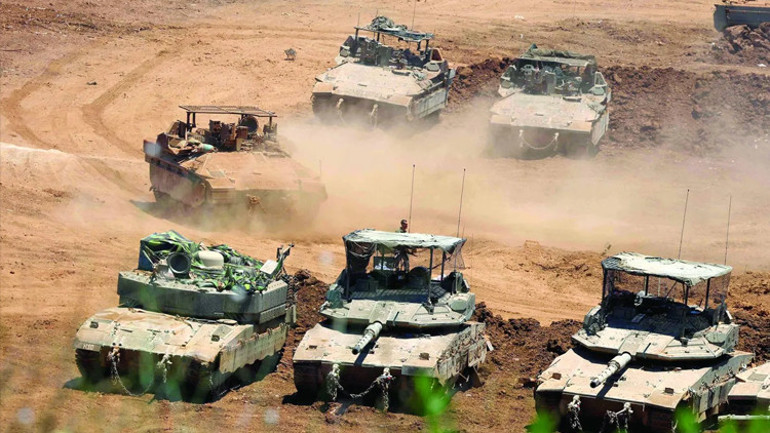
Speaking to Israeli Army Radio, Netanyahu stated that he opposes launching new military strikes against Iranian targets ahead of the country’s upcoming parliamentary elections, scheduled to take place on October 27.
"I do not think right now is the right time for us," Netanyahu said during the radio interview, explaining his reluctance to open an immediate direct front with Tehran. "Throughout my life, I have always placed security concerns above everything else."
Netanyahu’s comments follow reports in Israeli and international media indicating that the Israeli Prime Minister and U.S. President Donald Trump had recently held discussions regarding the feasibility and implications of conducting strikes against Iran. Those talks reportedly weighed the strategic consequences of military action ahead of two critical political milestones: Israel’s general elections on October 27, and the upcoming United States Congressional midterm elections scheduled for November 3.
While speculative reporting suggested that coordinated action was under active review between Washington and Tel Aviv, Netanyahu’s public comments signal a deliberate decision to hold back on major direct operations against Iranian soil in the immediate term, focusing defensive and offensive readiness instead on regional proxies along Israel’s immediate borders.
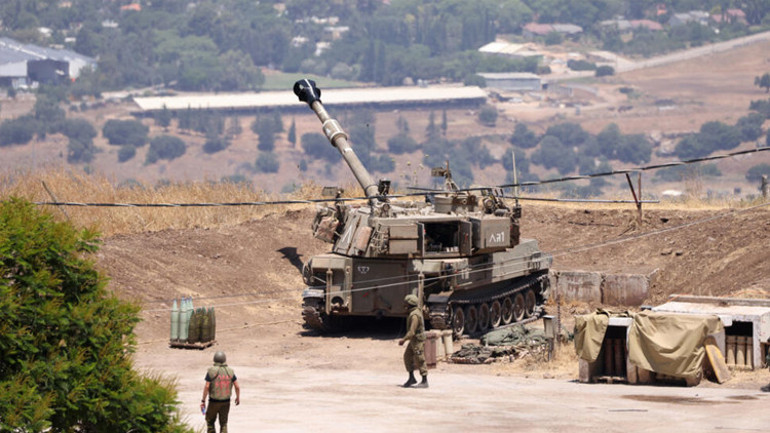
Background: Escalating Occupation and Humanitarian Toll
The threats of an expanded ground invasion come against the backdrop of months of sustained Israeli military operations across Lebanon. The current phase of intense conflict began on March 2, when the Israeli military unleashed a massive aerial bombardment campaign across southern Lebanon, eastern regions, and the suburbs of Beirut, accompanied by ground operations that resulted in the occupation of dozens of southern towns and villages.
The military campaign triggered a severe humanitarian crisis. According to official figures released by the Lebanese government, the initial waves of bombardment and ground fighting forced more than one million people to flee their homes, overwhelming shelters, schools, and temporary accommodations across central and northern Lebanon.
Efforts to halt the violence led to a ceasefire agreement that originally took effect on April 17. Although the truce was subsequently extended on several occasions to allow for diplomatic mediation, fighting and localized clashes have repeatedly flared along the border.
The human toll of the conflict has been extensive. In an official casualty update issued on October 12, the Lebanese Ministry of Public Health confirmed that at least 4,389 people have been killed in Lebanon since the onset of the intensified Israeli military campaign on March 2, with thousands more wounded and extensive civilian infrastructure destroyed across the country’s southern governates.
Diplomatic tracks have sought to establish a lasting resolution to the border crisis. On June 26, Israel and Lebanon signed a U.S.-brokered "framework agreement" intended to resolve long-standing border disputes and establish conditions for long-term peace. The framework outlined a structured, gradual withdrawal of Israeli forces from occupied Lebanese territories alongside sustained direct and indirect negotiations between the two states to settle contested border markers.
However, the implementation of the June 26 framework has stalled. Despite the existence of the agreement and its provisions for a phased troop withdrawal, Israel has maintained its physical military occupation inside southern Lebanon, continuing strikes and surveillance operations.
With Israeli defense officials now openly pledging to permanently hold territory from Nabatieh to the Litani River and warning of further mass evacuations, the prospects for a diplomatic de-escalation appear increasingly distant, leaving the region on the brink of an even wider military confrontation.