ANKARA — In a major milestone for Turkish higher education, Turkey has achieved historic success in the UI GreenMetric 2026 world university rankings, one of the most prestigious global platforms evaluating environmental sustainability. Demonstrating a sweeping institutional commitment to green initiatives, Turkey has ranked first in Europe and second in the world for the number of universities securing placements in the top 200, top 500, and top 1000 cohorts.
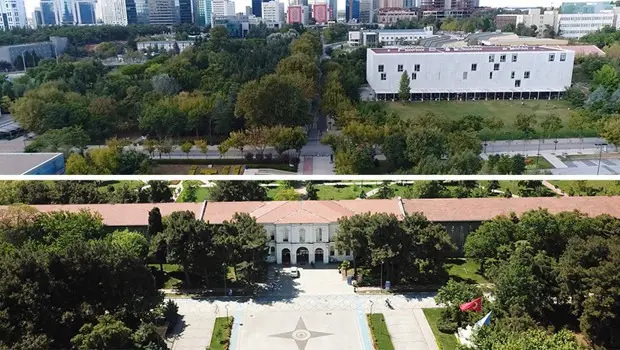
The benchmark assessment, which evaluates higher education institutions across a rigorous spectrum of environmental and infrastructural metrics, highlighted Turkey’s rapid transformation into a global leader in campus sustainability. Leading the domestic charge, Istanbul Technical University (İTÜ) and Yıldız Technical University (YTÜ) successfully placed within the world’s top 50 greenest campuses, setting a high standard for ecological stewardship in higher education.
The UI GreenMetric World University Ranking, established to measure campus sustainability efforts and environmental policies, released its highly anticipated 2026 results. This year’s edition featured a highly competitive field, evaluating 2,016 higher education institutions from 110 countries.
Among these global competitors, Turkey was represented by a formidable cohort of 150 universities. The collective performance of these institutions propelled the country to the absolute forefront of regional and international sustainability standings, highlighting the success of coordinated national campaigns to green Turkey’s higher education infrastructure.
According to the newly released data, Turkey has five universities within the global top 100. This concentrated excellence is supported by a remarkably deep field of performance across all ranking tiers: 21 Turkish universities secured spots in the top 200, 53 placed in the top 500, and 99 achieved placements within the top 1000. This broad representation solidified Turkey’s position as the top-performing nation in Europe and the second-best globally across these three major thresholds.
Twenty-One Turkish Universities Secure Places in the Global Top 200
In the highly competitive top 200 bracket, Turkey’s 21 qualifying institutions earned the nation the number-one spot in Europe. On the global stage, Turkey placed second, trailing only Indonesia, which led the category with 29 universities. Within Europe, Turkey’s closest competitor was Italy, which claimed second place regionally with 19 universities in the top 200.
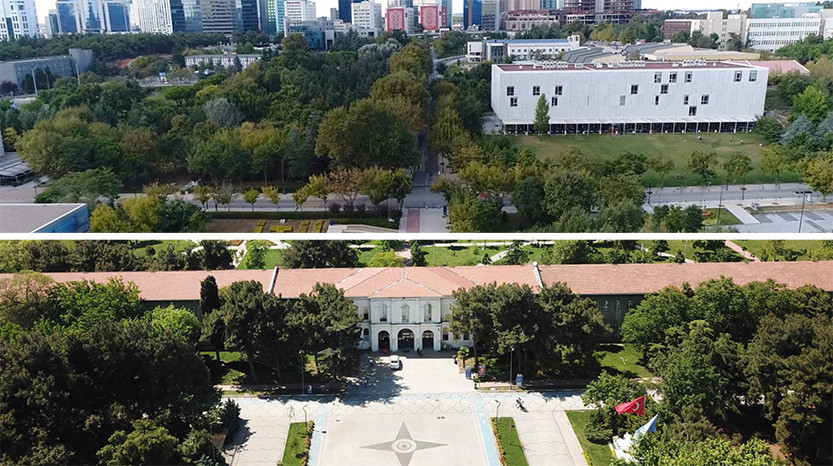
Within the elite top 100, Istanbul Technical University led the Turkish delegation, ranking 28th globally. It was followed closely by Yıldız Technical University at 45th, making both Istanbul-based institutions part of the world’s top 50 greenest campuses.
The other Turkish universities earning spots in the global top 100 include Erciyes University at 63rd, Ege University at 74th, and Özyeğin University at 86th. With these five institutions, Turkey secured the second-highest number of universities in the top 100 in Europe, positioned just behind Italy, which led the continent with seven institutions in the premier tier.
The robust depth of Turkey’s academic sustainability efforts is further illustrated by the 16 Turkish universities that ranked in the 101–200 range. These institutions represent a diverse mix of prestigious technical, research, and regional universities:
- Başkent University (102nd)
- Middle East Technical University (METU/ODTÜ) (105th)
- Sakarya University (114th)
- Izmir Institute of Technology (İYTE) (117th)
- Dokuz Eylül University (134th)
- Düzce University (138th)
- Mersin University (139th)
- Hasan Kalyoncu University (141st)
- Sabancı University (144th)
- Atatürk University (157th)
- Kütahya Dumlupınar University (161st)
- Bartın University (169th)
- Niğde Ömer Halisdemir University (173rd)
- Trakya University (176th)
- Tokat Gaziosmanpaşa University (178th)
- Kütahya University of Health Sciences (190th)
This extensive list demonstrates that environmental consciousness and sustainable infrastructure are being prioritized not only by elite metropolitan institutions but also by specialized medical universities and regional state institutions across Anatolia.
Strong Representation Continues with 53 Universities in the Top 500
Turkey’s dominance remained evident in the broader tiers of the 2026 rankings. In the top 500, Turkey placed 53 higher education institutions, claiming the top spot in Europe and the second spot globally. Once again, Indonesia led the global category with 60 universities.
In the top 1000 tier, Turkey maintained its European leadership and global runner-up status with 99 universities. This systematic presence across nearly a hundred campuses underscores a nationwide transition toward green operations.

The UI GreenMetric 2026 evaluation also featured representation from Northern Cyprus, which was assessed as a distinct territory among the 110 participating nations. Universities in Northern Cyprus recorded notable achievements, with Cyprus International University delivering a standout performance to rank 55th globally, comfortably within the top 100. Additionally, Near East University successfully entered the global rankings, placing 836th to secure its spot within the top 1000.
National Initiatives Drive Eco-Friendly Campus Development
The UI GreenMetric framework evaluates universities across six primary criteria: setting and infrastructure, energy and climate change, waste management, water usage, transportation, and education and research. This comprehensive methodology ensures that universities are judged not merely on their theoretical commitments to ecology, but on tangible, operational outcomes. These include carbon footprint reductions, renewable energy integration, waste diversion rates, water conservation practices, eco-friendly transit options, and the prevalence of sustainability-focused academic courses and research.
The widespread success of Turkish universities in these categories is closely linked to proactive national policies. Chief among these is the "Sustainable and Climate-Friendly Campus Project," spearheaded and managed by the Council of Higher Education (YÖK).
This initiative is designed to systematically improve energy and resource efficiency across all Turkish campuses. By promoting zero-waste protocols, expanding green spaces, implementing rainwater harvesting systems, and encouraging low-emission transportation alternatives, the project has provided Turkish universities with a structured roadmap to align their operations with international environmental standards.
This national framework has encouraged universities to view sustainability as a core institutional value. Consequently, campuses across the country have integrated renewable energy sources, such as solar panels and wind turbines, optimized their waste recycling systems, and transformed campus transit through pedestrianization and bicycle-sharing programs.
YÖK President: "All 208 Universities Will Play an Active Role in COP31"
Responding to the landmark results, YÖK President Erol Özvar expressed immense pride in the performance of Turkish higher education institutions, noting that the ranking reflects a deep-seated cultural shift toward sustainability.

"We are observing that the strong performance of our universities in the fields of sustainability and the green transition is increasingly spreading across a much wider base," Özvar stated. "Ranking first in Europe for the number of universities entering the top 200, top 500, and top 1000 is a highly significant indicator of the impact of the steps we have taken in this domain."
Looking ahead, Özvar highlighted that Turkey’s academic community is prepared to leverage this expertise on the global stage, particularly as the nation prepares to host the 31st United Nations Climate Change Conference (COP31). He announced a comprehensive mobilization of Turkey’s academic resources to support the global summit.
"We have actively integrated the scientific expertise and research capabilities of all our universities into the COP31 process," Özvar revealed. "All 208 of our universities will play an active role in this global climate action, contributing their academic knowledge, research outputs, and practical experience."
Özvar concluded by reiterating YÖK’s strategic commitment to the twin pillars of modern educational reform: green and digital transitions. He emphasized that YÖK will continue to support and fund university initiatives that target energy efficiency, advanced waste and water management, eco-friendly transportation networks, and sustainable campus designs, ensuring that the next generation of Turkish graduates is fully equipped with the green skills required to navigate a changing global landscape.