ANKARA — The Turkish Grand National Assembly (TBMM) commenced its 28th Term, 5th Legislative Year yesterday with a series of high-stakes addresses, significant political gestures, and a renewed call for a comprehensive civilian constitution. President Recep Tayyip Erdoğan, delivering the opening keynote, emphasized the historical resilience of the parliament while outlining an ambitious roadmap for the nation’s economic stability, democratic maturity, and a future free from the shadow of terrorism.
The day was marked by a complex tapestry of political interactions, ranging from unexpected handshakes between traditional rivals to organized walkouts by opposition factions. As the nation faces a volatile regional landscape, the President’s message was one of domestic consolidation and the dismantling of the "politics of polarization."
The "Veteran" Parliament and the Call for a New Foundation
President Erdoğan began his address by paying homage to the unique status of the Turkish Grand National Assembly. He reminded the gathered deputies and dignitaries that the TBMM remains the only parliament in the world to have earned the title of "Gazi" (Veteran) twice—first for its leadership during the National War of Independence and second for its defiance during the failed coup attempt of July 15, 2016.
"This Assembly successfully managed the National Struggle against those who sought to put shackles on our nation’s feet and a noose around its neck," Erdoğan stated. "On the night of July 15, under the rain of bombs, our Veteran Assembly defended the trust of the people. Alongside our citizens who resisted the coup in the squares, on the streets, and at the airports, this parliament passed that heavy test with its head held high."
The President transitioned from historical legacy to future necessity, placing the creation of a new, civilian constitution at the center of the legislative agenda. He argued that while the current constitution has undergone numerous revisions, it still bears the "stains and labels" of the military coup era under which it was drafted.

"The need for a civilian constitution that rejects the legacy of interventions that interrupted our democratic experience has not yet been met," Erdoğan noted. He emphasized that the current architectural structure of the constitution lacks integrity due to piecemeal changes. For Erdoğan, a new constitution is not merely a legal requirement but a "struggle to prove the maturity of Turkish democracy." He asserted that the current parliament, with its diverse political representation, possesses the full authority and capacity to draft a document that reflects the will of the people.
Addressing potential concerns regarding the fundamental pillars of the state, the President reaffirmed his stance on the "first four articles" of the existing constitution, which define the characteristics of the Republic. "Our position regarding the first four articles is clear. Rolling up our sleeves for a new and civilian constitution is a true test of sincerity for everyone," he said, calling on all political parties to honor their previous commitments to constitutional reform.
Economic Resilience and the "Fund" Crisis Resolution
Despite the ongoing regional conflicts and global economic pressures, President Erdoğan presented a narrative of growth and stability. He highlighted that the Turkish economy grew by 2.5% in the first half of 2024, with the annualized national income exceeding $1.1 trillion.

The President pointed to record-breaking export figures, noting that in August, exports reached an annualized $280.3 billion. Tourism also remained a pillar of the economy, generating $25.7 billion in the first six months of the year. Furthermore, the defense industry continued its upward trajectory, with exports in the sector rising by 16.2% in the first eight months to reach $6.3 billion.
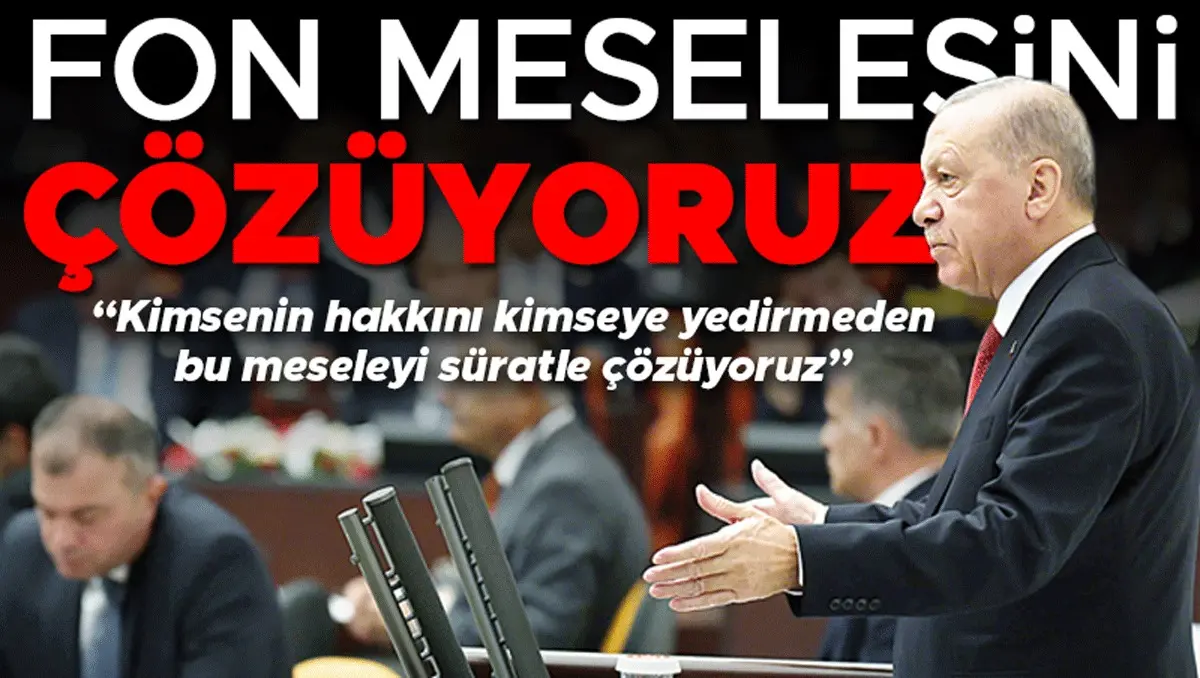
A significant portion of the economic address was dedicated to the "fund market" issues that have recently dominated domestic headlines. Erdoğan promised a swift and just resolution to the grievances emerging in certain sectors of the capital markets.
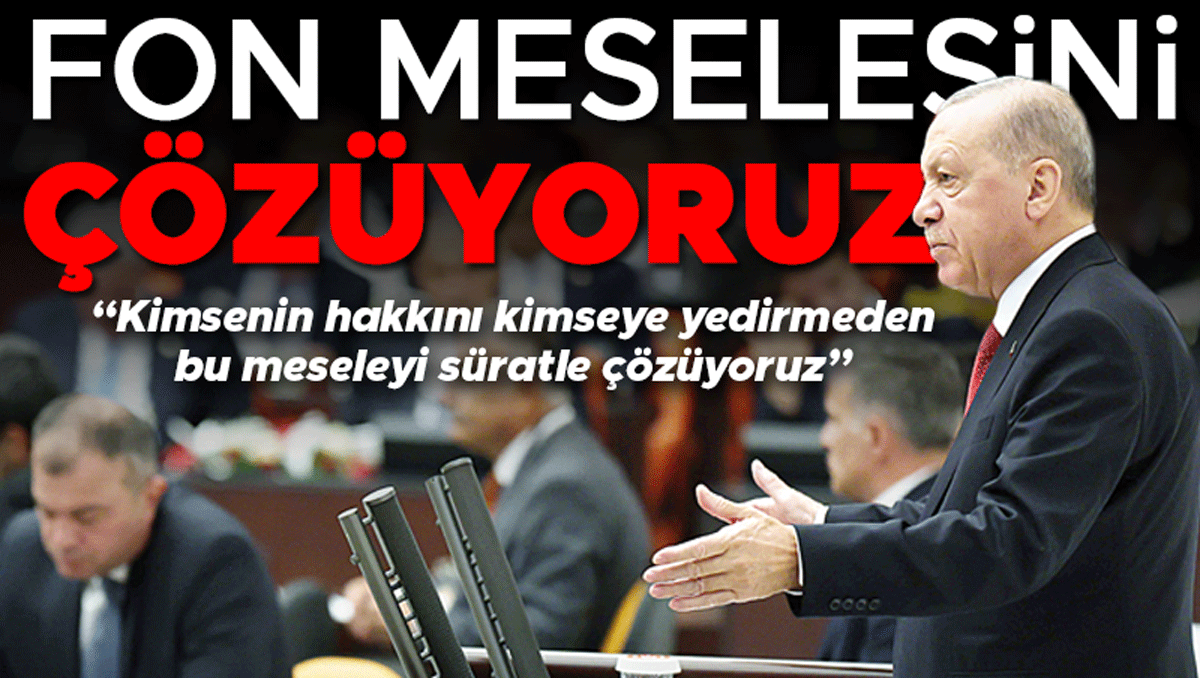
"We are successfully overcoming the problems that have arisen in a certain part of the fund market," the President assured. "Within the framework of capital market rules, observing equity and justice, and without allowing anyone’s rights to be usurped, we are resolving this issue rapidly. We will not allow this matter to turn into a threat to our economic security or social peace."

A Vision for a "Terror-Free Turkey"
One of the most significant moments of the speech involved the President’s vision for a "Terror-Free Turkey." Erdoğan suggested that the nation is entering a transformative period where the threat of terrorism is nearing an end. He argued that the "frontline politics" based on pure opposition has reached its expiration date and must be replaced by a new style of politics centered on common ground and mutual respect.
"The efforts for a Terror-Free Turkey have already created a deterrent effect on Turkey’s adversaries, added strength to our power, and blown a new wind through our region," Erdoğan said. He acknowledged that while terrorism could never successfully divide Turkey, it has historically wasted the nation’s energy, stalled its progress, and depleted its resources.
In a move that drew significant attention, the President explicitly thanked his People’s Alliance partner, MHP Leader Devlet Bahçeli, for his "determined, resolute, and courageous stance" in supporting this process. In a surprising gesture of parliamentary "softening," Erdoğan also extended his gratitude to the Peoples’ Equality and Democracy (DEM) Party group for their contributions to bringing the process to its current state without incident.
Parliamentary Dynamics: Handshakes, Roses, and Protests
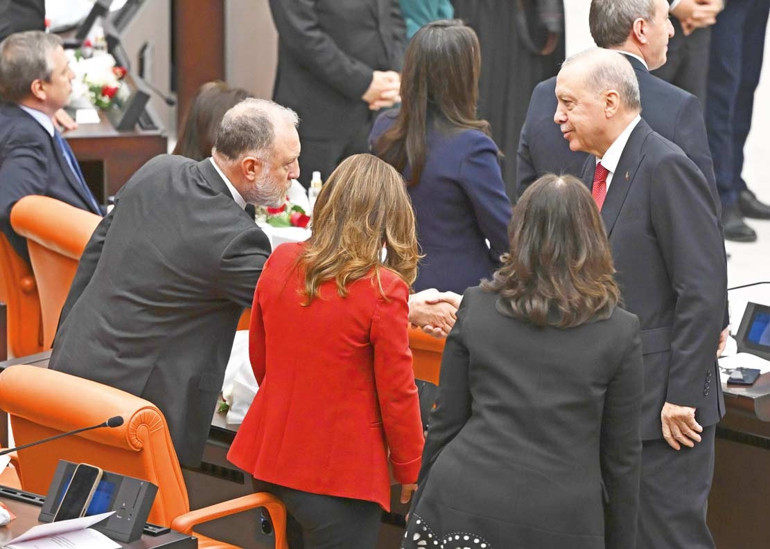
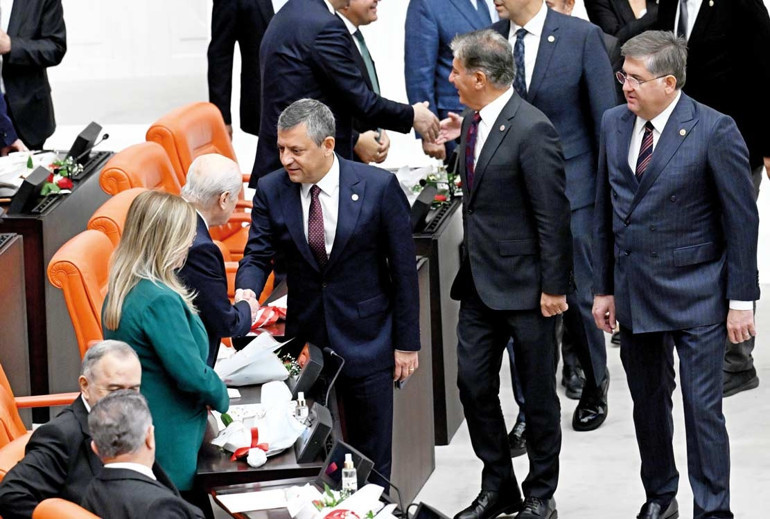
The atmosphere within the General Assembly was a mix of ceremonial tradition and modern political friction. Following his speech, which was met with a standing ovation from the AK Party and MHP benches, President Erdoğan engaged in a series of symbolic gestures. He walked to the opposition benches and shook hands with leaders and representatives from the DEM Party, the CHP (referred to in some contexts as the "New Party" following its leadership change), the İYİ Party, and the New Road (Yeni Yol) Party.
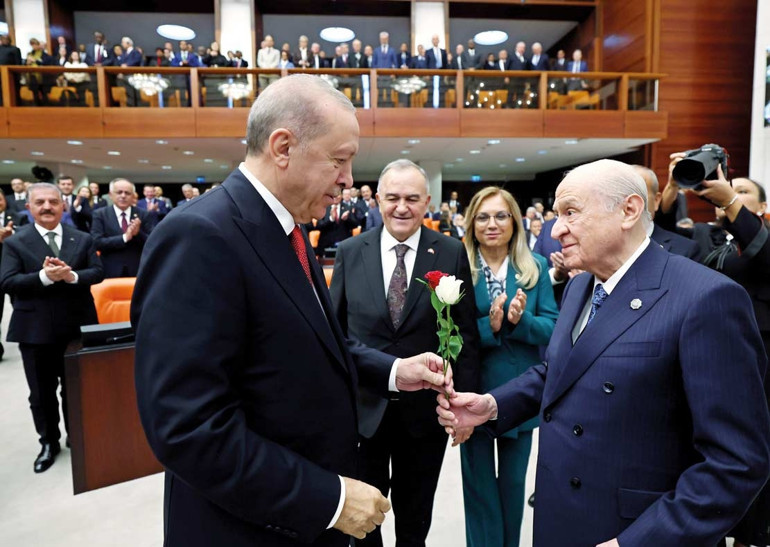
MHP Leader Devlet Bahçeli added a personal touch to the proceedings. As Erdoğan approached him, Bahçeli presented the President with a bouquet of red and white roses, a gesture seen as a reaffirmation of the solidarity within the People’s Alliance.
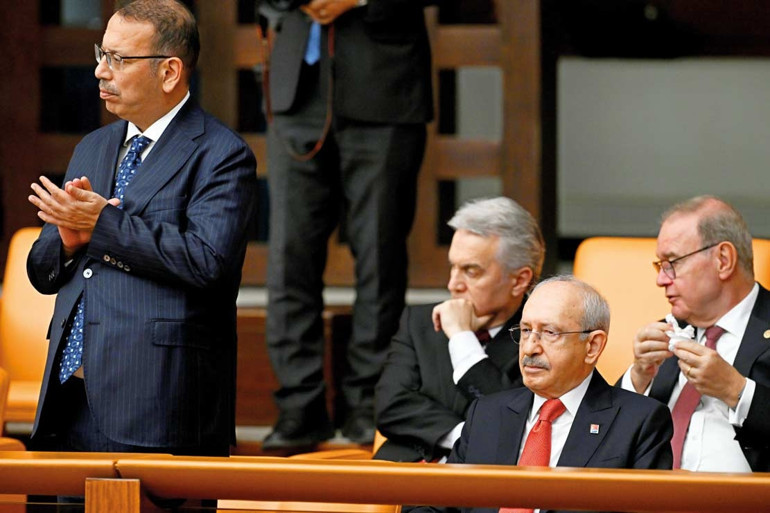
However, the opening was not without its discord. The CHP group, led by Özgür Özel, chose to walk out of the General Assembly just before the President’s speech began. This move followed the reading of the National Anthem and was reportedly a protest against recent investigations into municipalities and the ongoing "fund" controversy. Former CHP leader Kemal Kılıçdaroğlu watched the proceedings from the gallery for the first time, notably remaining seated while other guests rose for the President’s entrance.
Meanwhile, DEM Party deputies used the session to highlight the case of imprisoned lawyer and Hatay deputy Can Atalay, placing his photographs on their desks throughout the session.
Evening Reception and "Imralı" Dialogue
The diplomatic maneuvering continued into the evening at a reception hosted by Parliament Speaker Numan Kurtulmuș and his wife, Prof. Dr. Sevgi Kurtulmuș. The event was attended by various political leaders, though CHP’s Özgür Özel was absent, citing his party’s boycott.
During the reception, Devlet Bahçeli commented on the CHP’s walkout, stating, "It was not right for them to leave while the President was there. We expect innovations from the ‘New Party’." When asked about his handshake with İYİ Party Leader Müsavat Dervişoğlu, Bahçeli simply replied, "It will be good, God willing."
A particularly noteworthy exchange occurred between Bahçeli and DEM Party’s Pervin Buldan. Bahçeli inquired about Buldan’s recent travels and visits, specifically referring to the "Imralı" process. When Buldan mentioned they had last visited on September 13 and typically go once a month, Bahçeli responded, "Give them my regards," to which Buldan thanked him. This exchange was viewed by observers as a significant indicator of the "new climate" Erdoğan alluded to in his speech.
Internal Party Shifts and Defensive Rhetoric
Following the parliamentary session, President Erdoğan attended a consultative meeting with the AK Party Istanbul Women’s Branch. Here, his tone shifted from legislative statesman to party leader. He defended the AK Party against what he described as a "campaign of attacks" and "smear tactics" leveraging isolated negative incidents.
"They are trying every way to stain this movement, which is as white and pure as its name," Erdoğan told the party faithful. He praised the women of the AK Party for their role in bringing those who were once marginalized due to their beliefs or attire into the center of Turkish political life. Addressing the crowd’s chants of "Stand tall, do not bend," the President responded, "Do not worry at all. We are standing tall. There is no problem. No stopping, keep moving forward."
The day also saw a significant administrative change within the AK Party. Prof. Dr. Hülya Terzioğlu was appointed as the Deputy Chairperson for Social Policies, replacing Fatma Betül Sayan Kaya, who resigned following allegations related to the "fund" crisis. Terzioğlu, a distinguished academic from Sakarya University’s Faculty of Theology, is known for her work on modern faith problems, Islam and women, and gender issues. Her appointment is seen as an effort to bring academic rigor and a fresh perspective to the party’s social policy wing during a period of transition.
As the 5th Legislative Year begins, the TBMM finds itself at a crossroads. Between the President’s push for a landmark civilian constitution and the complex, often contradictory signals of cooperation and protest from the opposition, the coming months are set to define the trajectory of the Republic as it moves toward its next century.