ANKARA — In a development that has sent shockwaves through the Turkish political landscape, Doğan Bekin, a prominent Istanbul Deputy for the New Welfare Party (Yeniden Refah Partisi – YRP), has officially announced his resignation from his high-ranking administrative positions within the party. The move, which includes stepping down from his roles as Vice President and member of the Central Executive Board (MYK), comes amidst a burgeoning internal crisis centered on ideological purity and the historical legacy of the party’s foundational movement.
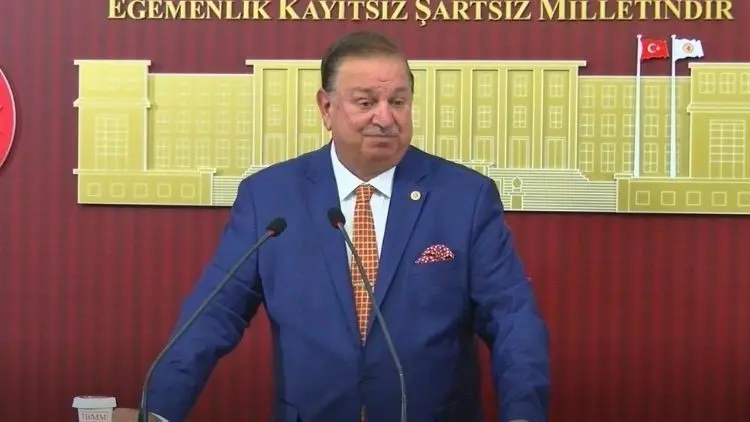
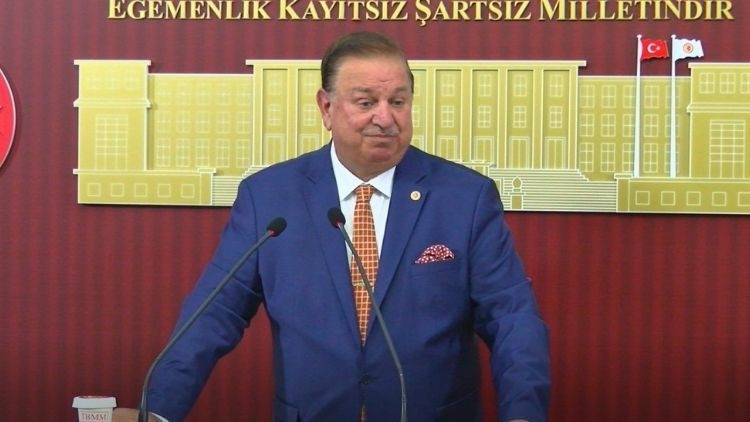
The announcement was made during a high-profile press conference held at the Turkish Grand National Assembly (TBMM), where Bekin detailed the circumstances leading to his departure. At the heart of the controversy is a profound disagreement regarding a book authored by another high-ranking party official, Suat Kılıç, which Bekin claims contains defamatory and historically inaccurate assertions regarding the late Prime Minister Necmettin Erbakan—the spiritual and political leader of the "Milli Görüş" (National Vision) movement.
The Catalyst: A Dispute Over Historical Legacy
The friction within the New Welfare Party escalated significantly during a recent meeting of the Party’s Presidential Board. According to Bekin, the primary source of the conflict is a book titled Son Ispartalı (The Last One from Isparta), authored by Suat Kılıç, who also serves as a Vice President within the YRP. Bekin highlighted a specific passage in the book that characterizes the events of the February 28, 1997, "post-modern coup"—a pivotal and traumatic moment in Turkish political history that targeted the late Necmettin Erbakan.
During the press conference, Bekin read the controversial excerpt aloud, which states: "The architect of February 28 was Erbakan, and its engineer was Demirel." For those steeped in the traditions of the National Vision movement, such a statement is nothing short of heresy. The February 28 process is widely regarded by the movement’s followers as a systematic effort by the military and secular establishment to dismantle Erbakan’s government and suppress the religious-conservative political identity in Turkey.
"These expressions are a form of political recklessness and hypocrisy that some might even characterize as ‘baseness,’" Bekin stated firmly. "The idea that an individual who authored these words could join the New Welfare Party on the 30th anniversary of February 28 and be appointed to the position of Vice President is a grave insult to the National Vision community, and most importantly, to the memory of our late Prime Minister, Necmettin Erbakan."
Bekin revealed that he had been a vocal critic of Kılıç’s appointment from the very beginning, citing the stark contradictions between Kılıç’s published views and the party’s core values. He noted that even after Kılıç published another work titled 101 Reasons for New Welfare, the underlying issues remained unresolved. Bekin stated that he had personally confronted Kılıç, demanding a public apology and a formal act of "repentance" (nedamet) for the claims made in Son Ispartalı. However, according to Bekin, Kılıç categorically refused to issue any such apology.
Resignation Under Pressure
The internal tension reached a breaking point when, according to Bekin, the Chairman of the New Welfare Party, Fatih Erbakan—son of the late Necmettin Erbakan—requested that Bekin vacate his administrative duties.
"In line with the request of our Chairman, Mr. Fatih Erbakan, I have stepped down from my administrative roles," Bekin explained. "I submitted my resignation from the Vice Presidency and the Central Executive Board via a WhatsApp message. While my formal petition has not yet been processed by the party administration, I consider myself resigned from these duties as of this moment."
Bekin expressed that while the decision caused him personal pain, his loyalty to the party’s leadership led him to comply with the Chairman’s wishes. However, he emphasized that his resignation is strictly from his administrative roles and not, for the time being, from the party itself. He continues to serve as a Member of Parliament representing Istanbul under the YRP banner.
The timing of the resignation was further complicated by Bekin’s recent international engagements. While the internal dispute was simmering, Bekin was in the Siberia region of Russia, participating in a program organized by the European Muslim Forum, where he serves as Vice President and Board Member. The program focused on the prevention of religious and ethnic intolerance.
During his absence, rumors began to circulate in the Turkish media suggesting that Bekin was preparing to defect to another political party. Bekin used the press conference to vehemently deny these claims, attributing them to a coordinated smear campaign.

"While I was speaking at an international forum on tolerance, certain individuals, through journalists with whom they share an operational bond, began leaking claims that I was switching to another party," Bekin said. "These people were caught red-handed. Seeing those who should be crushed under the weight of my historical and justified call attempt to frame this as a ‘party transfer’ is a testament to their vileness. The truth is what I am presenting here today."
The Weight of the Mandate and Future Prospects
As a veteran politician with a significant following, Bekin was quick to point out that any decision regarding his future in the party would not be taken lightly or in isolation. He highlighted the responsibility he feels toward the electorate that sent him to the TBMM.
"I will not act alone regarding the matter of resigning from the party," Bekin told reporters during the Q&A session. "There are 117,500 voters who cast their ballots for me. I carry their moral responsibility. There are also the responsibilities placed upon me by our local organizations. We have friends and comrades who worked day and night, who walked from house to house during the election campaign, even when they struggled to put food on their own tables. I will not take any step without consulting these brothers and sisters and hearing their opinions."
The situation places the New Welfare Party in a delicate position. The YRP has seen a surge in popularity in recent years, positioning itself as the true heir to the National Vision legacy and attracting voters disillusioned with the political mainstream. However, the inclusion of figures like Suat Kılıç—who previously served as a minister in the Justice and Development Party (AKP) government—has created friction with the party’s more traditionalist wing, represented by figures like Bekin.
Bekin’s departure from the leadership cadre signals a deepening rift between those who favor a more pragmatic, big-tent approach to party growth and those who believe the party must remain ideologically uncompromising.
"We will follow the process and see how the Chairman sees fit to proceed," Bekin added. "If he chooses to distance us from the party, we will evaluate the situation and act accordingly. At this moment, I have nothing further to add on that front."

Historical Context: The February 28 Legacy
To understand the gravity of Bekin’s allegations, one must look at the historical significance of the February 28 process. In 1997, the Turkish military issued a series of memorandums to the coalition government led by Necmettin Erbakan’s Welfare Party (Refah Partisi). This "post-modern coup" led to the eventual resignation of Erbakan and the banning of his party.
For the National Vision movement, Erbakan is viewed as a martyr of democracy who was unjustly targeted by domestic and international actors. To suggest, as Bekin claims Kılıç’s book does, that Erbakan was an "architect" of this process is perceived as an attempt to rewrite history in a way that blames the victim for the crime. This ideological bedrock is what makes the current dispute within the New Welfare Party so volatile.
As the YRP navigates this internal crisis, the eyes of the Turkish political establishment remain fixed on Fatih Erbakan. The Chairman now faces the challenge of balancing the party’s traditionalist roots with its aspirations for broader political influence, a task made significantly harder by the public nature of Doğan Bekin’s grievances.
For now, Doğan Bekin remains a member of the TBMM, representing the voters of Istanbul. However, his exit from the party’s inner circle marks a significant turning point for the New Welfare Party, raising questions about its internal cohesion and the future of the National Vision movement in contemporary Turkish politics. The coming weeks will likely determine whether this rift can be healed or if it will lead to a more permanent fracture within the party ranks.