The Turkish Armed Forces recently showcased the latest advancements in domestic defense technologies during a comprehensive military exercise held in the capital city of Ankara. The General Nahit Şenoğlu Shooting and Training Area, located in Ankara’s Polatlı district, served as the primary backdrop for the high-profile event, bringing together elements from the Land Forces, Naval Forces, Air Forces, and Special Forces. The exercise provided a strategic platform to demonstrate a wide array of advanced weaponry, tactical systems, and cutting-edge autonomous platforms currently utilized across various operational domains, featuring both live-fire demonstrations and static displays.
Among the standout technologies presented during the joint military drills were unmanned platforms developed by HAVELSAN, a leading defense technology company in Turkey. The event highlighted the increasing integration of autonomous systems into modern warfare doctrines, emphasizing their critical roles in enhancing operational efficiency, minimizing risk to human personnel, and providing tactical superiority on the battlefield. Two particular systems developed by the defense firm—the BULUT fixed-wing sub-cloud autonomous unmanned aerial vehicle and the BARKAN unmanned ground vehicle—captured significant attention from military officials and observers as they successfully executed complex operational scenarios under rigorous field conditions.
BULUT Takes Off Without a Need for a Runway
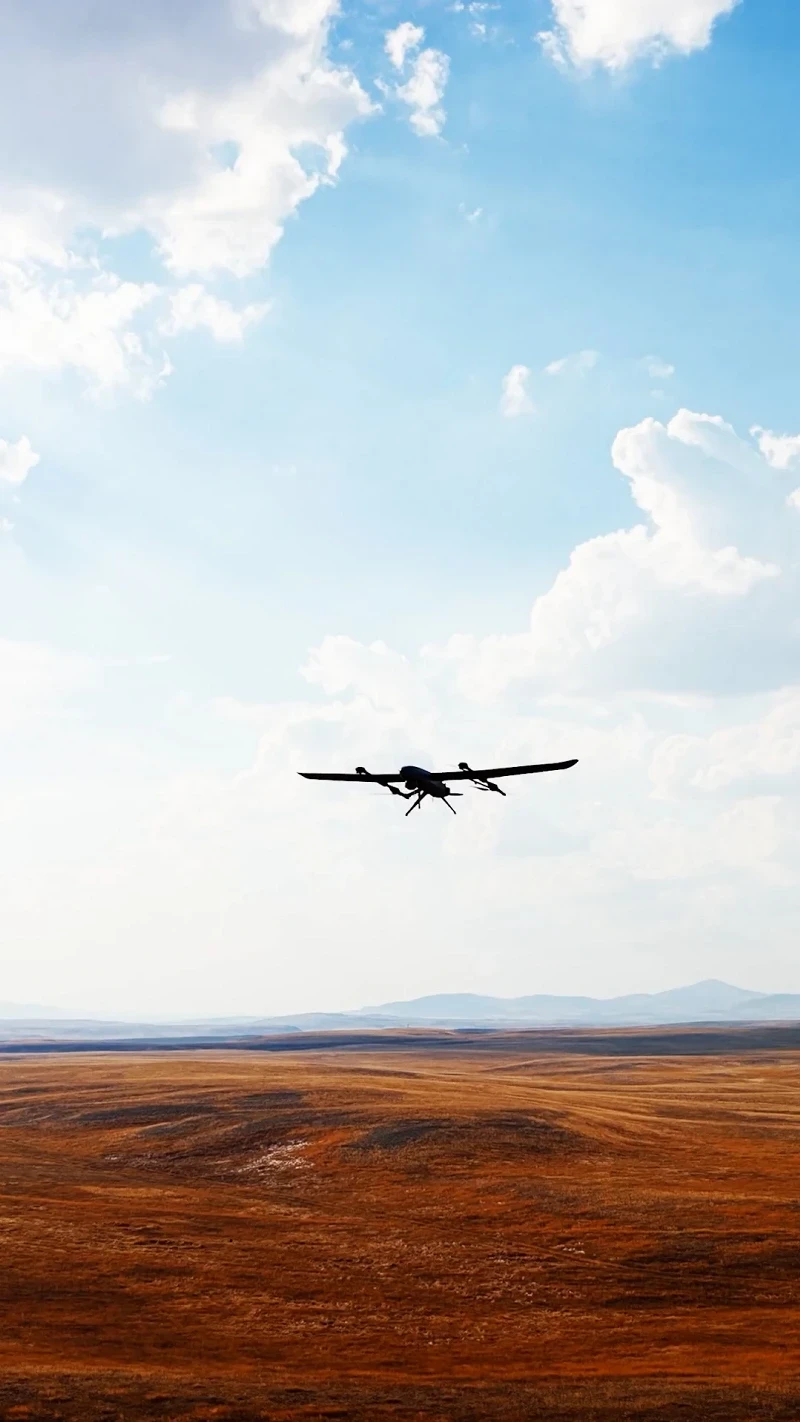
Operating silently and efficiently within the airspace of the Polatlı training grounds, the BULUT fixed-wing sub-cloud autonomous unmanned aerial vehicle demonstrated its advanced aerial capabilities. Developed entirely by HAVELSAN, BULUT was deployed throughout the exercise to execute a series of critical missions, including aerial reconnaissance, target designation, and continuous surveillance.
One of the most notable operational features demonstrated by the platform during the exercise was its vertical take-off and landing (VTOL) capability. This advanced engineering design allows the unmanned aerial vehicle to operate independently of traditional fixed runways or specialized launch infrastructure. By eliminating the necessity for a runway, BULUT offers exceptional tactical flexibility, enabling military units to deploy and recover the aircraft rapidly from constrained or unpaved terrains during field operations. Throughout the multi-branch exercise, the platform successfully exhibited its operational readiness and reliability, proving its effectiveness in supporting frontline units with real-time intelligence, surveillance, and reconnaissance data.
BARKAN Strikes Targets with a 12.7-Millimeter Weapon System
While the aerial platforms provided crucial intelligence from above, HAVELSAN’s unmanned ground vehicle, BARKAN, took center stage in ground-based combat and support scenarios. Operating across rugged terrain within the exercise area, BARKAN demonstrated its robust firepower and versatility by engaging designated targets with high precision.

The unmanned ground vehicle was integrated with a 12.7-millimeter Remote Controlled Weapon System (RCWS), allowing it to deliver effective and accurate fire support during tactical engagements. The live-fire demonstrations underscored the platform’s capability to act as a reliable robotic wingman for dismounted infantry units, providing immediate suppressing fire against simulated hostile positions without exposing human soldiers to direct enemy threat.
Beyond its primary role in offensive fire support, the exercise tested a broad spectrum of secondary capabilities designed into the BARKAN platform. Military evaluators assessed the unmanned ground vehicle’s performance in multifaceted operational scenarios, including tactical reconnaissance and surveillance, the protection of vulnerable supply and logistic lines, and advanced three-dimensional digital mapping of the operational environment. These diverse tests highlighted the platform’s potential to reduce logistical friction and enhance situational awareness for ground commanders operating in complex or hostile environments.
Operating for Up to 8 Hours in Challenging Terrain
Designed specifically to provide direct and sustained fire support to frontline military units, the BARKAN unmanned ground vehicle distinguished itself during the Polatlı exercises through its endurance and adaptability in harsh environments. According to technical specifications highlighted during the event, the robotic platform is engineered to operate continuously for up to eight hours in demanding and rugged terrain conditions.
The vehicle’s utility extends far beyond standard combat and reconnaissance duties. Equipped with an advanced robotic arm, BARKAN is capable of undertaking hazardous explosive ordnance disposal and bomb-handling missions, thereby safeguarding specialized engineering teams from imminent danger. Furthermore, the platform is equipped to address modern asymmetrical and conventional battlefield threats, including the detection of chemical, biological, radiological, and nuclear (CBRN) agents.
Its operational repertoire also includes heavy load and cargo transportation, day and night intelligence gathering, three-dimensional spatial mapping, and search-and-rescue operations. The successful deployment of both the BULUT unmanned aerial vehicle and the BARKAN unmanned ground vehicle during the Ateş Serbest-2026 exercise served as a definitive demonstration of how rapidly evolving autonomous platform technologies can be seamlessly integrated across diverse and demanding military operational domains.