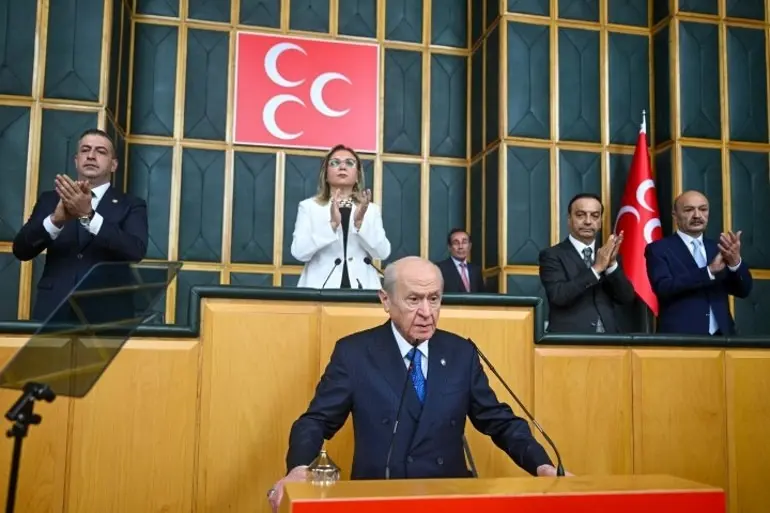
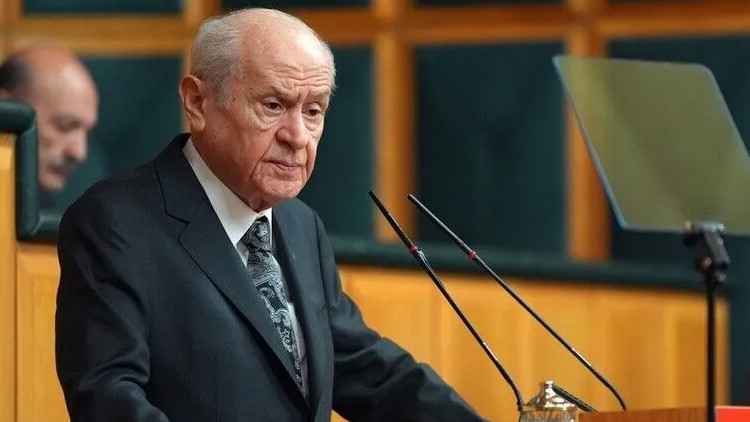
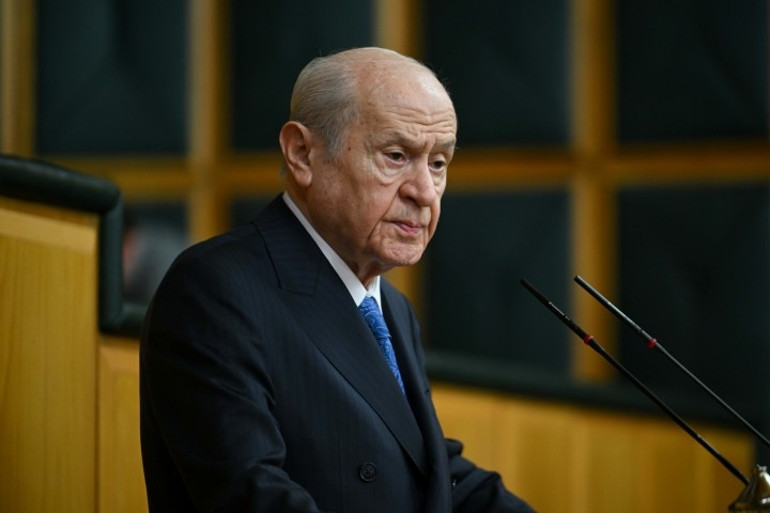
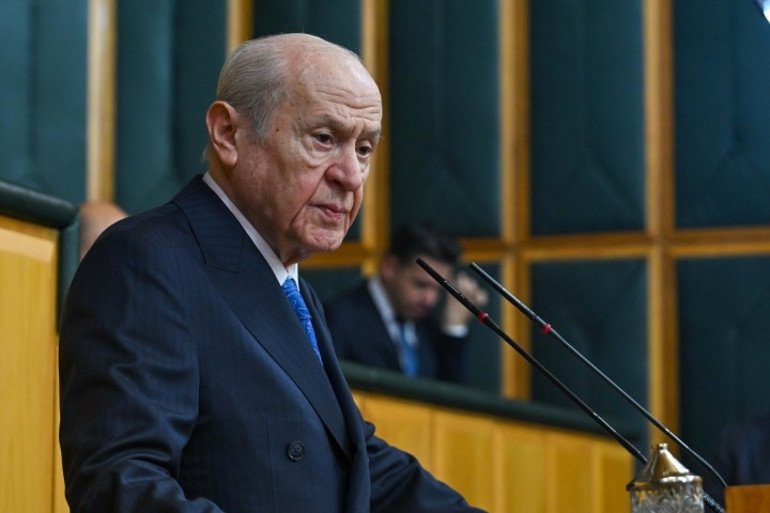
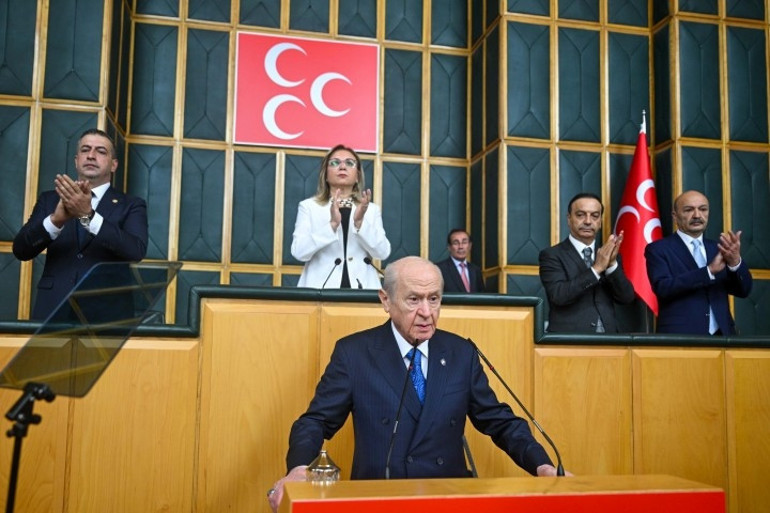
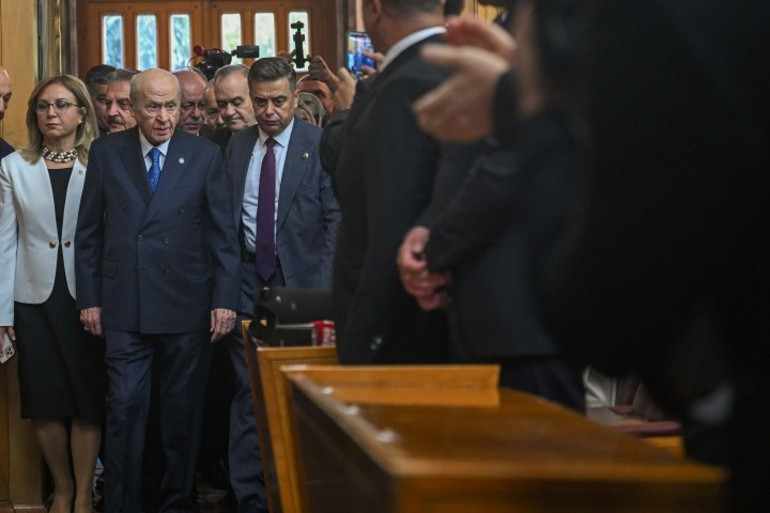
ANKARA — In a wide-ranging and resolute address to his party’s parliamentary group, Devlet Bahçeli, the Chairman of the Nationalist Movement Party (MHP), laid out a comprehensive vision for Turkey’s domestic and international policy. Speaking at the Turkish Grand National Assembly (TBMM), Bahçeli touched upon critical issues ranging from the nation’s fight against terrorism and regional geopolitical tensions to domestic corruption scandals and the state of global education standards. Central to his speech was a firm commitment to a "terror-free Turkey," a goal he asserted would be pursued with unwavering sincerity and national resolve.
Bahçeli began his address by extending his heartfelt greetings to the members of parliament, his colleagues, and the citizens watching across various media platforms. He invoked a message of unity and prosperity, praying for abundance in every household and peace for the nation. However, the tone quickly shifted to one of solemnity as he addressed a series of tragic incidents that have recently shaken the Turkish public.
Turkey’s Grieving Accidents and the Call for Urban Resilience
The MHP Leader expressed deep sorrow over several fatal accidents that occurred in the past week. He specifically noted the building collapse in Istanbul’s Maltepe district, which resulted in the deaths of five individuals and left 11 others injured. This tragedy, he argued, underscores the urgent necessity of the state’s ongoing mobilization for urban transformation.
"We must prioritize life safety in our infrastructure," Bahçeli stated. "The mobilization initiated by our state for urban transformation must be completed with great speed, particularly in areas with high seismic risk. Building safe structures across every corner of our country is not just a policy but a moral obligation."
He also extended his condolences to the families of those lost in a major traffic accident in the Akhisar district of Manisa, where 11 people perished, and another incident in Kahramanmaraş. Among the injured in the latter was MHP Kahramanmaraş Deputy Zuhal Karakoç. Bahçeli emphasized that a comprehensive approach to traffic safety and risk reduction is essential to preventing further loss of life.

"Our Political Center is Turkey": A Vision of Civilization
Moving to broader strategic themes, Bahçeli described Turkey not merely as a nation-state, but as the inheritor of a magnificent civilization and a rich Turkic-Islamic tradition. He argued that Turkey’s geographical position and cultural depth make it a natural center for global reconciliation and progress.
"Turkey is not just the name of a country; it is the address for new global consensus," he remarked. He urged the nation to move past superficial social debates that lack resonance with the public and instead focus on building a prosperous, high-value civilization. "Regardless of our ideological coordinates, our political center is Turkey. We have the historical experience and the cultural depth to create a great new civilization equipped with democratic values."
This vision, according to Bahçeli, is intrinsically linked to the "Turkish Century" project—a roadmap for national elevation that seeks to harmonize traditional roots with contemporary innovation. He noted that this journey would be guided by the principles of justice and a "Turkey-centered" consciousness that offers hope not just to the Turkish people, but to all oppressed nations seeking dignity.

"The Turkish Nation Will Not Turn Back From Its Path"
A significant portion of the Chairman’s speech was dedicated to the internal and external security of the state. He reaffirmed the commitment to the "terror-free Turkey" initiative, describing it as the collective will of the nation to live in unity and order. He warned that as Turkey grows stronger and more unified, systematic efforts by adversaries to destabilize the country would likely increase.
"Whether through economic pressure, political manipulation, or the incitement of violence, those who wish to see a weak and divided Turkey are once again active," Bahçeli warned. "But let it be known: Turkey will not turn back from its path, and the Turkish nation will not retract its decision. The steps toward a terror-free Turkey will be taken with seriousness and will be brought to a conclusion in the shortest possible time."
He framed the elimination of terrorism not just as a security measure, but as a prerequisite for the construction of a new regional order based on justice and stability.

Israeli Provocations and the Defense of Holy Lands
Turning his attention to the Middle East, Bahçeli launched a scathing critique of Israeli policy and regional instability. He condemned the ongoing provocations at Al-Aqsa Mosque, Turkey’s first Qibla, describing them as a peak of "Israeli barbarism." He also addressed the attacks by Houthi forces targeting Saudi Arabia, characterizing them as part of a broader attempt to destabilize the region’s holy lands.
"We cannot remain silent or tolerant toward attacks on Al-Aqsa, the Kaaba, or the blessed sanctuary of the Prophet," Bahçeli declared. He reminded the assembly of Turkey’s historical role as the "Servant of the Two Holy Cities" (Hadimü’l-Haremeyn) and the legendary defense of Medina by Fahrettin Pasha.
In a significant policy statement, he called for Turkey to provide all necessary military and diplomatic support to Saudi Arabia within the framework of the Makkah Defense Alliance. "The defense of these lands is etched into the memory of our history. If diplomacy is insufficient, deterrent power must be utilized. We must respond with determination to approaches that violate international law and threaten the sovereignty of our allies."
He expressed deep concern over the Houthi attacks on civilian infrastructure in Saudi Arabia, specifically citing the recent strikes on King Khalid International Airport in Riyadh, which caused significant casualties. Bahçeli argued that such actions jeopardize international trade, energy security, and regional economic stability in the Red Sea and the Bab al-Mandab Strait.
A Stern Warning to Greece on Maritime Rights and Armament
Addressing the tensions in the Eastern Mediterranean and the Aegean, Bahçeli issued a clear warning to the Greek government. He criticized Athens for its attempts to form alliances with Israel and the Greek Cypriot administration to bypass Turkey’s maritime jurisdiction, specifically regarding the proposed underwater electricity interconnection project.
"If Greece believes it can find safety by leaning on Israel or by seeking the support of third countries like the United States to ignore Ankara’s objections, it is making a grave historical error," Bahçeli said. He emphasized that Turkey’s stance on the coordination of maritime routes is firm.
He advised the Greek government to seek "Turkish peace" rather than Israeli weapons. "If the Greek government is arming itself to protect against us, they should instead seek refuge in our friendship. If they are arming themselves to scare us, they should know that no power can intimidate the Turkish nation. The path to lasting peace in our region lies in friendly relations with neighbors and the recognition of the sovereignty of the Turkish Republic of Northern Cyprus."
"Turkey is in a Period of Purification"
On the domestic front, Bahçeli addressed the "purification and clearing" period currently underway in Turkish public life and politics. He spoke out against corruption and the misuse of public resources, particularly within municipalities. He urged the judiciary and state institutions to act swiftly and transparently to ensure that those who "lay hands on the rights of orphans" are held accountable.
He specifically referenced a high-profile "Fund Investigation" involving the financial sector and sports figures, which has dominated the national media. Bahçeli accused the opposition of using this scandal as a distraction—an "escape ramp"—to hide the systemic corruption and bribery occurring within their own municipal administrations.
"The opposition is attempting to inject the ‘Fund Crisis’ into the veins of our political culture as a form of anesthesia," he argued. "They want to trap the public in a synthetic agenda to prevent them from seeing the moral erosion within their own ranks. Bribery and corruption in municipalities cannot be hidden behind the fund investigation. We trust the Turkish justice system to bring the truth to light quickly."
He invoked the philosophies of Ziya Gökalp and Sabri Ülgener to discuss the link between ethics and the economy, stating that a society whose moral bonds are severed will inevitably struggle with social disorder. "Morality is the center of gravity for both economic activity and social life. We advocate for moral standardization, starting first and foremost within the institution of politics."
Double Standards in Europe: The French Student Protests
Bahçeli also commented on the recent wave of student protests in France over educational inequality and teacher shortages. He noted the irony of European leaders, who often lecture Turkey on democracy and human rights, remaining silent as French police use heavy-handed tactics against their own youth.
"The sight of thousands of young people in the streets of France, concerned about their future, reveals the deteriorating climate of social solidarity in Europe," he said. "If similar events occurred in Turkey, these European leaders would be calling for ‘human rights and democracy.’ Their silence now exposes a profound hypocrisy."
He suggested that these events reflect a move away from the "social state" model in Europe, signaling a broader decline in educational and social standards across the continent.
Education and the "Architects of the Turkish Century"
In contrast to the educational struggles in Europe, Bahçeli lauded Turkey’s recent successes in the international arena. He highlighted the PISA 2025 results released by the OECD, which showed Turkey as the country that most increased its scores in mathematics, science, and reading compared to previous evaluations.
"This success is a concrete indicator of Turkey’s progress in education," he noted. "To reach the goals of the Turkish Century, we must continue to allocate maximum resources to our national education system. We need generations who are virtuous, entrepreneurial, and technologically savvy, yet deeply rooted in our spiritual and cultural values. These young people will be the architects of the new Turkish era."
Conclusion: A Call for National Unity
Closing his speech, Bahçeli called for an end to slander and political bickering, urging all citizens to work together for the betterment of the motherland. He recited a verse from the legendary folk poet Aşık Veysel:
"Let us put an end to slander and calumny,
Let us love one another as brothers, soul to soul.
Let us work for the Fatherland with joined hands,
Let us build many schools and factories, brother."
Reiterating that Turkey is no longer the "old Turkey" but a sovereign power with a deterrent defense industry and a resilient economy, Bahçeli vowed that the MHP and the People’s Alliance would continue to dismantle any "games" played against the nation’s stability. He ended by entrusting the assembly and the nation to the protection of God, promising a future of strength and unity.