FLORENCE — To step into Florence is to step directly onto the canvas of Western art history. Recognized universally as the birthplace of the Renaissance, the Tuscan capital operates like a living, open-air museum where every paved street, vaulted doorway, and marble facade echoes centuries of cultural innovation. From the towering silhouette of the Florence Cathedral to the priceless collections housed within the Uffizi Gallery, the city holds an enduring status as one of the world’s premier destinations for culture, architecture, and gastronomy.
Yet, the experience of navigating Florence today has shifted dramatically compared to decades past. A return to the city highlights a stark reality: over the last quarter-century, Florence’s overwhelming global popularity has transformed its historic core into a densely packed tourist hub. Long queues stretching for hours outside major landmarks, congested thoroughfares, and inflated prices at central cafes have become commonplace.
To truly experience Florence’s quintessential dolce vita—the effortless rhythm of afternoon gelato, evening aperitivos, and dinners in candlelit trattorias—travelers must approach the city strategically. Visiting during the shoulder seasons of spring or autumn, booking entry passes online well in advance, and venturing out during the quiet dawn hours before day-tripping crowds arrive are essential steps to unlocking the authentic charm of this Tuscan metropolis.
The Architectural Heart: Santa Maria del Fiore and the Duomo Complex
Any comprehensive journey through Florence naturally begins at its absolute center: the Piazza del Duomo, dominated by the Cathedral of Santa Maria del Fiore. Renowned for its monumental Renaissance dome engineered by Filippo Brunelleschi and its intricate exterior of geometric pink, white, and green marble, the cathedral stands as an unmatched masterpiece of late medieval and early Renaissance engineering.
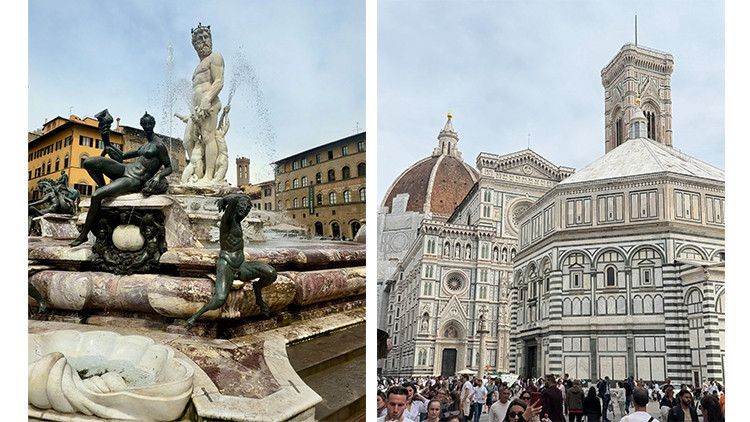
The broader Duomo complex comprises several distinct components, each offering a unique lens into the city’s religious and architectural history:
- The primary cathedral interior
- Brunelleschi’s Dome (Cupola)
- Giotto’s Bell Tower (Campanile di Giotto)
- The St. John Baptistery
- The Opera del Duomo Museum
- The underground Crypt of Santa Reparata
- The elevated cathedral terraces
While general access to the main floor of the cathedral interior remains free, lines form rapidly along the piazza throughout the day. Arriving in the early morning is highly recommended to minimize wait times. For travelers seeking a comprehensive exploration of the entire site, purchasing the "Brunelleschi Pass" is the most efficient option. At €30, this pass provides timed entry to all major components of the complex, with the exception of the cathedral terraces, allowing visitors to experience the full scope of the monument.
Bridges and Art Treasures: Ponte Vecchio and the Uffizi Gallery
Spanning the narrowest point of the Arno River, the Ponte Vecchio—or "Old Bridge"—stands as Florence’s most recognizable secular landmark. As the city’s oldest surviving bridge, this medieval stone structure survived the destruction of World War II intact. What sets the Ponte Vecchio apart from other historic bridges is its continuous row of timbered shops built along its edges. Historically occupied by butchers and tanners, these storefronts have been reserved exclusively for goldsmiths and jewelers since the late 16th century by ducal decree.
Walking across the bridge offers a lively atmosphere, but its true visual impact is best appreciated from a distance. Outstanding vantage points looking toward the Ponte Vecchio include the upper windows of the Uffizi Gallery, the neighboring Ponte alle Grazie, and the elevated overlook at Piazzale Michelangelo.

Just steps from the northern bank of the river sits the Uffizi Gallery (Galleria degli Uffizi), Florence’s crown jewel of fine art and one of the world’s most prestigious museums. Occupying a vast 16th-century administrative palace designed by Giorgio Vasari, the Uffizi holds an unrivaled collection of Renaissance art, tracing the evolution of painting and sculpture from classical antiquity through the late Baroque period.
Inside its expansive halls, visitors can examine iconic masterpieces by Sandro Botticelli, Leonardo da Vinci, Michelangelo, and Raphael. Due to the scale of the collection, visitors should allocate a minimum of two to three hours for a tour. Given that millions of art enthusiasts pass through the museum annually, reserving timed-entry tickets online months in advance is critical during peak travel months. A quiet detail easily missed inside the museum: a corner window on the gallery’s top floor provides one of the most picturesque, framed views of the Ponte Vecchio and the Arno River below.
Civic Power and Public Squares: Palazzo Vecchio and Piazza della Signoria
Directly adjacent to the Uffizi lies the historic center of Florentine political power: the Piazza della Signoria. The square is dominated by the imposing, fortress-like Palazzo Vecchio, the city’s historic town hall constructed at the turn of the 14th century. Characterized by its rustic sandstone masonry and crenellated battlements, the building continues to serve as the seat of local municipal government today.
Visitors can walk freely into the palace’s ornate interior courtyard, designed with delicate Renaissance frescoes and gilded columns. Beyond the courtyard, access to the Palazzo Vecchio Museum (€12.50) grants entry to grand historic chambers, including the famous Hall of the Five Hundred (Salone dei Cinquecento), decorated with massive wall murals and sculpted ceilings.

The square outside functions as an open-air sculpture gallery. It features the open-arched Loggia dei Lanzi, which shelters original Renaissance bronze and marble statues, as well as an exact marble replica of Michelangelo’s David positioned precisely where the original monument stood until the late 19th century.
A short walk to the west brings travelers to the Piazza della Repubblica. Occupying the site of the ancient Roman forum, this grand square was extensively remodeled during the 19th-century Risanamento period. Today, it is best known for its wide open walking area, historic cafes, and a vintage carousel that lights up the plaza each evening.
Across the Arno: Pitti Palace, Boboli Gardens, and Santa Croce
Crossing to the southern bank of the Arno brings visitors into the Oltrarno neighborhood, a district historically known for artisan workshops and quiet residential streets. The focal point of Oltrarno is the Pitti Palace (Palazzo Pitti), the largest palatial residence in Florence. Originally constructed for the ambitious banker Luca Pitti, the massive stone structure was later purchased by the Medici family to serve as their official royal residence. The palace’s expansive facade later served as a architectural model for major European residences, including Munich’s Residenz.
Today, the Pitti Palace functions as a major museum complex containing the Palatine Gallery—which houses an extensive collection of Medici paintings—alongside the former Royal Apartments. Directly behind the palace stretch the Boboli Gardens (Giardino di Boboli). Designed in the formal 16th-century Italian style, these geometric gardens feature vast lawns, shaded cypress avenues, stone fountains, hidden grottoes, and classical statues, offering a green refuge from the dense stone streets of the city center.

Returning to the northern side of the river, east of the Duomo, stands the Basilica of Santa Croce. Positioned on the spacious Piazza di Santa Croce, this Franciscan church features a striking neo-Gothic facade crafted from polychrome marble. Known as the "Temple of the Italian Glories," Santa Croce (€8 entry) serves as the final resting place for many of Italy’s most influential historical figures, including Niccolò Machiavelli, Michelangelo Buonarroti, and Galileo Galilei. The peaceful cloistered courtyards attached to the monastery provide excellent photographic opportunities away from the urban noise.
Panoramic Vantage Points: Towers, Squares, and Hilltop Secrets
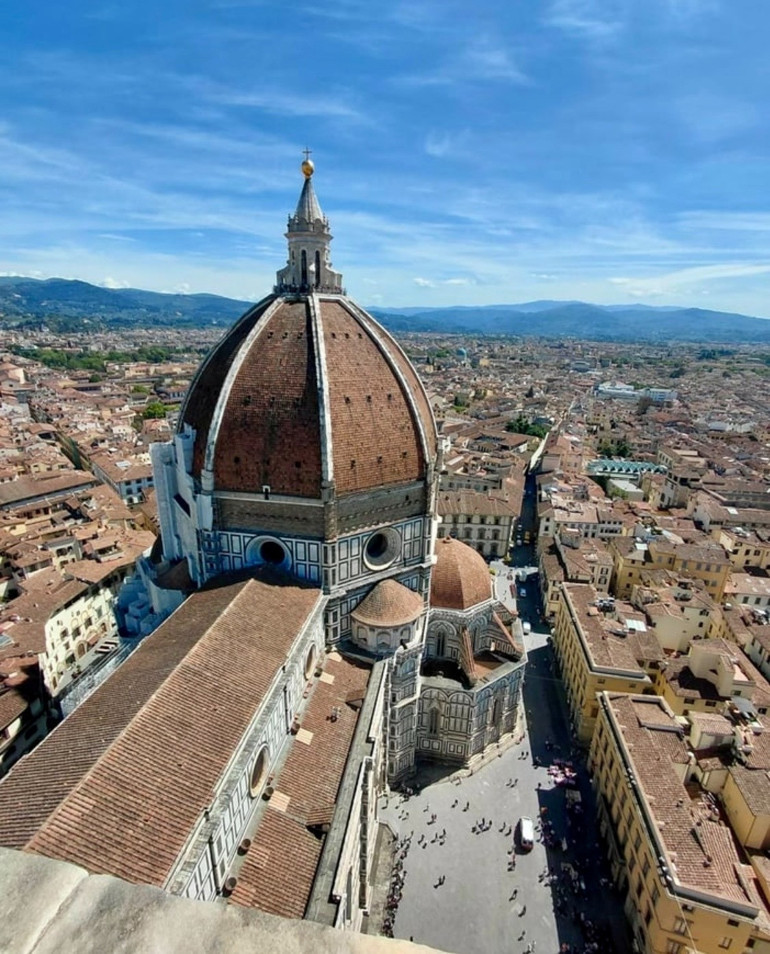
Florence’s iconic skyline—punctuated by tiled red roofs, church spires, and Brunelleschi’s dome—is best appreciated from its high points. The most famous lookout is Piazzale Michelangelo, a broad square set on a hillside south of the Arno. Every evening, hundreds of tourists gather on its stone steps to watch the sunset over the city. While the views of the Ponte Vecchio, the Duomo, and the surrounding Tuscan hills are undeniable, the square can become densely congested with tour buses and street vendors.
For a vastly superior and more serene experience, visitors should continue walking uphill for another five minutes past Piazzale Michelangelo to reach the Basilica of San Miniato al Monte. Perched high above the crowds, this 11th-century church is widely considered one of the finest Romanesque structures in Tuscany. Its geometric green-and-white marble facade overlooks an unobstructed panorama of the entirety of Florence. Inside, the church preserves complex Byzantine floor mosaics, a painted timber roof, and a Renaissance chapel.
Directly adjoining the basilica lies the Cimitero delle Porte Sante (Cemetery of the Holy Doors). This historic burial ground features elaborate Neoclassical and Art Deco funerary monuments. Among the notable figures buried here is Carlo Lorenzini, who wrote under the pen name Carlo Collodi and created the world-famous children’s character Pinocchio.
Within the city center, travelers can also climb historic towers for alternative perspective points:
- Brunelleschi’s Dome: Reached via a steep climb of 463 narrow stone steps, the upper platform of the dome offers an open, 360-degree panorama of Florence without any wire netting or barriers obstructing the view.
- Giotto’s Campanile: Standing 85 meters tall beside the cathedral facade, climbing its 414 steps yields a dramatic, close-up perspective of Brunelleschi’s Dome itself, though safety mesh covers the viewing windows at the top. Access to both the dome and bell tower is included in the €30 Brunelleschi Pass.
- Arnolfo Tower (Torre di Arnolfo): Rising 95 meters above the Palazzo Vecchio, this medieval tower offers guided climbs (€12.50) that provide classic, direct views looking down toward the Piazza del Duomo.
Additional Discoveries and Elevated Hospitality
Travelers spending several days in the city can explore several secondary sites that offer deeper cultural context:
- Galleria dell’Accademia: Home to the original, magnificent marble sculpture of David by Michelangelo.
- Mercato Centrale: A historic two-story iron market building where traditional vendors sell fresh local produce, meats, and seafood downstairs, while an artisanal food hall operates upstairs.
- Giardino Bardini: A hillside garden in Oltrarno that serves as a quiet, picturesque alternative to the larger Boboli Gardens, famous for its wisteria-covered pergola in spring.
- Fiesole: A small historic hilltop town located in the suburbs above Florence, easily accessible by local bus, offering panoramic vistas looking down across the entire Tuscan basin.
Florence has also developed a vibrant rooftop lounge culture, allowing visitors to enjoy views of the city skyline alongside light bites and drinks. Highlights include Tosca & Nino, situated on the top floor terrace of the Rinascente department store overlooking Piazza della Repubblica; View on Art, which places patrons nearly eye-level with the Duomo; and SE·STO on Arno, a sleek glass-walled lounge atop the Westin Excelsior providing sweeping views along the riverbank.
For local culinary experiences away from standard tourist traps, travelers can visit Floret, a green, plant-filled rooftop bistro located inside the Luisaviaroma concept store that specializes in modern fusion and vegetarian options. In the Oltrarno neighborhood, Neromo delivers traditional Tuscan wood-fired pizzas in an authentic setting, while coffee enthusiasts can visit Ditta Artigianale, a pioneer in Italy’s specialty coffee movement known for its house-roasted espresso.
Practical Logistics and the Art of the Backstreets
Navigating Florence is straightforward due to its compact geography. Amerigo Vespucci Airport (FLR) is located on the northwest edge of the city, connected directly to the central Santa Maria Novella railway station via the T2 tram line and local taxi services.
Because the vast majority of Florence’s historic center is designated as a Restricted Traffic Zone (ZTL) closed to non-resident vehicles, the city is best explored on foot. Almost all major cultural sites sit within a comfortable 20-minute walk of one another.
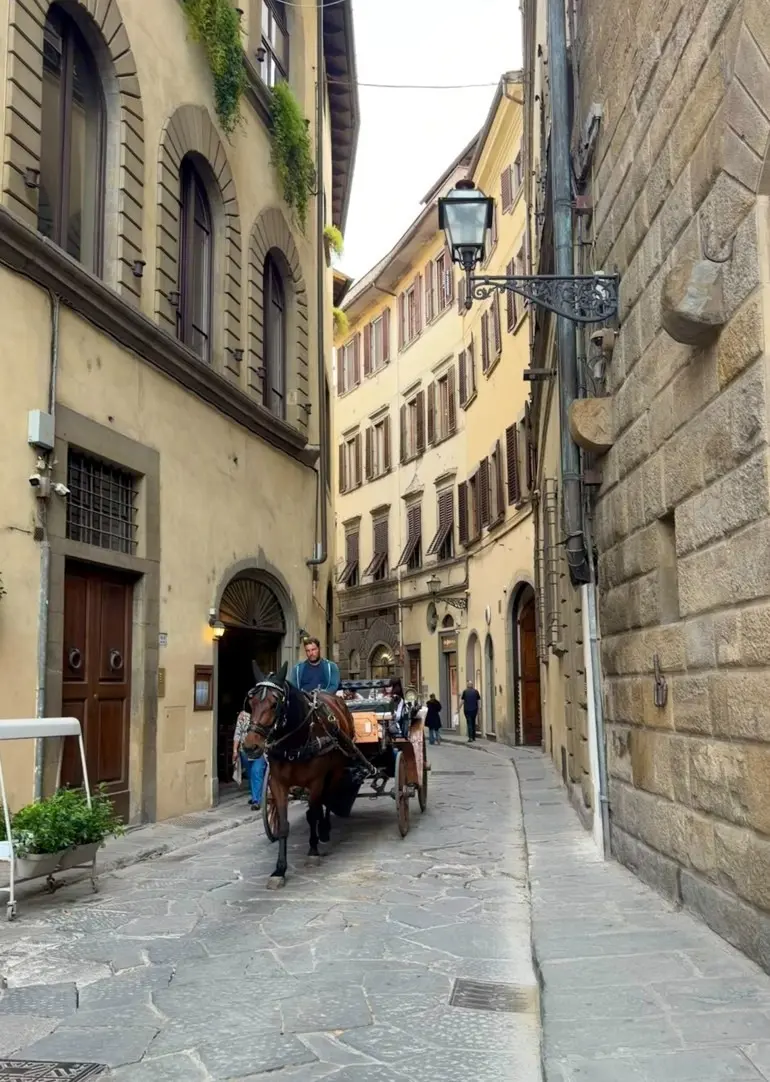
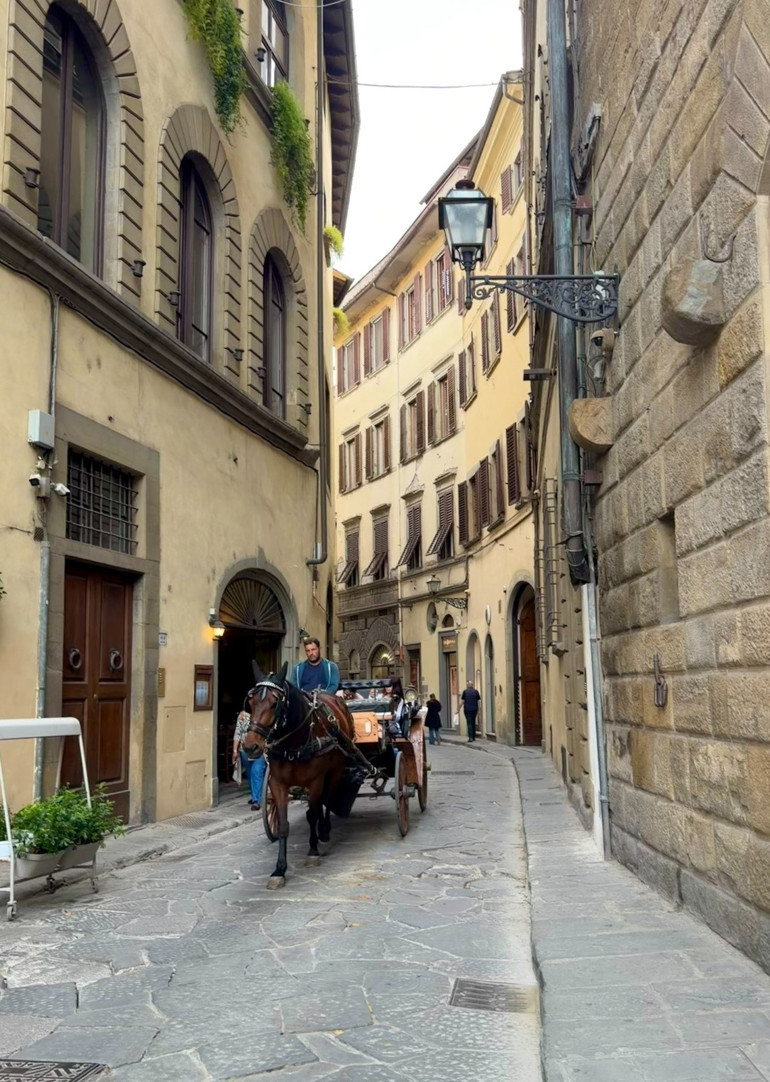
To escape the sheer density of tourist traffic along main arteries—such as the busy route connecting the Duomo to Piazza della Signoria—travelers should consciously slip into the network of narrow medieval backstreets known locally as chiassi (singular chiasso). Dating back to the Middle Ages, some of these stone passageways are barely wider than a doorway. Wandering through these shadowy alleys frequently reveals hidden neighborhood piazzas, quiet family-run artisan shops, and subtle works of contemporary Florentine street art tucked away on quiet building corners.