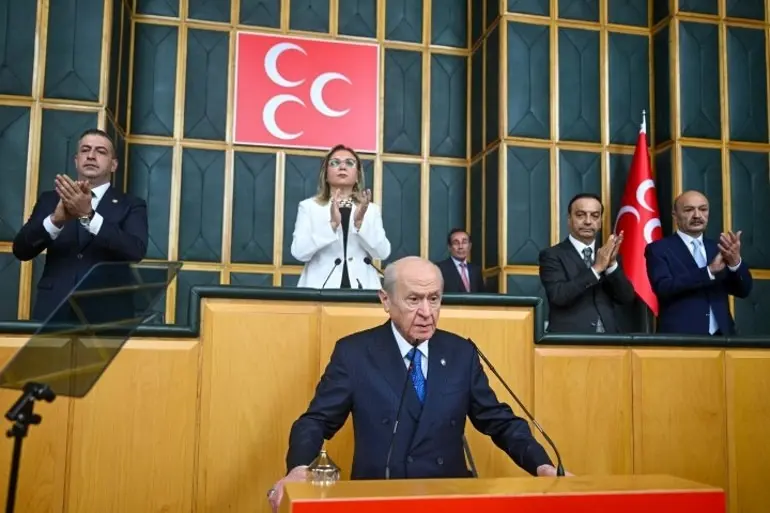
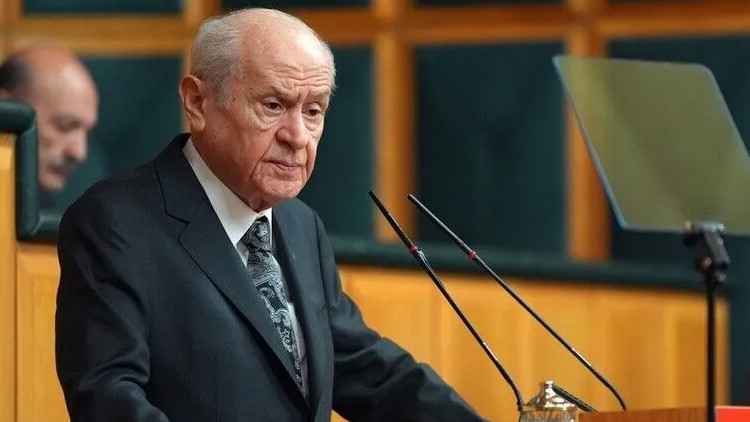
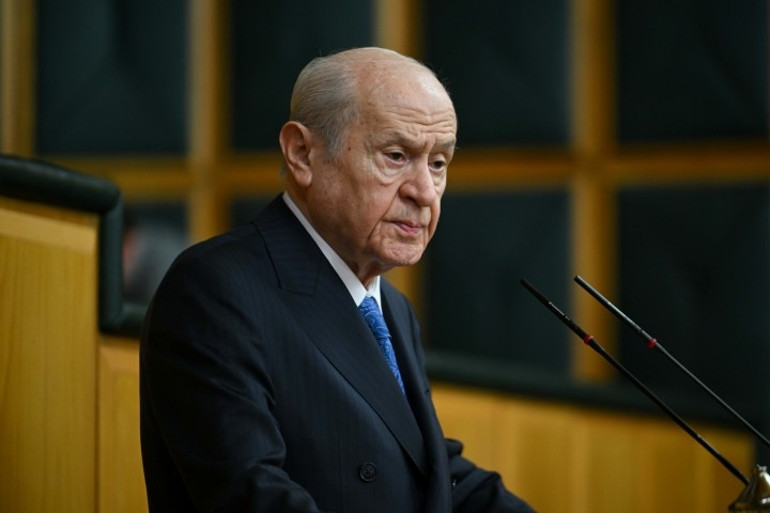
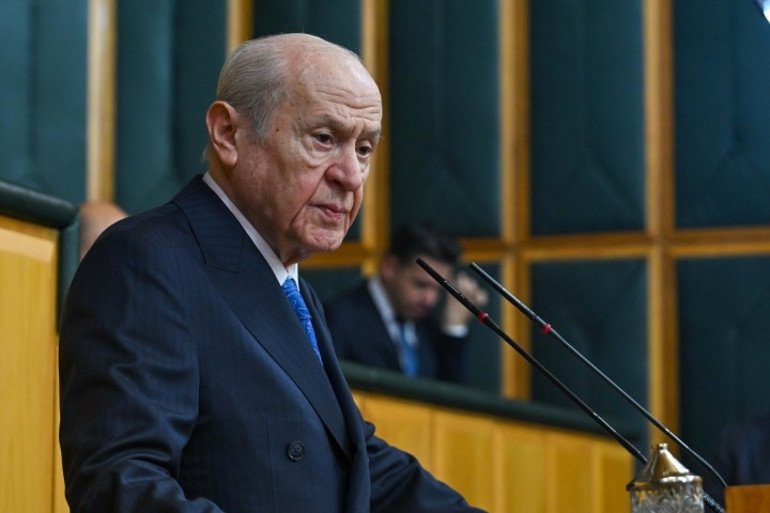
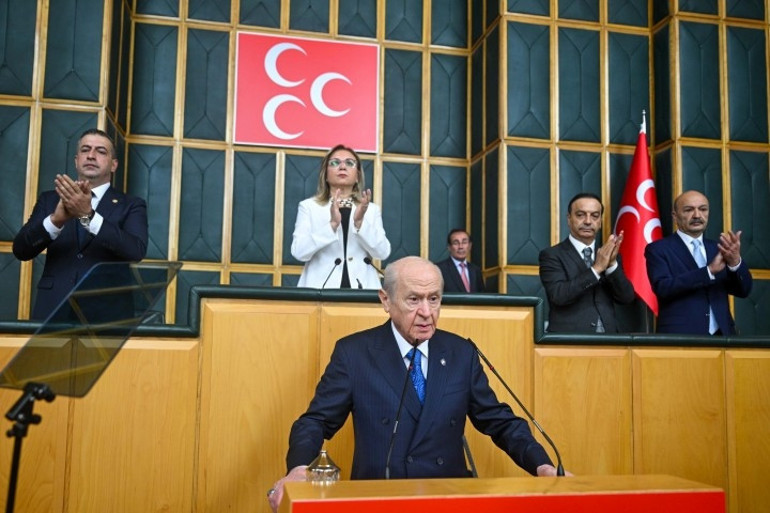
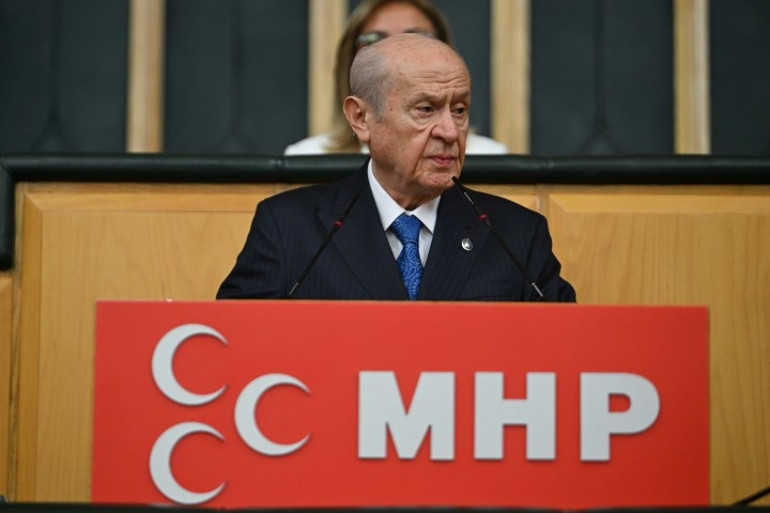
Devlet Bahçeli, the Chairman of the Nationalist Movement Party (MHP), delivered a wide-ranging and programmatic address during his party’s parliamentary group meeting at the Grand National Assembly of Turkey (TBMM) this week. In a speech that balanced domestic tragedies with high-stakes geopolitical maneuvering, the MHP leader reaffirmed Turkey’s commitment to internal security, regional leadership, and a rigorous ethical standard in public administration. Bahçeli’s remarks touched upon a diverse array of topics, including the ongoing "Terror-Free Turkey" initiative, maritime tensions in the Aegean, the humanitarian crisis in the Middle East, and a sharp critique of the political opposition’s handling of recent financial scandals.
Opening his address with a message of national solidarity, Bahçeli emphasized that Turkey is currently traversing a critical historical junction. He asserted that the "Terror-Free Turkey" and "Terror-Free Region" initiatives would be pursued with unwavering seriousness and sincerity. "Turkey will not turn back from its path, and the Turkish nation will not retreat from its decision," Bahçeli declared, setting a tone of defiance against both domestic threats and international pressures.
A Nation in Mourning: Addressing Recent Accidents and Urban Reform
The MHP leader began the substantive portion of his speech by addressing a series of tragic accidents that have recently shaken the country. He expressed deep sorrow over the collapse of a two-story building in Istanbul’s Maltepe district, which resulted in the deaths of five citizens and left 11 others injured. Bahçeli also extended his condolences to the families of those lost in a major traffic accident in Manisa’s Akhisar district, where 11 people were killed and 27 injured.
Furthermore, he noted a tragic incident in Kahramanmaraş that claimed the life of a young citizen and resulted in seven injuries, including MHP Kahramanmaraş Member of Parliament Zuhal Karakoç. "I pray for God’s mercy upon our citizens who lost their lives in these accidents and wish a speedy recovery to the injured," Bahçeli said.

Using these tragedies as a catalyst for policy discussion, Bahçeli called for a renewed focus on public safety. He urged the government to accelerate the national "urban transformation" mobilization, particularly in areas prone to seismic activity. He emphasized that the construction of safe, resilient buildings across every corner of the country is not merely a technical requirement but a fundamental duty of the state to ensure the "right to life" for all citizens.
Turkey as the "Political Center" of a Global Civilization
A central theme of Bahçeli’s address was the conceptualization of Turkey as a "political center" and a civilizational heavyweight. He argued that Turkey’s historical and cultural heritage, combined with its unique geopolitical position, makes it a state whose power is recognized and respected globally.

"Turkey is not just the name of a country; it is the name of the lands that house the legacy of a magnificent civilization and a rich Turkish-Islamic tradition," Bahçeli remarked. He suggested that by embracing the core values of this heritage while integrating modern advancements, Turkey could provide a "way out" for oppressed nations seeking a dignified existence. He called on the nation to move past "socially irrelevant" debates and focus its energy on building a prosperous, happy country and a new civilization equipped with high moral values.
"Even if our ideological coordinates differ, our political center is Turkey," he stated, reiterating that the Turkish nation possesses the depth and experience necessary to forge a new era of universal progress.
The Resolve for a "Terror-Free Turkey"

The MHP leader spoke extensively on the ongoing efforts to eradicate terrorism, describing the vision of a "Terror-Free Turkey" as a manifestation of the collective will to live in unity and peace. He warned that this initiative, which aims to bring justice and order not just to Turkey but to the broader cultural geography, has unsettled those who wish to maintain hegemony in the region.
Bahçeli noted that throughout history, various forces have attempted to weaken Turkey through economic sabotage, political instability, and organized violence. He warned that those who seek to undermine the current atmosphere of peace and security are once again active. "Let us say it in advance: Turkey will not turn back from its path. The steps toward a terror-free Turkey will continue to be taken with seriousness and will be brought to a conclusion in the shortest possible time," he affirmed.
Israel’s Provocations and the Defense of Holy Lands
Turning his attention to the Middle East, Bahçeli launched a scathing critique of Israel’s military actions and regional "barbarism." He characterized Israel’s recent activities as provocations that have reached a dangerous level, specifically citing the violations against the Al-Aqsa Mosque, Islam’s first qibla.
Simultaneously, he condemned the Houthi attacks targeting Saudi Arabia and holy sites, viewing them as another facet of a broader strategy to destabilize the region. "As the Nationalist Movement Party, we cannot turn a blind eye, remain silent, or show tolerance toward attacks on our first qibla, the Kaaba, or the blessed sanctuary of the Prophet," Bahçeli said.
He reminded the audience of the historical "Medina Defense" led by Fahrettin Pasha, noting that the Turkish soldier earned the title of "Mehmetçik" on these very lands. Bahçeli called for the full utilization of diplomacy to protect these holy sites, and if diplomacy fails, the use of "deterrent power." He expressed strong support for providing military assistance to Saudi Arabia within the framework of the Mecca Alliance, particularly in response to Houthi attacks that have caused significant civilian casualties.
Bahçeli cited specific figures from a recent tragedy, noting that an attack on King Khalid International Airport in Riyadh on October 10 resulted in 13 deaths and 309 injuries, followed by another attack the next day that claimed another life. He argued that these attacks threaten international trade, energy security, and regional economic stability, particularly concerning the safety of the Red Sea and the Bab-el-Mandeb Strait.
A Stern Warning to Greece
The MHP leader also addressed the growing tensions in the Aegean and Eastern Mediterranean. He criticized the Greek administration for its attempts to form alliances with Israel and the Greek Cypriot Administration, specifically mentioning the proposed "Great Sea Interconnector" electricity project.
Bahçeli warned Athens that relying on the support of third parties like the United States or Israel to bypass Turkey’s maritime jurisdiction is a "serious mistake." He advised the Greek government to seek refuge in "Turkish peace" rather than arming itself out of fear or an attempt to intimidate Ankara.
"The respect and friendship that Turkey can provide is much stronger than the weapons and ammunition Israel can sell," Bahçeli said, urging "novice politicians" in Athens to abandon "unnecessary shows and hostilities" in favor of dialogue and diplomacy.
Domestic Ethics: The Fund Crisis and Municipal Corruption
In a significant portion of his speech, Bahçeli addressed the domestic political climate, focusing on a recent "fund investigation" involving high-profile figures in the sports world. He warned that this crisis should not be used as an "escape ramp" by the opposition to divert attention from allegations of corruption within their own municipalities.
Bahçeli accused the opposition of attempting to hide "immoral acts" and the "usurpation of public property" in municipalities under their control by hyper-focusing on the fund crisis. He described this tactic as a form of "political anesthesia" intended to trap the public in a synthetic agenda.
Invoking the thoughts of Turkish sociologists and economists like Ziya Gökalp and Sabri Ülgener, Bahçeli argued that morality is the foundation of both the family and the state. He called for "moral standardization" in politics, asserting that no corruption or irregularity should find protection under the law. "We trust our institutions and Turkish justice. We expect justice to be manifested correctly and swiftly on behalf of our nation," he said, calling for a transparent disclosure of the scale of municipal corruption to the public.
European Unrest vs. Turkey’s Educational Progress
Bahçeli also commented on international social movements, specifically the student protests in France. He noted that the youth taking to the streets in Paris to demand better school conditions and more teachers are expressing a deep-seated anxiety about their future. He characterized the police response in France—marked by heavy-handed interventions and thousands of detentions—as an exposure of European "hypocrisy."
"If similar events occurred in Turkey, European leaders would be calling for ‘human rights and democracy.’ Their silence regarding the violence in France reveals their double standards," Bahçeli observed.
In contrast to the educational struggles in Europe, Bahçeli highlighted Turkey’s recent success in the OECD’s PISA 2025 results. He noted that Turkey was the OECD country that most increased its scores in mathematics, science, and reading compared to the previous assessment. He praised this as a concrete sign of Turkey’s progress and called for continued investment in the national education system to raise a generation that is virtuous, innovative, and deeply rooted in national values.
Conclusion: A Call for National Unity
Concluding his address, Bahçeli called for a legislative year focused on solving the socio-economic problems of the citizenry. He urged his fellow Members of Parliament to accelerate their efforts to meet the expectations of the people within the spirit of the People’s Alliance (Cumhur İttifakı).
Quoting the legendary folk poet Aşık Veysel, Bahçeli ended with a poetic plea for unity:
"Let us put an end to slander and calumny,
Let us love one another as siblings, soul to soul.
Let us work together for the Homeland,
Let us build many schools and factories, my brother."
With these words, Bahçeli reaffirmed the MHP’s commitment to building a "Turkish Century" through national unity, social justice, and a proactive foreign policy. He left the podium with a final message of hope, asserting that by overcoming obstacles and breaking "political games," Turkey would collectively build a powerful future.