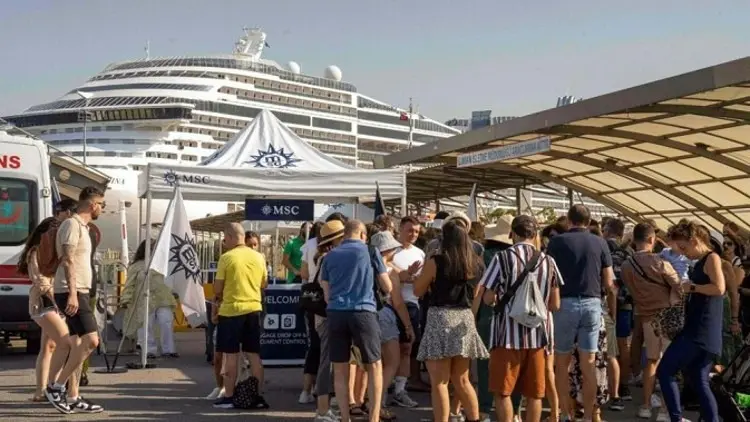
Maritime tourism across Turkey’s central Aegean coast has demonstrated notable growth, with key ports in the Izmir province welcoming 90,907 cruise ship passengers during the first seven months of the year. According to official data reported by news agency DHA, the total passenger volume recorded across the ports of Alsancak, Çeşme, and Dikili represents a significant increase compared to the corresponding period of the previous year, when 77,133 cruise visitors were hosted.
The surge in passenger arrivals underscores the growing prominent role of Izmir and its surrounding coastal districts within Eastern Mediterranean cruise itineraries. As international cruise lines continue to adjust their regional schedules and expand call options in the Aegean Sea, the coordinated port infrastructure across central Izmir, the western Çeşme peninsula, and the northern district of Dikili has absorbed a steady flow of multi-national maritime traffic between January and July.
The overall expansion in passenger turnout reflects both an increase in total vessel calls at key facilities and higher average passenger occupancy rates on ships navigating Aegean routes. Local tourism stakeholders and maritime authorities have observed elevated activity across city centers, historic bazaars, archaeological sites, and coastal resorts linked directly to the arrival schedules of international passenger ships.
Alsancak Leads Growth Across Regional Ports
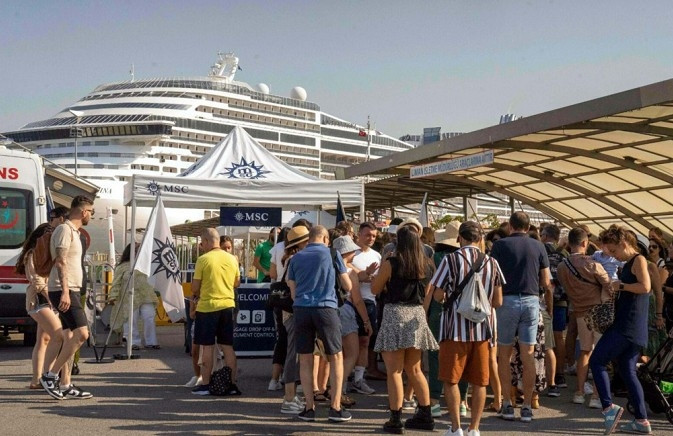
Among the three major maritime passenger facilities serving the region, Alsancak Port—situated in the urban center of Izmir—recorded the most pronounced year-over-year increase in cruise ship calls. During the seven-month reporting window, Alsancak Port welcomed 35 cruise ships. In the same seven-month period of the prior year, the central port had received 28 cruise vessels.
The positive differential at Alsancak highlights its strategic function as the primary urban deep-water entry point for large-capacity ocean liners operating in the region. Located along the inner Gulf of Izmir, the terminal provides direct geographic access to the central city, enabling thousands of disembarking passengers to access major commercial, historical, and cultural landmarks without requiring extensive regional transit. Visitors arriving at Alsancak are situated within short distance of the city’s prominent waterfront promenade, the historic Kemeraltı Market district, Konak Square, and local transit networks connecting to broader regional destinations.
While central Izmir achieved the highest relative growth in ship visits, Çeşme Port recorded the highest absolute number of vessel calls among the three locations during the seven-month period. A total of 39 cruise ships docked at the Çeşme terminal, cementing the western resort district’s position as a favored destination for boutique, mid-sized, and luxury cruise operators.
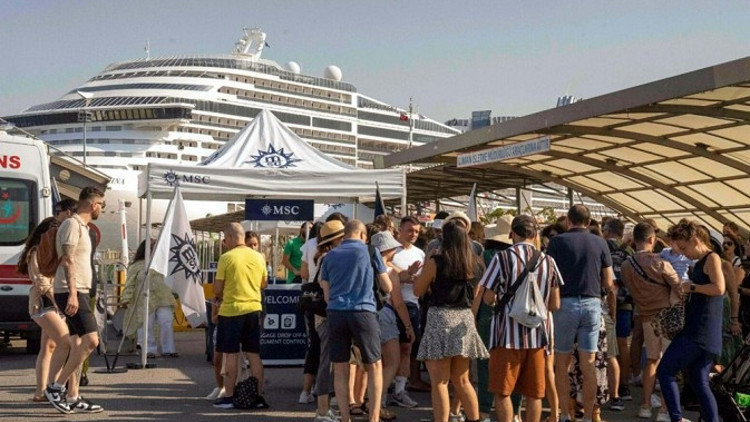
Situated on the western tip of the Izmir peninsula, Çeşme offers specialized port facilities tailored to cruise ships seeking high-end resort amenities and close proximity to the Aegean Greek islands. The port’s location enables cruise lines to integrate Çeşme seamlessly into short-sea Aegean itineraries and island-hopping routes. Disembarking passengers in Çeşme frequently visit the historic Ottoman fortress overseeing the harbor, explore local coastal architecture, and visit nearby thermal and maritime sites.
Further north along the Aegean coastline, Dikili Port hosted 10 cruise ships during the first seven months of the year. Serving as the primary northern maritime terminal for Izmir province, Dikili acts as an essential gateway for culture-focused cruise itineraries. The port’s proximity to inland historical sites, most notably the UNESCO World Heritage city of Pergamon (Bergama), makes it a vital stop for excursion-oriented cruise lines carrying passengers interested in classical Mediterranean history, ancient acropolises, and archaeological preserves.
Together, the three ports managed a total of 84 cruise ship calls over the seven-month duration, providing balanced geographic coverage across the central, western, and northern sectors of Izmir province.

The quantitative shift from 77,133 passengers in the previous year’s comparison window to 90,907 passengers in the current period highlights broader trends shaping regional travel. The Eastern Mediterranean cruise market has seen renewed operational commitment from international operators, who have gradually reintroduced larger vessels and increased port call frequencies throughout Aegean harbors.
The division of maritime traffic across three distinct port facilities allows the Izmir region to serve multiple segments of the global cruise market simultaneously. Large-capacity multi-story ocean liners utilize the logistical and deep-berth capabilities of Alsancak Port, where urban infrastructure can efficiently handle high-density passenger flows. Meanwhile, specialized boutique, luxury, and expedition vessels utilize the specialized facilities at Çeşme and Dikili, distributing tourist activity more evenly across the province’s coastal ecosystem.
The influx of nearly 91,000 visitors over seven months has produced direct and indirect economic activity for local service sectors tied to maritime arrival schedules. Tour bus operators, professional multi-lingual tour guides, municipal transit services, historical site management teams, and local merchants experience concentrated surges in demand during port call hours. In urban Izmir, central retail markets and dining establishments near Alsancak benefit directly from foot traffic generated by disembarking passengers, while local transport and craft vendors in Çeşme and Dikili experience elevated seasonal business during vessel dockings.

The handling of 90,907 cruise passengers requires coordination among port operations management, customs officials, border security personnel, and local tourism authorities. The successful management of increased ship arrivals at Alsancak, Çeşme, and Dikili demonstrates the operational capacity of Turkey’s Aegean port infrastructure to support higher volume maritime travel.
As the cruise season progresses through the remainder of the year, regional maritime facilities remain scheduled to receive additional vessel calls. The performance recorded through the first seven months establishes a strong baseline for full-year cruise tourism metrics across Izmir province, reflecting sustained international carrier interest in the coastal logistics, historic sites, and resort infrastructure of the Turkish Aegean.