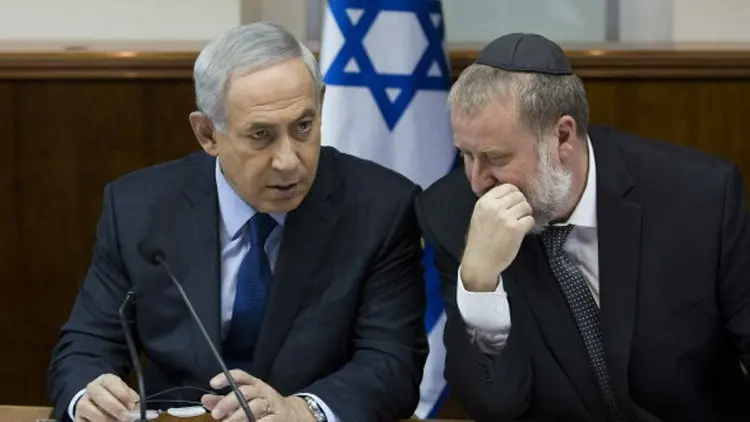
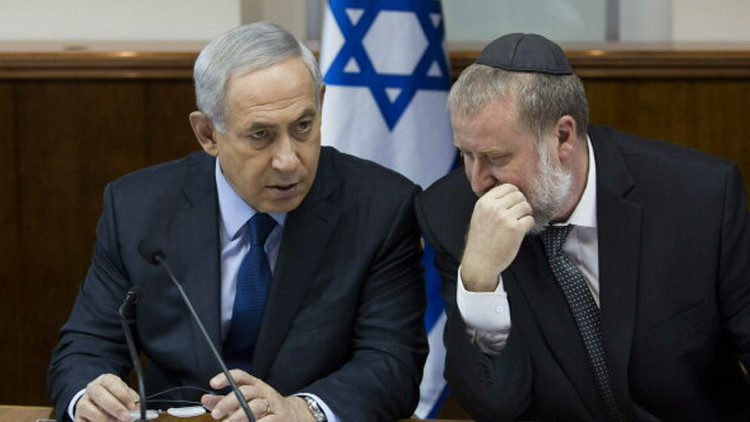
In a dramatic turn within Israel’s long-running political and legal saga, former Attorney General Avichai Mandelblit—the man who originally indicted Prime Minister Benjamin Netanyahu on sweeping corruption charges—took the witness stand at the Jerusalem District Court. This time, however, Mandelblit appeared not on behalf of the prosecution, but as a defense witness summoned by Netanyahu’s own legal team.
During his highly anticipated testimony, the former top legal official offered a critical view of law enforcement conduct during the high-stakes investigations, telling the court that at one point he believed police investigators were maneuvering behind his back without keeping him properly informed.
The courtroom atmosphere was charged with political weight. Prime Minister Benjamin Netanyahu, who has rarely attended the day-to-day proceedings throughout his roughly six-year trial, made an unusual personal appearance in the courtroom. He was flanked by several members of his cabinet, underscoring the acute political significance of the hearing.
Lead defense attorney Amit Hadad directed his questioning toward alleged procedural flaws, investigative misconduct, and regulatory overreach committed by law enforcement agencies during the formation of the cases against the premier. Hadad argued before the panel of judges that multiple investigative steps were executed without obtaining Mandelblit’s required formal authorization, or in some instances, substantially exceeded the precise boundaries of the approvals he had granted.
Under questioning, Mandelblit acknowledged procedural gaps in how some permissions were handled. He stated to the court that while he had indeed granted oral approval to investigators for specific measures, he had not formally formalized or documented these authorizations in written directives.
Addressing the overarching posture of the investigative teams, Mandelblit voiced lingering skepticism regarding law enforcement transparency during that period. Responding directly to Hadad’s inquiries, the former attorney general remarked that there came a stage in the probe where he felt investigators were actively concealing developments from him and operating entirely without his knowledge.
Mandelblit was especially critical regarding the handling of surveillance against figures close to the prime minister. He singled out the illicit wiretapping of Natan Eshel, who served as Netanyahu’s chief of staff during the relevant period, describing the unauthorized monitoring as completely unacceptable. Mandelblit testified that as soon as he discovered that law enforcement officers had subjected Eshel to illicit listening devices, he took immediate action to halt the operation.
Netanyahu Supporters Target Mandelblit
The tensions surrounding Mandelblit’s appearance were not confined to the courtroom itself. Outside the chamber, the former attorney general encountered an intensely hostile reception from lawmakers belonging to the ruling Likud party and a contingent of vocal Netanyahu loyalists who had gathered in the courthouse corridors.
Likud Member of the Knesset Tally Gotliv directly confronted the former chief prosecutor as he made his way through the building. Voicing the anger shared by many of Netanyahu’s staunchest political allies, Gotliv shouted at Mandelblit, demanding accountability for his decision to launch the criminal proceedings years earlier.
"How could you sign that indictment? How could you do this to us?" Gotliv declared loudly in the corridor. "You owe the public an answer!"
The confrontation outside the courtroom escalated into an incident involving the press. Mandelblit stated that upon his arrival at the hearing room, he was subjected to what he characterized as physical harassment by Ayala Hasson, a prominent journalist working for Israel’s public broadcaster KAN.
Addressing the judges shortly after entering the courtroom, Mandelblit voiced dismay over the security and decorum surrounding the proceedings. He told the bench that he found himself in an environment where he was entirely unprotected from harassment, recounting that a journalist had approached him aggressively with a mobile phone in hand, firing off baseless accusations that he could not realistically answer on the spot.
Hasson promptly pushed back against Mandelblit’s characterization of the interaction. Rejecting allegations of any physical assault or improper conduct, the journalist maintained that she had merely been performing her professional duties, recording footage with her mobile phone while calmly and politely directing journalistic questions to the former attorney general as he entered the hall.
Pre-Election Hearings Spark Controversy
The timing of Mandelblit’s cross-examination has ignited fierce debate across Israel’s political and media landscape. Netanyahu’s legal team requested a total of seven court sessions to question the former attorney general, scheduling the cross-examination in the critical window directly preceding the national election scheduled for October 27.

Israeli political analysts and media commentators have broadly interpreted the defense’s scheduling request as a tactical push to reshape the public narrative. By placing Mandelblit on the stand to face intense questioning regarding investigative missteps and police surveillance, the defense has sought to focus public and voter attention on alleged administrative and law enforcement wrongdoing rather than the factual allegations detailing the prime minister’s conduct.
The dynamic between Netanyahu and Mandelblit has been complex and adversarial for years. Before serving as attorney general, Mandelblit worked closely with Netanyahu as his cabinet secretary. After being appointed to the post of attorney general, Mandelblit oversaw years of police investigations, ultimately authorizing the indictments against Netanyahu on charges of bribery, fraud, and breach of trust.
In response, Netanyahu and his allies repeatedly accused Mandelblit of taking part in an orchestrated effort by law enforcement and the judicial establishment to force him from office through political elimination. Mandelblit consistently and forcefully rejected those allegations, maintaining throughout his tenure that his decisions were dictated solely by the evidence and the rule of law.
The defense’s cross-examination of the former attorney general is extensive and will not conclude before voters cast their ballots. Due to the number of hearing days allocated by the court, Mandelblit’s testimony is slated to continue in the period following the October 27 election.
The Ongoing Corruption Cases Against Netanyahu
The courtroom battle centers on three separate criminal dossiers, officially designated by law enforcement as Case 1000, Case 2000, and Case 4000. Across these combined files, Prime Minister Netanyahu stands accused of bribery, fraud, and breach of trust.
Case 1000 focuses on allegations that Netanyahu and his family systematically accepted hundreds of thousands of dollars worth of luxury gifts—primarily high-end cigars and champagne—from wealthy international benefactors in exchange for official political assistance and favorable regulatory intervention.
Case 2000 examines conversations between Netanyahu and the publisher of a major Israeli daily newspaper, during which they allegedly discussed legislation that would weaken a competing rival publication in exchange for more favorable press coverage of the prime minister.

Case 4000, widely regarded as the most legally serious file, involves allegations that Netanyahu promoted regulatory decisions beneficial to Israel’s largest telecommunications conglomerate in exchange for positive editorial coverage on a prominent news website owned by the telecom giant’s controlling shareholder.
The protracted trial, which has now spanned roughly six years, has severely divided the Israeli public and deeply influenced domestic governance. As the legal proceedings dragged on, avenues outside the courtroom emerged.
In November 2025, former United States President Donald Trump intervened by sending a formal letter to Israeli President Isaac Herzog, urging the head of state to grant an official presidential pardon to Netanyahu to bring an end to the corruption prosecution.
Netanyahu had long stated publicly that he had no intention of seeking an executive pardon, insisting on multiple occasions that he intended to clear his name entirely through the court system. However, following Trump’s appeal, Netanyahu changed his stance in late November 2025, submitting an official request to President Herzog seeking executive clemency from the corruption proceedings that have shadowed his leadership for over half a decade.
As Mandelblit’s testimony continues, both inside and outside the courtroom, the proceedings remain a focal point of Israel’s legal disputes and political battles, with the defense continuing to scrutinize the methods that initially brought the country’s longest-serving prime minister to the dock.