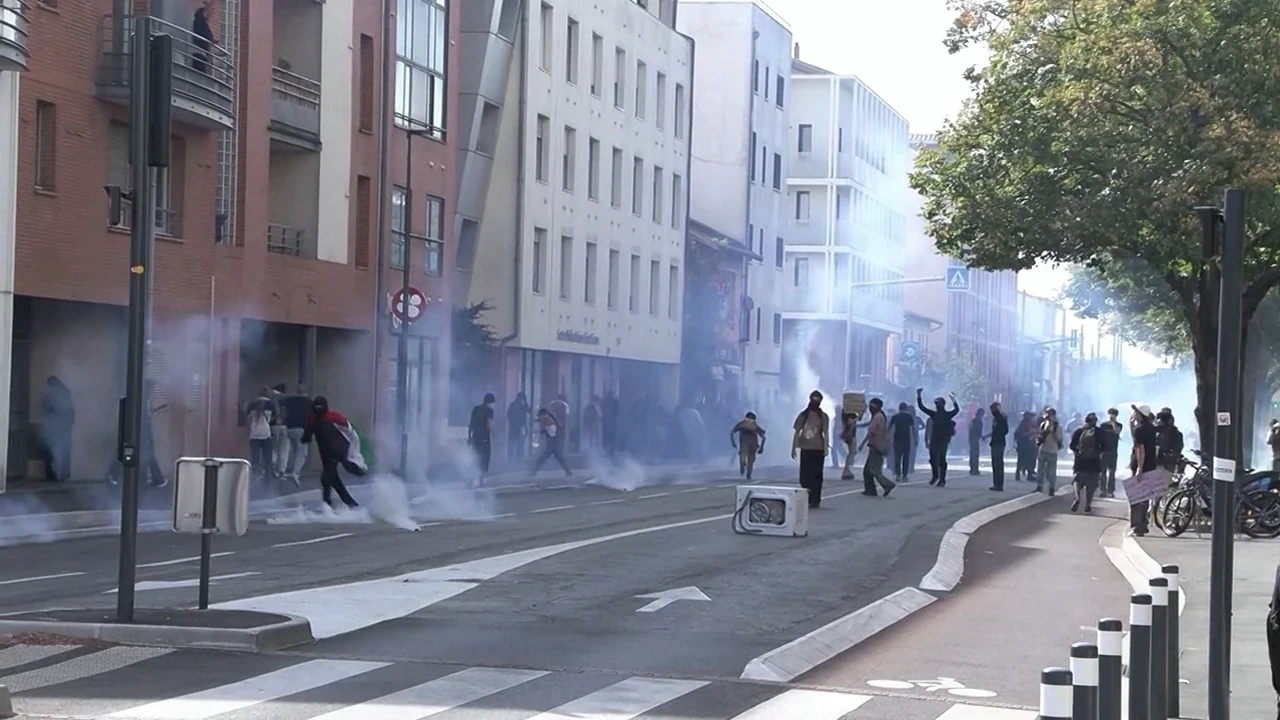
Frustrated by overcrowded classrooms, chronic teacher shortages, grueling academic schedules, and deteriorating physical infrastructure across the nation’s educational facilities, French high school students have escalated a wave of protests that has now entered its second month. What began in mid-September as a localized movement of solidarity with teachers at the Saint-Exupéry High School in Créteil, located in the southeastern suburbs of Paris, has rapidly snowballed into a sweeping nationwide educational crisis.
The demonstrations, driven by deep-seated anxieties about the future, opportunity inequality, and institutional neglect, have evolved from peaceful school-level boycotts into widespread confrontations, drawing thousands of students into the streets of major French cities and prompting a heavy mobilization of security forces.
Hundreds of Schools Affected as Educational Disruptions Spread
As the protest movement gained momentum, its impact on the nation’s academic schedule became severe. According to data published by Le Monde, educational activities were disrupted by protests at approximately 590 out of roughly 3,700 high schools across France in a single week. The widespread nature of these actions highlights a systemic breakdown that students argue has been ignored by policymakers for far too long.
At the core of the students’ demands are calls for significantly increased state funding for public education, the immediate official recruitment of waiting teachers to fill chronic staffing gaps, and a drastic reduction in classroom sizes that have ballooned to as many as 35 students per room. Furthermore, demonstrators are fiercely demanding an overhaul of Parcoursup, the centralized national platform used for university admissions, which many students argue creates an unfair, opaque, and highly stressful transition into higher education.

Streets Turn Into Flashpoints as Clashes Erupt in Major Cities
In several urban centers, the tone of the protests has grown increasingly tense. Students have adopted radical tactics to enforce blockades, using garbage containers, construction barriers, and debris to seal off school entrances and prevent classes from taking place.
In major metropolitan areas such as Lille, Lyon, Toulouse, and Marseille, these blockades have frequently brought students into direct confrontation with law enforcement agencies. In Lille, the situation deteriorated as public infrastructure was targeted; bus shelters sustained structural damage, and various materials were set ablaze in the streets. Police responded by deploying tear gas to disperse the crowds and clear the thoroughfares. Similar scenes played out in Lyon and Toulouse, where thick plumes of smoke filled the air as streets temporarily transformed into volatile flashpoints.
Security forces have implemented sweeping nationwide measures, deploying police units to strategic locations to maintain public order and protect public property. Despite the heavy police presence and the risk of confrontation, student organizers maintain that their collective action—aimed at addressing structural inequality, substandard school conditions, and acute future anxiety—will continue with unwavering resolve.
A Movement Born from a Month of Growing Discontent
The roots of the current upheaval stretch back approximately a month, originating in the everyday grievances shared by students and teachers alike. The acute shortage of teaching staff, which often leaves classrooms without consistent instruction for weeks, combined with oversized classes, heavy workloads, and decaying campus facilities, created a powder keg within the French public school system.

What started in mid-September as a modest display of solidarity in the Parisian banlieues has systematically expanded, morphing into a massive youth uprising. Students have repeatedly emphasized that they are facing a system plagued by opportunity inequality and chronic underfunding, stating that they will not back down until tangible reforms are promised. As the weeks have progressed, the resolve of the student body has only hardened, keeping the pressure firmly on national authorities.
Protesters Direct Anger at Government Leadership with ‘Macron Resign’ Chants
As the demonstrations have grown in scale and geographical reach, the political temperature on the streets has reached a boiling point. The escalating friction between the youth movement and the government culminated during a massive gathering in Toulouse, one of France’s major regional hubs.
Thousands of high school students converged on one of the city’s most prominent public squares, completely filling the open space with banners, placards, and chants directed squarely at the administration. Standing shoulder-to-shoulder in the heart of the city, the dense crowd raised their voices in unison, shouting "Macron resign" over and over again. By directly targeting President Emmanuel Macron and his administration’s signature educational reforms, the protesters made it clear that their grievances extend far beyond local school boards, challenging the highest levels of the French government to address the systemic crisis unfolding across the country’s classrooms.