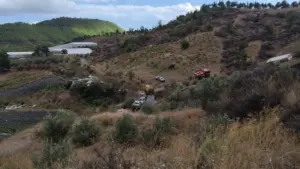
EDİRNE — Agricultural activities in Turkey’s northwestern border province of Edirne faced an unexpected and dramatic disruption during the peak of the seasonal harvest. A heavy-duty combine harvester, actively engaged in harvesting operations within a expansive paddy field, suddenly caught fire and was reduced to a charred husk of metal. The incident, which took place in the İpsala district, prompted a swift mobilization of local emergency services as towering columns of black smoke and high flames illuminated the evening sky over the agricultural plains.
The unfortunate event occurred during the late afternoon and early evening hours, a critical window when farmers and agricultural workers strive to maximize their productivity before nightfall. According to the initial reports gathered from the scene, the combine harvester—belonging to a private agricultural enterprise operating in the region—was moving through the muddy and dense terrain of a local rice field. Rice cultivation, or çeltik as it is locally known, is a cornerstone of the regional economy in İpsala, an area renowned for producing a significant portion of Turkey’s rice supply.

For reasons that remain entirely unclear at this early stage, a fire broke out on the high-capacity machinery while it was actively processing the crop. Because modern combine harvesters operate under grueling conditions—combining mechanical friction, high engine temperatures, dry crop residue, and volatile hydraulic fluids—agricultural machinery is inherently susceptible to sudden mechanical or electrical faults. Once the ignition point was reached, the combination of dry husks, straw, and fuel quickly transformed the heavy-duty vehicle into a raging ball of fire.
The flames spread at an astonishing pace, engulfing the entire body of the harvester within minutes. The operators and workers in the immediate vicinity found themselves powerless to combat the intense blaze using portable extinguishers, as the fire quickly overwhelmed the mechanical components of the multi-ton vehicle. Realizing the gravity of the situation and the potential risk of the fire spreading to the surrounding agricultural landscape or threatening neighboring fields, farm personnel immediately contacted the local emergency response services to request urgent intervention.

Upon receiving the alert, the İpsala detachments of the local gendarmerie command and municipal fire brigade were dispatched to the scene without delay. Navigating the challenging rural access roads leading into the paddy fields, firefighting crews arrived promptly to tackle the blaze. The firefighters deployed pressurized water streams to beat back the roaring flames that had entirely consumed the valuable agricultural machinery.
Despite the rapid and coordinated efforts of the fire department, the damage to the vehicle was absolute. The intense heat melted and warped the steel framework, destroyed the sophisticated harvesting headers, ruined the electronic control systems, and completely incinerated the cabin. By the time the fire was fully extinguished and cooled down to prevent any secondary flare-ups, the expensive combine harvester had been rendered entirely unusable, leaving behind only a blackened, smoking frame in the middle of the harvested paddy.

While the loss of the high-value agricultural machinery represents a severe financial blow to the private firm operating it, local authorities confirmed that swift intervention prevented the flames from spreading across the wider agricultural zone. Paddy fields, particularly during the dry phases of the harvesting season, can present severe fire hazards if stray sparks or burning debris come into contact with dry stubble, raising concerns among other local farmers in the İpsala region. Fortunately, prompt perimeter control by the emergency response teams ensured that the environmental and ecological impact of the fire was strictly contained to the vehicle itself.
In the wake of the incident, law enforcement officers and forensic experts from the gendarmerie launched a comprehensive investigation to ascertain the exact sequence of events that led to the combustion. Investigators are currently examining the burned remnants of the vehicle to determine whether the fire originated from an electrical short circuit, an overheated engine component, friction within the complex mechanical gears, or another unexpected technical malfunction. Technical inspection reports and statements from the machine operators are expected to shed further light on the precise cause of the accident as the inquiry progresses.