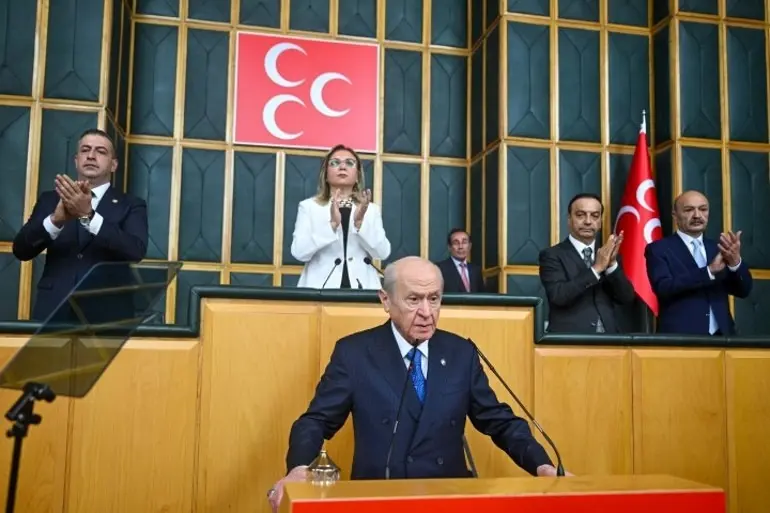
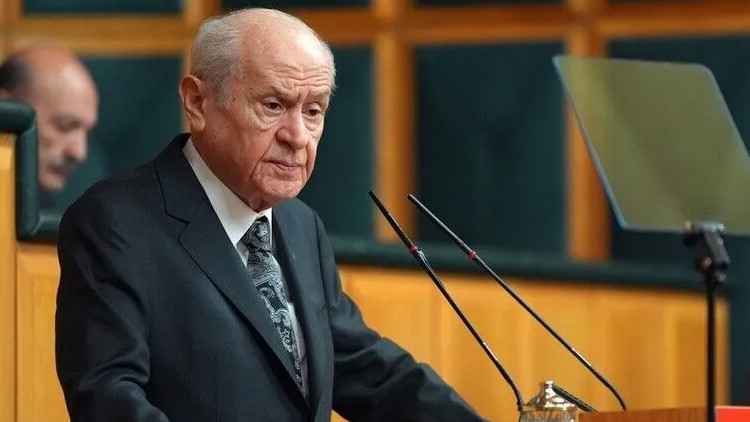
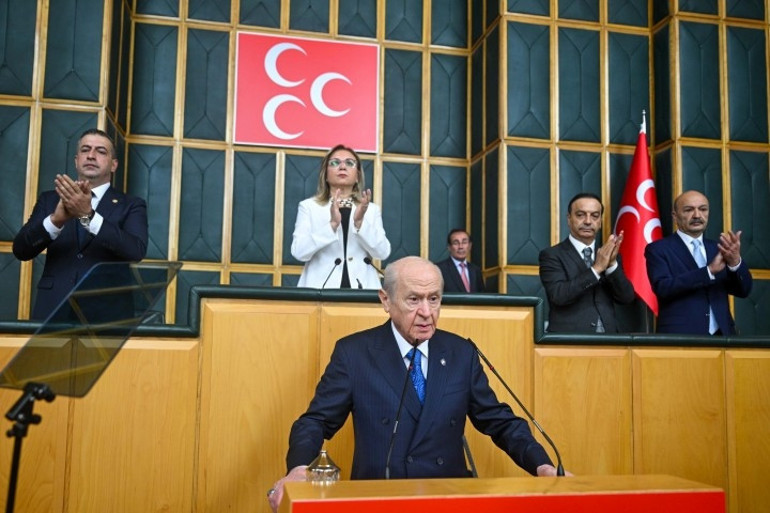
In a comprehensive and wide-ranging address to the Nationalist Movement Party (MHP) parliamentary group at the Grand National Assembly of Turkey (TBMM), Chairman Devlet Bahçeli outlined a vision of a "Turkey without terrorism" while delivering a series of stern warnings to both domestic political actors and international rivals. Bahçeli’s speech, which touched upon everything from regional geopolitical flashpoints to domestic corruption investigations and global educational standards, emphasized that the Turkish nation has reached a point of no return in its quest for stability, security, and moral purification.
The MHP leader began his address by extending his deepest condolences to the victims of several tragic incidents that occurred over the past week. He specifically noted the structural collapse of a building in Istanbul’s Maltepe district, which resulted in five fatalities and eleven injuries, as well as a series of devastating traffic accidents in Manisa and Kahramanmaraş. Among those injured in the Kahramanmaraş accident was MHP deputy Zuhal Karakoç. Bahçeli used these tragedies to underscore a broader national necessity: the acceleration of urban transformation projects. He insisted that the state-led mobilization for safer housing must be completed swiftly, particularly in earthquake-prone regions, to ensure that the sanctity of human life is protected through robust infrastructure and proactive safety measures.
The Pursuit of a Terrorism-Free Region
Central to Bahçeli’s message was the ongoing initiative to eliminate the scourge of terrorism not just from Turkish soil, but from the surrounding region. He described the "Terror-Free Turkey" initiative as a sincere and serious commitment that would be pursued to its logical conclusion. "Turkey will not turn back from its path; the Turkish nation will not reverse its decision," Bahçeli declared, framing the struggle against terrorism as a foundational element of a new civilization-building process.
He articulated a vision where Turkey serves as a center of gravity for justice and order in the international community. According to Bahçeli, this "civilizational march" draws its spiritual strength from Turkic-Islamic sources and its cultural foundations from ancient traditions. He argued that as Turkey strengthens its internal brotherhood and pursues this vision, external adversaries and their domestic collaborators would naturally ramp up their efforts to sabotage the environment of peace and trust. He warned that systematic attempts to destabilize the economy and polarize society are currently in play, yet he remained confident that the national will would prevail against these "orchestrated provocations."

Regional Volatility and the Defense of Holy Lands
Turning his attention to the Middle East, Bahçeli delivered a scathing critique of Israel’s current regional policies. He characterized the provocations regarding the Al-Aqsa Mosque—the first Qibla of Islam—as a manifestation of "barbarism" that has reached intolerable levels. He linked these tensions to the upcoming elections in Israel, suggesting that the government of Benjamin Netanyahu is utilizing "genocidal policies" in Gaza and the West Bank as a tool for political survival.
Bahçeli also addressed the escalating Houthi attacks originating from Yemen, particularly those targeting Saudi Arabia. He described these strikes as part of a broader effort to destabilize the region’s holy sites and critical infrastructure. Recalling the historical legacy of the Ottoman defense of Medina and the heroism of Fahrettin Pasha, Bahçeli asserted that Turkey cannot remain indifferent to threats against the Hijaz region. He called for the activation of the "Mecca Defense Alliance" and suggested that Turkey should provide all necessary military and diplomatic support to Saudi Arabia to protect the holy lands.

"Whether it is our first Qibla, Al-Aqsa, or our ultimate Qibla, the Kaaba, we will not close our eyes to these attacks," Bahçeli said. He emphasized that if diplomacy fails to deter such aggression, the use of "deterrent force" should be on the table. He further noted that the instability in the Red Sea and the Bab al-Mandab Strait poses a direct threat to international trade and energy security, requiring a unified stance from the Islamic world to prevent further bloodshed and the exhaustion of regional resources in sectarian conflicts.
Stern Warnings to Athens and the Mediterranean Axis
The MHP leader also directed a significant portion of his speech toward the tensions in the Aegean and Eastern Mediterranean. He specifically criticized the Greek administration’s attempts to forge a "security axis" with Israel and the Greek Cypriot administration, particularly regarding the proposed subsea electrical interconnection project. Bahçeli warned Athens that relying on third-party powers like Israel or the United States to bypass Turkey’s maritime jurisdiction is a "grave historical error."

He advised Greek politicians to abandon "amateurish" provocations and "theatrical displays of hostility." According to Bahçeli, the friendship and respect of Turkey are far more valuable and powerful than any weaponry or ammunition Greece might purchase from Israel. "If the Greek government is arming itself to protect itself from us, they should instead seek refuge in Turkish peace," he remarked. "If they are arming themselves to scare us, they should know that no power on earth can intimidate this nation." He reiterated that as long as Greece refuses to recognize the sovereignty of the Turkish Republic of Northern Cyprus and the legitimate rights of Turkey in the Mediterranean, it will never truly find the security it seeks.
The "Fund Crisis" as a Political Escape Ramp
On the domestic front, Bahçeli addressed the "fund" investigations and high-profile financial scandals that have dominated the Turkish media. He issued a nuanced warning, stating that while all forms of corruption must be prosecuted, the current "fund crisis" should not be used as an "escape ramp" for the opposition to cover up their own moral and administrative failures.
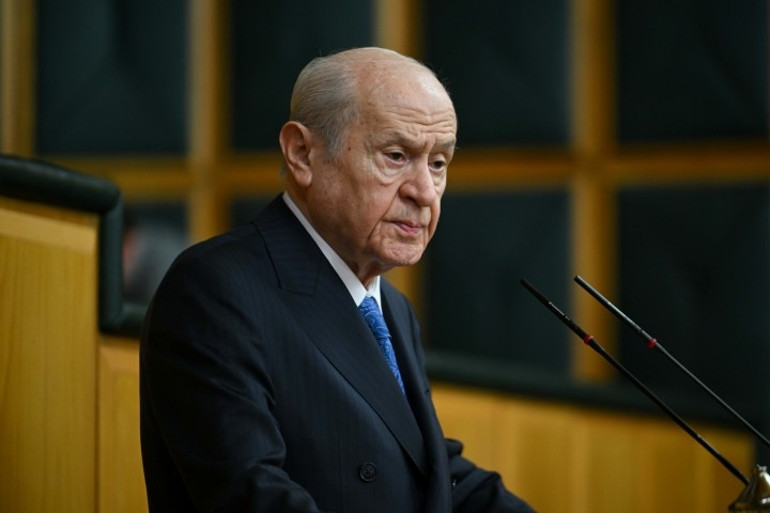
Bahçeli accused the opposition of using the public’s focus on financial scandals to distract from corruption and bribery investigations within opposition-run municipalities. He described this as a form of "political anesthesia" designed to hide the "looting of public property" and the "betrayal of the people’s trust." He emphasized that the state’s institutions are already taking the necessary legal steps regarding the fund investigations and that the judiciary must be allowed to work swiftly to protect small investors.
However, he shifted the focus toward what he called "Moral Standardization." Drawing on the philosophies of Ziya Gökalp and Sabri Ülgener, Bahçeli argued that morality is the bedrock of both the family and the state. He asserted that a society where the moral compass has shifted will inevitably face a crisis of justice and economy. "No corruption or irregularity should receive protection under the law," he stated, calling for a total "purification" of Turkish politics and the public sector from unethical elements. He urged the government to use an effective communication strategy to inform the public about the true extent of municipal corruption, ensuring that "the innocent and the guilty are not weighed in the same scale."
European Double Standards and Education Success
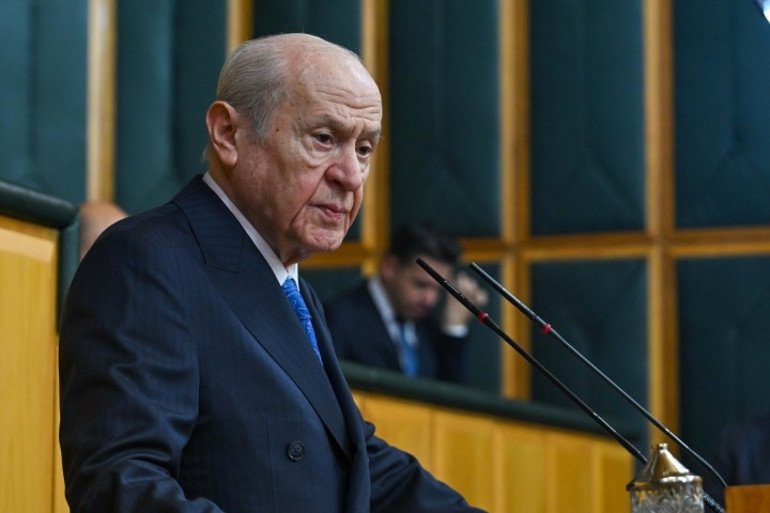
In a comparative analysis of social stability, Bahçeli pointed to the recent student protests in France. He noted that the youth in Europe are increasingly taking to the streets to protest deteriorating educational conditions, teacher shortages, and a lack of equal opportunity. He suggested that these protests, reminiscent of the 1968 movements and the 2018 Yellow Vest riots, signal a breakdown in the European social state model.
Bahçeli highlighted a perceived "hypocrisy" in the European leadership, noting that while they are quick to lecture Turkey on democracy and human rights during minor domestic incidents, they remain silent or resort to heavy-handed police tactics when faced with their own internal unrest. "The heavy injuries and thousands of detentions in France expose the two-faced nature of European values," he observed.
In contrast, Bahçeli celebrated Turkey’s recent progress in the international educational arena. Citing the PISA 2025 results released by the OECD, he noted that Turkey was the country that most significantly increased its scores in mathematics, science, and reading compared to previous assessments. He hailed this as a concrete indicator of Turkey’s rise and emphasized the need to continue investing heavily in the nation’s youth. He described the goal of the "Turkish Century" as raising a generation that is technologically adept, entrepreneurially minded, and deeply rooted in national and spiritual values.
A Call for National Unity and the Path Ahead
Concluding his address, Bahçeli invoked the words of the legendary folk poet Aşık Veysel, calling for an end to slander and a commitment to "working together for the homeland." He reminded the parliamentarians that Turkey is no longer the "old Turkey" of past decades. With its strengthened institutions, expanding economic capacity, influential diplomacy, and a deterrent defense industry, the nation is now a sovereign power that "builds its own games rather than playing in those of others."
He called on his fellow lawmakers to focus the upcoming legislative period on solving the socio-economic problems of the citizens and meeting the expectations of the public. He reiterated the strength of the "People’s Alliance" (Cumhur İttifakı) and its role in building a future defined by national unity and "Turkish centuries."
"Let our nation be assured," Bahçeli concluded. "We will strengthen our national unity and set sail for new Turkish centuries. By overcoming every obstacle and breaking every trap, we will build our powerful future together."