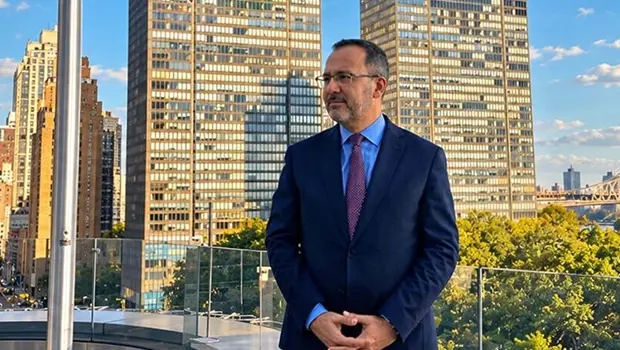
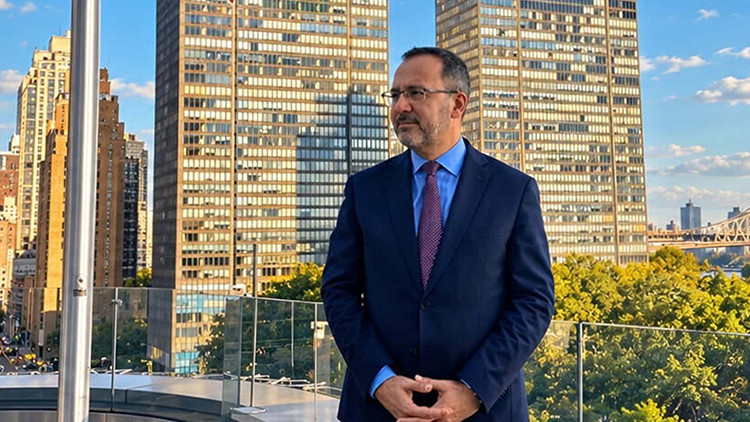
In the wake of the 81st United Nations General Assembly in New York, Dr. Mehmet Kasapoğlu, a Member of Parliament for Izmir and Chairman of the Turkey-USA Inter-Parliamentary Friendship Group, has provided a comprehensive assessment of Turkey’s diplomatic and economic maneuvers on the world stage. Following his return from the high-level meetings held between September 20 and 23, 2026, Dr. Kasapoğlu penned an analytical article titled "My New York Observations: Turkey Taking Initiative in Global Issues," detailing the strategic depth of President Recep Tayyip Erdoğan’s 16th address to the global body and the multifaceted diplomatic traffic that defined the visit.
Dr. Kasapoğlu characterized President Erdoğan’s presence at the UN rostrum not merely as a routine diplomatic engagement, but as a transformative moment that challenged established international norms. According to Kasapoğlu, the President’s approach continues to resonate with those seeking justice in an increasingly fragmented world order, directly confronting global powers with the grievances of the oppressed. The visit, he noted, represented a historic turning point where Turkey’s "intellectual weight" and uncompromising stance on global ethics were on full display before representatives from over 190 nations.
The UN General Assembly as a Mirror of Global Realities
Reflecting on the atmosphere in New York, Dr. Kasapoğlu described the UN General Assembly hall as more than a showcase for traditional diplomacy; he viewed it as a "public square" where the world is forced to confront its harshest realities. He emphasized that President Erdoğan’s speech—his 16th to date—shunned dry statistics and repetitive diplomatic jargon. Instead, the President utilized the platform to amplify the voices of those marginalized by the current international system.
"Every step the President takes toward that podium represents a break from the status quo," Kasapoğlu wrote. "He presents a stance that strikes the faces of those who ignore the plight of the innocent and those who search for justice with a candle in the dark. In this 81st General Assembly, he once again raised the volume for those waiting for justice."
Kasapoğlu’s observations suggest that Turkey’s role has evolved into a bridge between conscience and rationality. He argued that the Turkish delegation managed to place "conscience and mind at the same table," balancing a bold call for global justice with a pragmatic, rational diplomacy that serves Turkey’s national interests. This dual approach, he suggested, is particularly evident in the context of the 100th anniversary of Turkish-American diplomatic relations, where Turkey has maintained its principles without retreating an inch while pursuing a sophisticated and multi-dimensional foreign policy.
The Humanitarian Crisis in Gaza: A Global Shame
The most poignant and "heart-wrenching" segment of President Erdoğan’s address, according to Dr. Kasapoğlu, was the focus on the ongoing tragedy in Gaza. The President’s descriptions of the region as "the world’s largest children’s cemetery" and "the most shameful concentration camp of our age" were intended to bring the raw reality of the humanitarian disaster to the forefront of the international agenda.
Dr. Kasapoğlu underscored the gravity of the figures presented by the President, noting that in the last three years alone, 74,000 civilians have been killed in Gaza. Even more distressing were the reports that over 1,500 innocent people were killed following the announcement of a ceasefire. These figures were presented directly to the world leaders to ensure that the human cost of the conflict could not be ignored.
"We must give credit where it is due," Kasapoğlu stated. "Today, voices are rising against the oppression in Gaza from all corners of the world. Millions are taking to the streets, and the global conscience is in revolt. However, when we look at the arena of states, we see that no country has taken as much initiative as Turkey, nor has any other nation been as willing to put its hand under the stone and risk paying a price."
He argued that if other nations had exhibited the same courageous stance as Turkey, the world might not be discussing such atrocities today. He pointed to the President’s declaration—"We will suffer if necessary, we will pay a price if necessary, but we will not remain silent in the face of injustice"—as the definitive summary of Turkey’s honorable position in international affairs.

The Vision of "The World is Bigger Than Five"
A recurring theme in Turkey’s foreign policy, the critique of the United Nations Security Council’s structure, was once again a focal point in New York. Dr. Kasapoğlu highlighted President Erdoğan’s reiteration of the "The World is Bigger Than Five" vision, arguing that the fate of over 190 countries cannot be left to the whims of five permanent members.
The current global system, Kasapoğlu noted, is perceived as being in a state of paralysis, having lost its capacity to function effectively in the face of modern crises. To overcome this "state of stroke," Turkey has proposed a five-principle "global prescription." Central to this proposal is the demand that international law should not be applied differently to the weak and the strong, and that the "culture of impunity" must be eradicated.
In instances where the global system remains blocked, Dr. Kasapoğlu pointed to "regional ownership" as the solution. He cited the Defense Alliance established between Turkey, Pakistan, and Saudi Arabia as a concrete manifestation of the will to find internal solutions to regional problems. This alliance, he suggested, serves as a model for how nations can cooperate to ensure security and stability when international institutions fail to act.
Economic Diplomacy and the 100 Billion Dollar Goal
Beyond the humanitarian and structural critiques of the UN, the New York visit was characterized by intense economic diplomacy. Dr. Kasapoğlu emphasized that Turkey’s humanitarian stance does not come at the expense of its rational state goals. On the contrary, while defending global justice, Turkey is simultaneously fortifying its commercial and strategic objectives.

The 100th anniversary of Turkish-American diplomatic relations served as a backdrop for discussions on trade and investment. Dr. Kasapoğlu noted the positive momentum in bilateral relations, attributing it in part to the "sincere and exceptional dialogue" between President Erdoğan and U.S. President Donald Trump. This coordination, he said, has led to positive outcomes in crises ranging from the Middle East to Asia.
The primary economic target remains increasing the trade volume between Turkey and the United States to $100 billion. The statistics provided by Kasapoğlu indicate a steady upward trajectory: trade reached $38.6 billion in 2025, and in the first eight months of 2026, it hit the $28 billion mark. Projections suggest that by the end of 2026, the volume will reach between $40 billion and $43 billion.
During the visit, the Turkish delegation extended "clear and warm invitations" to American investors and the business world, highlighting the unique opportunities Turkey offers. Dr. Kasapoğlu described the efforts of the economic and foreign policy teams in New York as a "flawless team game." While one side of the delegation briefed global fund managers on Turkey’s economic resilience—specifically the transition away from the Currency Protected Deposit (KKM) scheme and the strengthening of central reserves—the other side engaged in intensive diplomatic shuttling at multilateral summits.
Strategic Sectors and Defense Industry Growth
The Turkish delegation identified five "golden sectors" for direct investment: the defense industry, tourism, digital services, mobile gaming, and renewable energy. As the world’s 16th largest economy with an export capacity of $405 billion, Turkey’s economic strength was a central theme in meetings with the American business community.
The defense industry, in particular, was highlighted as a symbol of Turkey’s technological leap. Dr. Kasapoğlu pointed out that annual defense exports, which once stood at a mere $248 million, have now surged past $10 billion. Furthermore, Turkey’s global market share in this sector has increased by 120% over the last five years. He noted that Turkish companies are no longer just selling products in the U.S. market; they are establishing bases and making significant investments.

Multilateral Leadership at the Turkish House
The "Turkevi" (Turkish House) in New York served as a hub for high-level diplomatic activity. Dr. Kasapoğlu detailed several critical meetings led by Turkey, including a trilateral meeting between Turkey, Syria, and Saudi Arabia. Additionally, Turkey took a leading role in MIKTA (Mexico, Indonesia, South Korea, Turkey, Australia) meetings and the "Group of 8" coordination meetings regarding Palestine.
These engagements, according to Kasapoğlu, represent a new doctrine in Turkish foreign policy that transcends the traditional "idealism vs. realism" debate. "We are not drifting into a cold pragmatism that compromises on principles, nor are we imprisoned in an abstract rhetoric detached from the naked realities of the field," he wrote.
Conclusion: A Vision for the Second Century
As Turkey enters its second century as a Republic, Dr. Kasapoğlu believes the messages delivered in New York signal a confident and independent vision. He argued that Turkey’s ability to simultaneously criticize the global system while pursuing $100 billion trade targets with the U.S. is evidence of a "rational state mind" free from ideological obsessions.
"In the turbulent waters of the 21st century, it is not just those who speak who will determine the direction, but those who use conscience as a compass and the mind as a strategy," Kasapoğlu concluded. "With the representative power derived from our Grand National Assembly and the game-changing will under the leadership of our President, we will continue to grow our strategic partnerships on a foundation of mutual gain while remaining the uncompromising standard-bearers of global justice."