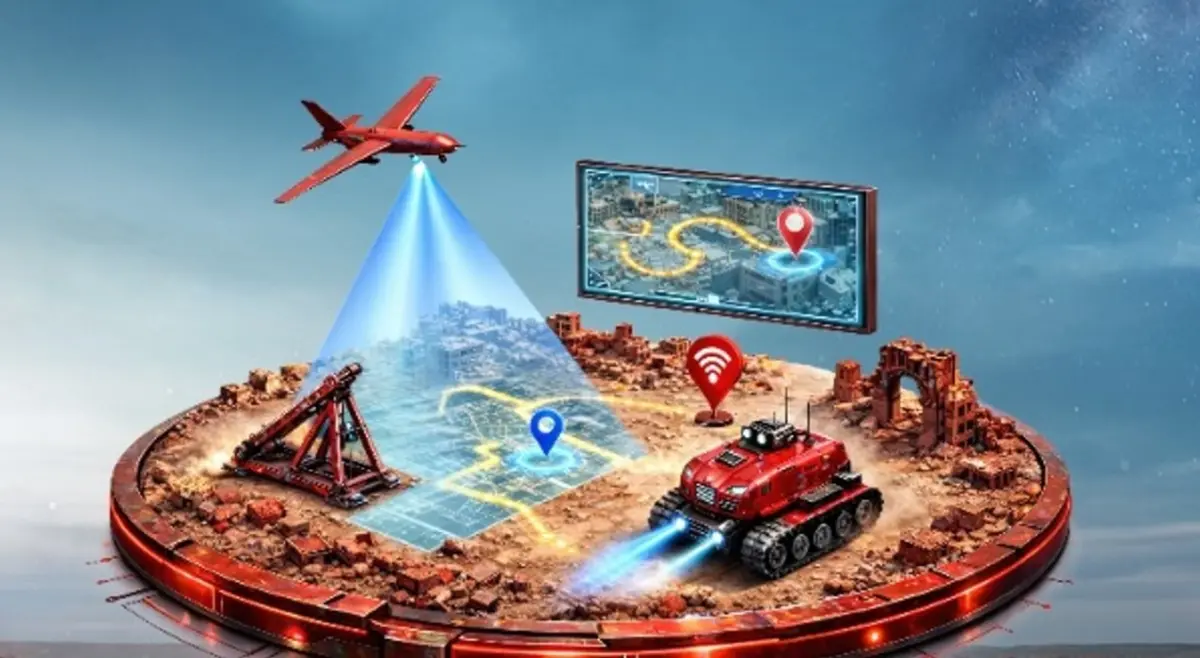
Young engineering teams and innovators are converging at the Advanced Autonomous Systems Design and Operation Competition, organized under the framework of TEKNOFEST 2026, to develop cutting-edge solutions that combine unmanned aerial vehicles, artificial intelligence, computer vision, and autonomous operational frameworks. Designed to address critical challenges in simulated disaster environments, the competition has brought together hundreds of university and high school students, researchers, and young technology enthusiasts. Following an extensive technical evaluation process that reviewed 118 team applications, 30 teams have advanced to the final evaluation phase, with the top 20 performing teams set to earn a place in the ultimate final round.
Jointly organized under the main leadership of the Ministry of Industry and Technology of the Republic of Turkey and the Turkish Technology Team Foundation (T3 Foundation), the competition is directly executed by Turkish Aerospace Industries (TUSAŞ). The initiative aims to equip young talents with advanced technical competencies across a spectrum of modern engineering disciplines, including unmanned systems architecture, autonomous decision-making algorithms, artificial intelligence models, computer vision systems, wireless communication protocols, and multi-platform system integration. By challenging participants with real-world engineering hurdles, the program seeks to cultivate high-level technical expertise capable of advancing the autonomous systems ecosystem.
Autonomous Solutions for Post-Disaster Operational Scenarios
The operational scenario constructed for the competition focuses on the complex conditions encountered during post-disaster response and relief missions. In such crisis environments, standard communication infrastructures may be compromised, terrain can become unpredictable, and immediate situational awareness is vital for directing emergency services and delivery mechanisms. Within this framework, competing teams are tasked with developing integrated engineering solutions that enable Unmanned Aerial Vehicles (UAVs) and autonomous systems to operate collaboratively and execute mission requirements without continuous human piloting.
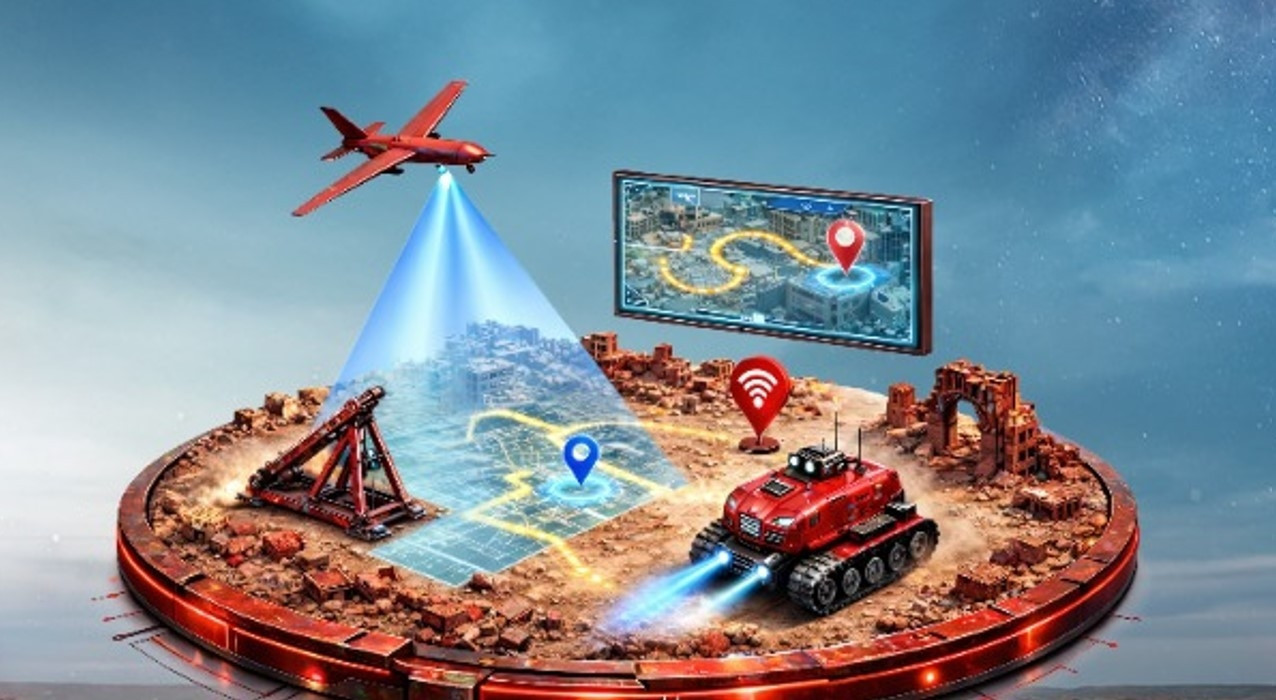
Under the defined mission profile, the participating UAV is required to conduct an entirely autonomous reconnaissance flight over a designated test area. Leveraging onboard computer vision and artificial intelligence algorithms, the aircraft must inspect the terrain, identify navigable pathways, and detect open routes that remain accessible amid simulated disaster blockages. Once the clear path is calculated, the system must establish reliable wireless communication links to transmit real-time telemetry, imagery, and route data directly to both the Ground Control Station (GCS) and an Unmanned Ground Vehicle (UGV).
The aerial phase of the mission concludes when the UAV executes a safe and fully autonomous landing at a designated landing zone. While the current year’s final mission scenario focuses primarily on the aerial reconnaissance, path detection, and data transmission phases without requiring the UGV to physically traverse the path to the target location, organizers have outlined an expanded roadmap for the future. The physical deployment of UGVs to follow the identified ground trajectory and complete downstream navigation tasks is planned to be incorporated into the competition’s final phase in the subsequent year.
From 118 Contending Teams to 30 Qualified Finalists
The Advanced Autonomous Systems Design and Operation Competition witnessed substantial interest from both national and international academic institutions. Open to applications from across Turkey and abroad, the contest initially attracted 118 teams comprising a total of 727 individual participants. Each team submitted preliminary design proposals and technical approaches detailing their hardware architectures, sensor suites, software pipelines, and integration strategies.
Following comprehensive technical evaluation milestones, 30 teams consisting of 263 participants successfully met the qualification thresholds to advance to the Final Evaluation Stage. Demonstrating broad regional participation, the finalist teams represent academic institutions and independent technology groups from 13 different provinces across Turkey. In addition to the strong domestic presence, the competition also features international representation, with a finalist team from North Macedonia qualifying to test its autonomous systems alongside Turkish competitors.
The path to the finals requires participating teams to navigate a structured, multi-tier assessment methodology. Throughout the development lifecycle, teams are evaluated across several formal reporting gates, including the Preliminary Evaluation Report, the Detailed Evaluation Report, and the Final Evaluation Report. In addition to rigorous documentation reviews, finalists must undergo formal technical presentations, hardware-in-the-loop and system reviews, and demanding flight performance assessments.
During these evaluations, an expert panel assesses each team’s technical design robustness and physical integration quality. Key criteria under scrutiny include autonomous mission execution capability, the accuracy and latency of computer vision and artificial intelligence models, the stability of real-time wireless data transmission, overall mission completion efficiency, and demonstrated resilience during live field testing.
Rigorous Technical Presentations and Five-Day Field Testing
The Final Evaluation Stage is divided into two distinct components: exhaustive technical presentations and multi-day live operational flight trials. The first phase, scheduled across September 21 and 22, requires all 30 finalist teams to deliver comprehensive technical presentations directly to the competition’s evaluation jury. During these sessions, team leaders and subsystem specialists present their complete system architectures, software algorithms, hardware integration schematics, and performance metrics as documented in their Final Evaluation Reports.

The jury reviews each presentation to evaluate how effectively teams have addressed technical design challenges, system redundancy, safety protocols, and algorithm optimization. This academic and technical scrutiny ensures that the underlying engineering principles match the operational capabilities demonstrated on the field.
Following the two-day presentation phase, the competition transitions to its decisive field testing stage from September 23 to 25. Spanning three consecutive days, this phase centers on practical Drone Mission Test Flights conducted under field conditions. During these tests, each team’s UAV is deployed into the simulated disaster operational area to carry out the full mission sequence autonomously.
The live trials serve as an active verification ground for the core competencies developed by the students. Juries closely monitor and measure computer vision performance, the speed and accuracy of AI-driven decision-making, autonomous navigation and path calculation stability, real-time data link integrity, and total mission success rates. To ensure fairness and account for potential sensor anomalies or unexpected environmental factors, the schedule includes provisions for makeup flight tests at the end of each testing day when deemed necessary by the technical committee.
Upon the conclusion of the two-day technical presentations and the three-day field operations, the jury will consolidate the technical scores, presentation ratings, and live mission results. Based on these aggregate performance evaluations across the general classification standings, the top 20 teams will earn their qualification to enter the final round.
Substantial Financial Rewards for Top-Performing Teams
To encourage high-level technological innovation and support the continued research and development efforts of participating youth, the Advanced Autonomous Systems Design and Operation Competition offers significant financial prizes for top-ranking projects. The successful teams will receive their awards during the official award ceremony held as part of the broader TEKNOFEST 2026 celebrations.

The competition provides up to 750,000 Turkish Liras in monetary awards for the highest-performing finalists. Under the announced prize structure, the team securing first place in the overall standings will be awarded 750,000 TL. The second-place team will receive 600,000 TL, while the team finishing in third place will be presented with an award of 500,000 TL.
These awards, coupled with the technical mentorship provided by TUSAŞ and the institutional backing of the Ministry of Industry and Technology and the T3 Foundation, underscore the ongoing commitment to expanding the pipeline of qualified engineers, researchers, and software developers specialized in autonomous robotics and emergency response technologies.