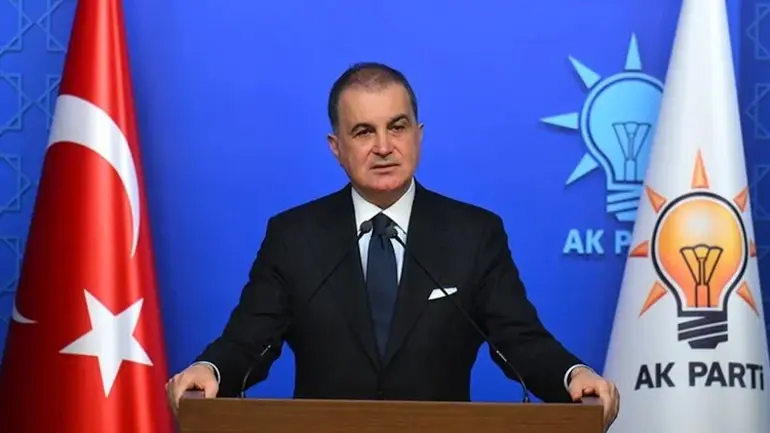
ANKARA — In a sharp escalation of political rhetoric that highlights the deepening divide between Turkey’s ruling and opposition factions, AK Party Spokesperson Ömer Çelik has issued a comprehensive and stinging rebuttal to recent statements made by Özgür Özel, the Chairman of the New Party. In a series of detailed communications shared via his social media accounts on September 29, 2026, Çelik characterized Özel’s critiques as a mixture of "political ignorance" and "slander," accusing the opposition leader of attempting to mask internal party failings by launching unfounded attacks on the integrity of the state and its various institutions.
The confrontation comes at a time of heightened political sensitivity, as the AK Party seeks to reaffirm its commitment to legal transparency while the New Party, under Özel’s leadership, has ramped up its scrutiny of the government’s administrative and judicial conduct. Çelik’s response was not merely a defense of the ruling party’s record but a broad philosophical critique of the opposition’s current trajectory, which he described as being guided by a fundamental lack of principle.
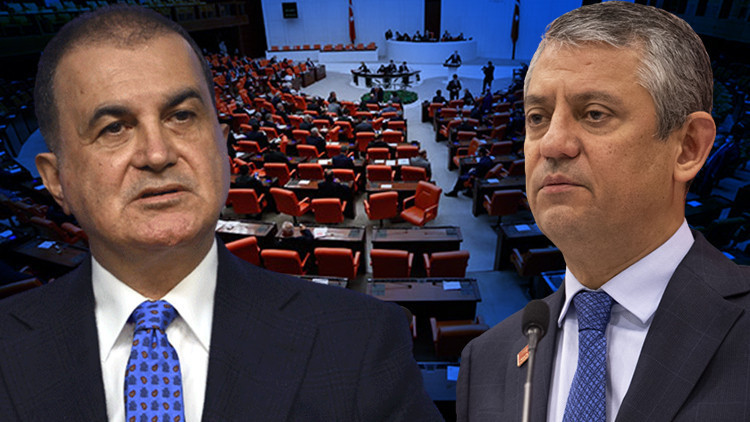
A Critique of "Political Ignorance" and the Alphabet of Responsibility
The core of Ömer Çelik’s rebuttal centered on what he described as a profound lack of understanding on the part of Özgür Özel regarding the basic tenets of governance and political accountability. Referring to Özel’s recent remarks concerning the "alphabet of political responsibility," Çelik suggested that the New Party leader’s grasp of these concepts is non-existent.
“Mr. Özgür Özel’s lack of knowledge regarding the ‘alphabet of political responsibility’ is very clear,” Çelik stated. He went on to argue that the statements issued by Özel and his associates do not carry the weight of constructive political discourse but are instead indicators of "political exhaustion." According to Çelik, the New Party has moved beyond occasional missteps and has now formally integrated "political unprincipledness" into its very party program.
This accusation of "political exhaustion" (tükenmişlik) is a significant rhetorical tool in Turkish politics, often used to suggest that an opponent has run out of viable ideas and has resorted to desperate measures to remain relevant in the public eye. By framing the New Party’s actions as a symptom of this exhaustion, Çelik sought to delegitimize their critiques as the byproduct of a failing political strategy rather than a genuine concern for the public interest.

Defense of the Presidency and the AK Party Leadership
A significant portion of Çelik’s response was dedicated to defending the President and the AK Party Chairman against what he termed "outright slander." He maintained that the attacks directed toward the nation’s leadership are devoid of factual basis and are rooted in "political ignorance."
“The words directed at our President and our Chairman are composed entirely of political ignorance and political slander,” Çelik asserted. He emphasized that the AK Party remains undeterred by such accusations and promised a rigorous legal and political struggle against those who propagate them. “No one should have any doubt that we will struggle against these slanders in the clearest possible way,” he added, signaling that the party may pursue legal avenues or more aggressive communication strategies to counter the New Party’s narrative.
Çelik’s defense rested on the assertion that the AK Party has always maintained a clear and unwavering principle regarding the use of authority. He argued that the party’s history is defined by a commitment to the rule of law and the protection of the people’s rights. He pointed out that under the leadership of the President, the government has consistently held the view that anyone who abuses their power, violates the law, or infringes upon the rights of the nation must be held accountable, regardless of their title, position, or identity.

Allegations of Institutional Sabotage and Internal Pollution
Perhaps the most severe of Çelik’s accusations was the claim that the New Party leadership is intentionally attacking state institutions to divert attention from their own internal crises. He described the opposition’s current political understanding as one that blindly defends scandals and irregularities, even when faced with confessions and documented evidence.
“The political understanding of Mr. Özgür Özel’s management consists of acting as a shield for scandals in the town squares and defending irregularities despite documents and confessions,” Çelik remarked. He argued that this "mentality that takes lack of principle as its guide" has no moral authority to lecture the Turkish people on ethics or governance.
Çelik contrasted this with the AK Party’s approach, which he characterized as being rooted in "state seriousness." He claimed that the ruling party ensures that all legal and financial processes are executed thoroughly and transparently. In contrast, he accused the opposition of "political irresponsibility and distortion," alleging that they attack state institutions and their managers solely to "cover up the pollution within their own ranks."

This narrative of "internal pollution" suggests that the New Party is currently grappling with scandals or ethical lapses that it is struggling to contain. By positioning the opposition as an entity that protects its own wrongdoers while attacking the pillars of the state, Çelik aimed to portray the AK Party as the sole guardian of institutional integrity and the rule of law.
The Public Perception and the Choice Between Two Mentalities
In the concluding remarks of his response, Çelik addressed the Turkish public directly, expressing confidence that the citizens can distinguish between the two competing political philosophies. He framed the choice as one between those who stand by the law and justice and those who are "enslaved" by political errors.
“You cannot escape from this distortion you have fallen into by attacking our President and our AK Party,” Çelik warned the New Party leadership. He concluded by stating that the nation is well aware of the difference between those who uphold the rights of the people and those who remain under "political captivity," defending the wrong actions of their own associates.
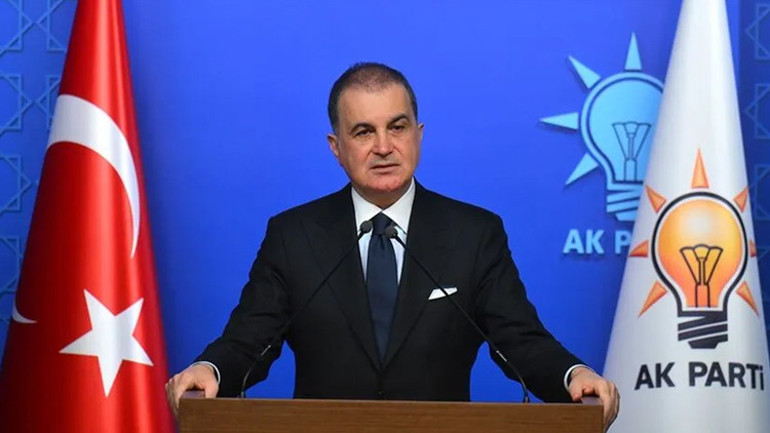
This rhetoric of "political captivity" or "political slavery" (siyasi esaret) is a potent accusation, implying that the opposition leaders are not free agents of the public will but are instead beholden to internal factions, hidden agendas, or the need to protect corrupt elements within their own organization.
The exchange marks a significant moment in the ongoing political discourse of 2026, highlighting a period where the "alphabet of responsibility" has become a central battleground. As both parties prepare for the political challenges ahead, the language of "unprincipledness," "ignorance," and "institutional defense" is likely to remain at the forefront of the national conversation.
For the AK Party, the strategy appears to be a dual-track approach: reinforcing the image of a disciplined, law-abiding government that holds its own accountable, while simultaneously painting the opposition as a chaotic and ethically compromised force that seeks to undermine the state for partisan gain. For Özgür Özel and the New Party, the challenge will be to navigate these accusations while attempting to prove that their critiques of the government are based on systemic issues rather than political opportunism.
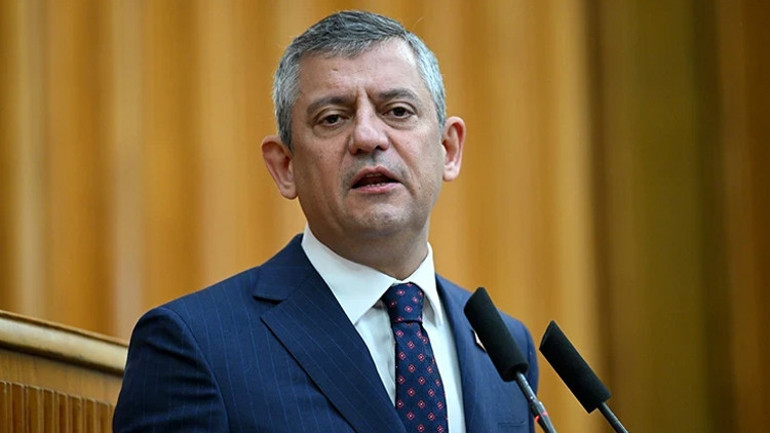
As the political atmosphere continues to heat up, the statements from Ömer Çelik serve as a reminder of the high stakes involved in Turkish political life, where the defense of state institutions and the personal integrity of leaders are frequently the primary theaters of conflict. The AK Party Spokesperson’s firm stance suggests that the government is prepared to meet the opposition’s intensified rhetoric with an equally robust and uncompromising defense of its record and its vision for the country’s future.