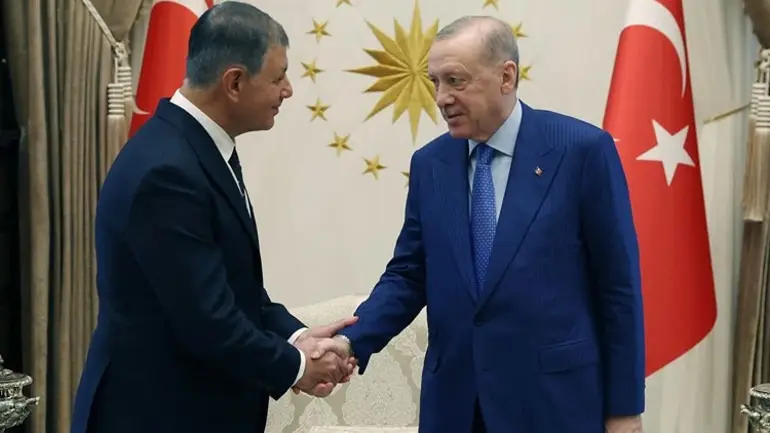
The speculation, which has been simmering for months, gained significant momentum following a landmark meeting between Mayor Tugay and President Recep Tayyip Erdoğan at the Presidential Complex, often referred to as the Külliye. While the official agenda of the meeting was not fully disclosed, the optics of the visit, combined with Tugay’s recent departure from the Republican People’s Party (CHP) and his subsequent resignation from the Atatürkist Thought Association (ADD), have led political analysts to conclude that a formal transition is imminent.
All Eyes on Wednesday’s Group Meeting
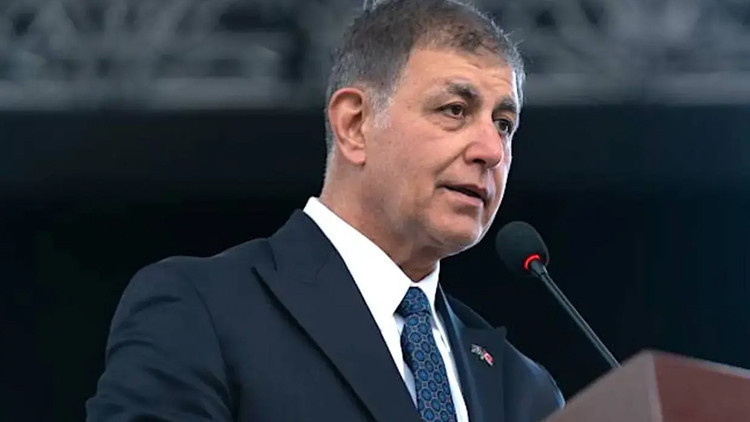
The focus of the Turkish political capital has now shifted entirely to the AK Party’s parliamentary group meeting scheduled for Wednesday. According to seasoned political observers and reports from the field, this session is expected to serve as the stage for a formal "badge ceremony," where President Erdoğan traditionally welcomes new members into the party fold by personally pinning the AK Party emblem onto their lapels.
CNN Türk correspondent Melike Görür Demirkıran, who has been closely monitoring the developments in Ankara, noted that the narrative surrounding Tugay’s transition has transitioned from mere rumor to a highly probable outcome. "The claims that İzmir Metropolitan Municipality Mayor Cemil Tugay will join the AK Party are growing stronger by the day," Demirkıran reported. "The visit to the Külliye to see President Erdoğan was a turning point. In political circles, the expectation is now firmly set on Wednesday. It is widely anticipated that the President will pin the party badge on Tugay during the group meeting, marking a definitive end to his period as an independent mayor."
This potential move is not merely a change in party affiliation; it represents a major strategic shift for the AK Party, which has long sought to make inroads into İzmir, a city traditionally dominated by the CHP. For Tugay, the transition would mark the culmination of a turbulent period that began with his high-profile exit from his former party.

Critical Meetings and Political Maneuvers in Ankara
The road to this week’s anticipated announcement began on June 18, when Cemil Tugay officially resigned from the CHP. His departure was not a quiet affair; it was rooted in deep-seated ideological and administrative friction with the party’s then-leadership under Kemal Kılıçdaroğlu. At the time of his resignation, Tugay cited the "absolute nullity" (mutlak butlan) of certain party decisions and expressed sharp criticism of the internal management of the CHP.
Despite his departure, Tugay initially maintained a degree of hope for reconciliation, famously stating that he was leaving with the hope of one day returning to a party that better reflected his values. Since that time, he has carried out his duties as the Mayor of İzmir in an independent capacity. During this period, the political world watched closely to see if he would join the newly formed "New Party," but Tugay remained unaligned, fueling speculation that he was waiting for a more significant platform or a different political path.

The rumors began to solidify during the summer months. Although Tugay initially denied reports of a move to the AK Party, his recent itinerary in Ankara suggested a change in strategy. Before his meeting with President Erdoğan, Tugay held a significant discussion with the Minister of Transport and Infrastructure, Abdulkadir Uraloğlu. In the context of Turkish municipal governance, such meetings are often viewed as precursors to major infrastructure collaborations, which are frequently facilitated when a mayor aligns with the central government.
Following the meeting with Minister Uraloğlu, Tugay was received by President Erdoğan at the Külliye. The acceptance of an independent mayor by the President is a rare occurrence and is typically interpreted as a sign of high-level political negotiation. Adding further weight to the theory of a total ideological shift was Tugay’s resignation from the Atatürkist Thought Association (ADD). Given the ADD’s status as a staunchly secularist organization closely aligned with the traditional values of the CHP, Tugay’s exit from the association was seen by many as the removal of the final barrier to his entry into the AK Party.
Striking Words and Social Media Interactions

As the rumors intensified, Tugay’s own words on social media provided the most direct hints yet regarding his future. In a digital landscape where every syllable is scrutinized, the Mayor’s refusal to deny the AK Party claims has been interpreted as a tacit confirmation.
The most notable exchange occurred when a follower asked a direct question regarding the fate of municipal employees should the transition occur. "When you join the AK Party, will you dismiss our hard-working brothers and sisters?" the user asked. Tugay’s response was both concise and telling: "Nothing happens to anyone who does their job."
By answering a question predicated on his "joining the AK Party" without correcting the premise, Tugay effectively allowed the assumption to stand. His focus on administrative continuity and job security suggested that he is already thinking about the practicalities of governing under a new party banner. For many, this was the clearest indication that the negotiations have moved past the "if" stage and into the "how" stage.
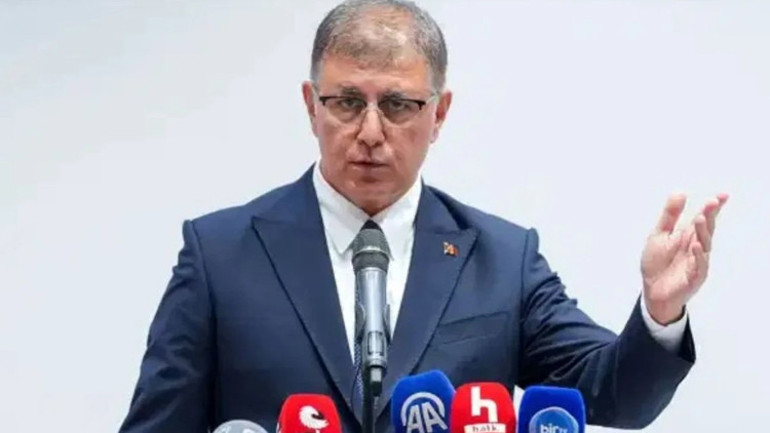
The Mayor’s social media activity has served as a bridge between his independent status and his potential future. By signaling that "business as usual" would continue for efficient workers, he appeared to be addressing the anxieties of the municipal workforce in İzmir, a city where political shifts can often lead to administrative restructuring.
The Implications for İzmir’s Political Future
The potential transition of Cemil Tugay to the AK Party is more than just a personal career move; it is a development with profound implications for the governance of İzmir. As the third-largest city in Turkey, İzmir has long been considered the "fortress" of the CHP, representing the secular, liberal wing of the Turkish electorate. Having its Metropolitan Mayor join the ruling party would represent a historic shift in the city’s political identity.
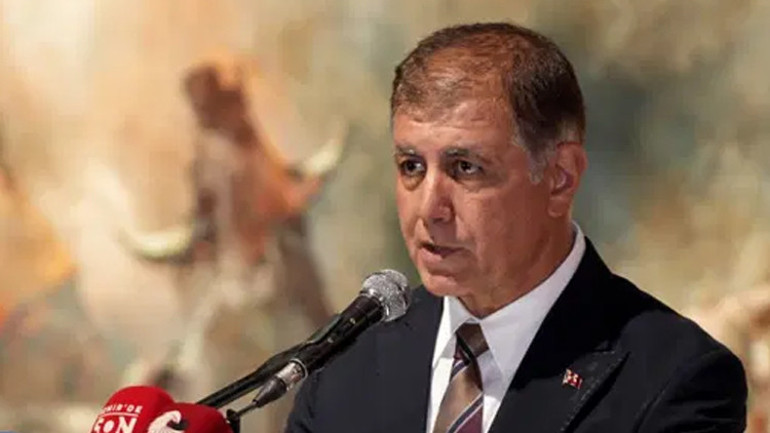
From a practical standpoint, supporters of the move argue that aligning the municipal government with the central government in Ankara could unlock significant resources for the city. İzmir has frequently faced challenges regarding large-scale infrastructure projects, transportation upgrades, and urban renewal efforts that require heavy investment and coordination with national ministries. The recent meeting with Minister Uraloğlu suggests that these developmental concerns may be at the heart of Tugay’s decision-making process.
However, the move is also fraught with political risk. The electorate in İzmir has historically been wary of the AK Party’s platform, and Tugay will likely face significant criticism from his former colleagues in the CHP and the segments of the public that voted for him under the opposition banner. The challenge for Tugay will be to demonstrate that this transition is motivated by a desire to better serve the city’s needs rather than simple political expediency.
As the clock ticks toward Wednesday, the political atmosphere in both Ankara and İzmir remains electric. The AK Party group meeting is expected to provide the final answer to the questions that have dominated the news cycle for weeks. Whether this move will lead to a new era of cooperation between the central government and the Aegean metropolis or trigger a new wave of political polarization remains to be seen. For now, the eyes of the nation are fixed on the rostrum of the AK Party group meeting, waiting to see if a new badge will indeed be pinned on the lapel of İzmir’s mayor.