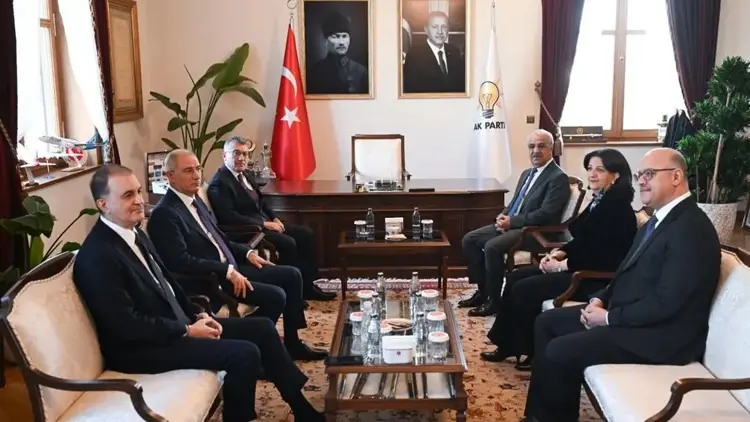
In a development that has captured the immediate attention of the Turkish political establishment and the public alike, a high-profile meeting took place in the capital city of Ankara on October 8, 2026. The meeting brought together senior representatives from the Peoples’ Equality and Democracy Party (DEM Party) and the ruling Justice and Development Party (AK Party), signaling a potential shift or a significant new chapter in the ongoing discussions regarding the country’s long-standing political and social challenges.
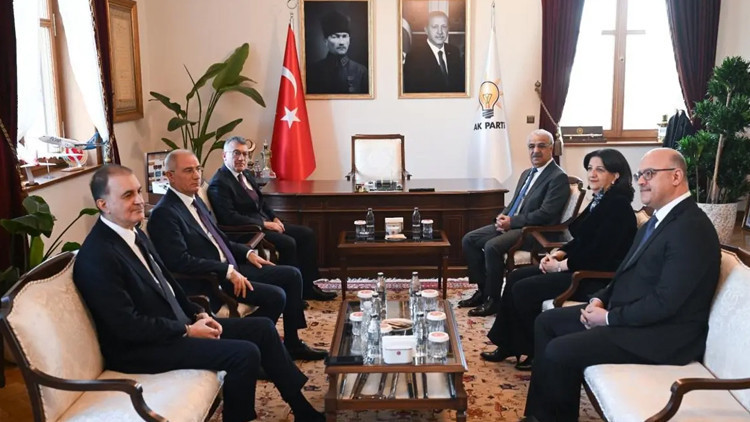
The meeting was centered around the DEM Party’s "Imrali Delegation," a group historically tasked with facilitating dialogue and addressing the complexities of the Kurdish issue within the framework of Turkey’s democratic and legal systems. Representing the DEM Party were two of its most prominent figures: Pervin Buldan and Mithat Sancar. On the other side of the table, the AK Party was represented by a heavyweight delegation including Deputy Chairman Efkan Ala, Parliamentary Group Chairman Abdullah Güler, and Party Spokesman Ömer Çelik.
According to a formal written statement released by the DEM Party following the conclusion of the talks, the primary focus of the meeting was to evaluate the current stage of the "process"—a term often used in Turkish politics to refer to the multi-faceted efforts toward social peace and democratic resolution. The participants reportedly engaged in a detailed exchange of views regarding the progress made thus far and, more importantly, the specific steps to be taken in the upcoming period.
A Significant Gathering of Key Political Actors
The composition of the two delegations highlights the importance both parties are placing on these discussions. Pervin Buldan and Mithat Sancar are seasoned politicians who have both served as co-chairs of the party (and its predecessor, the HDP) and have been central figures in the parliamentary landscape for years. Their inclusion in the "Imrali Delegation" underscores their role as mediators and primary interlocutors in high-stakes political negotiations.
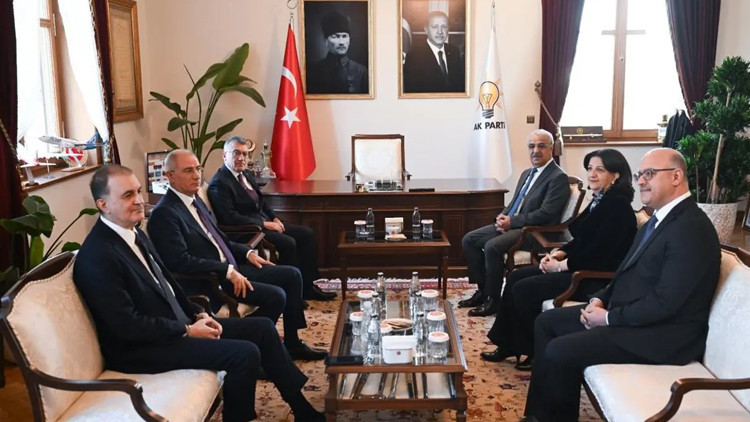
On the government side, the presence of Efkan Ala is particularly noteworthy. As a former Interior Minister and a key architect of previous resolution efforts, Ala is widely regarded as a figure with deep institutional memory and expertise in the nuances of the "process." His participation, alongside Abdullah Güler, who manages the ruling party’s legislative agenda in the Grand National Assembly, and Ömer Çelik, the public face and voice of the AK Party, suggests that the discussions were not merely exploratory but were held at a level capable of influencing executive and legislative policy.
The meeting comes at a time when the Turkish political climate is increasingly focused on the possibility of a new roadmap for domestic stability. While the original statement from the DEM Party remained concise, the breadth of the topics—ranging from the current status of the dialogue to future procedural steps—indicates a comprehensive agenda.
Evaluating the Current Stage of the Process
The core of the discussions revolved around "the stage the process has reached." This phrase implies that there is an existing, albeit perhaps quiet, framework of communication that has been operational leading up to this point. For the Imrali Delegation, the primary objective has historically been to ensure that the channels of communication remain open and that the legal and human rights aspects of the situation at the Imrali Island Prison—where Abdullah Öcalan is held—are addressed as part of a broader democratic solution.
The evaluation of the current stage likely involved a review of the security environment, the legislative reforms currently on the table, and the general social atmosphere in the country. In recent months, political observers have noted a cautious but persistent effort by various political actors to lower the temperature of nationalistic rhetoric and focus on the potential for a "civilian constitution" and a "new era" of democratic standards.
The AK Party’s involvement in these talks, particularly through figures like Efkan Ala and Ömer Çelik, suggests that the government is keen to gauge the DEM Party’s positions on these broader national goals. By discussing the "steps to be taken," the delegations are essentially working on a timeline and a set of priorities that could define the political landscape of 2027 and beyond.
Future Steps and Strategic Outlook
The mention of "steps to be taken henceforth" is perhaps the most critical takeaway from the Ankara meeting. In the context of Turkish politics, such steps often include a wide range of legal, administrative, and political maneuvers. These could involve changes to the anti-terror legislation, improvements in the conditions of political prisoners, or the implementation of local government reforms.
From the perspective of the DEM Party, the "Imrali Delegation" seeks a transparent and legally grounded framework for dialogue. They have consistently advocated for the inclusion of all stakeholders in the search for a permanent solution to the Kurdish question, emphasizing that a lasting peace can only be achieved through the parliament and a consensus-based approach.
For the AK Party, the motivation for such high-level contact may be tied to its broader strategic objectives. As the ruling party looks toward potential constitutional changes, the support—or at least the constructive engagement—of the DEM Party, which represents a significant portion of the electorate, could be vital. Furthermore, maintaining domestic stability is a prerequisite for the government’s regional and economic ambitions.
The Role of the Imrali Delegation
The "Imrali Delegation" has long occupied a unique and often controversial position in Turkish politics. Its name is derived from the Imrali Island Prison, and its historical function was to act as a bridge between the state, the leadership of the PKK, and the legal political representatives of the Kurdish movement. While the "Solution Process" of 2013-2015 eventually broke down, the concept of a delegation that can facilitate high-level political contact has remained a tool in the arsenal of Turkish diplomacy and internal politics.

The meeting between Buldan, Sancar, and the AK Party trio indicates that this tool is being utilized once again. However, unlike previous iterations, the current context is shaped by years of security operations, regional shifts in Syria and Iraq, and a different parliamentary arithmetic. The fact that the meeting was held openly and followed by an official statement suggests a level of normalization in these contacts that was absent in the recent past.
Public and Political Reactions
While the meeting was conducted behind closed doors, its occurrence alone has sparked significant debate. Proponents of the dialogue argue that direct communication between the government and the DEM Party is the only way to prevent further polarization and to find a "Turkey-centric" solution to long-standing issues. They point to the seniority of the participants as evidence that both sides are taking the matter seriously.
Conversely, some segments of the political opposition may view these contacts with skepticism, questioning the timing and the ultimate goals of the ruling party. However, the DEM Party’s statement was careful to frame the meeting as an exchange of views on a process that affects the entire country, rather than a narrow partisan negotiation.
As the news of the meeting spreads, the focus will inevitably turn to what these "next steps" will actually look like. Will there be a softening of judicial policies? Will new legislative packages be introduced to the Parliament? Or is this meeting the first of many intended to build the necessary trust for a more formal and public initiative?
Conclusion of the Meeting and Next Phases

The Ankara meeting concluded with a mutual understanding that the dialogue would continue, although no specific date for a follow-up encounter was mentioned in the initial statement. The brief but weighted communication from the DEM Party serves to inform the public that the "Imrali Delegation" is active and that the government is engaging with them at a high level.
In the coming days, political analysts will be looking for signals from the Presidency and the AK Party headquarters to see how these discussions are integrated into the government’s broader narrative. For now, the meeting stands as a critical touchstone in the 2026 political calendar, marking a moment where the path of dialogue was chosen over the rhetoric of confrontation.
As Turkey navigates its complex internal dynamics, the meeting between the DEM Party’s Imrali Delegation and the AK Party leadership remains a pivotal event, potentially laying the groundwork for a new phase in the country’s journey toward democratic consolidation and social harmony.
DON’T MISS!
The political atmosphere in Ankara remains highly charged following this meeting. Observers are closely watching for any subsequent statements from the AK Party side, particularly from Ömer Çelik, whose role as party spokesman often involves clarifying the government’s stance on such sensitive negotiations. Additionally, the reactions from other opposition parties in the Grand National Assembly will be crucial in determining whether this dialogue can transform into a broader national consensus or if it will remain a bilateral effort between the two parties. In the meantime, the "steps to be taken" remain the subject of intense speculation and hope for a resolution-oriented future.