ANKARA — The Turkish Armed Forces (TSK) recently demonstrated the pinnacle of modern military technology and tactical integration during the high-profile Ateş Serbest-2026 (Fire Free-2026) exercise, held in the Polatlı district of Ankara. Bringing together elite units from across the military branches, the live-fire and tactical demonstration served as a proving ground for next-generation defense technologies developed domestically. Among the standout participants were advanced unmanned systems engineered by DASAL Aviation Technologies, which played critical, high-stakes roles in simulated combat scenarios ranging from tactical screening and counter-sniper operations to autonomous front-line logistical resupply.
The exercise provided a comprehensive platform to evaluate how unmanned aerial systems (UAS) can be seamlessly integrated into conventional military formations, offering strategic multipliers to ground commanders. Through rigorous scenarios designed to mirror the complexities and unpredictable nature of modern warfare, the deployed systems demonstrated exceptional reliability, precision, and operational adaptability under demanding field conditions.
MİKON Kamikaze UAV Executes 15-Minute Uninterrupted Smoke Screening Operation
One of the most visually striking and tactically significant demonstrations during the Ateş Serbest-2026 exercise involved the MİKON Kamikaze UAV system, developed by DASAL. Operating in a simulated combat environment requiring immediate tactical concealment, the unmanned platforms executed a highly coordinated smoke-screening operation.
Flying directly over the designated operational zone, the MİKON systems successfully triggered on-board smoke grenades, blanketing the area in a dense, protective cloud for approximately 15 consecutive minutes without interruption. This sustained deployment of smoke created an effective visual barrier against simulated enemy observation and targeting systems.
Crucially, the system was engineered to withstand the intense thermal output and high temperatures generated during the prolonged release of the smoke payloads. By maintaining structural and operational integrity under such harsh conditions, the MİKON platform provided friendly ground units with a vital tactical advantage—enabling safe movement, repositioning, and concealment from potential hostile surveillance in contested terrain.
MİKON Gözlükara Deployed in Precision Counter-Sniper Scenario
Expanding upon the tactical versatility of the MİKON family, the Ateş Serbest-2026 exercise also marked the operational testing of the DASAL MİKON Gözlükara systems within an innovative basing architecture. The Gözlükara platforms were integrated into the "Arı Kovanı" (Beehive) monoblock guard station—a sophisticated, rotating carrier system capable of housing up to 30 unmanned aerial vehicles simultaneously.
The tactical scenario underscored the synergy between subterranean command elements and automated deployment mechanisms. Featuring an innovative openable roof structure, the Arı Kovanı guard station allowed the Gözlükara UAVs to perform rapid vertical takeoffs directly from the housing unit. Operating under the direct command and control of soldiers positioned safely within an underground bunker, the unmanned systems executed a precision reconnaissance and engagement mission.
The scenario tested the system’s capability to counter asymmetrical threats in complex environments. When a simulated sniper team opened fire from a fortified urban warfare (meskun mahal) position, the MİKON Gözlükara system rapidly acquired the target coordinates and successfully neutralized the threat with pinpoint accuracy. The demonstration highlighted how automated housing and vertical-lift capabilities can drastically reduce deployment times while keeping human operators out of the direct line of fire.
PUHU C75 Delivers Autonomous Logistical Support to Front-Line Units
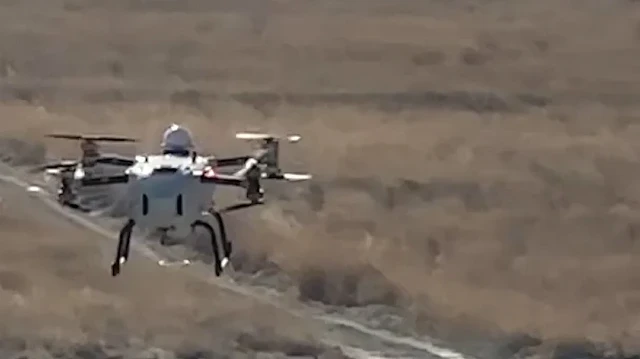
While tactical engagement and battlefield concealment formed major pillars of the exercise, logistical sustainability remained a critical focus for the Turkish Land Forces Command. Addressing the perennial challenge of supplying troops in high-risk zones, the heavy-class cargo UAV PUHU C75 was deployed to execute vital logistical support missions.
Operating under fully autonomous flight controls, the robust cargo platform bridged the gap between rear supply depots and forward combat positions. Without requiring direct pilot intervention, the PUHU C75 successfully navigated the designated flight corridors and delivered critical ammunition directly to front-line units, ensuring that combat elements maintained their operational readiness without facing supply bottlenecks.
The logistical demonstration concluded with a symbolic and operationally significant gesture. The PUHU C75 cargo UAV carried a commemorative closing banner across the exercise area, successfully fluttering the flag before the distinguished military observers and senior commanders in attendance. This final flight successfully brought the live demonstrations of the Ateş Serbest-2026 exercise to a close, underscoring both the logistical utility and the ceremonial reliability of heavy-lift unmanned platforms.
DASAL General Manager: "We Will Continue Developing Systems Aligned with Real-World Battlefield Realities"
Reflecting on the successful performance of DASAL’s technologies during the high-profile military drill, Kutay Çağıl Büyüköztürk, General Manager of DASAL Aviation Technologies, emphasized the evolving nature of contemporary combat environments. He noted that the rapidly shifting demands of modern warfare have made autonomous, interoperable, and resilient systems more indispensable than ever for armed forces operating in contested regions.
Büyüköztürk expressed his satisfaction with how the deployed platforms performed under the direct command of Turkish Armed Forces personnel, noting that the systems met and exceeded operational expectations in real-world scenarios. Reaffirming the company’s commitment to advancing national defense capabilities, Büyüköztürk stated that DASAL will continue to design, engineer, and manufacture systems that act as a true force multiplier for the TSK, enhancing operational flexibility while remaining strictly aligned with the practical realities and demands of the modern battlefield.