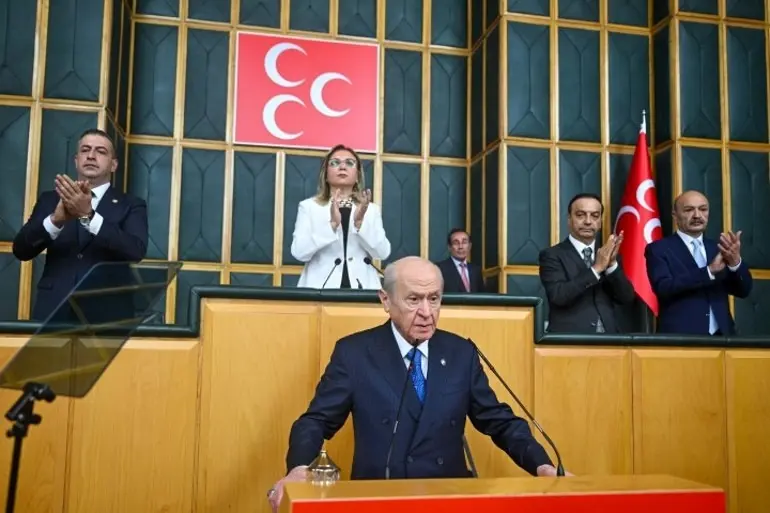
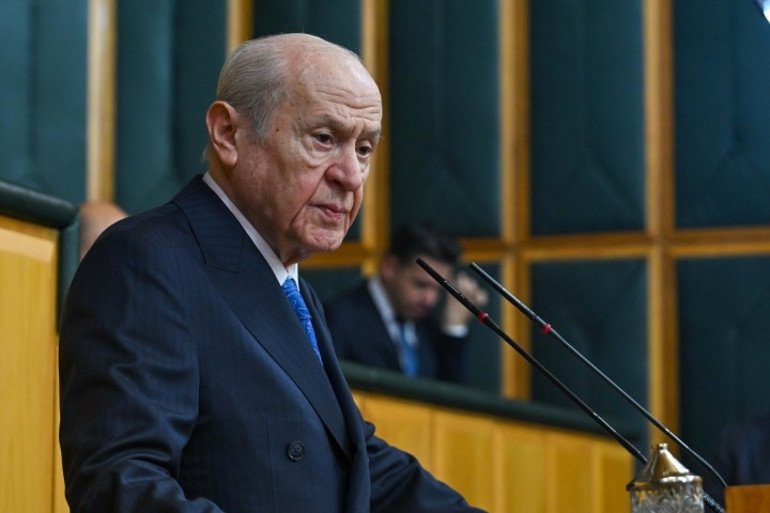
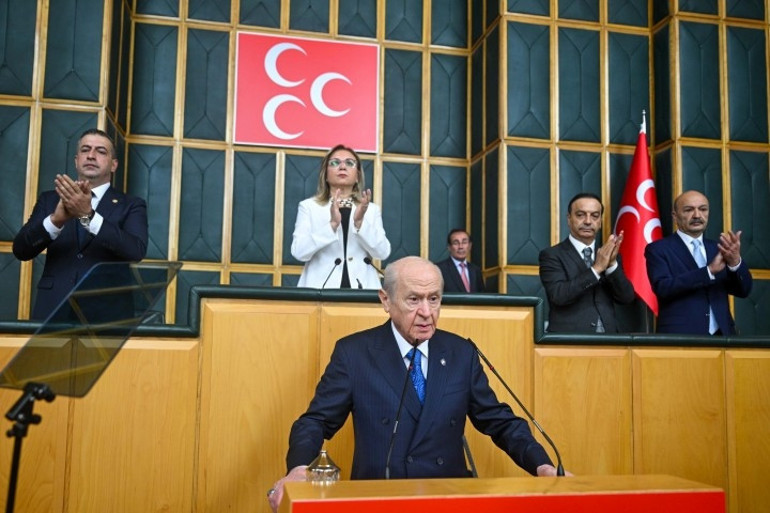
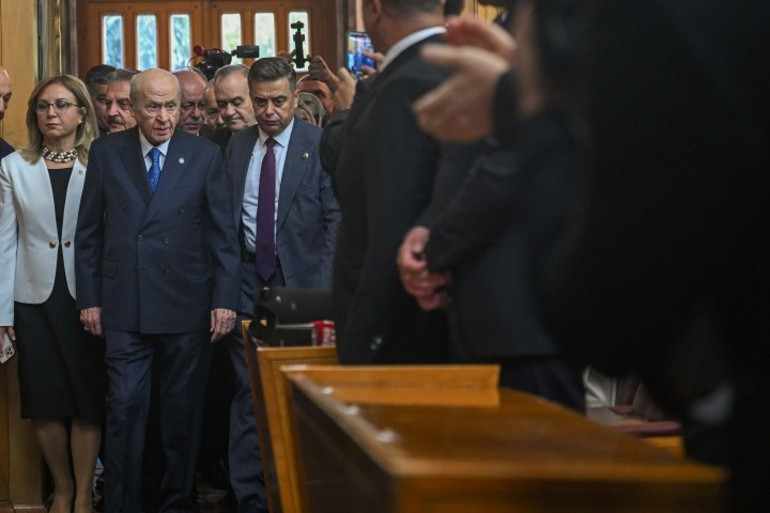
Devlet Bahçeli, the Chairman of the Nationalist Movement Party (MHP), addressed his party’s parliamentary group at the Turkish Grand National Assembly (TBMM) this week, delivering a wide-ranging speech that touched upon national security, regional geopolitics, and the internal ethical landscape of Turkish politics. Central to his address was a resolute commitment to establishing a "terrorism-free Turkey" and a "terrorism-free region," initiatives he vowed would be pursued with utmost seriousness and sincerity.
"Turkey will not turn back from its path, and the Turkish nation will not retreat from its decision," Bahçeli declared, emphasizing that the country is currently in a critical phase of consolidation and growth. His speech served as a comprehensive evaluation of current events, ranging from Israeli provocations in Jerusalem and Houthi attacks in the Red Sea to domestic corruption investigations and the double standards he perceives in European democratic rhetoric.
Turkey Mourns Recent Tragedies and Calls for Structural Reform
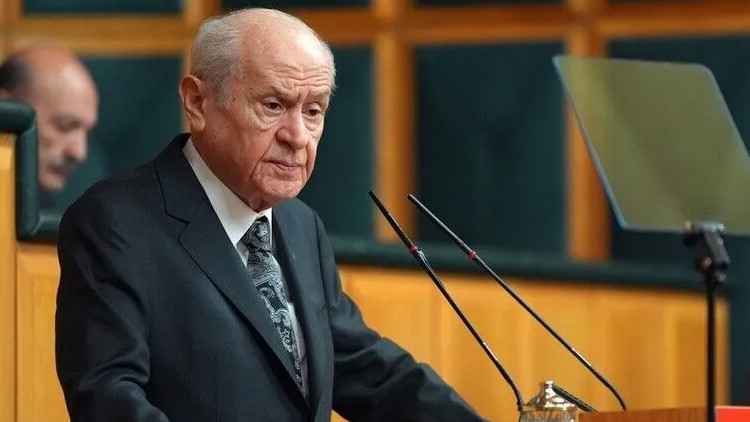
Opening his address with a somber tone, the MHP leader expressed the nation’s collective grief following a series of tragic accidents over the past week. He specifically noted the collapse of two floors of a building in Istanbul’s Maltepe district, which resulted in the loss of five lives and left eleven others injured. Bahçeli used this incident to underscore the urgency of the state’s ongoing urban transformation initiatives. He stressed that the mobilization for urban renewal must be completed rapidly, particularly in areas with high seismic risk, to ensure that safe and resilient structures are the standard across every corner of the country.
The Chairman also offered his condolences for victims of recent traffic accidents. He cited a devastating incident in the Akhisar district of Manisa, where eleven people lost their lives and twenty-seven were injured. Furthermore, he mentioned a traffic accident in Kahramanmaraş that claimed the life of a young citizen and injured seven others, including MHP Kahramanmaraş Deputy Zuhal Karakoç.
"We pray for God’s mercy upon those who lost their lives and a speedy recovery for the injured," Bahçeli said. He called for a comprehensive approach to traffic safety that prioritizes the sanctity of life and focuses on mitigating risks through both infrastructure and education.
"Our Political Center is Turkey"

Transitioning to the broader strategic and cultural identity of the nation, Bahçeli described Turkey as a state whose power and influence are recognized globally, rooted in a magnificent civilization and a rich Turkish-Islamic tradition. He argued that Turkey is not merely the name of a country but the address of a new global consensus and reconciliation.
"Preserving the spirit and core values represented by the Turkish-Islamic civilization, while integrating them with contemporary progress and innovation, will be Turkey’s way forward," the MHP Leader stated. He added that this path would also serve as a beacon of hope for oppressed nations seeking to live with dignity and freedom.
Bahçeli urged the nation to move past superficial debates that lack social resonance and instead focus its energy on building a prosperous, happy country and a new civilization equipped with high values. Reaffirming his party’s stance, he noted, "As I stated last week, even if our ideological coordinates differ, our political center is Turkey." He expressed absolute confidence that the Turkish nation possesses the historical experience and cultural depth required to create a great civilization once more, augmented by universal democratic achievements.
"The Turkish Nation Will Not Retreat From Its Decision"

The MHP Chairman defined the vision of a "terrorism-free Turkey" as the consciousness of building a new civilization centered in Turkey—one that proposes a just order for humanity and maintains the will to live in unity and peace. He warned that as Turkey takes these sovereign steps, systematic efforts to weaken the state from both within and without are being activated.
Bahçeli observed that whenever the nation captures an environment of peace and stability, various actors attempt to sabotage it through economic, political, or social means, or through the direct use of terror and violence. "Let us say it in advance," he warned, "Turkey will not turn back. The steps toward a terrorism-free Turkey will continue to be taken with seriousness and sincerity, and they will be brought to a conclusion in the shortest possible time."
Israeli Provocations and the Defense of the Holy Lands
Turning his attention to the Middle East, Bahçeli condemned the increasing level of provocation by Israel, particularly regarding Al-Aqsa Mosque, the first Qibla of Islam. He characterized these actions as a display of "Israeli barbarism" and warned that such aggression, often fueled by domestic political calculations and upcoming elections, threatens to ignite the entire region.

Simultaneously, he addressed the Houthi attacks originating from Yemen, which he described as another element of a broader strategy to destabilize the region. He asserted that while the rhetoric of different regional actors might vary, the destructive outcomes they serve are identical.
"As the Nationalist Movement Party, we cannot turn a blind eye to attacks on our first Qibla, Al-Aqsa, or our Qibla, the Kaaba, nor the holy sanctuary of the Messenger of Allah," Bahçeli declared. He reminded the audience that although these holy lands are within the borders of another sovereign state, the history of the Turkish nation is filled with the memory of campaigns launched to repel aggressors from these sacred sites.
In a significant policy statement, Bahçeli called for Turkey to provide all necessary military support for the defense of Saudi Arabia within the framework of the "Mecca Alliance." He argued that Turkey cannot remain indifferent to threats against the sovereignty and territorial integrity of a country that hosts the most sacred sites of the Islamic world.
He cited specific casualties from Houthi attacks, noting a strike on Riyadh’s King Khalid International Airport on October 10 that killed 13 and injured 309, followed by another attack the next day that claimed another life. Bahçeli emphasized that such attacks on civilians and civilian infrastructure constitute a major crime under international humanitarian law. He warned that the escalation of conflict in Yemen endangers the security of the Red Sea and the Bab el-Mandeb Strait, posing serious risks to international trade, energy security, and regional economic stability.
A Stern Warning to Greece
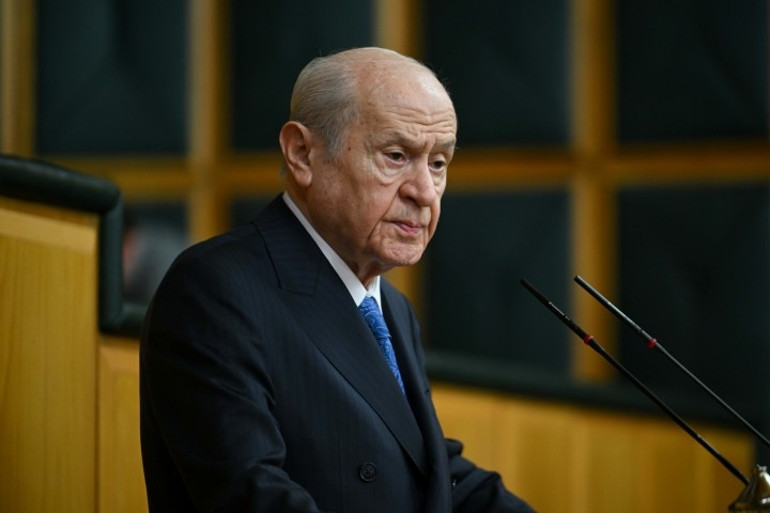
The MHP Leader also addressed the escalating tensions in the Eastern Mediterranean and the Aegean, issuing a sharp warning to the Greek administration. He criticized Athens for believing that it could find security by aligning itself more closely with Israel or by relying on the support of third countries like the United States.
Specifically, Bahçeli pointed to the proposed electricity interconnection project between Greece, Southern Cyprus, and Israel, as well as Athens’ attempts to restart seabed research in disputed maritime jurisdictions. He warned that attempting to bypass Turkey’s objections by seeking external backing is a grave mistake.
"If Greece wants lasting peace and tranquility in our region, it must remember that the path to this lies in establishing friendly relations with its neighbors," Bahçeli said. He advised the Greek government that if they are arming themselves to "protect" against Turkey, they should instead take refuge in a "Turkish peace." If they are arming themselves to intimidate Turkey, he warned that "no power can frighten us."
He concluded this segment by urging the "apprentice politicians in Athens" to realize that the respect and friendship offered by Turkey are far more powerful than any weapons or ammunition Israel might sell them.
Turkey’s Period of Purification and Ethical Standards
Domestically, Bahçeli described the current era as a "period of purification and clearing" for Turkey. He expressed support for ongoing operations aimed at exposing illegal acts and the exploitation of public interests. However, he warned against the attempts of certain political and media circles to use these investigations to create social unrest or to portray the state as being in a state of systemic decay.
Bahçeli was particularly critical of the opposition’s handling of corruption allegations within their own municipalities. He argued that the current "fund investigation"—a high-profile fraud case—is being used by the opposition as an "escape ramp" to divert attention from bribery and corruption in local governments under their control.
"No corruption or irregularity should receive protection before the law," he stated. "We trust our institutions and Turkish justice, and we expect justice to be manifested correctly and swiftly on behalf of our nation."
Drawing on the philosophies of Ziya Gökalp and Sabri Ülgener, Bahçeli discussed the necessity of "moral standardization" in politics. He argued that morality is the center of gravity for both economic activity and social life. A society that loses its moral anchor, he suggested, will struggle to find its way out of crisis. He called for ethical standards to be established first and foremost within the institution of politics, asserting that the basis of both morality and justice is the conscience.
European Double Standards and the French Protests
Bahçeli also commented on the recent student protests in France, where youths have taken to the streets to demand better school conditions and equal opportunities. He noted that the heavy-handed police response, which resulted in numerous injuries and thousands of arrests, exposed the hypocrisy of European leaders who frequently lecture other nations on democracy and human rights.
"The silence of European leaders regarding the violence in France, while they would call for ‘human rights and democracy’ if similar events occurred in Turkey, once again reveals the double standards of Europe," he said. He suggested that these developments indicate a decline in the "social state" model in Europe and a worsening of educational conditions across the continent.
Success in Education: Turkey’s PISA Results
In contrast to the unrest in Europe, Bahçeli highlighted Turkey’s recent successes in the international educational arena. He cited the PISA 2025 results released by the OECD, which showed that Turkey was the OECD country that most increased its scores in mathematics, science, and reading compared to the previous assessment.
"This success is a concrete indicator of the progress Turkey has made in education," he said. He emphasized that the nation must continue to allocate maximum resources to national education to prepare the youth for the goals of the "Century of Turkey." He called for an education system that produces virtuous, faithful, and technologically savvy generations capable of international competition.
Conclusion: A Call for National Unity
Concluding his lengthy address, Bahçeli reiterated that every problem facing the nation is a problem for the MHP. He called on his fellow members of parliament to accelerate their efforts to solve the socio-economic issues of citizens in the coming legislative year.
Quoting the great Turkish folk poet Aşık Veysel, Bahçeli ended with a plea for unity:
"Let us put an end to slander and calumny,
Let us love one another as brothers, soul to soul.
Let us work together for the Fatherland,
Let us build many schools and factories, brother."
With these words, the MHP Leader reaffirmed the party’s commitment to the People’s Alliance (Cumhur İttifakı) and expressed his belief that by overcoming obstacles and thwarting external plots, Turkey would successfully build a powerful and prosperous future.