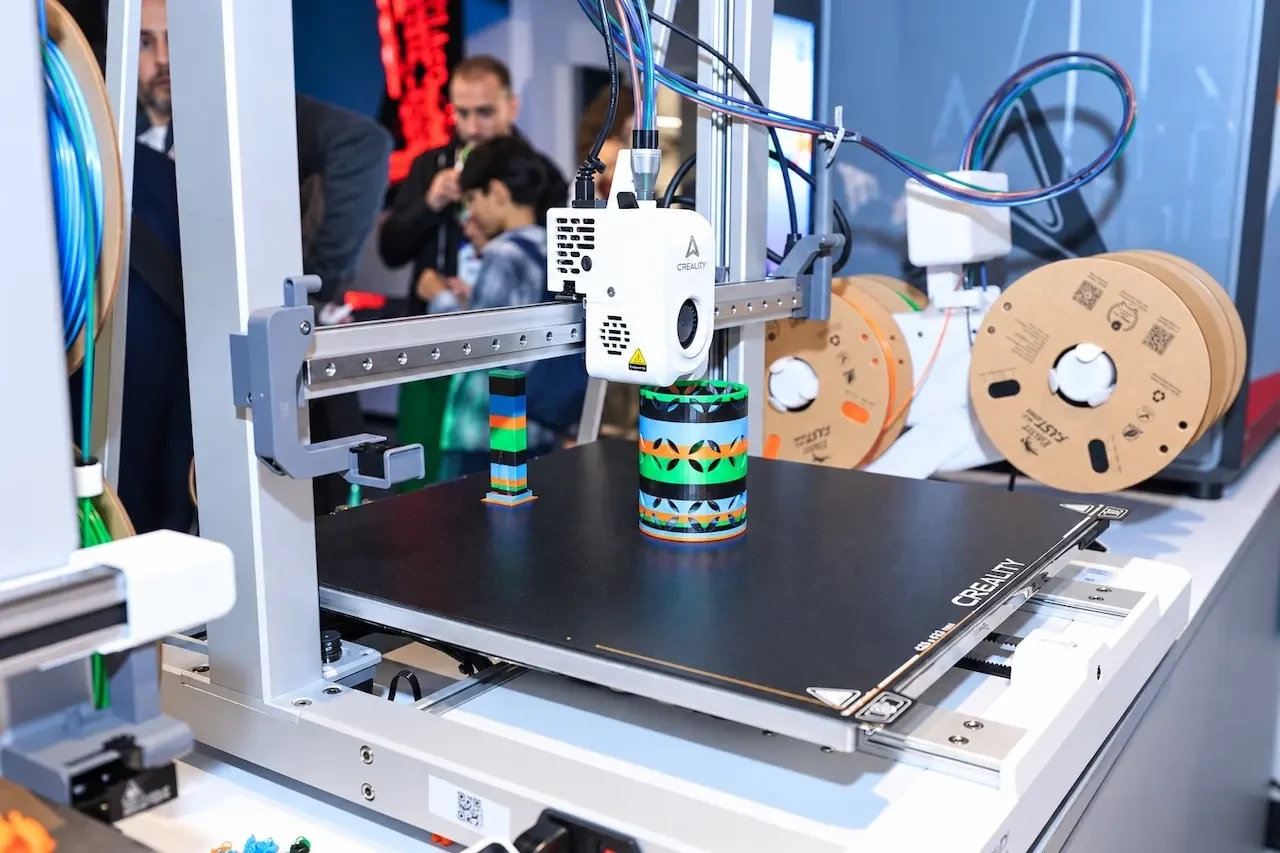
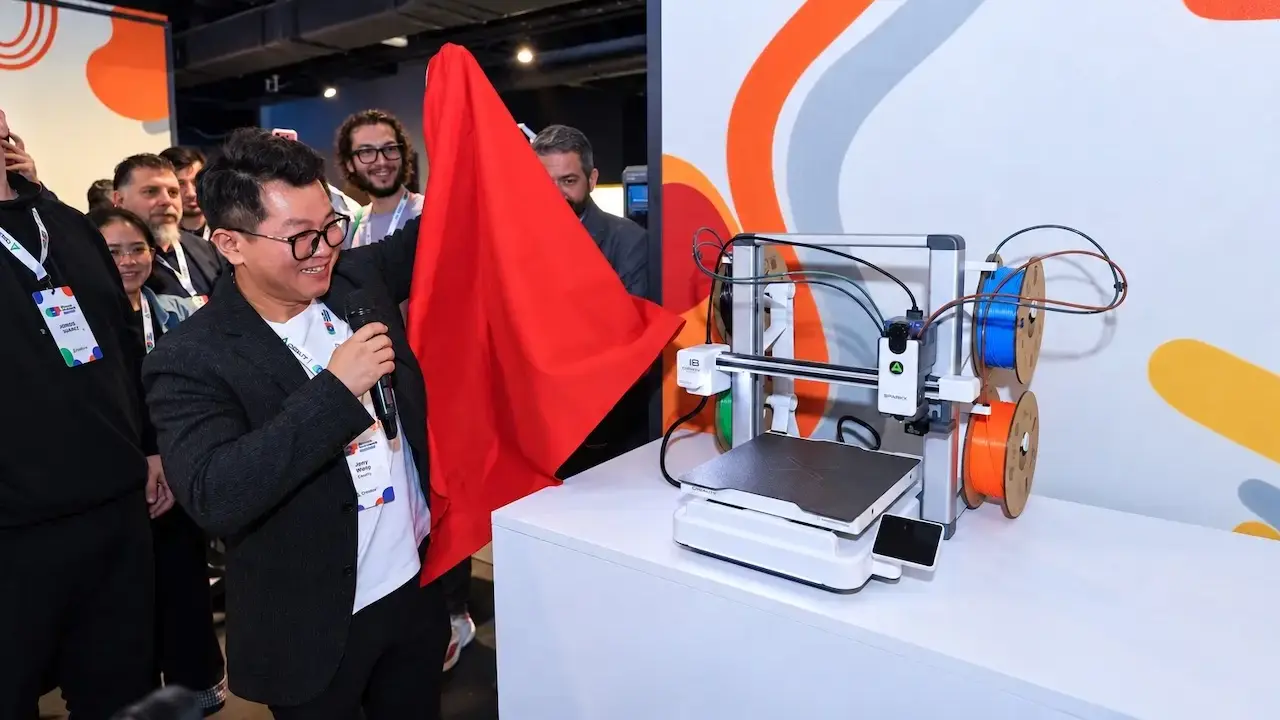
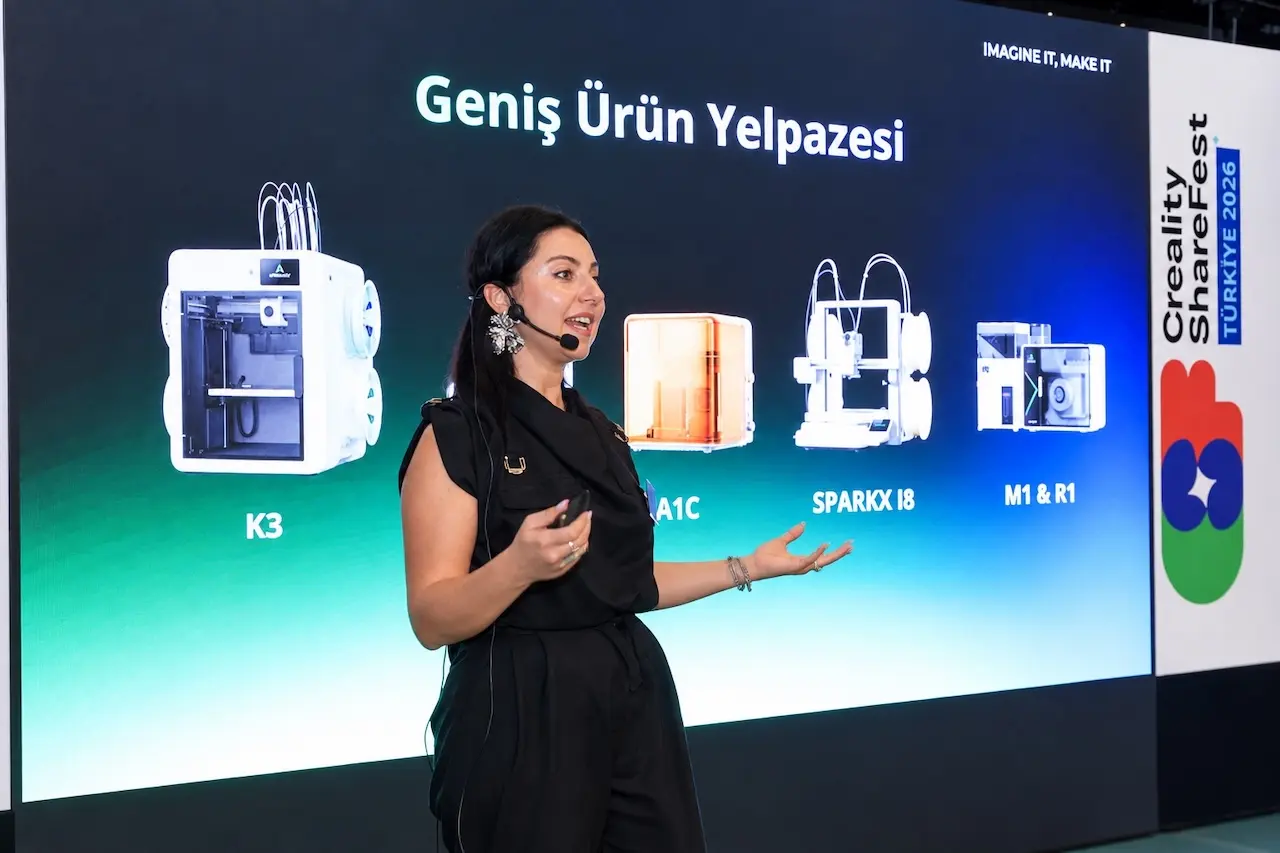
ISTANBUL — Creality, a global leader in the 3D printing industry, recently hosted its highly anticipated ShareFest Turkey 2026 event in Istanbul. Bringing together the local maker community, industrial designers, entrepreneurs, and sector representatives, the event served as a major milestone for the additive manufacturing industry in the region. Under the inspiring theme "Imagine, Create" ("Hayal Et, Hayata Geçir"), Creality officially launched five of its latest innovative models into the Turkish market: the K3, SPARKX i8, Falcon T1, Falcon A1C, and Creality Pika.
The gathering was far more than a conventional product demonstration. It functioned as a comprehensive forum where industry experts and creators analyzed the expanding role of the 3D printing ecosystem across various sectors. Discussions spanned from automotive applications and small-scale boutique workshops to rapid prototyping and full-scale serial production, highlighting how digital fabrication is reshaping modern manufacturing and entrepreneurship in Turkey.
Turkey’s Maker Ecosystem Shifts from Consumption to Active Production
A central theme of the event was the rapid evolution of Turkey’s local maker and industrial ecosystem. Speaking at the event, Joey Zhao, Creality’s Sales Director for Europe and the MMEA (Middle East, India, and Africa) region, drew attention to the remarkable dynamism of the Turkish market. Zhao emphasized that the country’s manufacturing and maker community is no longer merely consuming hardware. Instead, Turkey has developed into a significant hub for research and development, characterized by strong local problem-solving capabilities and a highly proactive approach to technology integration.
According to Zhao, Creality’s 3D printers and scanning solutions have moved far beyond the realm of casual hobbyists or educational novelties in Turkey. Today, these advanced tools are actively deployed by major automotive manufacturers, who integrate them directly into their prototyping departments and specialized production lines. This shift demonstrates how professional-grade desktop manufacturing tools are becoming vital assets in industrial workflows.
Furthermore, Zhao pointed out that small and medium-sized enterprises (SMEs) across Turkey are rapidly adopting these technologies to internalize their design and manufacturing processes. By mastering the "scanning-modeling-printing" cycle, local businesses are successfully bypassing traditional supply chain bottlenecks. This technological democratization is enabling SMEs to establish agile, localized business models, allowing them to design, test, and manufacture custom parts rapidly and cost-effectively.
Multi-Color Printing and Digitization: Five New Devices Take Center Stage
The centerpiece of ShareFest Turkey 2026 was the detailed technical introduction of Creality’s five new ecosystem products. While some of these devices had previously been teased in international previews, the Istanbul event marked their formal, detailed debut for Turkish users, showcasing how each machine addresses specific challenges within the modern digital-to-physical workflow.
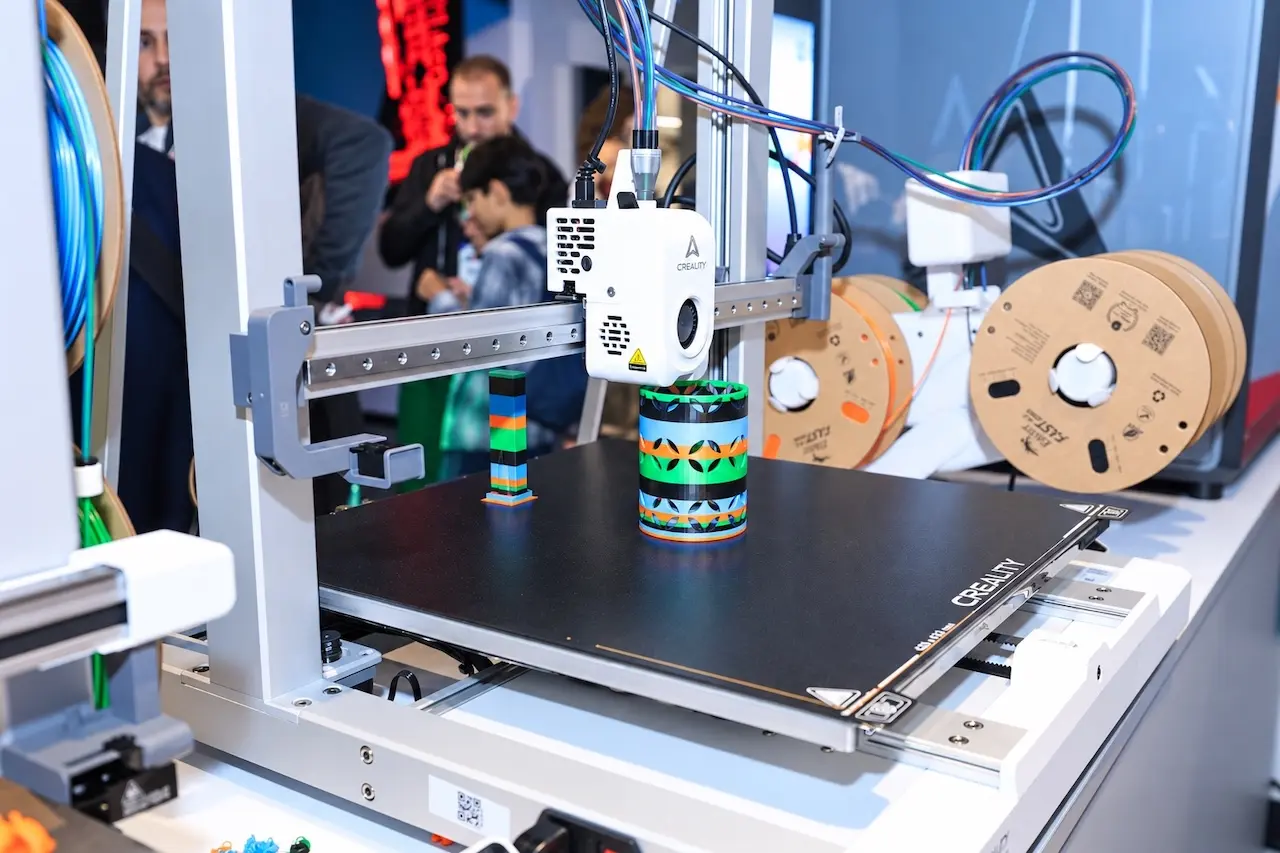
The newly introduced models—the K3, SPARKX i8, Falcon T1, Falcon A1C, and Creality Pika—are designed to address different phases of the production lifecycle. Collectively, they bridge the gap between digital asset creation and physical manufacturing, offering advanced capabilities in multi-color 3D printing, high-precision scanning, and versatile laser processing.
By integrating these diverse technologies, Creality aims to simplify the complex transition from a digital design to a finished, multi-color physical object. This unified approach addresses a long-standing challenge in the 3D printing sector: reducing the post-processing and assembly time required for complex, multi-material, or multi-colored parts, thereby making professional-grade output more accessible to independent creators and industrial design firms alike.
Erasing the Boundaries Between Design and Production
William Wu, Deputy Director of Creality’s Ecosystem Department, spoke in detail about the technical philosophy behind the new product lineup, particularly emphasizing the synergy between 3D scanning and laser engraving technologies. Wu argued that the process of digitizing a physical object should not be viewed simply as a method for generating a replication or a passive digital clone. Instead, accurate 3D scanning serves as the vital starting point for creative engineering and custom design.
With precise digital models of physical objects, designers can develop perfectly tailored, complementary components that fit seamlessly with existing machinery, consumer products, or historical artifacts. According to Wu, when scanning, slicing, 3D printing, and laser finishing are unified into a single, cohesive workflow, the traditional barriers between concept and final product disappear.
This integrated workflow is particularly revolutionary for boutique workshops and specialized engineering firms. It allows them to provide high-value-added services—such as customized retrofitting, reverse engineering, and bespoke engraving—without requiring the massive capital expenditures historically associated with industrial-grade manufacturing facilities. By streamlining these steps, Creality is helping small businesses offer services that rival those of much larger manufacturing plants.
The Expansion of Print Farms and the Critical Role of Local Support
The commercial scaling of these technologies was a primary topic during the event’s panel session, titled "GENIX: Growing Together." Cansel Kelebek, Co-founder of GENIX—Creality’s official distributor in Turkey—shared valuable insights into the commercial realities of the 3D printing market. Kelebek noted that the true commercial value of 3D printing technology is ultimately determined by the specific, real-world problems it solves for the end-user.
In Turkey, the market for 3D printing is exceptionally diverse. It ranges from independent entrepreneurs running print-on-demand services and designers developing their own proprietary products, to large-scale industrial factories that design custom assembly jigs, fixtures, and alignment tools to optimize their production lines.
Kelebek emphasized that for this diverse user base to remain competitive and productive, operational sustainability is critical. To support this growing demand, GENIX has focused heavily on establishing a robust, localized support network. By ensuring a reliable supply of spare parts through a widespread dealer network, organizing structured technical training programs in coordination with Creality’s global engineering team, and providing prompt technical service, the distributor ensures that professional makers and industrial clients can minimize downtime and maintain continuous production schedules.
The event concluded with interactive 3D print farm workshops and practical technical Q&A sessions, where attendees engaged directly with application engineers to discuss machine optimization, material compatibility, and fleet management. By bringing together creative hobbyists, independent entrepreneurs, and industrial manufacturing experts, Creality ShareFest Turkey 2026 successfully demonstrated how the country’s maker movement is actively merging with its established industrial sectors, driving a new wave of localized digital production.