By Gülay Yılmaz
EDINBURGH — Scotland reveals a completely different character during the autumn months, when misty valleys, jagged mountain peaks, ancient fortresses, and mythical lochs are bathed in shifting light and framed by frequent rainbows. Beginning in the historic capital of Edinburgh and tracing a clockwise circuit of roughly 2,000 kilometers, a journey across this landscape offers an immersive encounter with the country’s mystical spirit, vibrant seasonal foliage, and dramatic geographical features.
To travel through Scotland is to experience a landscape unlike any other on Earth. Endlessly stretching moorlands, desolate coastlines, shroud-covered lakes, and imposing peaks are constantly transformed by sudden downpours, fierce winds, and sunbeams breaking through heavy cloud cover to cast vibrant rainbows across the terrain. Yet Scotland is defined as much by its history and heritage as by its physical grandeur. Century-long conflicts with England, deeply rooted clan traditions, the haunting melody of bagpipes, traditional tartan kilts, and world-renowned scotch whiskies all contribute to the nation’s distinct identity. The most rewarding way to absorb this atmosphere is to traverse the country from end to end, embracing its moody rhythms and unpredictable weather.
First Stop: The Striking Contrasts of Loch Lomond and Luss
Leaving Edinburgh after a two-day exploration of the capital, the northward journey into the Scottish interior begins. The first major destination along the route is Loch Lomond and The Trossachs National Park, a protected expanse covering nearly 2,000 square kilometers that serves as one of the country’s most cherished natural treasures. Renowned among anglers for its rich stocks of trout and salmon, this vast body of water is also a favorite retreat for hikers and outdoor enthusiasts.
Navigating the Scottish landscape requires constant adaptability, as shifting weather patterns mean a backup plan is always essential. Upon reaching the southern shore of Loch Lomond, a sudden surge of dense clouds and heavy rain enveloped the 40-kilometer-long lake, obscuring much of its expanse behind a thick curtain of mist.
Despite the rain, the picturesque village of Luss, situated on the lake’s western bank, proved captivating. The village’s small cottages, constructed from muted brown and gray sandstone, were decorated with vibrant flower displays that stood out in stark, beautiful contrast against the overcast skies and shrouded mountains in the background. Looking out over the water from the village’s wooden pier provided a unforgettable vista that perfectly encapsulated the stark beauty of the region.

Oban: The Bustling Gateway to the Western Isles
Continuing along the route, the journey leads to Oban, a coastal town with a population of approximately 8,500 residents. Serving as a crucial maritime gateway to the Hebrides, Oban maintains active ferry connections to offshore islands such as Mull, Barra, and Colonsay.
The town is remarkably compact and easily navigated on foot. Its bustling heart revolves around the harbor area, where narrow lanes lined with art galleries open onto the waterfront. Along the quayside, where the air carries the strong scent of fresh seafood, visitors are treated to an impressive view of the urban skyline.
Dominating the hills above the town is McCaig’s Tower, an iconic landmark built to resemble Rome’s Colosseum. Featuring 94 distinct arches, this historic structure sits like a crown above Oban and stands alongside the famous Oban Distillery as one of the town’s most recognizable features.

Glencoe: Dramatic Beauty in the "Valley of Tears"
Heading northeast from Oban, the road winds into the Glencoe Valley, widely regarded as one of Scotland’s most breathtaking natural monuments. Sheer mountain slopes, narrow mountain passes, tumbling waterfalls, and the meandering Coe River combine to form a landscape so cinematic that it has served as the backdrop for major motion pictures including Braveheart, Highlander, and the Harry Potter film franchise.
Yet beneath the dramatic beauty of Glencoe lies a dark and tragic past. Often referred to as the "Valley of Tears," the glen is forever marked by the horrific 1692 massacre in which members of the Campbell clan turned against their hosts, the MacDonald clan, in a notorious betrayal.
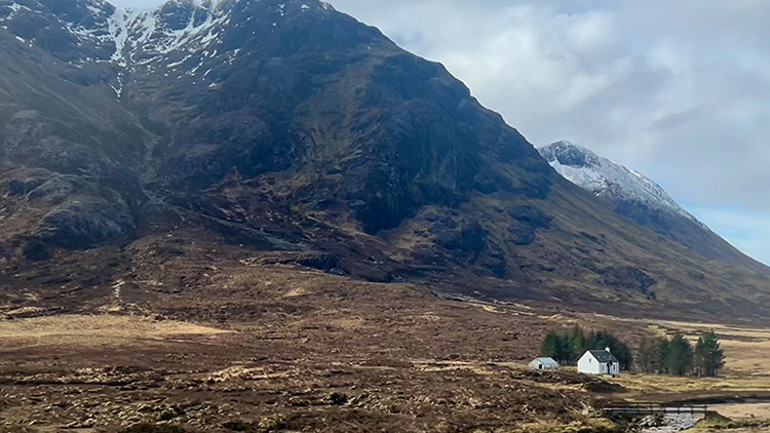
Set against this wild and towering terrain sits one of the most famous structures in the Highlands: the "Wee White House." Officially known as Lagangarbh Hut (or Lagangarbh Cottage), this solitary white building stands isolated at the base of Buachaille Etive Mòr, a striking, pyramid-shaped mountain. Located near the banks of the River Coupall just off the main A82 road, the lone cottage presents an unmistakable sight for travelers passing through the valley.

Fort William and the Historic Ruins of Old Inverlochy
Further along the route lies Fort William, a bustling tourist town situated at the base of Ben Nevis, the highest peak in the British Isles. The town also marks the northern terminus of the West Highland Way, Scotland’s famed 165-kilometer long-distance walking trail.
When heavy, persistent rainfall forced the cancellation of planned mountain treks up Ben Nevis, the itinerary shifted toward the nearby ruins of Old Inverlochy Castle. Dating back to the 13th century, this ancient fortress played a prominent role in Scotland’s turbulent military history. Although much of the structure now lies in ruins, its enduring stone walls and weather-beaten towers offer visitors a compelling glimpse into the medieval defenses of the Highlands.
In the Footsteps of the Hogwarts Express: Glenfinnan Viaduct
A short 30-minute drive from Fort William leads to Glenfinnan, a location revered by cinema enthusiasts and Harry Potter fans alike. Crossing the green expanse of the valley is the Glenfinnan Viaduct, an engineering marvel spanning roughly 380 meters and supported by 21 towering concrete arches. The sight of the historic Jacobite steam train crossing this high bridge brings to life the fictional Hogwarts Express made famous on the silver screen.
Reaching the primary vantage point requires a brief five-minute walk from the local visitor center. However, travelers taking shelter under the arches during sudden rain showers should come prepared to contend with the Highlands’ infamous midges—tiny, biting insects that frequent damp areas. Continuing up the trail behind the viaduct rewards hikers with a sweeping, postcard-perfect view that encompasses the Glenfinnan Monument, the waters of Loch Shiel, and the viaduct itself within a single panorama.
Eilean Donan: Scotland’s Most Photogenic Castle
Before crossing over to the Isle of Skye, the route passes Eilean Donan Castle, arguably the most frequently photographed fortress in Scotland. Situated on a small tidal islet where three sea lochs meet at Loch Duich, the castle is connected to the mainland by an arched stone footbridge. At high tide, the surrounding waters completely isolate the islet, giving the stone structure a fairytale quality.
With origins dating back to the 1220s, Eilean Donan has undergone meticulous restoration over the years. Inside, fully furnished banqueting halls, restored bedrooms, and period-accurate kitchen displays offer a vivid look into the daily lives of those who once inhabited this historic stronghold.
The Isle of Skye: A Landscape Changing by the Minute
Crossing the Skye Bridge brings travelers onto the Isle of Skye, Scotland’s most famous island, celebrated for its legendary valleys, whisky production, and exceptionally volatile weather. Skye is a place where microclimates dominate; sunlight can bathe one corner of the island while heavy rain and dense fog saturate a location just a few kilometers away. On any given day, the southern Cuillin Hills may be completely obscured by low clouds while the northern coast remains bright and clear.
At the center of island life sits Portree, a charming harbor town characterized by its bright, multi-colored waterfront buildings, offering a sheltered haven amid the rugged surroundings.
Beyond the town, Skye hosts several renowned geographical landmarks:
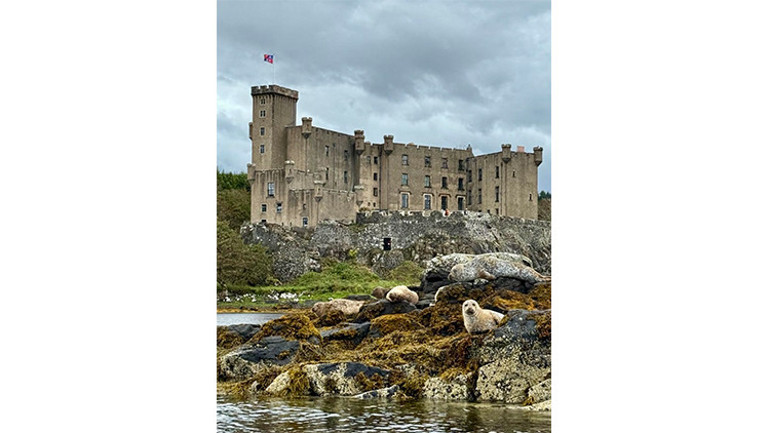
- Old Man of Storr: One of Skye’s most famous natural features, this dramatic rock pinnacle is reached via a popular hiking trail that covers roughly four kilometers round-trip from the parking area.
- Lealt Falls: A dramatic, easily accessible waterfall located just a short walk from the main road, making it a convenient stop along the eastern coastal route.
- Kilt Rock and Mealt Falls: Formed over 60 million years ago by intense volcanic activity, these towering sea cliffs feature basalt columns resembling the pleats of a Scottish kilt. Dinosaurs once roamed this coast, leaving behind fossilized footprints. Plunging over the cliff face directly into the ocean below is Mealt Falls, creating one of Skye’s most spectacular coastal lookouts.
In Pursuit of Legend: The Mists of Loch Ness
Leaving Skye behind and returning to the mainland, the journey leads toward one of the world’s most enduring mysteries: Loch Ness. Famed globally for the legend of "Nessie," the elusive sea monster said to inhabit its depths, this vast and remarkably deep loch retains a powerful, enigmatic pull.
Excursions by boat out onto the dark waters provide a unique perspective on the surrounding hillsides. While scientific evidence of the creature remains nonexistent, the nearby village of Drumnadrochit has built a thriving community around the monster’s lore, providing a memorable and playful finish to the journey through the Scottish wilderness.
Essential Travel Advice for Exploring the Highlands
The mountainous northern and western regions of Scotland comprise the Highlands—a vast area characterized by pristine, sparsely populated wilderness, rugged glens, and unyielding natural scenery.
To properly explore the Highlands, renting a car or booking a specialized guided tour is strongly recommended, with a minimum of five days dedicated to the journey. Regardless of the season, travelers must pack warm layers, durable waterproof footwear, and a reliable rain jacket to navigate the rapidly changing weather. Visitors traveling from outside the United Kingdom should also remember to bring a Type G electrical adapter, which accommodates the standard British three-pin rectangular wall outlets.
Driving dynamics in the region require careful attention. Distances on a map can be deceiving, as narrow, winding single-track roads mean that covering even 100 kilometers takes significantly longer than standard highway travel.
For those with flexibility in their schedule, allocating a full day to sample authentic single malts at a local Scotch whisky distillery provides rich cultural insight into the region’s heritage. Finally, accommodation options across the Highlands frequently consist of historic lodges or hostel-style accommodations with shared facilities. While these lodges offer cozy, authentic hospitality, travelers seeking high-end luxury should plan and book their stays well in advance.