
Fresh technical leaks concerning Samsung’s future flagship smartphone, the Galaxy S27 Ultra, have surfaced, providing an early look into the display hardware changes planned for the 2027 release. The leaked information points to three significant technological pivots intended to revamp the visual experience on Samsung’s top-tier handhelds: the introduction of Direct Current (DC) dimming, the adoption of Samsung Display’s advanced M16 OLED panel generation, and targeted architectural overhauls to the company’s hardware-based Privacy Display functionality.
Together, these changes suggest that Samsung is focusing heavily on resolving display-related issues reported by users of earlier models, particularly the Galaxy S26 Ultra. By overhauling how display brightness is managed, upgrading the underlying organic materials of the panel, and refining integrated optical privacy mechanisms, the upcoming flagship aims to address long-standing complaints regarding display flicker, visual fatigue, and viewing angle distortion.
Major Shifts in Display Dimming and Flicker Reduction
The most significant operational change reported for the Galaxy S27 Ultra is the inclusion of dedicated DC dimming support. Historically, Samsung has relied on Pulse-Width Modulation (PWM) to regulate display brightness across its premium Galaxy S lineup. The potential shift to DC dimming marks the first time Samsung is expected to bring this technology to an Ultra-series flagship.
To understand the importance of this shift, it is necessary to examine how display dimming technologies operate. Under traditional Pulse-Width Modulation, a screen does not actually lower the intensity of its light output when a user reduces brightness. Instead, the display rapidly switches its light-emitting diodes on and off at high speeds. The perception of a darker screen is created by extending the duration of the "off" periods relative to the "on" periods within each cycle.
While this rapid cycling is usually imperceptible to the human eye, the constant switching produces microscopic screen flickering. For users sensitive to display flicker, low-frequency PWM can trigger significant physiological discomfort, including digital eye strain, severe headaches, and nausea. Samsung’s previous flagship displays typically operated at a PWM frequency capped around 480 Hz. By contrast, several competing smartphone manufacturers, particularly Chinese original equipment manufacturers (OEMs), have integrated high-frequency PWM dimming into their upper-tier devices, reaching speeds of 1,920 Hz and even 3,840 Hz. Higher PWM frequencies shorten the pulse intervals, making the flicker far less noticeable and significantly reducing eye strain.
DC dimming takes a completely different approach to luminance control. Rather than cycling the display on and off, DC dimming alters the display brightness by directly controlling the electrical voltage and current supplied to the individual pixels. Lowering the current directly dims the light produced by the screen, eliminating the rapid on-off pulsing characteristic of PWM systems.

Samsung previously tested a combined implementation of PWM and DC dimming techniques on the Galaxy S24 FE. However, if the latest leaks prove accurate, the Galaxy S27 Ultra will represent the complete integration of primary DC dimming controls into Samsung’s top-tier flagship family, providing a far more comfortable viewing experience during extended use in low-light environments.
Next-Generation OLED Materials and Panel Architecture
Beyond brightness modulation, the leak outlines notable advancements in the physical composition of the display panel itself. The Galaxy S27 Ultra, along with an expected Galaxy S27 Pro variant, is slated to feature Samsung Display’s next-generation M16 OLED panel architecture. Meanwhile, the baseline Galaxy S27 and larger Galaxy S27 Plus models are rumored to utilize an M14+ panel designation.
In OLED display manufacturing, the "M" series designation refers to the specific generation of organic material sets used to construct the display’s light-emitting layers. These sets consist of specialized chemical compounds that govern red, green, and blue subpixel performance. Upgrading the underlying material set directly impacts the physical parameters of the display, influencing maximum light output, operational efficiency, hue accuracy, and lifespan.
The transition to the M16 OLED material set is expected to bring measurable improvements over previous panel generations. Primary benefits include higher peak brightness levels for outdoor visibility, richer and more accurate color rendering, and decreased energy consumption. Because display panels remain one of the largest power consumers in modern mobile devices, the efficiency gains provided by the M16 substrate could directly translate to longer battery life. Furthermore, the structural improvements within the M16 material set are anticipated to enhance overall display durability and resistance to pixel degradation over time.
The reach of Samsung Display’s M16 material set extends beyond the company’s own product line. According to industry leaks, Apple is also planning to adopt M16 OLED panels for its upcoming premium hardware offerings, including the iPhone 18 Pro, iPhone 18 Pro Max, and the rumored iPhone Duo. Samsung’s implementation of M16 panels across the Galaxy S27 Ultra and Galaxy S27 Pro positions both devices at the absolute forefront of display hardware parity within the premium smartphone market.
Refining the Hardware-Based Privacy Display
The third major structural revision detailed in the leaked report involves Samsung’s hardware-based Privacy Display technology. Introduced on the Galaxy S26 Ultra, Privacy Display utilizes specialized hardware layers built into the screen to restrict the viewing angles from the left and right sides. By narrowing the light distribution cone on demand, the feature prevents onlookers from reading sensitive information on the screen from lateral angles—a common concern in crowded public spaces.
Despite its privacy benefits, the initial deployment of Privacy Display on the Galaxy S26 Ultra generated notable criticism from users due to optical compromises. Reports indicated that the specialized physical structure required for the technology negatively impacted normal screen usage, even when the software toggle for Privacy Display was turned off. Users observed unwanted shifting in image clarity and reduced visual quality when looking at the device from slightly off-center angles.
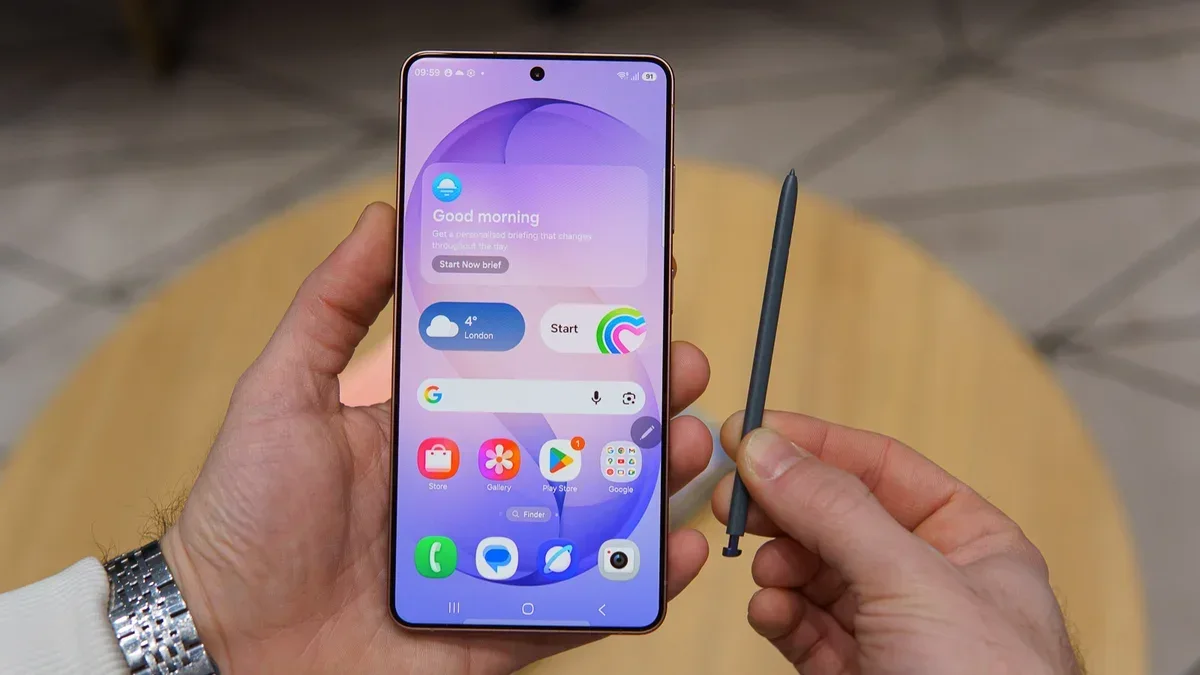
When the Privacy Display feature was actively enabled, additional degradation occurred. Users experienced a noticeable drop in perceived display resolution, a reduction in fine detail sharpness, and muted color saturation across the board.
To address these flaws, Samsung is reportedly implementing significant structural adjustments for the display of the Galaxy S27 Ultra. The upcoming hardware revisions focus on preserving image fidelity when the privacy layer is active, maintaining display sharpness, and minimizing color loss. Additionally, adjustments to the panel’s optical construction aim to ensure that off-angle viewing experiences under standard operation—when the privacy features are deactivated—remain crisp and uncompromised.
Alongside these physical refinements, the report highlights a significant functional enhancement to how Privacy Display operates within the user interface. On the Galaxy S26 Ultra, enabling the feature restricted the viewing angles across the entire display surface uniformly. For the Galaxy S27 Ultra, leaks suggest Samsung is developing a selective activation system designed for split-screen multitasking. Under this updated framework, users working in a split-screen layout can apply the Privacy Display effect exclusively to a single application window—such as a personal messaging application or financial portal—while keeping the remainder of the screen set to standard wide-angle viewing mode.
Market Context and Unconfirmed Status
While these detailed display specifications offer a promising look into Samsung’s future engineering priorities, the technological changes outlined in the leak remain unconfirmed. Neither Samsung Electronics nor Samsung Display has officially verified the adoption of primary DC dimming, the deployment of M16 OLED panels on the Galaxy S27 Ultra, or the updated Privacy Display architecture.
Nevertheless, the alignment of these leaked changes points to a deliberate effort by Samsung to address documented hardware limitations from previous generations. By focusing on health-conscious flickering solutions, superior material efficiency through the M16 substrate, and practical visual fixes for Privacy Display, Samsung appears to be laying the groundwork for a major leap in display performance for its 2027 flagship lineup.