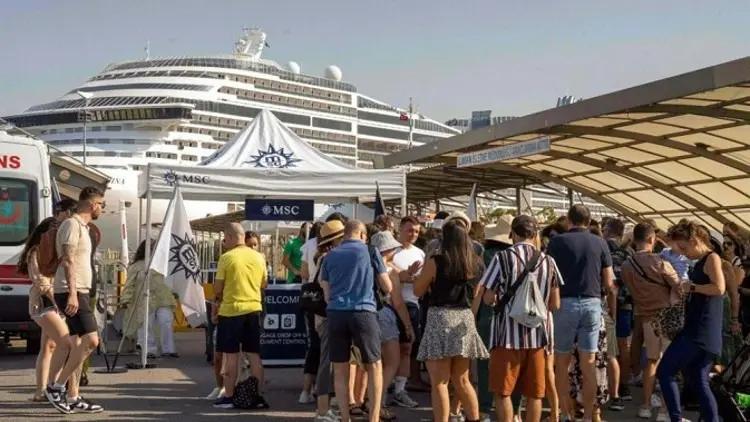
İZMİR — Cruise tourism across the coastal gateways of İzmir province demonstrated notable momentum during the first seven months of the year, driven by a steady rise in international vessel arrivals and expanding regional itineraries. According to official data reported by DHA journalist Yağmur Öngün, the primary maritime entry points of Alsancak, Çeşme, and Dikili collectively hosted 90,907 cruise passengers between January and July, marking a clear upward trajectory for maritime travel along Türkiye’s Aegean coastline.
The cumulative figure represents a significant increase compared to the corresponding seven-month period of the previous year, during which the three ports recorded a total of 77,133 cruise visitors. The net gain of more than 13,000 arrivals highlights the growing appeal of the central Aegean region among global cruise operators and international vacationers navigating Eastern Mediterranean and Aegean Sea routes.
The surge in passenger arrivals across İzmir’s maritime corridors reflects broader dynamics within the regional travel sector, where cruise operators have increasingly integrated Turkish coastal destinations into multi-country itineraries connecting the mainland with the surrounding Aegean islands and the broader Mediterranean basin.
Strongest Growth Recorded at Alsancak Port
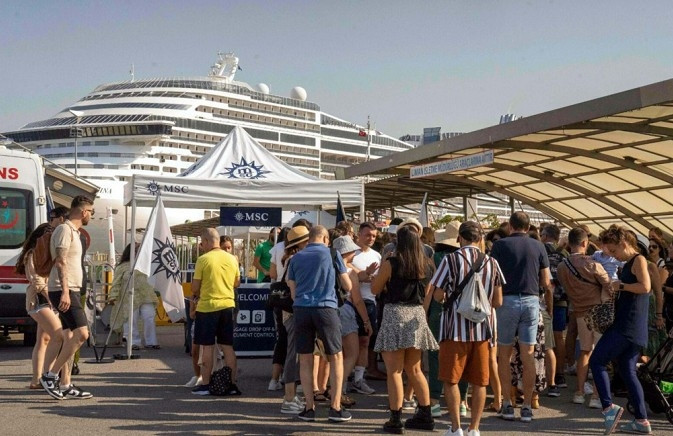
Among the three main cruise gateways in the province, Alsancak Port recorded the most pronounced relative increase in vessel activity during the seven-month stretch. Located near the central core of İzmir, Alsancak Port welcomed 35 cruise ships between January and July. During the same period in the previous year, the port had registered 28 cruise ship dockings.
The addition of seven vessel calls at Alsancak underscores the facility’s expanding role in absorbing large-scale passenger ships that require deep-water berthing and direct urban access. As the main urban port of İzmir—Türkiye’s third-largest city—Alsancak provides an immediate landfalls for passengers seeking both modern city experiences and access to high-profile historical landmarks across the wider region.
When cruise ships dock at Alsancak, disembarking travelers land within walking distance or short transit rides of İzmir’s primary commercial and cultural districts. Key urban attractions that benefit directly from Alsancak’s cruise traffic include the historic Kemeraltı Bazaar, Konak Square, the iconic İzmir Clock Tower, and the expansive waterfront promenade known as Kordon. The central port also serves as the principal hub for organized excursions heading inland to world-renowned archaeological destinations, including the ancient city of Ephesus, the House of the Virgin Mary in Selçuk, and the ancient Agora of Smyrna.
The increase to 35 ship calls at Alsancak has delivered a tangible boost to central İzmir’s urban economy. Local transport providers, tour operators, historic market vendors, and food service businesses throughout the city center experience concentrated waves of customer demand on days when ocean liners berth at the urban terminal.
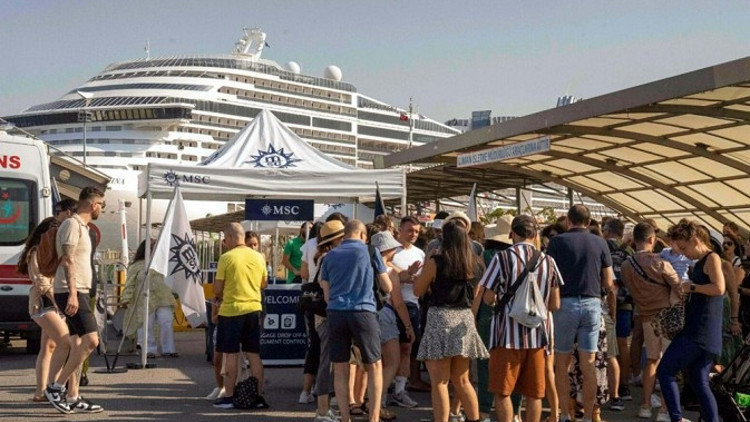
While Alsancak achieved the highest rate of year-over-year vessel growth, Çeşme Port maintained the highest overall volume of ship calls among the three ports during the seven-month period. Situated on the far western tip of the resort peninsula bearing the same name, Çeşme hosted 39 cruise ships between January and July.
Çeşme’s high volume of ship visits reflects its established position as a premier boutique port of call. Known for its restored Ottoman-era castle, modern marina infrastructure, Aegean culinary tradition, and proximity to famous coastal hamlets like Alaçatı, Çeşme caters extensively to small-to-medium cruise liners and luxury vessels navigating the Aegean archipelago. Its location directly across from the Greek island of Chios makes it an optimal geographic stop for island-hopping and cross-border Aegean itineraries.
Further north along the provincial coast, Dikili Port hosted 10 cruise ships during the same seven-month period. Located in the northern reaches of İzmir province, Dikili serves as a specialized maritime entry point primarily oriented toward cultural and heritage tourism.
The primary draw for cruise vessels berthing at Dikili is its direct proximity to the ancient city of Pergamon (modern-day Bergama), a UNESCO World Heritage site renowned for its hilltop acropolis, ancient library remains, monumentally steep theater, and the historic Asclepion sanctuary. By receiving 10 cruise ships through July, Dikili preserved its important position as an essential stop for heritage-focused cruise operators bringing culture-oriented travelers to the northern Aegean coast.

Taken together, the performance across Alsancak, Çeşme, and Dikili highlights how İzmir’s multi-port maritime network offers cruise operators a versatile range of options tailored to different vessel sizes, traveler demographics, and excursion themes.
The spatial distribution of cruise arrivals across these three distinct ports creates a balanced geographical footprint for tourism across the province. Rather than channeling all visitor traffic into a single terminal, the regional port framework distributes economic activity across central urban districts, western resort peninsulas, and northern historical corridors.
The geographic positioning of İzmir province along the Eastern Mediterranean cruise route plays a crucial role in sustaining this maritime traffic. Cruise itineraries operating in the Aegean Sea frequently link Turkish port cities with maritime hubs across the southern and eastern Mediterranean. For cruise operators designing week-long or multi-week voyages, the inclusion of İzmir’s ports provides passengers with a combination of historical exploration, coastal relaxation, and urban shopping within relatively short sailing distances.
The surge to 90,907 passengers also highlights the operational efficiency of the local port facilities and customs agencies tasked with handling vessel arrivals. Managing the arrival of cruise liners requires precise coordination between port authorities, maritime agencies, customs officials, tour bus operators, and local municipalities to ensure seamless passenger processing and traffic management upon disembarkation.

From an economic perspective, cruise passenger traffic represents an important revenue channel for regional tourism supply chains. Although cruise passengers typically spend shorter periods on land compared to overnight hotel guests, their concentrated purchasing power provides immediate, direct cash flows to local service providers.
During typical shore excursions, passenger spending is distributed across several key categories:
- Transportation and Logistics: Independent taxi operators, private shuttles, and chartered tour buses providing transit between port terminals, historical sites, and regional city centers.
- Cultural and Heritage Sites: Ticket sales and administrative fees collected at state-run museums, archaeological ruins, and protected heritage zones across İzmir, Selçuk, and Bergama.
- Guided Excursion Services: Licensed professional tour guides hired to conduct informative tours in multiple languages for large group excursions and private travelers.
- Retail and Artisanal Commerce: Purchases made at historic marketplaces, souvenir shops, craft stands, leather goods outlets, and jewelry boutiques in central İzmir, Çeşme, and Dikili.
- Food and Beverage Services: Dining expenditures at seaside restaurants, traditional Turkish eateries, cafes, and local food vendors located near disembarkation points and excursion stops.
As the maritime sector reflects on the performance of the first seven months, the rise from 77,133 to 90,907 cruise passengers confirms that İzmir’s coastal terminals remain firmly established on international cruise schedules. With Alsancak securing 35 ship calls, Çeşme leading overall vessel arrivals at 39, and Dikili providing dedicated access for 10 vessel visits, the regional port ecosystem continues to serve as an indispensable driver of international visitor traffic and economic activity along Türkiye’s western coast.