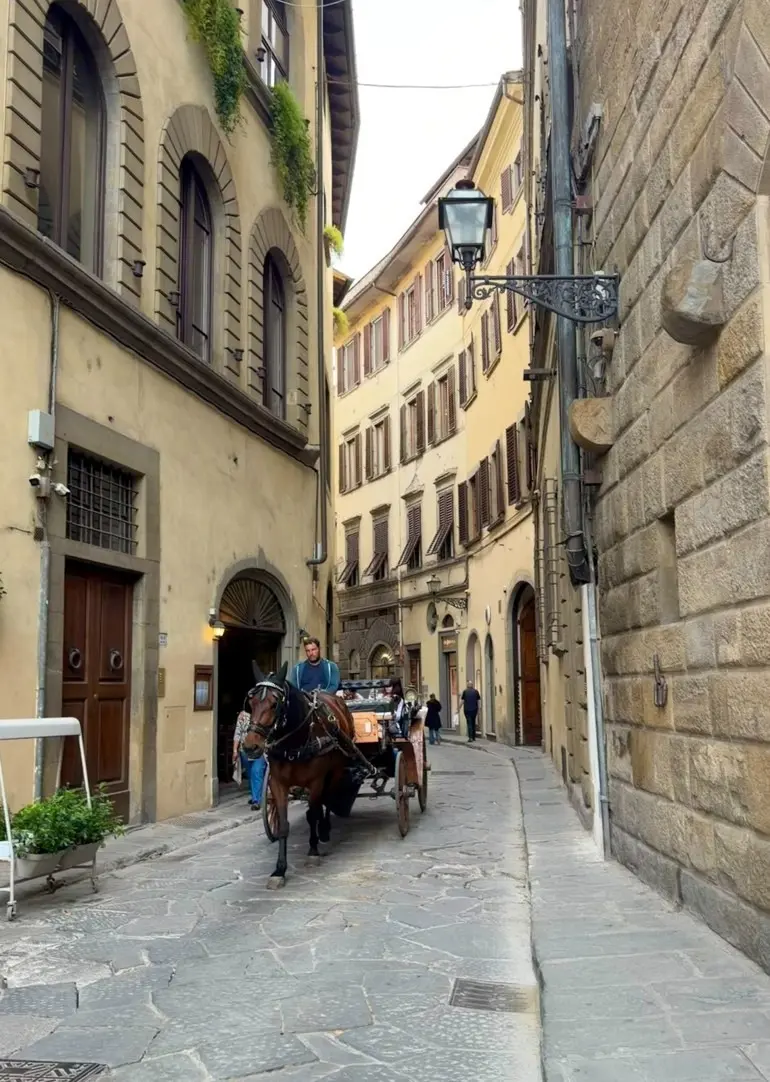
The enduring magic of Florence stems from a rare confluence of architectural mastery, world-class artistic heritage, and an unmistakable atmosphere defined by the Italian philosophy of la dolce vita. Widely celebrated as the cradle of the Renaissance, the city functions as an open-air museum where centuries of cultural history are preserved within a remarkably walkable historic center. From the towering silhouette of the Florence Cathedral to the priceless collections housed within its galleries, Florence offers a visual and sensory experience unlike any other urban destination in the world.
Understanding what sets Florence apart begins with its extraordinary architectural heritage. The city is defined by sweeping Renaissance structures, elegant stone facades, and monumental civic plazas. At its center stands the magnificent Santa Maria del Fiore Cathedral, an engineering marvel that continues to dominate the urban landscape. Walking through the streets of Florence feels less like navigating a modern metropolis and more like stepping into a living canvas where grand palaces, humble chapels, and historic bridges tell the story of European civilization at its peak.
Beyond its physical structures, Florence remains an unrivaled global art capital. The city is home to the world-renowned Uffizi Gallery, an institution that stands shoulder-to-shoulder with the Louvre in Paris in terms of historical significance and artistic wealth. Within its corridors, masterpieces by Leonardo da Vinci, Michelangelo, Botticelli, and countless other masters are displayed, drawing art enthusiasts, historians, and travelers from every corner of the globe.
Finally, Florence embodies the pure essence of the Italian lifestyle. The rhythm of daily life here invites visitors to slow down and immerse themselves in simple pleasures—whether that means strolling through winding medieval alleys with an artisanal gelato in hand, lingering over an early evening aperitivo at a neighborhood cafe, or sharing a romantic dinner in a candlelit courtyard. This seamless blend of high culture and relaxed living creates an environment that has captivated travelers for generations.
Overtourism and the Shifting Travel Landscape
While Florence retains its historical charm, the experience of visiting the city has evolved significantly over the past two decades. Increased global travel popularity has transformed Florence into one of Europe’s most heavily visited destinations. Today, visitors face challenges that were far less pronounced a quarter-century ago, including multi-hour queues at major cultural sites, crowded thoroughfares, and elevated prices at central cafes and restaurants.
The extreme concentration of tourists—particularly during the peak summer months—can occasionally obscure the romantic atmosphere for which the city is famous. The Uffizi Gallery and the Florence Cathedral complex routinely experience massive crowds, making spontaneous visits nearly impossible during high season.
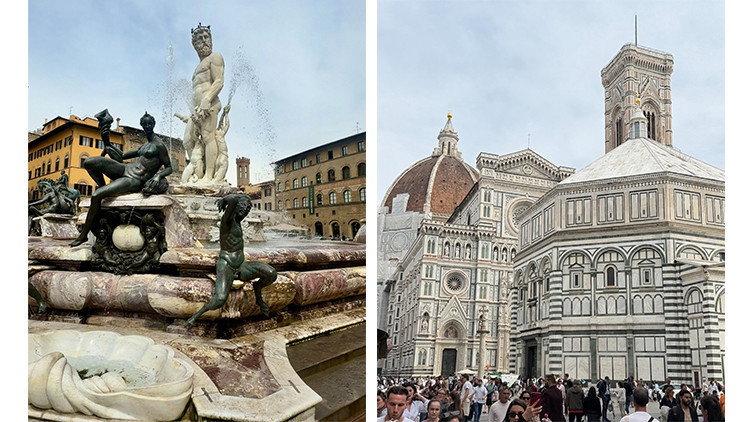
To navigate these modern travel realities, strategic planning is essential. Travelers are strongly advised to avoid visiting during peak summer months, opting instead for the shoulder seasons of spring and autumn, when temperatures are milder and crowd densities are noticeably lower. Reserving tickets online well in advance for major attractions is crucial to avoiding wasted hours in ticket queues. Furthermore, exploring key landmarks like the Ponte Vecchio or the cathedral square during the early morning hours provides a rare opportunity to experience the city in relative tranquility before day-trippers arrive.
The Heart of the City: Florence Cathedral
No exploration of Florence is complete without starting at its undisputed central landmark: the Cathedral of Santa Maria del Fiore, known locally as the Duomo. Recognized worldwide for its monumental Renaissance dome and striking facade crafted from white, pink, and green marble, the cathedral stands as a testament to the ambitions of Renaissance engineering and design.
The cathedral complex comprises several distinct areas of historical and architectural significance:
- The Cathedral Interior: The vast central nave of the church itself.
- Brunelleschi’s Dome: The landmark structural marvel overlooking the city skyline.
- Giotto’s Campanile: The free-standing bell tower offering elevated perspectives.
- The Baptistery: The octagonal religious structure positioned directly opposite the cathedral entrance.
- The Cathedral Museum (Museo dell’Opera del Duomo): The repository housing original sculptures, reliefs, and structural artifacts from the complex.
- The Crypt and Terraces: Underground archaeological remains and elevated exterior walkways.
While admission to the main cathedral interior remains free of charge, long queues form consistently throughout the day. Visiting early in the morning is the most effective way to minimize wait times. For travelers wishing to explore the remaining components of the complex, such as the bell tower, baptistery, and museum, purchasing a comprehensive pass in advance is required. The "Brunelleschi Pass" provides access to all major areas of the complex with the exception of the cathedral terraces, making it an ideal choice for a thorough visit.
Historic River Crossings and Masterpiece Collections
From the cathedral, the historic center leads naturally toward the Arno River, crossing one of the world’s most recognizable structures: the Ponte Vecchio, or "Old Bridge." As the oldest and most famous bridge in Florence, this medieval stone structure spans the widest point of Tuscany’s primary river.
What renders the Ponte Vecchio unique is its continuous line of small, traditional shops built directly along its edges. Historically occupied by butchers, the bridge’s shops have been reserved exclusively for jewelers and goldsmiths since the late 16th century. Walking across the bridge surrounded by glittering shop windows can easily make visitors forget they are standing over water. However, some of the finest views of the Ponte Vecchio are enjoyed from a distance—specifically from the upper-story windows of the Uffizi Gallery, from the neighboring Ponte alle Grazie, or from the elevated vantage point of Piazzale Michelangelo.

Adjacent to the Ponte Vecchio stands the Uffizi Gallery, Florence’s premier art museum and one of the most visited cultural institutions in the world. The gallery occupies a grand 16th-century palace originally constructed to house municipal offices for the Tuscan administration. Today, its vast corridors display a breathtaking chronological collection spanning from classical antiquity through the late Baroque period.
A thorough visit to the Uffizi requires a significant commitment of time. Given the sheer scale of the building and the density of world-class artworks on display, visitors should set aside at least two to three hours to appreciate the galleries without rushing. Because annual visitor numbers run into the millions, securing time-slot tickets online prior to arrival is imperative during peak travel periods. As an added visual highlight, a large window located in the upper-level rear corner of the gallery provides a frame-worthy, elevated view directly over the Ponte Vecchio and the Arno River.
Civic History at Palazzo Vecchio and Piazza della Signoria
Located just steps from the Uffizi Gallery is the historic seat of Florentine civic power: the Palazzo Vecchio, or "Old Palace." Constructed in the late 13th century, this imposing, fortress-like stone building features heavy crenellations and a towering bell tower, serving today as both a historical museum and Florence’s active city hall.
Visitors can enter the ground-floor interior courtyard of the Palazzo Vecchio free of charge to admire its intricate frescoes and delicate fountain central piece. Those interested in diving deeper into Florentine political history can purchase tickets to the Palazzo Vecchio Museum, which includes entry to the grand Hall of the Five Hundred (Salone dei Cinquecento)—a massive chamber decorated with large-scale wall frescoes and ornate gilded ceilings. Furthermore, visitors can climb the palace’s iconic Arnolfo Tower (Torre di Arnolfo) for a sweeping panorama across the city center.
The palace anchors the Piazza della Signoria, long considered the political and social heart of Florence. The square doubles as an open-air sculpture gallery, featuring prominent works such as the open-air Loggia dei Lanzi with its Renaissance bronzes and marbles, as well as an exact replica of Michelangelo’s David positioned at the original entrance location of the palace.
A short walk from Piazza della Signoria brings travelers to the Piazza della Repubblica, a expansive open square situated near the Duomo. Built during the 19th-century urban renewal of Florence, the square is characterized by grand archways, historical cafes, and an illuminated vintage carousel that remains a popular feature for families traveling with young children.

Beyond the Arno: Pitti Palace, Boboli Gardens, and Santa Croce
Crossing back over the Ponte Vecchio brings visitors into the Oltrarno district, a historical neighborhood on the southern bank of the river known for its traditional artisan workshops, local eateries, and impressive royal architecture.
The centerpiece of the Oltrarno is the Pitti Palace (Palazzo Pitti). Though its stone facade presents a relatively severe Renaissance aesthetic, it is the largest palace complex in Florence and served historically as the primary residence of the ruling Medici family. The palace provided the architectural design inspiration for several major royal residences across Europe, including Munich’s Residenz. Inside, the palace houses multiple distinct museums, most notably the Palatine Gallery, which features an extraordinary private art collection displayed within lavishly decorated royal apartments.
Directly behind the Pitti Palace lie the extensive Boboli Gardens (Giardino di Boboli). Spanning several acres of hillside, these historical formal gardens feature manicured lawns, geometric hedge pathways, decorative fountains, classical statues, and quiet stone grottos, offering a peaceful retreat from the bustling city streets.
Back on the northern side of the river, located approximately ten minutes on foot from the Duomo, stands the Church of Santa Croce (Basilica di Santa Croce). As the principal Franciscan church of Florence, Santa Croce is distinguished by its crisp white marble facade and its location on the wide, lively Piazza di Santa Croce. The church is world-famous as the final resting place of some of Italy’s most illustrious historical figures, including political philosopher Niccolò Machiavelli, master artist Michelangelo, and astronomer Galileo Galilei. Admission to the church complex is €8, though the impressive exterior and surrounding cloistered courtyards can be admired from the square.
Extended Itineraries: Markets, Galleries, and Hillside Escapes
For travelers spending multiple days in Florence, several additional sites offer deeper insights into the city’s artistic, culinary, and regional culture:
- Mercato Centrale: A bustling historic market hall where vendors sell authentic Tuscan food products, ranging from fresh produce and regional cheeses to cured meats and seafood. The upper floor features a modern food hall serving prepared regional dishes.
- Galleria dell’Accademia: Florence’s second most prominent art museum, world-renowned primarily as the home of Michelangelo’s original masterwork statue, David.
- Fiesole: A charming hillside town situated just outside Florence’s municipal boundaries. Located easily by local public transport, Fiesole offers cooler air and sweeping views overlooking the entire Florentine basin on clear days.
- Giardino Bardini: A historical garden located in the Oltrarno district that serves as a quieter, less congested alternative to the nearby Boboli Gardens, featuring terraced hillsides, wistaria arbors, and excellent views over the city.
Panoramic Vantage Points: Piazzale Michelangelo to San Miniato
Capturing the ideal skyline view of Florence is a highlight for many travelers. The most famous lookout point in the city is Piazzale Michelangelo, a large elevated square perched on a hillside south of the Arno River. From here, visitors are treated to a classic postcard panorama encompassing the Ponte Vecchio, the Arnolfo Tower, the sweeping red-tiled rooftops, and the massive dome of the cathedral.

Piazzale Michelangelo can be reached via a 20-minute uphill walk from the Ponte Vecchio or by taking local city buses. While historically a quiet local lookout, the square now draws thousands of visitors every evening who gather to watch the sunset over the city.
For a significantly quieter and superior viewing experience, travelers can continue walking uphill for another five minutes beyond Piazzale Michelangelo to reach the Basilica of San Miniato al Monte. Perched at one of the highest points overlooking Florence, this site offers stunning panoramas far removed from the tour buses and crowded selfie spots below.
The Basilica of San Miniato al Monte itself is widely considered one of the finest Romanesque structures in Tuscany. Its geometric facade of dark green and white marble opens into an interior featuring an ornate Renaissance chapel, intricate Byzantine-style mosaic floor pavements, and painted wooden ceiling beams.
Adjacent to the basilica lies the Cimitero delle Porte Sante (Cemetery of the Holy Gates). This historic graveyard features elaborate Neoclassical and Art Deco tombs set along quiet stone pathways. Among the notable figures buried here is Carlo Lorenzini, who wrote under the pen name Carlo Collodi and created the world-famous children’s character Pinocchio.
Scaling the Skyline: Campanile, Dome, and Arnolfo Tower
For those wishing to admire Florence from above, the city offers three primary architectural climbing experiences, each with distinct features:
+---------------------+-------------------+------------------+--------------------------------------+
| Landmark            | Height / Steps    | Entry Cost       | Key Feature                          |
+---------------------+-------------------+------------------+--------------------------------------+
| Giotto's Campanile  | 85 m / 414 steps  | Brunelleschi Pass| Direct dome view (behind wire mesh)  |
| Brunelleschi's Dome | --  / 463 steps  | Brunelleschi Pass| 360° open panorama, close dome detail|
| Arnolfo Tower       | 95 m / -- steps   | €12.50           | Guided entry, iconic Duomo perspective|
+---------------------+-------------------+------------------+--------------------------------------+
Giotto’s Campanile stands at roughly 85 meters in height. Climbing its 414 steps requires good physical conditioning, but rewards climbers with a unique, close-range view of the cathedral dome. However, visitors should note that the top viewing area is fully enclosed by protective wire mesh netting, which can hinder unobstructed photography.
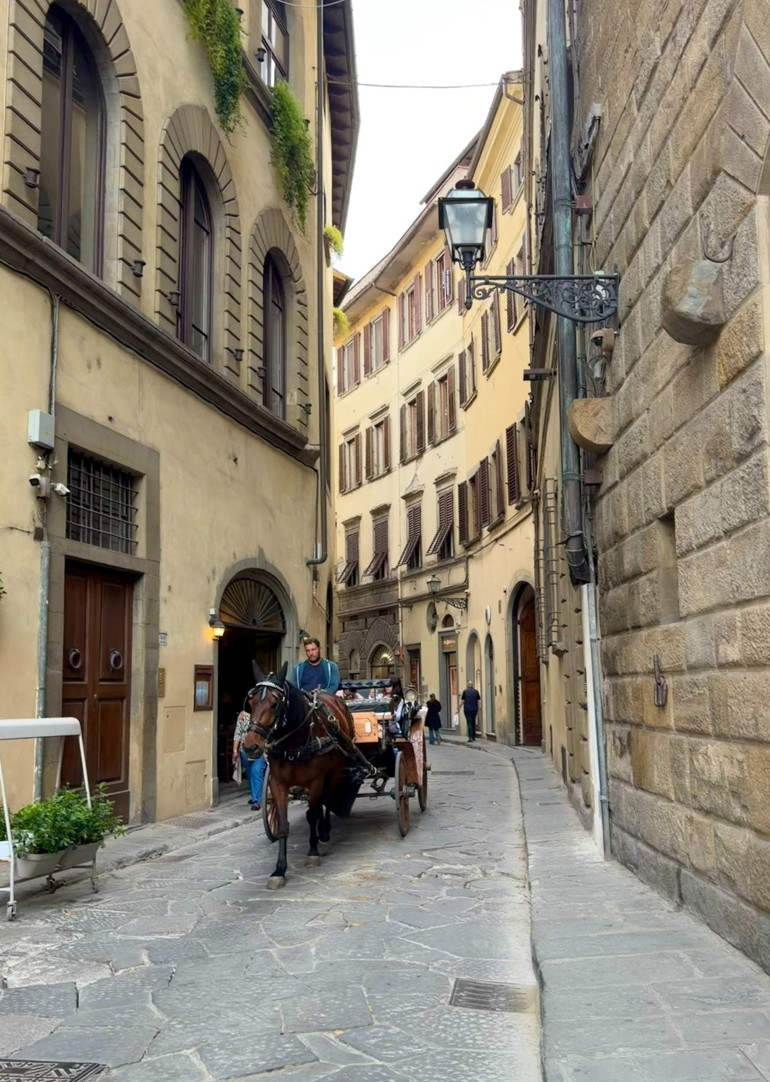
The climb up Brunelleschi’s Dome involves ascending 463 narrow steps through the structural layers of the cathedral’s roof. The primary advantage of the dome platform is that it offers an unobstructed, 360-degree open-air panorama of Florence without any wire mesh barriers, along with an up-close look at the internal architecture of the dome itself. Access to both the dome and bell tower is included in the comprehensive €30 Brunelleschi Pass.
Alternatively, the 95-meter Arnolfo Tower at Palazzo Vecchio offers another exceptional perspective. Access is arranged via organized group entries, allowing ample time for photography at the top. The tower provides an iconic side-profile view directed toward the cathedral dome, framed by the surrounding red-roofed cityscape. Entry to the tower costs €12.50.
Rooftop Barmanship, Local Dining, and City Logistics
As day turns to evening, Florence’s vibrant rooftop bar scene offers a stylish way to take in the urban landscape from above:
- Tosca & Nino: Situated on the upper terrace of the Rinascente department store on Piazza della Repubblica, offering direct, elevated views toward the cathedral dome.
- View on Art: A popular rooftop venue featuring close-range vantage points overlooking the Duomo complex.
- SE·STO on Arno: An upscale rooftop bar and restaurant located along the riverbank, known for its sleek design, luxury pricing, and panoramic views over the Arno River.
Florentine gastronomy extends far beyond standard tourist menus if travelers know where to look. For a modern dining experience, Floret, located on the top floor of the Luisaviaroma concept store, offers fusion dishes and extensive plant-based options within a lush, green indoor-outdoor space. In the Oltrarno district, Neromo serves authentic Tuscan pizzas and regional specialties in a relaxed neighborhood setting. Coffee enthusiasts will find exceptional specialty brews prepared from house-roasted beans at Ditta Artigianale.
Navigating Florence is straightforward due to its compact geographical scale. The city’s primary airport, Amerigo Vespucci Airport (FLR), is located on the outer edge of the city and connects directly to the central train station via the T2 tram line or by local taxi.
Because the vast majority of Florence’s historical center is designated as a Pedestrian Zone (Zona a Traffico Limitato or ZTL) and closed to standard vehicular traffic, exploring on foot is by far the most practical and enjoyable way to travel.
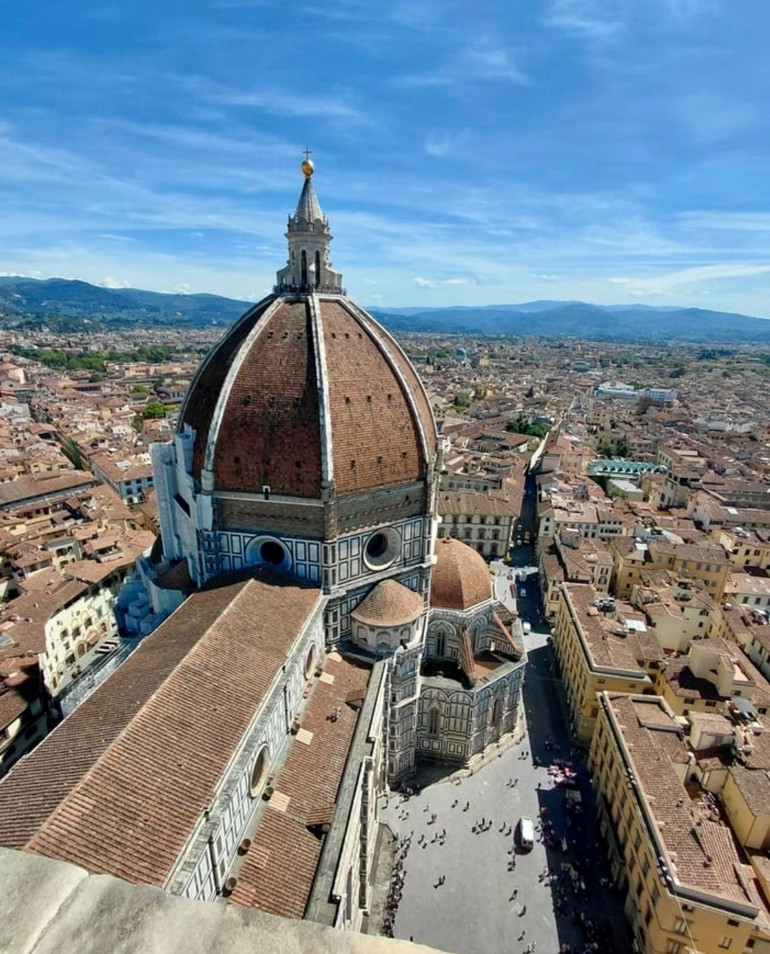
When walking between major landmarks—such as the central route between the Duomo and Piazza della Signoria—main thoroughfares can become densely packed with tour groups. Travelers can enjoy a more peaceful experience by stepping off the primary avenues and navigating the city’s narrow medieval side alleys, known locally as chiassi. These historical passages, some no wider than a doorway, often lead to quiet, forgotten squares, traditional artisan workshops, and creative modern street art hidden away from the main tourist trail.