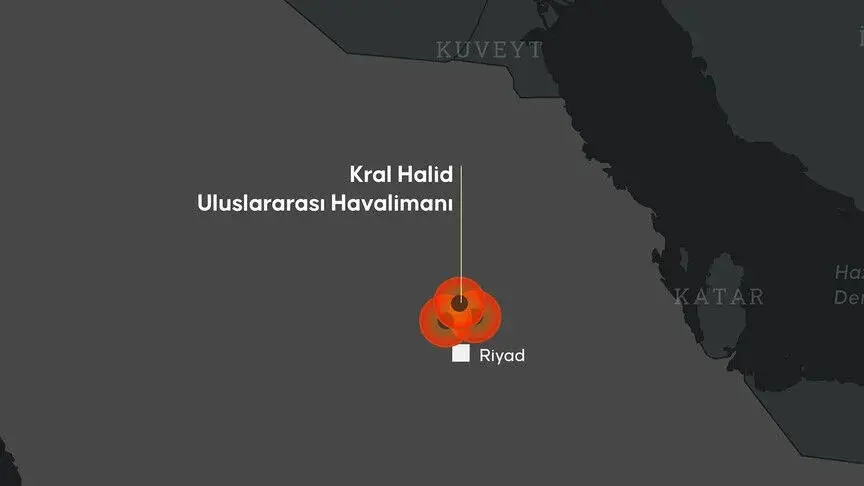
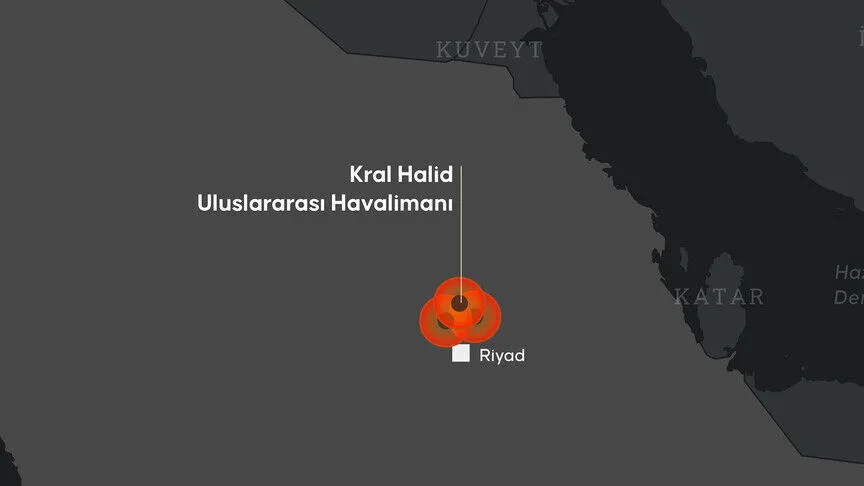
RIYADH — A major attack struck King Khalid International Airport in the Saudi capital of Riyadh, leaving at least 12 people dead and more than 300 others wounded, marking the second deadly assault to hit the kingdom’s primary international aviation hub within a 48-hour period.
The strike triggered immediate emergency procedures across the sprawling capital facility, forcing aviation authorities to halt all flight operations and order an urgent evacuation of terminal buildings. The incident has sharply escalated security alarms across the Arabian Peninsula, coming directly in the wake of an attack just two days prior at the same airport that claimed the lives of three individuals, including a commercial pilot, and wounded dozens more.
According to initial casualty tallies reported by news agencies, the human toll of the latest incident is severe, with at least 12 people confirmed dead and 309 individuals sustaining varying degrees of injury. The dramatic surge in casualties compared to the earlier incident highlights the intensifying peril confronting civil infrastructure amidst the broader regional conflict between the Saudi-led military coalition and Iran-backed Houthi forces based in neighboring Yemen.
Devastation at King Khalid International and Emergency Shutdown
The strike brought operations at King Khalid International Airport to a sudden standstill. Situated approximately 35 kilometers north of central Riyadh, the airport serves as the primary international gateway to the Saudi capital and functions as one of the busiest transit hubs in the Middle East, handling tens of millions of commercial passengers and vital cargo traffic annually.
Witnesses in and around the airport complex reported hearing at least two massive explosions reverberating across the facility. The loud blasts shook terminal structures and sent plumes of smoke rising into the sky, prompting panic among travelers, airline personnel, and ground crews navigating departure lounges and transit corridors.
Two officials familiar with the operational response, who spoke on the condition of anonymity due to the sensitivity of the unfolding security situation, confirmed that airport authorities moved quickly to order a comprehensive evacuation of passenger terminals. Terminal gates were cleared as emergency medical personnel, civil defense teams, and counter-threat units rushed onto the scene to tend to the wounded and secure vulnerable sectors of the complex.
Simultaneously, air traffic controllers implemented an immediate ground stop, halting all departing flights and diverting inbound international and domestic arrivals away from Riyadh airspace toward alternative regional landing strips. The abrupt airspace closure left thousands of passengers stranded inside transport networks, while aircraft already en route to the capital were placed into holding patterns before being rerouted to nearby domestic and regional hubs.
Following the explosions, airport management issued a concise advisory urging travelers and the general public to refrain from traveling directly to the airport complex and to verify the operational status of their flights through their respective carriers before departing their homes or hotels.
Consecutive Strikes Deepen Security Crisis
The assault represents a dramatic and rapid escalation, occurring a mere two days after King Khalid International Airport was targeted in an earlier strike that killed three people and injured 36 others. Among the fatalities in that initial incident was an aircraft pilot who was caught in the blast area while on duty, underscoring the vulnerability of civil aviation workers operating in the line of cross-border fire.
While that earlier attack drew widespread shock for penetrating the defenses of the Saudi capital, the recurrence of an assault at the exact same high-profile facility within 48 hours has compounded concerns regarding the resilience of capital air defenses. The dramatic leap in casualties—from three dead and 36 injured in the first incident to 12 dead and 309 injured in the latest barrage—reflects a markedly higher degree of destruction, either from direct strikes on heavily populated passenger or ground-handling areas or from falling fragments and shrapnel over populated operational zones.

In the immediate aftermath of the second strike, Saudi authorities had not yet issued a comprehensive official statement detailing the exact munitions employed, the specific point of impact within the vast airport perimeter, or the precise trajectory of the incident. In security-sensitive events of this magnitude, official defense and civil aviation ministries typically conduct detailed forensic investigations and preliminary damage assessments before releasing formal public communiqués regarding military engagements over sovereign airspace.
The Conflict Backdrop: The Saudi-Led Coalition and Houthi Confrontation
The recurring strikes on Riyadh’s international airport take place against the backdrop of sustained hostilities between the Saudi-led military coalition and the Iran-backed Houthi movement. For years, the coalition has conducted military campaigns against Houthi forces in Yemen in an effort to restore the internationally recognized government, leading to persistent cycles of aerial bombardment, asymmetric warfare, and retaliatory cross-border strikes.
Throughout the protracted conflict, Houthi forces have repeatedly demonstrated their capability to deploy ballistic missiles, cruise missiles, and loitering armed unmanned aerial vehicles across the southern Saudi border, frequently targeting energy installations, military installations, and transport networks. While southern Saudi cities situated closer to Yemen, such as Abha, Jizan, and Najran, have historically borne the brunt of cross-border aerial incursions, attacks directed at Riyadh—located hundreds of kilometers from the Yemeni frontier—represent high-stakes operations intended to project reach directly into the sovereign heart of the kingdom.
The targeting of civil aviation hubs carries profound implications under international humanitarian law, which strictly prohibits direct attacks against civilian objects and non-combatants. The presence of international travelers, ground staff, and commercial flight crews makes airports uniquely catastrophic targets when targeted by aerial ordnance. Even when hostile munitions are intercepted by surface-to-air defense batteries, the resulting shower of heavy debris and supersonic shrapnel over populated tarmac aprons, parking complexes, and glass-paneled passenger terminals can produce catastrophic casualties and extensive physical destruction.
Humanitarian and Logistical Repercussions
The influx of more than 300 injured individuals has placed an immense operational burden on metropolitan Riyadh’s emergency response apparatus and healthcare infrastructure. Regional medical facilities and trauma centers were placed on high alert to receive victims suffering from blast injuries, severe burns, shrapnel wounds, and trauma sustained during the chaos of the airport’s sudden evacuation.

For commercial aviation, the double assault on King Khalid International Airport presents formidable logistical hurdles. In addition to immediate physical repair work required on damaged runways, taxiways, administrative facilities, or terminal buildings, airlines operating out of the Middle East must grapple with heightened risk premiums, complex airspace routing adjustments, and schedule disruptions. Flight cancellations and rerouting decisions reverberate across global flight paths, given Riyadh’s role as a vital midpoint linking destinations across Europe, Asia, and Africa.
The disruption also affects the broader socio-economic landscape of the Saudi capital, which has been positioning itself as an international business, tourism, and transit center. Repeated disruptions to the capital’s main airport strike at the core of the city’s transport infrastructure, raising pressing questions regarding defensive perimeters, early-warning capabilities, and emergency crisis management protocols during ongoing cross-border escalations.
An Uneasy Calm Amid Ongoing Assessments
As emergency response personnel continue their operations on the ground at King Khalid International Airport, an uneasy quiet has settled over the facility’s perimeter. Security forces have reinforced checkpoints on access roads leading to the airport terminals, restricting entry to authorized emergency services and official personnel conducting ongoing inspection operations.
Aviation and defense analysts continue to monitor the situation closely, awaiting formal debriefings from defense officials concerning the defensive measures employed during the attack and the precise source of the threat. With at least 15 people killed across both airport strikes within the span of 48 hours and nearly 350 individuals wounded in total, the twin incidents mark one of the most perilous security episodes involving civil aviation infrastructure in the Saudi capital in recent history, keeping regional security mechanisms on their highest state of alert.