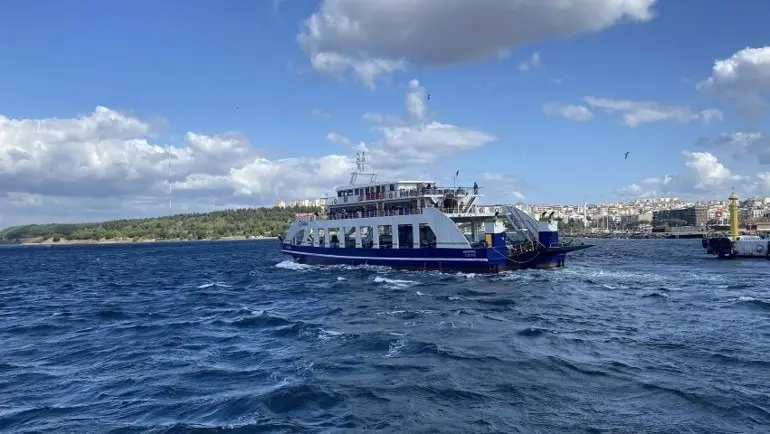
ÇANAKKALE — A powerful maritime storm developing across the northern Aegean Sea has disrupted regional transportation networks, forcing maritime authorities to suspend crucial island ferry connections. Transport operator GESTAŞ announced on Tuesday, October 13, 2026, that all scheduled ferry sailings between the Turkish mainland and the northern Aegean islands of Gökçeada and Bozcaada have been canceled for the following day as a precautionary measure against severe weather.
The service shutdown affects both primary vessel corridors serving the islands in Çanakkale province: the Kabatepe–Gökçeada route and the Geyikli–Bozcaada route. According to official announcements from the operator, the decision was made after meteorological evaluations indicated that deteriorating sea conditions and gale-force winds in the northern Aegean would present unacceptable safety risks for passenger and vehicular transit.
Severe Weather Hits Northern Aegean Maritime Transport
The announcement came through an official operational update issued by GESTAŞ Deniz Ulaşım, the principal maritime transport enterprise responsible for passenger and vehicle crossings across the Çanakkale Strait (Dardanelles) and the adjacent island routes. The company confirmed that all scheduled departures set for Wednesday across both island lines have been annulled.
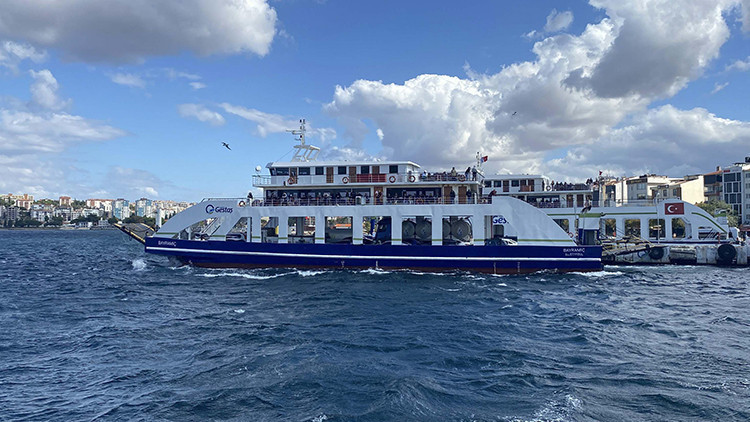
Reporting from Çanakkale, news agency correspondent Nazif Cemhan Şen noted that weather systems moving through the northern Aegean Sea generated volatile sea states, prompting early intervention by maritime safety managers. The preemptive cancellation aims to prevent vessels from attempting open-sea passages under hazardous conditions and to give residents, commercial logistics providers, and travelers sufficient notice to adjust their schedules.
The affected maritime routes form the sole vehicular lifelines linking the mainland to Turkey’s two largest inhabited Aegean islands. The northern route connects Kabatepe port, situated on the western shore of the Gallipoli (Gelibolu) Peninsula, to the island of Gökçeada. The southern island route connects the mainland port of Geyikli, located in the Ezine district of Çanakkale province, to the island of Bozcaada.
Under standard operating schedules, GESTAŞ maintains multiple daily round trips on both lines, employing roll-on/roll-off (Ro-Ro) car ferries and passenger vessels designed to handle standard coastal conditions. However, when storm systems sweep through the northern Aegean basin, the open maritime stretches between the mainland ports and the islands become highly prone to heavy swells, strong crosswinds, and reduced visibility, rendering docking maneuvers at harbor piers difficult and dangerous.
The geographical position of the northern Aegean islands makes them particularly susceptible to seasonal weather disruptions. Gökçeada, Turkey’s largest island by land area, sits in an exposed section of the northern Aegean Sea near the mouth of the Dardanelles Strait. The crossing from Kabatepe port requires vessels to navigate open waters that are directly exposed to prevailing northerly and northwesterly winds. When high-pressure and low-pressure systems interact over the Balkan peninsula and the Aegean basin, the resulting wind fields produce sea swells that build rapidly across the open waters of the Thracian Sea.
Bozcaada, located further south near the Aegean entrance of the Dardanelles, is similarly exposed to maritime weather patterns. Although the distance between the mainland port of Geyikli and Bozcaada is relatively short, the channel between the island and the Anatolian coast experiences funneling wind effects and swift coastal currents. Strong atmospheric disturbances create unstable rolling conditions for flat-bottomed car ferries, increasing the risk of vehicle shift on deck and posing severe hazards during embarkation and disembarkation at exposed port facilities.
Ferry suspensions of this magnitude reverberate quickly across island communities. Because Gökçeada and Bozcaada depend entirely on maritime links for goods, fuel, medical transport, postal services, and daily commerce, an abrupt halt to ferry operations effectively isolates the islands from the mainland. Municipal authorities, local businesses, and emergency services must adjust their operations around weather-induced travel windows.

For local residents who commute to the mainland for work, education, or healthcare services, the cancellation of all sailings necessitates immediate changes to personal plans. Commercial freight drivers transporting fresh produce, food supplies, construction materials, and commercial inventory are frequently forced to hold their vehicles at port staging areas in Kabatepe and Geyikli until harbor masters declare the sea channels safe for navigation.
Maritime safety protocols in Çanakkale province mandate that ferry operators work in close coordination with local harbor master offices, the Turkish Coast Guard, and national meteorological services. When weather forecasts predict wind speeds and wave heights exceeding the certified operational parameters of passenger and vehicle ferries, maritime authorities issue navigation advisories. Operators are required to prioritize life and vessel safety over scheduled timetables, leading to full operational standstills during intense storm events.
GESTAŞ operates a fleet tailored for high-density passenger and vehicle transit, but open-water ferry operations remain constrained by physical sea states. Heavy swell conditions present structural and stability challenges for car ferries, particularly when carrying heavy commercial trucks or passenger vehicles. Furthermore, harbor infrastructures at island terminals—such as those at Kuzu Port in Gökçeada and the central harbor in Bozcaada—require calm water conditions to allow ships to ramp safely onto concrete slipways without risking hull damage or passenger injury.

The process of managing weather cancellations involves continuous monitoring of coastal marine weather radar and sea-state buoys stationed in the Aegean. When gale warnings are issued for the northern Aegean sector, operational teams assess whether reduced service can be maintained or if a total shutdown is required. In this instance, the atmospheric severity across the region led managers to issue an advance cancellation covering all departures for the entire day, eliminating the possibility of partial or conditional sailings.
To mitigate customer disruption, maritime authorities advise all ticket holders, commercial transporters, and island visitors to follow real-time announcements broadcast through GESTAŞ’s official digital channels, passenger notification systems, and call centers. Ticketing policies typically allow passengers affected by weather-related service suspensions to reschedule their travel or obtain refunds once regular operations resume.
The operational pause on the island routes also places additional focus on the main transit routes within the Çanakkale Strait itself. While the narrow waters of the Dardanelles offer greater land-shelter than the open Aegean Sea, severe storms can occasionally impact crossings between Çanakkale city center, Eceabat, Kilitbahir, Gelibolu, and Lapseki. Maritime teams remain on heightened alert across all provincial water sectors during major meteorological events to evaluate local wind vectors and current shifts.

Historically, autumn and winter weather transitions in the northern Aegean bring frequent cold fronts and high wind activity, making temporary ferry suspensions a recurring aspect of coastal life in Çanakkale. Regional authorities and transport coordinators stress that advance planning and adherence to official advisories remain vital for minimizing logistical friction when severe weather forces maritime operations to close.
As the weather front moves across the northern Aegean region, GESTAŞ technical teams and local harbor masters will continue monitoring wind velocity, wave heights, and barometric pressure trends. Operational assessments will be conducted periodically throughout the duration of the storm to determine when sea conditions clear sufficiently to permit the safe inspection of port facilities and the eventual resumption of normal ferry schedules between Kabatepe, Geyikli, Gökçeada, and Bozcaada.