Middle school students in the rural villages of Bartın, a northern province in Turkey, are gaining hands-on exposure to science, nature, and the creative arts through an innovative educational initiative. Titled the "Village Academy: From Nature to Science, From Life to Art Project" (Köy Akademisi: Doğadan Bilime, Hayattan Sanata Projesi), the initiative aims to bridge educational divides in rural communities by converting village school grounds into vibrant, interactive learning camps.
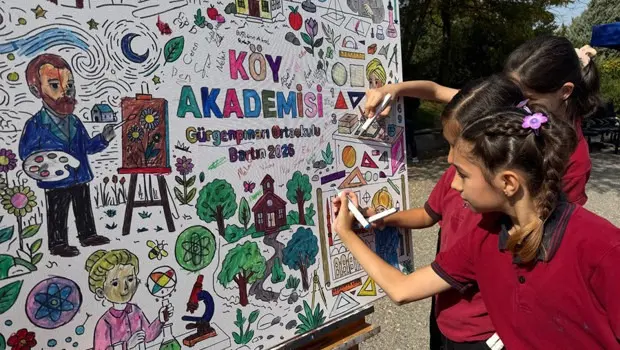
The project is officially supported under the TÜBİTAK 4009 Support Program for Village Schools, an initiative established by the Scientific and Technological Research Council of Turkey to foster scientific curiosity and interdisciplinary learning in rural communities. Spearheaded by Dr. Bekir Güler, a research assistant at Bartın University’s Faculty of Education, the initiative officially launched this month with its inaugural camp at Gürgenpınarı Middle School in Bartın.
By bringing together academic personnel, prospective teachers, local educators, and middle school pupils, the Village Academy creates an immersive camp environment right in the heart of rural settlements. Rather than requiring children from remote villages to travel long distances to urban centers or university campuses, the project transports scientific equipment, artistic materials, and expert instruction directly to the students’ home communities.
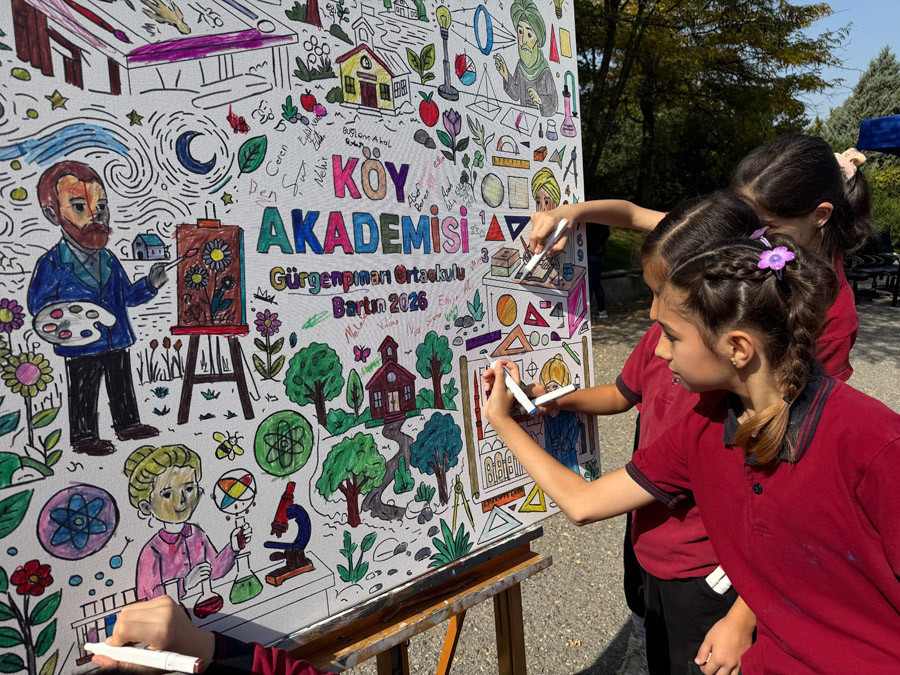
The opening camp event at Gürgenpınarı Middle School served as an encouraging demonstration of the project’s potential, drawing approximately 100 participants. The gathering brought together middle school pupils, schoolteachers, and members of the local village community. By opening the camp activities to local residents, the project fosters a broader, community-wide appreciation for scientific and artistic literacy, encouraging parents and elders to actively engage in the educational journey of young learners.
The project relies on a dedicated 15-member team consisting of academic researchers and prospective teachers—student educators completing their training—from Bartın University. Working in close partnership with the Bartın Provincial Directorate of National Education, this team facilitates specialized workshops designed to make learning tangible, fun, and deeply connected to daily life.
‘We Want Students to See Science, Nature, and Art Together’
Dr. Bekir Güler emphasized that the core objective of the project is to elevate awareness across multiple disciplines by making scientific and artistic concepts accessible to rural students, teachers, and community members alike. He explained that the initiative builds upon the foundational principles of earlier academic and social outreach initiatives, including established programs such as "Nature Education and Science Schools" and "That Village Is Our Science Village."
"Our project’s aim is to reach students, teachers, and local residents in villages with science, art, and nature activities, thereby increasing their awareness," Dr. Güler stated. He explained that the project bridges abstract theoretical knowledge found in standard school textbooks with practical, hands-on experiences anchored in the natural environment surrounding the students.

During the camp, students step outside traditional classroom boundaries to engage with a variety of dedicated workshops. The curriculum spans core natural sciences that students usually meet in theoretical form during their standard science classes, including physics, chemistry, and biology. However, under the Village Academy framework, these subjects are introduced through interactive experimentation and creative problem-solving.
In the science workshops, middle schoolers are introduced to microscopic exploration, learning how to examine cellular structures and microscopic organisms under real laboratory equipment. They conduct safe, interactive chemical experiments that demonstrate core scientific reactions and principles. In physics, students explore mechanics and structural design by constructing simple catapults and building balance towers, which challenge them to apply principles of center of gravity, force, and structural stability in real time.
The integration of art and hands-on craftsmanship plays an equally central role in the program. Students participate in painting workshops, where they can express their creative vision, as well as hands-on sculpting modules. Using clay, participants learn to mold three-dimensional objects, functional pottery, and figures, while also creating kinetic sculptures that blend principles of physical movement and visual art.
Music is another pivotal component of the curriculum. In the music workshops, students learn about different instruments, their acoustic mechanics, and how sound is produced. Beyond theoretical instruction, the children are given the opportunity to craft their own simple musical instruments using basic materials, uniting physical craftsmanship with musical education.

Dr. Güler highlighted the importance of this integrated, multi-disciplinary approach. "In our camps, we have workshops related to physics, chemistry, and biology, which our students are familiar with from their science classes," he explained. "Here, they examine specimens under microscopes, conduct chemical experiments, design simple catapults, build balance towers, and create clay and kinetic sculptures. They paint in our art workshops. In our music workshop, they both receive information about musical instruments and design their own simple instruments. We want our students to see science, art, mathematics, natural science, painting, and music all together in nature, and to experience them firsthand on site."
Looking ahead, Dr. Güler noted that the team intends to expand the reach of the Village Academy. While the launch event at Gürgenpınarı Middle School successfully demonstrated the project’s impact, the overarching goal is to bring these camp activities to students in the most remote and isolated village schools across Bartın province, ensuring that geography does not limit access to quality enrichment programs.
Students Express Joy Over Interactive Workshops
For the middle school students attending the Gürgenpınarı Middle School camp, the project provided an exciting break from conventional classroom routines, offering them a space to experiment, build, and express themselves creatively through interactive mediums.
Nehir Sarıkaya, a sixth-grade student at Gürgenpınarı Middle School, shared her enthusiasm about participating in the diverse range of activities offered during the camp event. She noted that the hands-on nature of the workshops made learning enjoyable and memorable.

"We are going to make a musical instrument here, I made paintings, and we will make sculptures," Sarıkaya said. "We are learning new and wonderful things here. It is a really great event area."
Similarly, Semanur Sinoplu, another sixth-grade student at the school, reflected on her creative output throughout the day, highlighting how the blend of artistic and practical tasks kept her fully engaged.
"Today I drew pictures twice here," Sinoplu said. "I made a bowl and a plate out of clay to put my pencils in. And here I am also going to make a musical instrument. All of the activities are wonderful, each better than the last."
The enthusiastic feedback from students underscores the broader socio-educational value of the TÜBİTAK 4009 initiative. By combining academic instruction with tactile creation, the project not only reinforces standard school curricula but also builds confidence, curiosity, and artistic expression among young learners in rural regions.
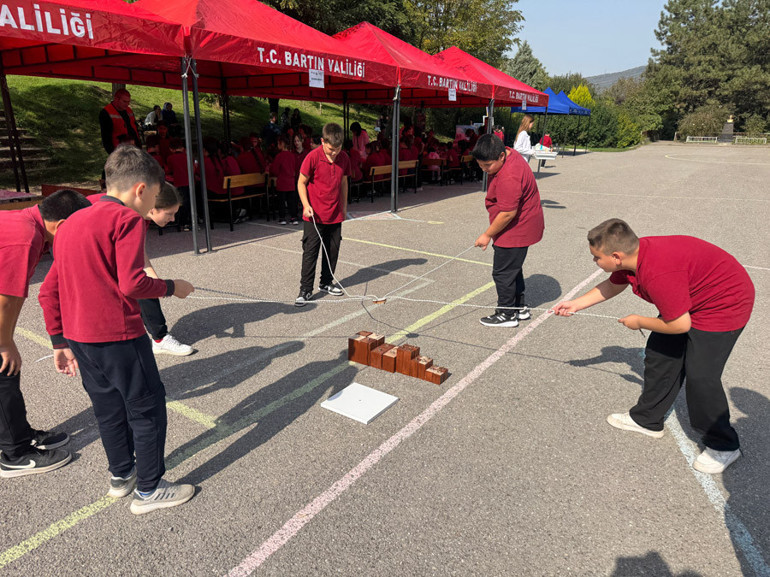
The success of the "Village Academy: From Nature to Science, From Life to Art Project" highlights the value of institutional collaboration between regional universities and provincial education boards. By leveraging the academic expertise of Bartın University’s Faculty of Education alongside the operational reach of the Bartın Provincial Directorate of National Education, the initiative provides pre-service teachers with valuable field experience while simultaneously serving under-resourced rural schools.
Furthermore, the project addresses long-standing educational challenges in rural areas. Village schools often face structural resource constraints compared to their urban counterparts, particularly regarding access to dedicated science laboratories, specialized art rooms, and diverse extracurricular activities. Programs like the Village Academy serve as mobile learning hubs that temporarily convert standard school premises into fully equipped exploratory environments.
By bringing local residents into the fold, the project also strengthens the relationship between rural communities and formal educational institutions. Parents and community members who attended the initial camp at Gürgenpınarı witnessed firsthand how scientific principles apply to daily life and how creative arts can be nurtured using simple, accessible materials. As the project team prepares for subsequent camp sessions across Bartın’s rural network, the initial response at Gürgenpınarı Middle School demonstrates a strong appetite among rural youth for interactive, experiential education.