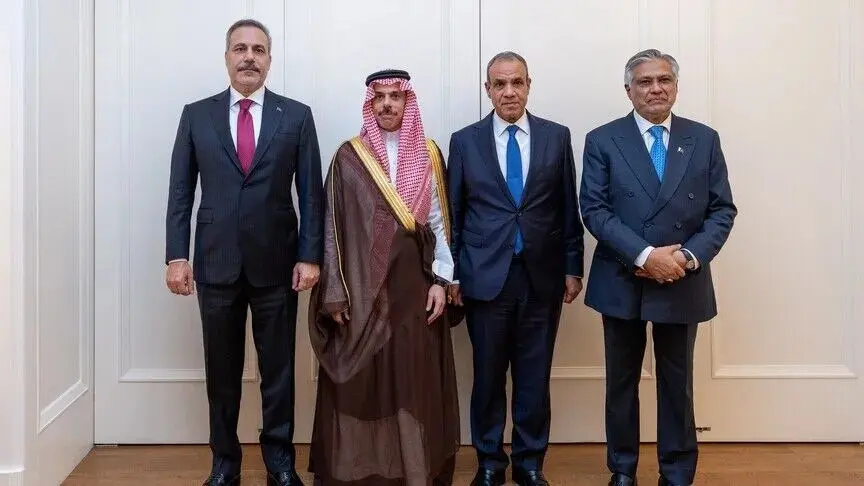
The high-level consultation served as a platform for an extensive exchange of views regarding the volatile regional landscape and the shifting dynamics of international relations. Amidst a backdrop of escalating tensions and protracted conflicts, the ministers emphasized that the synergy between Ankara, Cairo, Islamabad, and Riyadh is essential for fostering peace, security, stability, and economic prosperity across a wide geographic area.
According to the joint communiqué, the ministers reaffirmed their commitment to maintaining a high level of consultation and coordination. They underscored that the collective influence of these four nations could act as a stabilizing force in a period characterized by geopolitical uncertainty. By aligning their diplomatic efforts, the quartet aims to address systemic issues that have long hindered regional development and to advocate for a rules-based international order that respects the sovereignty of nations.
Sustaining Regional Stability Through the Islamabad Memorandum
A central theme of the discussions was the urgent need to de-escalate ongoing conflicts through the prioritization of dialogue and diplomacy. The ministers expressed their deep concern over the persistent cycles of violence and the humanitarian tolls of regional disputes. In their joint statement, they were explicit in their conviction that military solutions are insufficient for achieving long-term peace. Instead, they pointed toward the "Islamabad Memorandum" as a critical framework that must be adhered to in order to establish a foundation for lasting stability.
The emphasis on the Islamabad Memorandum highlights a shared commitment to a specific set of diplomatic principles designed to navigate the complexities of regional rivalions. By calling for strict adherence to this memorandum, the ministers signaled their intent to move away from ad-hoc crisis management and toward a more structured, sustainable approach to conflict resolution. They argued that only through a genuine commitment to the spirit of this agreement can the region hope to transcend its current state of fragmentation and move toward a more integrated and peaceful future.
Unwavering Support for Saudi Sovereignty and Maritime Security
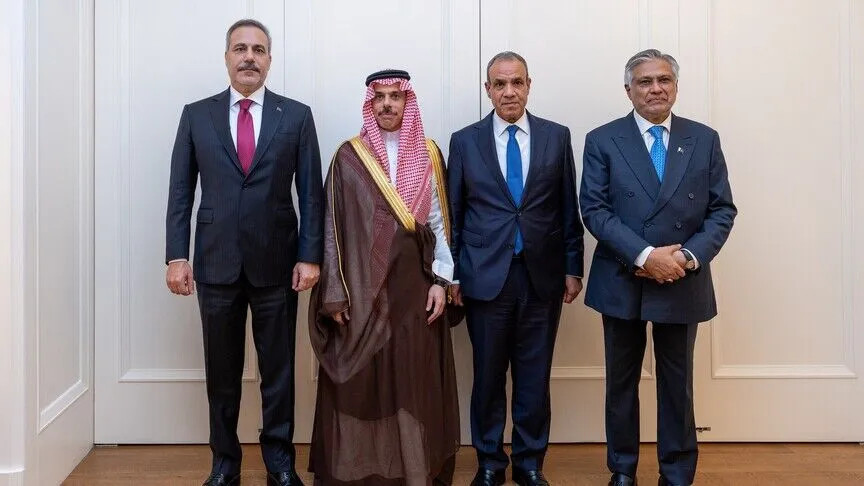
The joint statement also addressed the security of the Arabian Peninsula with particular gravity. The Foreign Ministers of Turkey, Egypt, and Pakistan joined their Saudi counterpart in strongly condemning the recent wave of attacks targeting the Kingdom of Saudi Arabia, specifically noting the continued aggression from Houthi forces. These attacks, the ministers noted, represent not only a threat to the Kingdom but also a broader challenge to regional security and the principles of international law.
The quartet reaffirmed their "unwavering support" for the sovereignty, territorial integrity, and national security of Saudi Arabia. In a forceful defense of the Kingdom’s position, the ministers validated Saudi Arabia’s inherent right to self-defense. This right, they noted, is firmly rooted in international law and the Charter of the United Nations, which grants every state the authority to protect its territory, its people, and its legitimate interests from external aggression.
Closely linked to the security of the Kingdom is the issue of maritime safety. The ministers emphasized the critical importance of protecting the freedom of navigation and ensuring the security of maritime routes. Given that the region serves as a vital artery for global trade and energy supplies, the quartet warned that any disruption to these waters could have catastrophic consequences for the global economy. They called for international cooperation to safeguard these essential corridors against asymmetrical threats and acts of piracy or sabotage.
In the context of the ongoing crisis in Yemen, the ministers reiterated their firm support for the Yemeni Legitimate Government and the Presidential Leadership Council. They argued that a sustainable resolution to the Yemeni conflict can only be achieved through an inclusive, "Yemeni-Yemen" dialogue. Such a process, they maintained, must involve all relevant stakeholders and be aimed at restoring security, stability, and the path toward national development, free from external interference that seeks to undermine the country’s unity.
Reaffirming the Centrality of the Palestinian Cause
A significant portion of the joint statement was dedicated to the Palestinian issue, which the ministers described as being of "central importance" to the achievement of peace and stability in the Middle East. The quartet’s position was a clear articulation of the long-standing international consensus, yet it carried renewed weight coming from this specific group of regional heavyweights during the UN General Assembly.

The ministers reaffirmed their support for the legitimate rights of the Palestinian people, including their inalienable right to self-determination. They called for the establishment of an independent, sovereign, and sustainable Palestinian State, characterized by geographic integrity. According to the statement, this state must be based on the borders as they existed on June 4, 1967, with East Jerusalem as its capital.
This stance, rooted in the relevant United Nations Security Council resolutions, serves as a rejection of any unilateral measures that seek to alter the status quo or undermine the viability of a two-state solution. The ministers emphasized that without a just and lasting resolution to the Palestinian-Israeli conflict—one that addresses the fundamental aspirations of the Palestinian people—the region would remain susceptible to perpetual instability and radicalization. Their joint advocacy in New York was intended to remind the international community that the Palestinian cause remains a primary driver of regional sentiment and a prerequisite for any broader regional peace framework.
Protecting the Sovereignty and Institutions of Sudan
Turning their attention to the African continent, the ministers expressed profound concern over the deteriorating situation in the Republic of Sudan. They affirmed their steadfast support for Sudan’s sovereignty, unity, independence, and territorial integrity. In a period where the Sudanese state faces existential threats from internal conflict, the quartet emphasized that the preservation of legitimate national institutions is paramount.
Crucially, the ministers voiced a strong rejection of "parallel entities" that seek to weaken the sovereignty and unity of the Sudanese state. This position reflects a broader concern that the proliferation of non-state actors or rival governance structures could lead to the permanent fragmentation of the country. They argued that the international community must focus its efforts on bolstering the state’s formal institutions rather than legitimizing factions that contribute to the chaos.
The statement also addressed the external factors exacerbating the Sudanese crisis. The ministers underlined the absolute necessity of halting the illegal flow of weapons, mercenaries, and foreign fighters into Sudanese territory. They noted that such external interference only serves to fuel the fire of conflict and hampers any domestic or international efforts to reach a ceasefire and a subsequent political settlement. By calling for an end to these illicit flows, the quartet aimed to create a more conducive environment for a Sudanese-led political process.

A Commitment to Long-Term Collective Security
The meeting in New York concluded with a mutual agreement to continue the momentum of this four-way coordination. The ministers expressed their intent to maintain close contact and to hold regular consultations on regional and international developments. This commitment suggests that the quartet of Turkey, Egypt, Pakistan, and Saudi Arabia is looking to establish a more permanent mechanism for diplomatic cooperation, recognizing that their collective voice carries significantly more weight on the global stage than their individual efforts.
The joint statement serves as a roadmap for their future engagement, focusing on the principles of collective security and long-term regional stability. By bridging the gaps between different parts of the Islamic world—from the Anatolian heartland and the Nile Valley to the Arabian Peninsula and South Asia—these four nations are positioning themselves as the primary architects of a new regional order.
As the 81st Session of the UN General Assembly continues, the unified message from Ankara, Cairo, Islamabad, and Riyadh will likely resonate through the halls of the United Nations. It sends a clear signal to global powers that the regional stakeholders are prepared to take a leading role in managing their own security challenges, advocating for the rights of their populations, and insisting on a diplomatic path forward in an era of complex and overlapping crises. The focus now shifts to how these declarations will be translated into concrete diplomatic actions on the ground in the months following this landmark New York summit.